
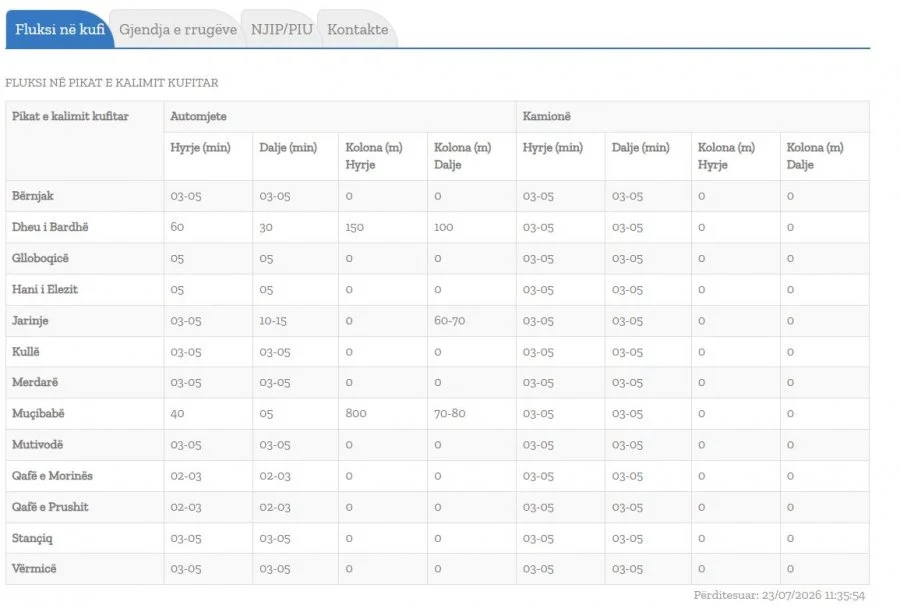
PRISTINA, Kosovo – The National Center for Border Management (NCBM) has issued its latest update on traffic flow at Kosovo’s border crossing points, revealing considerable wait times and extensive queues at several key locations. As the summer travel season intensifies, with a significant influx of diaspora members and tourists, the border points of Dheu i Bardhë and Muçibabë are experiencing the most pronounced pressure, prompting authorities to advise travelers to plan their journeys meticulously.
The NCBM’s report, released earlier today, underscores a recurring challenge during peak periods: balancing efficient border control with high volumes of traffic. While the majority of Kosovo’s border crossings continue to operate smoothly, the situation at Dheu i Bardhë and Muçibabë stands out, presenting prolonged delays that can significantly impact travelers’ plans.
Main Facts: A Snapshot of Current Border Conditions
According to the NCBM data, the most substantial delays for passenger vehicles are concentrated at two specific border crossing points:
- Dheu i Bardhë: This crossing point, a crucial artery for travelers entering Kosovo, is currently experiencing wait times of up to one hour for entry, with queues extending approximately 150 meters. For those exiting Kosovo, the situation is slightly better but still significant, with an average wait of 30 minutes and queues reaching 100 meters. These figures highlight the particular congestion faced by inbound traffic, indicative of the current seasonal surge.
- Muçibabë: Another point of concern is Muçibabë, where travelers entering Kosovo face waits of up to 40 minutes. The queues here are notably longer, stretching an estimated 800 meters, signaling a substantial volume of incoming vehicles. Exit times from Muçibabë are considerably shorter, around 5 minutes, with queues of 70 to 80 meters.
While Dheu i Bardhë and Muçibabë bear the brunt of the traffic, other crossings report more manageable conditions:
- Jarinjë: At Jarinjë, entry into Kosovo typically takes between 3 and 5 minutes. Departures, however, see slightly longer waits of 10 to 15 minutes, with queues extending 60 to 70 meters.
- Other Border Crossing Points: The vast majority of Kosovo’s border crossings, including Bërnjak, Hani i Elezit, Kulla, Merdarë, Qafa e Morinës, Qafa e Prushit, Vërmicë, and Stançiq, are reporting minimal delays. For these locations, passenger vehicle wait times range from a swift 2 to 5 minutes, with no significant queues observed. This widespread efficiency across multiple points offers alternatives for travelers seeking to avoid the hotspots.
- Commercial Vehicles (Trucks): Remarkably, commercial traffic, which often faces its own set of challenges, is experiencing very smooth transit across all border points. Trucks are reporting wait times of only 3 to 5 minutes, with no discernible queues, indicating that the current congestion is predominantly affecting passenger vehicles.
The NCBM’s real-time monitoring system provides these crucial updates, serving as an indispensable tool for both authorities and the public in navigating the complexities of cross-border travel during high-demand periods.
Chronology: A Recurring Summer Phenomenon
The current surge in border traffic is not an isolated incident but rather a predictable annual event. Every summer, as expatriates, commonly referred to as the diaspora, return to their homeland for holidays, and as tourists flock to the region, Kosovo’s border infrastructure faces immense pressure. This seasonal pattern typically begins in late June and extends through August, peaking around major holidays and weekends.
Historically, Kosovo has grappled with managing these seasonal influxes. In previous years, wait times at some border points could extend to several hours, leading to significant frustration and economic disruption. Recognizing this challenge, the government, through institutions like the NCBM and the Ministry of Internal Affairs, has continuously worked to streamline processes, enhance infrastructure, and improve coordination among border agencies.
The establishment of the National Center for Border Management itself was a strategic move to centralize and optimize border operations. Founded with the mandate to provide real-time data, coordinate activities of various agencies (police, customs, veterinary, phytosanitary, etc.), and implement modern border management strategies, the NCBM has become the nerve center for monitoring and responding to border traffic dynamics. Its continuous updates are a testament to its role in transparent communication with the public, a significant improvement from past practices where information might have been less readily available.
The current situation, while challenging at specific points, reflects ongoing efforts to mitigate widespread congestion. The fact that the majority of crossings are operating efficiently, and that commercial traffic remains largely unaffected, suggests a more targeted pressure on routes predominantly used by passenger vehicles, particularly those connecting with neighboring Serbia, from where a significant portion of the diaspora often travels.
Supporting Data: Deeper Insights into Travel Patterns
The NCBM’s data, while concise, offers a window into broader travel patterns and their implications. The stark difference in wait times between entry and exit at Dheu i Bardhë and Muçibabë clearly indicates a dominant inbound flow. This is characteristic of the initial phase of the summer holiday season, where the primary movement is people returning into Kosovo. As the summer progresses, and holidays conclude, this trend will likely reverse, with exit queues becoming more prominent.
The length of the queues – 800 meters at Muçibabë for entry – is particularly telling. Assuming an average vehicle length of 5 meters, this translates to roughly 160 vehicles waiting in line. Such numbers represent a substantial bottleneck, even with multiple lanes open and increased staffing. The volume suggests that even a minor delay in processing each vehicle can quickly accumulate into significant overall wait times.
The relative efficiency of other border points, such as Bërnjak (also connecting to Serbia), Vërmicë (to Albania), and Hani i Elezit (to North Macedonia), highlights the varied pressures experienced across the border network. Vërmicë, for instance, is a critical crossing with Albania, a popular destination for many Kosovars, yet it maintains low wait times, possibly due to more robust infrastructure or less concentrated traffic surges at this specific time.
The minimal impact on commercial vehicles is a positive sign for the economy. Unhindered freight movement is vital for trade, ensuring supply chains remain intact and businesses are not negatively affected by passenger traffic. This suggests that border authorities have successfully prioritized commercial lanes or that the volume of commercial traffic, while steady, does not experience the same sudden peaks as passenger traffic.
Moreover, the NCBM’s ability to provide real-time updates through its website and potentially mobile applications (though not explicitly stated in the original snippet, it’s a common modern practice for such centers) empowers travelers. Access to such data allows individuals to make informed decisions, potentially rerouting to less congested crossings or adjusting their travel times, thereby distributing the load more evenly across the border network. This proactive communication is a crucial element of modern border management, aiming to mitigate frustration and improve overall traveler experience.
Official Responses: Measures and Recommendations
In response to the current situation, officials from the National Center for Border Management and the Ministry of Internal Affairs have reiterated their commitment to facilitating smooth border crossings while maintaining security standards.
A spokesperson for the NCBM, who requested anonymity to speak broadly about operational challenges, stated, "We understand the frustration that comes with waiting at the border, especially during holiday periods. Our teams are working tirelessly around the clock, in close coordination with the Kosovo Border Police and customs officials, to process vehicles as quickly and efficiently as possible. We have activated all available lanes at the most congested points and increased staffing where feasible."
Officials emphasize that the primary goal remains to ensure public safety and adherence to border procedures, even amidst high traffic volumes. "The security checks and documentation processes are non-negotiable for national security. However, we are constantly exploring technological and procedural enhancements to speed up these necessary steps," the spokesperson added.
The NCBM has issued several key recommendations for travelers:
- Check Real-Time Data: Before embarking on their journey, travelers are strongly advised to consult the NCBM’s official website or designated information channels for the latest updates on wait times and queue lengths at all border crossing points. This allows for informed decisions regarding route planning.
- Utilize Less Congested Crossings: Where possible, travelers are encouraged to consider using alternative border points that are currently reporting minimal delays. For instance, if traveling from a direction that offers multiple options, choosing a less-known or less-trafficked crossing could save significant time.
- Travel During Off-Peak Hours: Peak travel times typically include early mornings, late afternoons, and weekends. Traveling during weekdays or late at night/early morning hours can significantly reduce wait times.
- Prepare Documents in Advance: Having all necessary travel documents (passports, vehicle registration, green card insurance, power of attorney if driving someone else’s car) readily accessible can expedite the process at the inspection booth.
- Stay Informed: Follow official announcements from the NCBM and relevant government ministries for any further updates or changes in border procedures.
While no immediate large-scale infrastructure projects were announced in direct response to this specific report, the Ministry of Internal Affairs has previously outlined plans for modernizing several border points, including expanding lanes and integrating advanced scanning technologies. These long-term investments are crucial for sustainably managing future traffic increases.
Implications: Beyond the Immediate Delays
The current border situation, particularly at Dheu i Bardhë and Muçibabë, carries several broader implications for Kosovo:
Economic Impact
While commercial traffic is currently flowing smoothly, prolonged and severe passenger vehicle delays can indirectly affect the economy. The diaspora contributes significantly to Kosovo’s economy through remittances and spending during their visits. If border experiences become consistently negative, it could deter future visits, potentially impacting local businesses, hospitality sectors, and the overall flow of foreign currency. Moreover, an image of inefficient borders can negatively affect perceptions for potential foreign investors and tourists.
Social Impact
For many diaspora members, returning home is a cherished annual tradition, a time to reconnect with family and heritage. Long waits at the border can transform the excitement of arrival into frustration and exhaustion. This can impact the overall experience of their holiday and, by extension, their emotional connection to the homeland. It also reflects on the state’s capacity to provide efficient public services to its citizens, regardless of their place of residence.
Regional Connectivity and Image
Kosovo’s aspirations for closer integration with European structures and improved regional cooperation rely heavily on efficient cross-border movement. Smooth border operations are a tangible sign of a well-functioning state and good neighborly relations. Consistent issues at specific crossings, particularly those with Serbia, can sometimes be politicized or used to highlight underlying challenges in bilateral relations, even if the delays are purely operational. Maintaining fluidity at borders is crucial for projecting an image of stability and openness in the Western Balkans.
Future Planning and Infrastructure Development
The recurring nature of these peak season challenges underscores the need for continuous investment in border infrastructure and smart management solutions. This includes not only expanding physical lanes but also exploring digital solutions such as pre-arrival declarations, automated passport control for citizens, and better data analytics to predict and manage traffic flows more effectively. The current situation serves as a continuous reminder for policymakers to prioritize these strategic investments for sustainable development.
Looking Ahead: Towards Smarter Border Management
The challenges at Dheu i Bardhë and Muçibabë during this peak travel season serve as a stark reminder of the dynamic nature of border management. While immediate measures such as increased staffing and maximizing operational lanes are crucial for short-term relief, the long-term vision must encompass a more holistic and technologically advanced approach.
Investment in modern infrastructure is paramount. This includes expanding the number of processing lanes at high-traffic crossings, upgrading existing facilities, and implementing state-of-the-art surveillance and scanning technologies. Furthermore, exploring the feasibility of digital solutions, such as online pre-registration for certain categories of travelers or the introduction of automated e-gates for Kosovar citizens, could significantly streamline processing times. Such innovations would not only reduce physical wait times but also enhance security protocols.
Beyond technology, continuous training for border police and customs officials is vital. Equipping personnel with advanced skills in customer service, crisis management, and the efficient use of new technologies can greatly improve the traveler experience. Inter-agency cooperation, both domestically among various border authorities and regionally with neighboring countries, is also key to harmonizing procedures and optimizing flow. Collaborative initiatives, such as shared databases or joint border patrols, could further enhance efficiency and security.
Ultimately, the goal is to transform Kosovo’s border crossing points into efficient, secure, and user-friendly gateways that reflect the country’s commitment to progress and its aspirations for regional integration. While the current delays at Dheu i Bardhë and Muçibabë present immediate difficulties, they also provide valuable data and impetus for continuous improvement, ensuring that future peak seasons are managed with even greater effectiveness and minimal disruption to the lives of citizens and visitors alike.
Advice for Travelers: Plan Smart, Travel Smoothly
As the summer travel season continues, the National Center for Border Management strongly advises all individuals planning to cross Kosovo’s borders to remain vigilant and proactive. By utilizing the real-time information provided by the NCBM, considering alternative routes, adjusting travel times to avoid peak hours, and ensuring all necessary documentation is prepared in advance, travelers can significantly mitigate potential delays and contribute to a smoother overall flow at the border crossing points. The commitment of border authorities to facilitate travel remains steadfast, but cooperation from the public is equally crucial in navigating these high-demand periods successfully.