The grocery sector in 2026 has become a battlefield defined by relentless inflation, shifting consumer loyalties, and a digital-first reality that has left legacy retailers scrambling. For Albertsons, one of the nation’s largest supermarket operators, the terrain has proven particularly treacherous. Following a second-quarter earnings report that sent shockwaves through the industry, the company finds itself at a critical inflection point, grappling with declining sales, plummeting net income, and an urgent need to redefine its identity.
The Financial Fallout: A Quarter of Contraction
The numbers released this past Tuesday painted a grim picture for the grocery giant. In the second quarter of 2026, Albertsons reported a 0.8% year-over-year decline in comparable sales—a metric that highlights the weakening foot traffic and dwindling basket sizes across its sprawling store network. More alarming, however, was the bottom line: net income plummeted to $52 million, a sharp drop from the $168.5 million recorded during the same period in 2025.
In a sign of extreme caution and internal uncertainty, leadership made the rare move of pulling the company’s full-year guidance. By removing these financial guardrails, Albertsons has effectively signaled to shareholders that the current trajectory is unsustainable and that the volatility of the present market makes long-term forecasting a fool’s errand.
A Chronology of Instability
The current crisis at Albertsons did not happen overnight; it is the culmination of years of operational inertia and a rapidly changing competitive landscape.
- The Post-Merger Hangover (2024–2025): The failed merger with Kroger remains the shadow hanging over the company. Blocked by federal regulators on antitrust grounds, the collapse of the deal forced Albertsons to abandon its primary strategy for scale.
- Legal Retaliation (Late 2025–Present): Following the failed merger, relations between the two giants soured completely. Albertsons recently initiated a massive legal battle, seeking at least $8 billion in damages from Kroger, alleging that the latter failed to exert "best efforts" to secure regulatory approval.
- The Turnaround Attempt (Fall 2026): In a desperate move to inject new vision into the C-suite, the board brought in Meg Whitman, the former CEO of eBay and Hewlett-Packard, to serve as executive chair. Her mandate is to act as a strategic anchor for CEO Susan Morris.
- The Restructuring (ACI Edge): Last quarter, the company launched "ACI Edge," a corporate restructuring program designed to streamline operations by consolidating 11 regional offices into four primary geographic hubs (California, South, East, and West).
The Strategic Misstep: Losing the Value Proposition
Analysts suggest that Albertsons’ primary struggle is not merely inflationary pressure, but a failure to answer a fundamental question: Why should a shopper choose us?
Historically, Albertsons positioned itself as the "convenient second trip"—a store where shoppers would stop if their primary destination (like a discount club or a specialized grocer) didn’t carry everything on their list. However, in 2026, the secondary trip is under siege.
The Competition: A Three-Pronged Threat
- The Club Giants: Retailers like Costco have successfully captured the bulk-buying market, offering price points that traditional grocers simply cannot match.
- The Digital Dominance: Amazon and Instacart have decimated the need for a "second trip." If a customer realizes they are missing an item, they no longer go to the local Safeway; they open an app and have the item delivered to their door within hours.
- The Value-Experience Hybrid: Players like Aldi have cracked the code of offering high-quality, private-label goods with an element of "treasure hunt" excitement, a stark contrast to the "old-fashioned and tired" atmosphere found in many Albertsons locations.
Neil Saunders, managing director at GlobalData Retail, noted that the shopping experience at many Albertsons banners—which include Safeway, Jewel-Osco, ACME, and Tom Thumb—feels as though it is "stuck in the 1990s." For a generation of shoppers accustomed to the aesthetic and functional efficiency of digital-native retailers, these stores feel increasingly out of step with the times.
Official Responses and Leadership Vision
During the earnings call, the tone was uncharacteristically somber. Meg Whitman, whose reputation is built on high-level corporate transformation, did not mince words regarding the company’s current standing.
"Our performance has fallen short. Sales and earnings growth have not met our expectations," Whitman stated, emphasizing the need for the company to "move faster." Perhaps most telling was her declaration that "everything should be on the table" as the company reviews its structure and long-term strategy.
CEO Susan Morris acknowledged the necessity of aggressive cost-cutting and a renewed focus on product quality. However, her responses lacked the granular detail investors craved, particularly regarding the performance of the company’s 22 different banners. This lack of transparency has left many analysts wondering if the company has a cohesive plan to modernize its perishables proposition or if it is merely treading water.
The Implication: Can They Pivot?
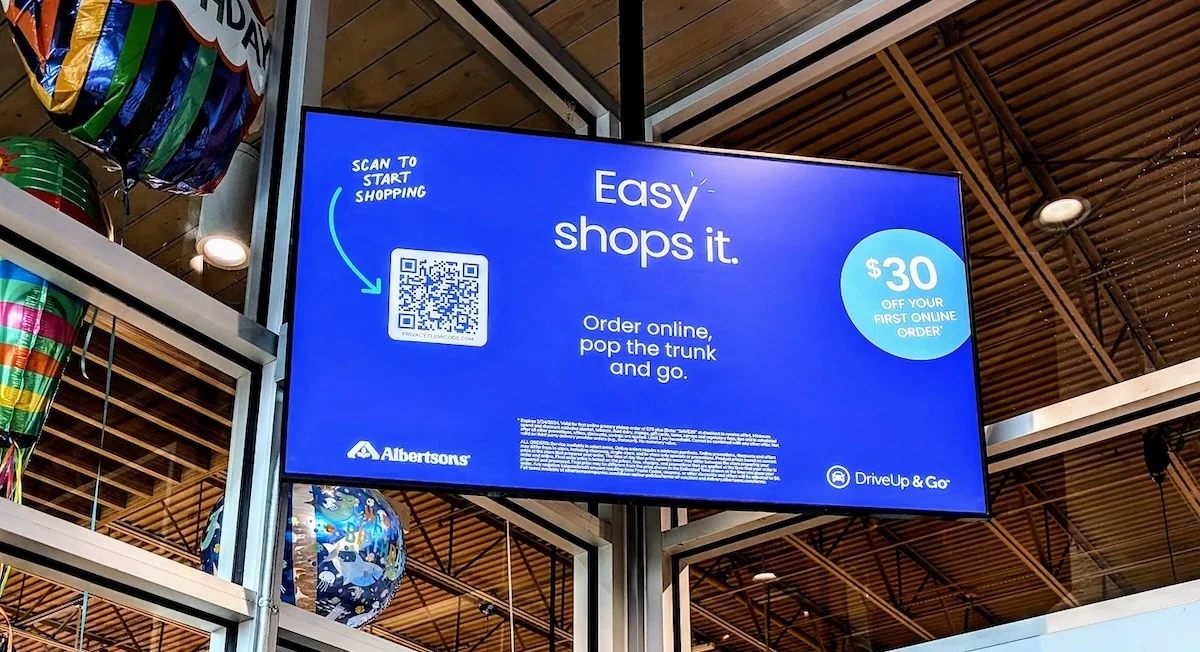
The road ahead for Albertsons is narrow. While they have invested heavily in digital infrastructure—evidenced by an 11% year-over-year increase in digital sales—these gains are being cannibalized by the overhead of maintaining over 2,200 physical locations that are increasingly seen as under-performing assets.
The "Asset Shedding" Possibility
There is growing speculation that Albertsons may begin to divest itself of underperforming banners to slim down and focus on core regional strengths. By consolidating the brand footprint, the company could theoretically reduce its operational complexity and focus capital on the stores that actually possess growth potential.
The Financial "Lifeline"
Regarding the $8 billion litigation against Kroger, industry observers are wary of seeing this as a solution. As Neil Saunders pointed out, even if Albertsons wins a significant settlement, the influx of cash provides only "temporary relief." It would solve a balance sheet problem, but it would do nothing to fix the customer-facing issues. "This lifeline cannot be relied upon as a savior of the business," Saunders warned.
The Path to Relevancy
For Albertsons to transition from a fading giant to a "destination grocer," experts like Bryan Gildenberg of Confluencer Commerce suggest three non-negotiable pillars:
- A Refined Perishables Strategy: The company must stop competing on commodity items alone and start offering an experience that justifies the trip.
- Coherent Brand Communication: Customers need to understand what the Albertsons ecosystem stands for in a market where they are constantly being pulled in different directions.
- Operational Economics: The company must reconcile the high cost of its physical footprint with the lower-margin reality of e-commerce and retail media.
Conclusion
The story of Albertsons in 2026 is a cautionary tale of institutional inertia. Despite having deep roots and prime real estate, the company is finding that historical success is a poor predictor of future performance in an era of hyper-competition. Whether the leadership team can successfully pivot from a sprawling, fragmented operator to a lean, experience-driven retailer remains to be seen. What is certain, however, is that the era of relying on the "convenient second trip" is over. For Albertsons, the only way forward is to stop being a place where people stop by, and start being a place where they want to shop.
Stat of the Week
1 million: The staggering number of robots currently deployed across Amazon’s global fulfillment centers, a figure that highlights the widening chasm between traditional retailers and the tech-enabled logistics powerhouses currently dominating the market.