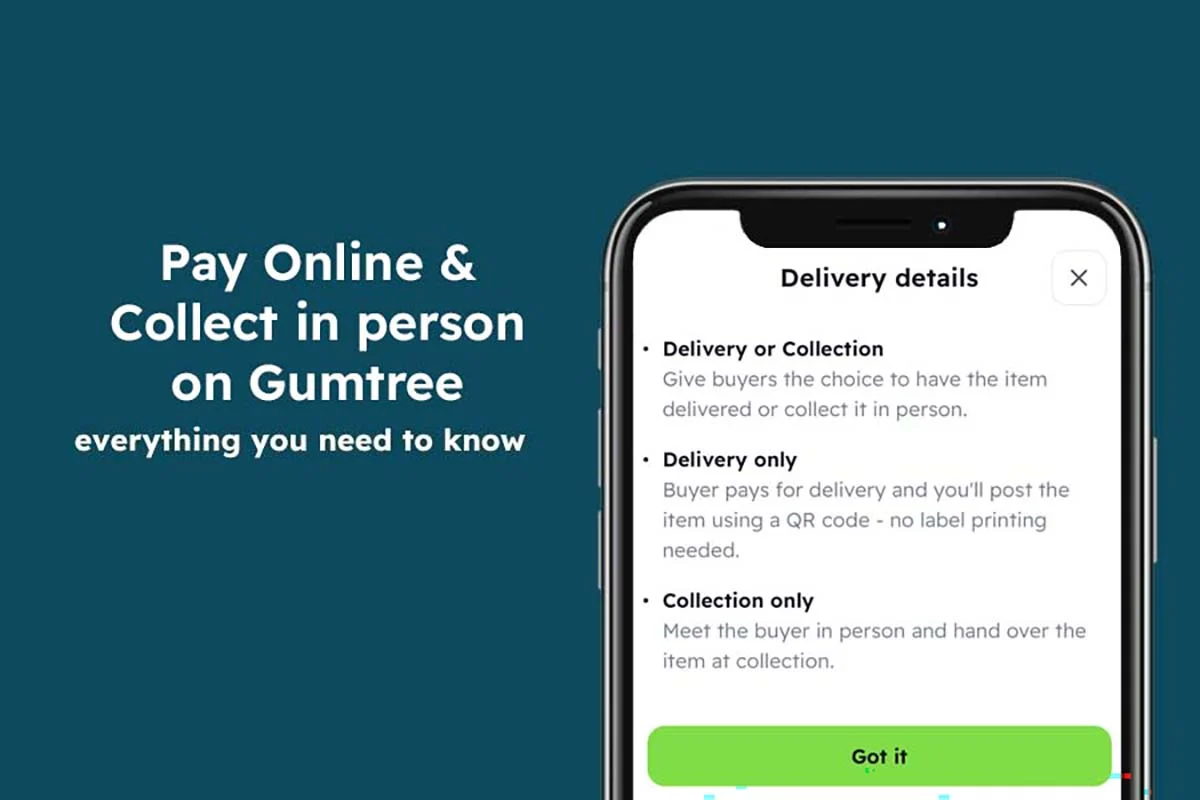
The landscape of local digital marketplaces is undergoing a significant transformation. Gumtree, one of the United Kingdom’s most established platforms for buying and selling, has officially announced the launch of "Pay & Collect," a new feature designed to bridge the gap between digital convenience and the tactile safety of local, in-person transactions. By enabling secure online payments for items under £250, the platform is effectively tackling the perennial issues of cash handling, "no-show" buyers, and the general anxiety associated with meeting strangers for exchanges.
This development marks a pivotal shift for the classifieds giant, moving away from the "cash-only" culture that has defined peer-to-peer marketplaces for decades and toward a more integrated, fintech-forward ecosystem.
Main Facts: The Mechanics of ‘Pay & Collect’
At its core, Gumtree Pay & Collect is a security layer designed to formalize the local exchange process. Historically, buying a secondhand item on a classifieds site involved a delicate dance of trust: the buyer had to ensure they had the exact change, the seller had to worry about counterfeit currency or last-minute cancellations, and both parties had to navigate the logistics of a physical meeting without any formal record of the transaction.
Under the new system, for eligible listings priced at £250 or less, the transaction is no longer a handshake agreement. Instead, the buyer pays for the item directly through the Gumtree platform. Once the payment is processed, the item is officially "reserved." This serves as a digital contract, ensuring that the seller cannot sell the item to someone else while the buyer is en route.
Crucially, the money is held in escrow. The seller does not receive the funds until the buyer has inspected the item in person and formally confirmed the collection through the app. If the item does not match the description or the buyer is unsatisfied upon inspection, the order can be cancelled on the spot, triggering an immediate and full refund.
Chronology: A Strategic Pivot Toward Security
The introduction of Pay & Collect did not happen in a vacuum. For several years, the peer-to-peer marketplace sector has been under pressure to improve safety standards.
- Pre-2020 Era: Gumtree, like many competitors, functioned primarily as a directory. The platform provided the venue for contact, but the actual commerce remained entirely off-platform.
- The Pandemic Shift (2020–2022): The COVID-19 pandemic accelerated the need for contactless transactions. As hygiene concerns rose, the reliance on physical cash became a friction point. During this period, Gumtree began internal evaluations of how to integrate payment processing without losing the "local-first" identity that makes it unique.
- Beta Testing (2023): Throughout last year, the company began pilot programs for secure payments in select regions, monitoring for fraud patterns and user feedback.
- The Launch (2024): The official rollout of Pay & Collect represents the culmination of these efforts, positioning Gumtree as a modern, tech-enabled marketplace capable of competing with the user experience offered by more "social" platforms like Facebook Marketplace or Vinted.
Supporting Data: The Cost of Friction in Peer-to-Peer Trade
Why limit the feature to items under £250? Market data suggests that the vast majority of local secondhand transactions—ranging from household goods and small electronics to clothing and toys—fall within this "micro-transaction" bracket.
According to consumer behavior studies, the "trust gap" is the primary reason why potential users abandon online classifieds. Approximately 40% of surveyed users cited "safety concerns when meeting strangers" as a reason to avoid local marketplaces. Furthermore, nearly 30% of sellers report frustration with "ghosting"—where a buyer commits to a purchase but fails to show up for the collection.
By introducing a financial commitment via the Pay & Collect feature, Gumtree is leveraging behavioral economics: when a buyer has already paid, they are statistically far more likely to complete the collection. For sellers, this reduces the "time-cost" of waiting for buyers who may never arrive, thereby increasing the efficiency of the entire marketplace.
Official Responses and Corporate Strategy
In official statements, Gumtree leadership has framed this as a commitment to the user experience rather than a move toward becoming a traditional e-commerce retailer.
"Our goal has always been to facilitate local connection," a spokesperson for the company stated. "However, the digital age demands more than just a list of phone numbers. Our users want the benefit of local pickup—seeing the item, saving on shipping, and supporting their community—without the risks that come with informal, cash-only exchanges."
The company has emphasized that this feature is an opt-in tool for many existing sellers. While Gumtree is pushing the feature heavily, they recognize that the legacy users of the platform may prefer the traditional methods. Consequently, the transition is being handled as an "eligible listing" model, where users can enable or disable the feature in their account dashboard as they see fit.
Implications: Changing the Face of the Secondhand Economy
The introduction of Pay & Collect has far-reaching implications for both the individual user and the broader secondhand economy.
1. Increased Consumer Protection
For the buyer, the "inspect-before-confirm" rule is a game-changer. It effectively eliminates the risk of "item-not-as-described" disputes that plague online-only marketplaces. If the item is broken or misrepresented, the buyer has the power to walk away with their money intact.
2. A Digital Audit Trail
By moving payments on-platform, Gumtree is creating a digital record of transactions. This provides a safety net for both parties. In the event of a dispute or a security concern, the platform now has the data required to mediate effectively—a capability that was previously impossible when transactions were conducted in cash.
3. The Death of the "Bank Transfer" Fear
One of the most awkward parts of the old Gumtree experience was the "bank transfer" request. Sellers were often wary of fake transfer confirmations, and buyers were understandably hesitant to send money to a stranger’s bank account before seeing the item. By acting as an intermediary, Gumtree removes this tension. The buyer pays the platform, not the seller, providing an essential layer of anonymity and security.
4. Marketplace Competition
This move places Gumtree in a more competitive position against platforms like Vinted and eBay. By adopting an escrow-style payment system, Gumtree is signaling to its user base that they don’t need to migrate to other apps to get a modern, secure experience.
Future Outlook: What’s Next?
As the rollout continues, industry analysts expect to see an increase in transaction volume on the platform. The convenience of "booking" an item via payment will likely encourage younger demographics—who are accustomed to the seamless UX of modern fintech apps—to engage with the platform more frequently.
However, challenges remain. The company must ensure that the payment processing fees (if any) or the technical interface remains intuitive. If the process of "confirming collection" is too burdensome, users may revert to old habits. Furthermore, the expansion of this feature to items over £250 remains an open question. Managing higher-value transactions requires a more robust insurance and dispute resolution infrastructure, which could be the next logical phase in Gumtree’s evolution.
In conclusion, Gumtree Pay & Collect is not merely a technical update; it is a fundamental re-imagining of how we trade locally. By prioritizing security and eliminating the uncertainty of cash, Gumtree is reinforcing its position as a cornerstone of the British circular economy. For the casual seller looking to declutter their home, or the savvy buyer hunting for a bargain, the process has just become significantly more reliable, professional, and, most importantly, secure.
As the marketplace continues to evolve, one thing is clear: the era of meeting a stranger with a pocket full of cash is rapidly drawing to a close, replaced by a digital-first approach that keeps the community at the heart of commerce.