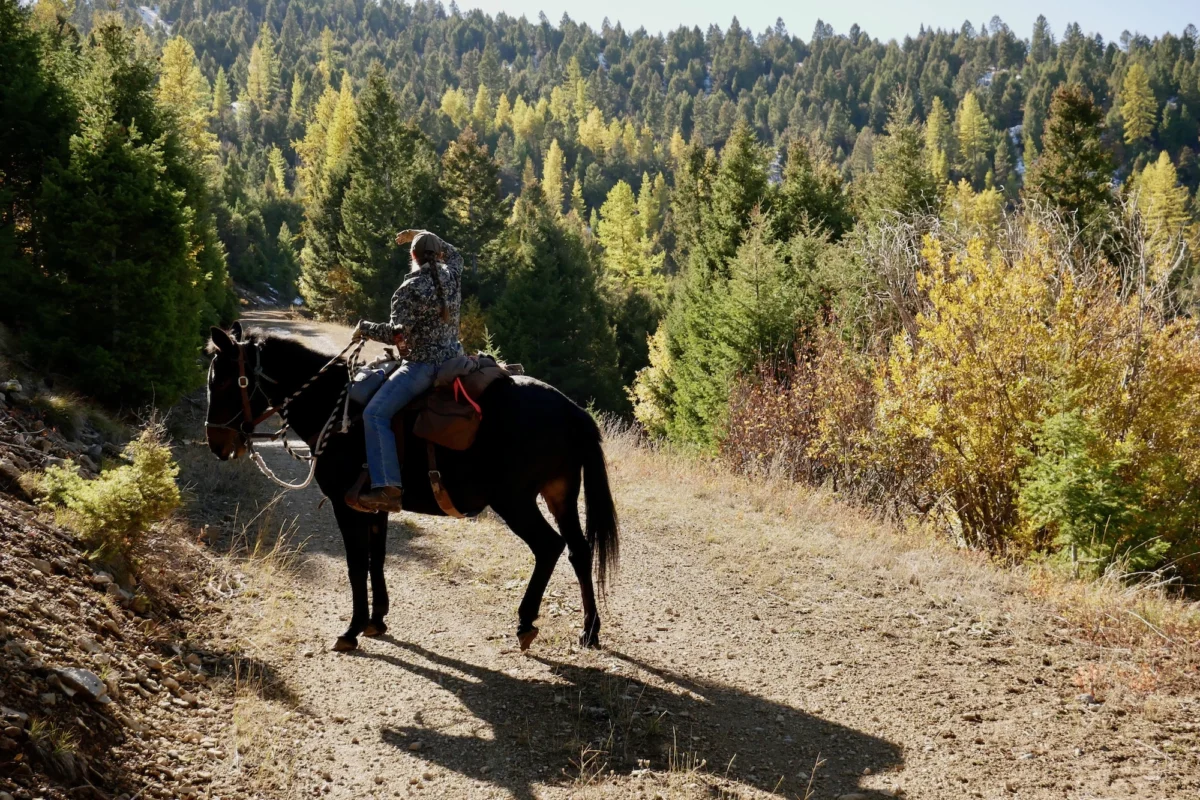
In the rugged, high-altitude ridges of Montana’s Blackfoot Valley, the silence of the wilderness is often broken only by the rhythmic thud of hooves against gravel. Here, Sigrid Olson moves with the deliberate focus of a sentry. As a range rider—a profession rooted in the 19th-century era of Western expansion—Olson acts as a vital, living buffer between the livestock that sustain the local economy and the apex predators that have recently reclaimed their ancestral territories.
As grizzly bears and gray wolves continue their steady recovery across the American West, the age-old friction between human enterprise and wild nature has intensified. In the Blackfoot Valley, however, a collaborative, science-backed approach is proving that coexistence is not just a theoretical goal, but a daily, boots-on-the-ground reality.

The Reemergence of a Lost Trade
The occupation of the range rider was once a staple of the American frontier, a necessity of open-range cattle ranching. Yet, as the West was fenced off and predators were systematically eradicated during the 20th century, the role faded into obscurity.
Today, the tide has turned. Driven by federal protections and shifting ecological awareness, apex predators are returning to their former ranges. For the modern rancher, this return presents a significant operational challenge. Enter the modern range rider: part conservationist, part livestock manager, and part wildlife tracker.

These individuals are not merely herders; they are the front line of non-lethal conflict mitigation. By maintaining a human presence on the landscape, they utilize a technique known as "hazing," which discourages predators from viewing livestock as easy prey. Between May and October, when both cattle and predators are most active, riders like Olson spend long, grueling days in the saddle, acting as a constant, vigilant presence that effectively redefines the boundaries of the human-wildlife interface.
A Chronology of Conflict and Cooperation
The evolution of land management in the Blackfoot Valley serves as a case study for the rest of the nation. For years, the Valley was a microcosm of the "us versus them" mentality that defined wildlife policy in the West.

- The Era of Expansion: In the 1800s, range riders were hired by large outfits to manage cattle movement across vast, unclaimed landscapes.
- The Period of Extirpation: Throughout the mid-20th century, as predator populations plummeted, the need for intensive range oversight diminished, leading to the near-extinction of the professional range rider.
- The Modern Resurgence: As the 21st century dawned, the resurgence of grizzly bears—aided by the Endangered Species Act—brought the reality of predation back to the ranch gate.
- The Blackfoot Challenge: Over a decade ago, the local nonprofit, the Blackfoot Challenge, recognized that individual ranchers could not fight this battle alone. They initiated a collaborative program to fund and organize a network of range riders, transforming a solitary job into a coordinated conservation strategy.
Today, the program has grown to include several riders, each assigned to specific regions of the valley. Their work is a daily ritual: checking water sources, monitoring herd health, and, most importantly, scanning for the telltale signs of grizzly or wolf activity.
Supporting Data: The Efficacy of Presence
The success of the range rider program is not merely anecdotal. Data collected by the Blackfoot Challenge and participating ranchers indicates that the presence of a rider significantly alters predator behavior.

Studies in human-wildlife conflict have consistently shown that "deterrence by presence" is one of the most effective non-lethal strategies. Because predators like grizzlies are naturally wary of humans, the regular scent and sight of a rider can push a predator toward wilder areas and away from vulnerable calves.
Furthermore, the intelligence gathered by riders is invaluable. When a rider spots a grizzly track near a herd, the information is relayed immediately to the rancher. This allows for proactive management: moving the herd to a more secure pasture, utilizing guard dogs, or deploying light-and-sound deterrents. This "informed ranching" approach minimizes the need for lethal removal of predators, which is often a source of deep local and political division.

Perspectives from the Field: The Human Element
To be a range rider requires more than equestrian skill; it demands a deep, intuitive understanding of the landscape. Olson, who works as the sole rider in her specific sector of the Blackfoot, approaches her work with a mix of reverence and caution.
"You have to have your head on a swivel," Olson explains. Her daily routine involves scanning the horizon with binoculars, identifying wildlife tracks, and carefully documenting the location of cattle. The work is physically taxing—often involving hours of solitary riding in changing weather—but it provides a level of peace of mind to the ranchers who employ her.

For the ranchers of the Blackfoot Valley, the cost of the program is an investment in stability. "Without the riders, we’re essentially blind to what’s happening in the high pastures," one local producer noted. By integrating traditional agricultural practices with contemporary ecological knowledge, these ranchers are demonstrating that the survival of the family farm and the survival of the apex predator are not mutually exclusive.
Implications for the Future of the West
The model established in the Blackfoot Valley offers a blueprint for other regions struggling with the return of large carnivores. As human development continues to push into previously wild areas, the conflict is destined to spread. The lessons learned in Montana suggest several key takeaways:

- Community-Led Solutions: The most effective programs are those developed locally, by people who understand the land and the specific challenges of their region, rather than top-down mandates.
- Investment in Labor: Conservation in practice is expensive. It requires funding for personnel, equipment, and training. Nonprofits and state agencies must prioritize the human element of conservation as much as they prioritize biological research.
- Non-Lethal Flexibility: Moving away from a reliance on lethal control requires a paradigm shift. It requires ranchers to be willing to adapt their methods and conservationists to acknowledge the economic realities of agriculture.
The work of range riders like Sigrid Olson represents a bridge between two worlds. By patrolling the fringes of the Blackfoot Valley, they are not only protecting cattle; they are helping to rewrite the narrative of the American West—a narrative where humans and predators might finally, after centuries of strife, learn to share the same space.
As the sun sets over the ridge and Olson guides her horse, Jake, toward the trailhead, the valley remains quiet. There are no conflicts to report today. The herd is safe, the predator has stayed in the shadows, and another day of successful coexistence has been notched into the history of the Blackfoot. In an era of rapid environmental change, this quiet, steady work may be the most important work of all.