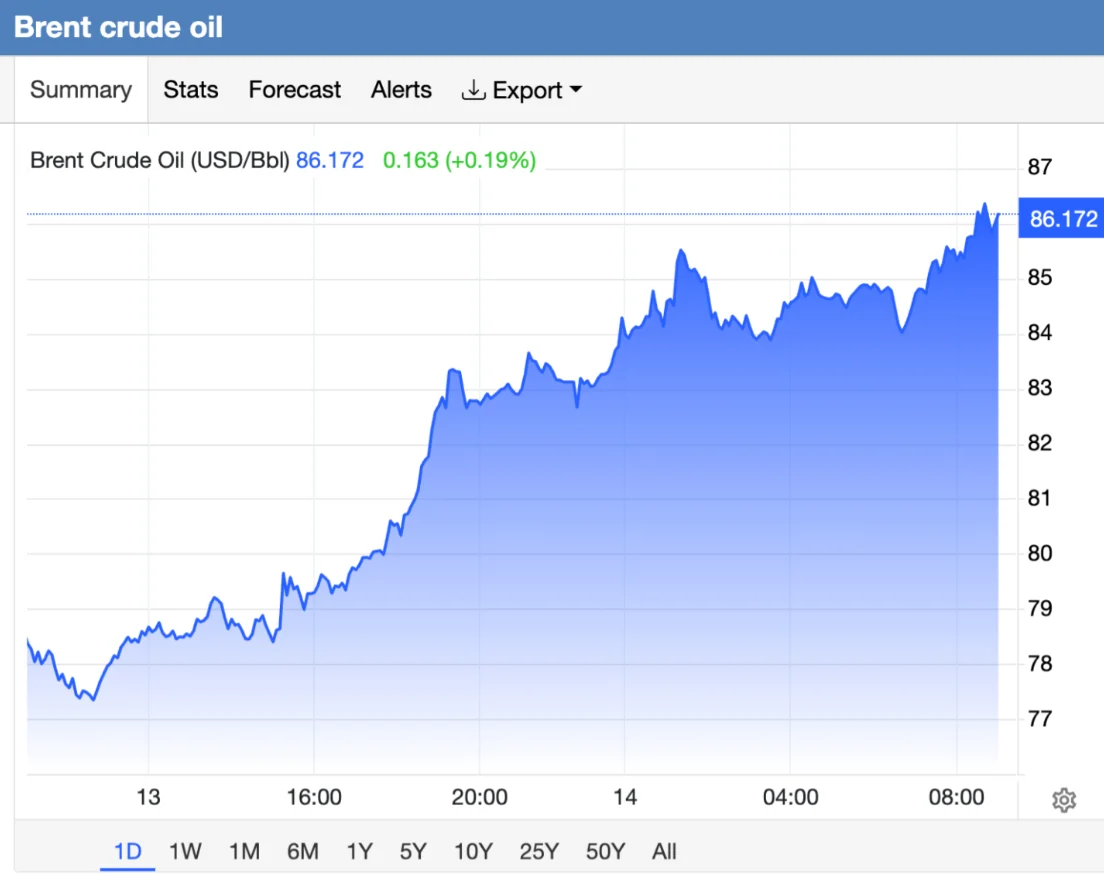
The fragile state of global geopolitical stability shattered on July 17 as Iran launched a series of targeted missile and drone strikes against power-generation and desalination infrastructure in Kuwait. This aggressive maneuver, directed at a key United States ally, represents a dangerous escalation in a confrontation that has been intensifying since early July. The incident has sent shockwaves through global energy markets, pushing Brent crude toward the $79-per-barrel mark and causing West Texas Intermediate (WTI) to mirror these gains, fueling renewed concerns regarding global inflation and market volatility.
Amidst this turmoil, Bitcoin has remained a focal point of investor attention. Trading near $63,000, the leading digital asset is currently serving as a litmus test for the "digital gold" narrative. As traders grapple with the dual pressures of soaring energy costs and the potential for a broader regional war, the question remains whether cryptocurrency can maintain its ground as a legitimate geopolitical hedge or if it will succumb to the broader "risk-off" sentiment dominating traditional finance.
A New Threshold of Conflict: The Kuwait Strikes
The events of July 17 signify a shift from maritime skirmishes to the direct targeting of critical civilian infrastructure. By striking power plants and desalination facilities, Iran has moved beyond the established theater of naval engagement, signaling a willingness to impose direct economic and humanitarian costs on neighboring states aligned with Western interests.
Kuwaiti government officials confirmed the strikes, reporting that several facilities sustained significant damage, leading to massive fires. The timing of this offensive is particularly provocative, occurring shortly after the United States conducted airstrikes on Iranian energy sites. The cycle of retaliation was further accelerated by President Donald Trump’s stern ultimatum to Tehran: unless the Islamic Republic returned to the negotiating table, critical infrastructure, including power plants and vital bridges within Iran, would remain targets for U.S. military action.
To date, Iran has categorically rejected any movement toward ceasefire talks, maintaining a hardline stance that has effectively paralyzed diplomatic efforts and ensured that the conflict remains in a state of constant, high-stakes escalation.
Chronology of a Crisis: From Skirmishes to Structural Risk
The current volatility is not an isolated event but rather the culmination of a deteriorating security environment that began in early July. To understand the gravity of the current situation, one must look at the rapid progression of hostilities:
- Early July: Initial tensions flared near the Strait of Hormuz, a global energy artery. The U.S. military engaged Iranian targets following accusations that Iranian forces had harassed and attacked commercial shipping vessels.
- Mid-July (July 12–13): Iran expanded the theater of operations by targeting U.S.-linked facilities across Bahrain, Kuwait, Qatar, and Jordan. These strikes were met with an immediate market response, as Brent and WTI crude prices surged by over 4% in a 48-hour window.
- July 17: The strikes on Kuwaiti infrastructure marked a new, dangerous threshold. By directly impacting civilian energy production, Iran demonstrated a strategy aimed at disrupting the economic stability of the Gulf region.
This timeline highlights a transition from localized, low-intensity conflict to a broad-spectrum confrontation. Analysts from major financial institutions, including ANZ and ING, have expressed concern that the window for de-escalation is closing rapidly. Their assessments suggest that the surge in oil prices is no longer a temporary reaction to headlines, but rather a reflection of "structural supply risk" that will likely define the economic landscape heading into the third and fourth quarters of the year.
The Energy Crisis: Why the Strait of Hormuz Matters
The Strait of Hormuz is not merely a geographic bottleneck; it is the jugular vein of the global energy economy. Estimates suggest that approximately 20% of the world’s total oil trade passes through this narrow passage daily. Iran’s reassertion of control over the waterway and the subsequent slowing of maritime traffic have created a supply-side bottleneck that traditional markets are ill-equipped to handle.
With the threat of closure looming, the market is pricing in a significant risk premium. As long as the Strait remains a contested zone, global energy prices will likely remain elevated, creating a feedback loop where higher costs dampen economic growth while simultaneously fueling inflationary pressures.
Bitcoin and the Safe-Haven Paradox
In the face of rising oil prices and geopolitical uncertainty, Bitcoin’s price action has been closely scrutinized. Holding near $63,000, Bitcoin has demonstrated a surprising degree of resilience compared to previous rounds of escalation, during which the asset dipped toward the $60,000–$61,000 range before recovering on hopes of a potential peace deal.
The Macro Sensitivity of Crypto
The correlation between Bitcoin and macro signals—such as the June Consumer Price Index (CPI) data—suggests that the market treats the asset as a reflection of global liquidity and inflation expectations. When inflation data cooled in June, Bitcoin rebounded, reinforcing the idea that digital assets are deeply integrated into the broader macroeconomic framework.
However, the current geopolitical shock presents a more complex challenge. Historically, geopolitical volatility triggers a "flight to quality." While the U.S. Dollar and Treasury bonds are the traditional beneficiaries of this flight, crypto proponents argue that Bitcoin’s finite supply makes it an ideal hedge against the inflationary outcomes of war. Yet, the reality of "risk-off" market cycles is that investors often liquidate speculative assets first to cover margin calls or to move into cash.
Institutional Influence and Market Beta
The emergence of institutional Bitcoin ETFs has added a layer of complexity to price discovery. These flows act as a wildcard; while they provide structural support, they also expose Bitcoin to the mandates of institutional managers who may be forced to reduce risk when global volatility spikes. Furthermore, altcoins have shown higher beta than Bitcoin, experiencing sharper pullbacks during risk-off sessions. This disparity suggests that while Bitcoin is being tested as a macro hedge, the broader crypto market remains highly sensitive to systemic liquidity constraints.
Implications: The Looming Shadow of Inflation
The convergence of energy supply shocks and ongoing geopolitical tension carries significant implications for monetary policy. If oil prices remain persistently high, the resulting inflationary pressure could force the Federal Reserve to reconsider its current trajectory regarding interest rate cuts.
A delay in rate cuts would effectively tighten global liquidity, historically a significant headwind for risk assets like cryptocurrencies and equities. Market participants are already pricing in multiple scenarios, as evidenced by the high volume of interest in both Bitcoin and altcoins like XRP, where investors are attempting to navigate both regulatory clarity and macro instability.
Official Responses and Future Outlook
While Washington continues to emphasize that its military posture is designed to protect civilian infrastructure and ensure the freedom of navigation, Tehran has remained defiant. The diplomatic vacuum left by the collapse of ceasefire talks has left the international community waiting for a potential breakthrough or a further descent into conflict.
As we move deeper into the second half of the year, the primary concern for global markets remains the sustainability of supply chains. If the damage to Kuwaiti energy plants leads to a prolonged outage, the strain on global oil reserves could trigger a more severe inflationary episode, forcing a paradigm shift in how central banks manage the balance between growth and stability.
For investors, the current environment serves as a stern reminder of the interconnectedness of modern markets. Whether Bitcoin emerges from this crisis as a hardened store of value or remains a speculative proxy for market sentiment will likely depend on the duration of the current energy shock. For now, the world remains on edge, watching the Strait of Hormuz and the crypto charts in equal measure, waiting to see which way the geopolitical winds will blow.
Disclaimer: This report provides a summary of market conditions and geopolitical events as of July 17. Investors are encouraged to conduct their own due diligence and remain cognizant of the high volatility inherent in both energy and digital asset markets during times of war.