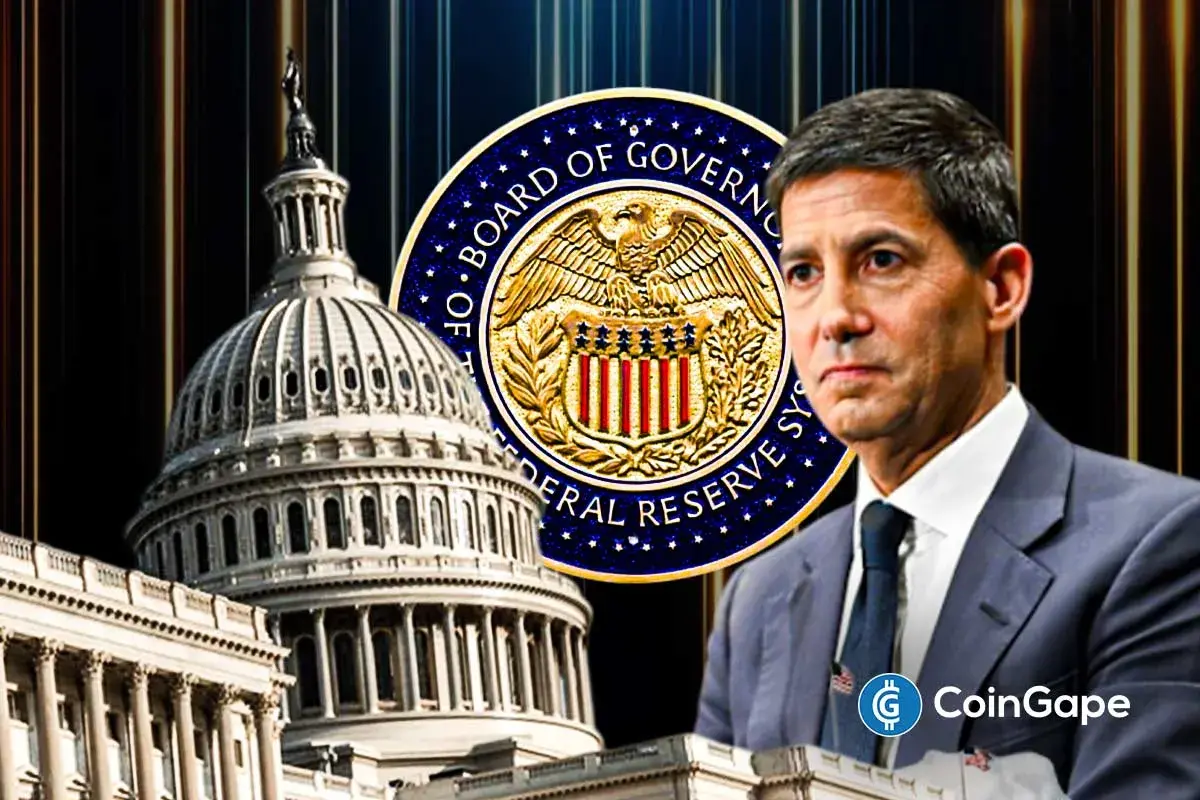
In a consequential shift for American monetary policy, the U.S. Senate has confirmed Kevin Warsh as the next Chairman of the Board of Governors of the Federal Reserve. The confirmation, secured by a 54-45 vote, marks a pivotal transition at the helm of the world’s most influential central bank, as Warsh prepares to succeed Jerome Powell. This development comes on the heels of his confirmation as a Fed governor just one day prior, setting the stage for a dramatic restructuring of U.S. economic oversight at a time of high inflation and geopolitical instability.
Chronology: A Rapid Transition to New Leadership
The process of installing Kevin Warsh as the successor to Jerome Powell was accelerated to ensure a seamless transition of power.
- The Lead-Up: Following weeks of speculation regarding the future of the Fed’s leadership, Warsh emerged as the administration’s primary candidate, noted for his pragmatic, pro-crypto, and market-oriented philosophy.
- Day One (Governor Confirmation): On the penultimate day of the confirmation process, the Senate successfully voted to seat Warsh on the Board of Governors, a constitutional requirement that effectively cleared the path for his elevation to the chairmanship.
- Day Two (Chair Confirmation): The Senate voted 54-45 to confirm Warsh as the Chair of the Board of Governors for a four-year term.
- The Handover: Jerome Powell’s term as Chair is set to conclude on Friday, May 15. In a highly irregular move, Powell has announced his intention to remain on the Board of Governors as a rank-and-file member, breaking with the long-standing tradition of outgoing chairs resigning their board seats entirely.
The Mandate Debate: A Shift Toward Inflation Targeting
While the leadership transition dominates headlines, the legislative landscape surrounding the Federal Reserve is undergoing an even more profound change. The U.S. House of Representatives is currently moving to dismantle the Federal Reserve’s long-standing "dual mandate."
The Move to Scrap the Dual Mandate
The House Financial Services Committee has begun marking up legislation that would force the Federal Reserve to focus exclusively on price stability, stripping away the requirement to manage the labor market. Historically, the Fed has been tasked with a dual mandate: keeping inflation low and maximizing employment.
If this legislation passes, it would fundamentally alter the Fed’s reaction function. Under the current regime, the Fed has previously lowered interest rates to support a weakening labor market. Under a single mandate focused strictly on inflation, the Fed would be legally obligated to ignore employment data, potentially adopting a more "hawkish" stance regardless of the health of the broader job market.
Economic Implications for Crypto and Markets
The shift toward an inflation-only mandate is viewed by many market analysts as bearish for high-risk assets, including cryptocurrencies. Because cryptocurrencies thrive in environments of loose monetary policy and "cheap money," a Fed that is legally barred from stimulating the economy during labor downturns could stifle market growth.
Furthermore, the recent uptick in the U.S. Producer Price Index (PPI)—which rose to 6% in April, the highest level since January 2026—suggests that inflationary pressures remain stubborn. With the Fed already signaling that rates may remain steady for the remainder of the year, the market is bracing for a prolonged period of high borrowing costs.
Independence Under Pressure: The Warsh Doctrine
Kevin Warsh inherits a Federal Reserve that is currently the subject of intense political scrutiny. The independence of the central bank—a cornerstone of modern American financial stability—is being tested on multiple fronts.
The Conflict with the Executive Branch
The relationship between the White House and the Federal Reserve has soured significantly under the current administration. President Donald Trump has been vocal in his demands for lower interest rates, frequently pressuring the Fed to stimulate the economy to boost growth.
Jerome Powell recently leveled serious allegations against the administration, suggesting that the White House initiated a criminal investigation into his activities specifically because he refused to lower rates in alignment with the President’s political preferences. This climate of hostility has extended to other members of the Board, most notably Lisa Cook. The administration is currently embroiled in legal battles attempting to remove Governor Cook over allegations of mortgage fraud—a move widely interpreted by institutional observers as a politically motivated attempt to clear the board for more pliable appointees.
Warsh’s Pledge of Autonomy
In his confirmation hearings and subsequent statements, Kevin Warsh has sought to distance himself from the narrative of a subservient central bank. Warsh has vowed to protect the Fed’s institutional independence, famously declaring that he will not act as the President’s "sock puppet." Whether he can maintain this distance while navigating a highly polarized political environment remains the primary question for investors and economists alike.
Supporting Data: The Current Economic Landscape
The economic environment facing the new Chair is arguably more complex than that faced by his predecessors in the post-2008 era.
- Inflationary Pressures: The 6% PPI reading in April has spooked bond markets and raised concerns that the "transitory" inflation narrative is effectively dead.
- Energy Volatility: The ongoing conflict between the U.S. and Iran has placed significant upward pressure on energy prices. Because energy is a core component of production and transportation costs, higher oil prices serve as a multiplier for overall inflation, potentially forcing the Fed into an aggressive rate-hike cycle.
- The Labor Market Paradox: While the House seeks to remove the dual mandate, the labor market remains in a state of flux. The Fed has warned that if inflation continues to manifest in wages and service prices, they may be forced to hike rates further, even if the labor market begins to show signs of contraction.
Institutional Implications: What Lies Ahead?
The confirmation of Kevin Warsh signals a potential paradigm shift in how the Federal Reserve communicates with the public and interacts with global markets.
A Pro-Crypto Perspective?
Warsh’s reputation as a "pro-crypto" figure is a significant point of interest for the digital asset industry. Unlike many traditional central bankers who have viewed Bitcoin and decentralized finance (DeFi) with skepticism or hostility, Warsh has displayed a nuanced understanding of blockchain technology’s role in modern finance. While he is unlikely to pivot the Fed toward holding crypto assets, his presence suggests a more open-minded regulatory environment for fintech innovation compared to the rigid oversight seen under previous chairs.
The Powell Factor
The decision by Jerome Powell to remain on the Board of Governors introduces an unprecedented dynamic. Typically, a former Chair’s presence on the board could be seen as a "shadow" influence or, conversely, a source of internal friction. How Warsh manages this relationship will determine the unity of the Board during a time when clear, singular communication is vital to stabilizing the markets.
Conclusion: The Road Ahead
Kevin Warsh assumes the chairmanship at a time of extreme volatility. With the U.S. House of Representatives actively seeking to restrict the Fed’s toolkit, the administration exerting pressure to lower rates, and inflation remaining at multi-year highs, the new Chair has little room for error.
If the legislative efforts to scrap the dual mandate succeed, the Federal Reserve will face a rigid new reality where the human cost of economic policy—employment levels—is no longer a consideration. For investors, the takeaway is clear: the era of "easy money" is fading, and the new Fed Chair will be operating under a microscope of intense political and economic scrutiny. As the markets digest the news of Warsh’s confirmation, the focus now turns to his first press conference as Chair, where the world will be looking for a definitive stance on inflation, interest rates, and the preservation of the Fed’s hard-won independence.