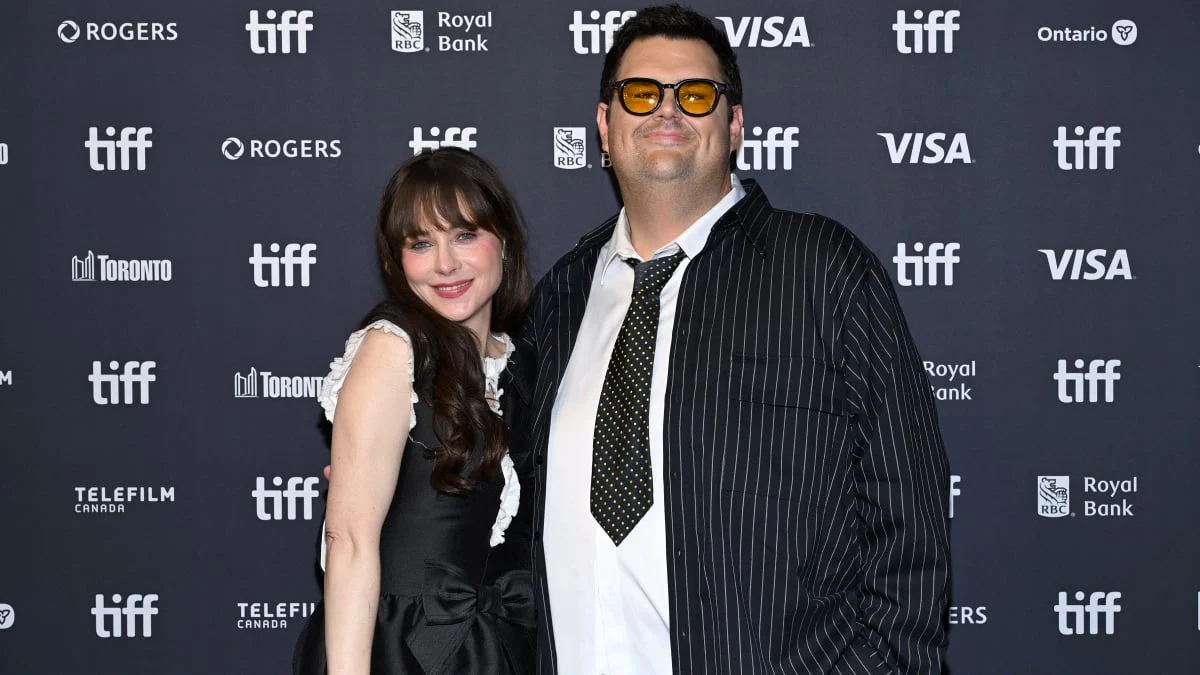
The Toronto International Film Festival (TIFF) has long been a barometer for the future of cinema, but this year, the focus shifted from traditional prestige dramas to the evolving ecosystem of digital-native talent. During a highly anticipated panel titled “For You Feed to Feature Film,” attendees were treated to a candid exploration of the modern entertainment landscape, featuring comedian and writer Caleb Hearon alongside veteran actor Zooey Deschanel.
Moderated by Jenny Kim, TikTok’s Global Entertainment Partnerships Lead, the discussion peeled back the curtain on the challenges—and immense opportunities—facing creators attempting to bridge the gap between ephemeral social media content and the enduring medium of feature-length film.
The Convergence of Platforms: A New Creative Paradigm
The central thesis of the panel was the blurring of lines between “internet famous” and “industry professional.” Hearon and Deschanel, who co-star in the buzzy new film Trash Mountain—a project Hearon penned alongside Ruby Caster—represent two different generational approaches to the same goal: creative autonomy.
For the modern creator, the "For You" page is no longer just a hobbyist’s playground; it is a launchpad. However, the panel highlighted that the transition from a 60-second vertical video to a 90-minute narrative feature requires a profound shift in mindset, production logistics, and risk management.
Chronology: The Evolution of the Digital Creator
To understand the weight of the advice shared at TIFF, one must look at the trajectory of the digital creator economy over the last decade.
- The Early 2010s: Digital creators were largely viewed as outliers. Traditional Hollywood studios operated behind iron gates, and the path to acting or writing was strictly defined by agents, casting directors, and auditions.
- The Mid-2010s: The "vlogger" era established that individuals could command massive, loyal audiences without studio backing. However, the stigma of being a "YouTuber" or "Influencer" remained a significant barrier to serious theatrical work.
- The 2020s: The pandemic-era explosion of short-form content on platforms like TikTok democratized the distribution of talent. Studios, desperate for built-in audiences and authentic voices, began actively scouting talent directly from the "For You" feed.
- TIFF 2024: The panel signifies the current normalization of this path. The discussion moved past "how to get discovered" and into "how to maintain integrity while navigating the machine."
The Myth of Permission: Deschanel’s Call to Action
Zooey Deschanel’s contribution to the panel was grounded in her extensive experience navigating both the music and film industries. She addressed the systemic tendency for gatekeepers to pigeonhole performers.
"I remember being told, very early on, that I couldn’t be a serious musician because I had already established myself as an actor," Deschanel noted during the session. "The industry loves a box. They want to know exactly what you are so they can market you efficiently. But that is the death of creativity."
Deschanel’s advice to the room was stark: stop waiting for an invitation. She argued that the digital age has rendered the "permission-based" model of Hollywood obsolete. "How about you just be the person that does it first?" she challenged. Her perspective serves as a rallying cry for artists who feel stifled by the industry’s rigid categorizations. In her view, the most successful creators are those who possess the audacity to act before the industry deems them "qualified."
The Cost of Autonomy: Caleb Hearon’s Candid Financial Reality
If Deschanel provided the philosophical framework, Caleb Hearon provided the cold, hard economic reality of the creator-to-film pipeline. Hearon, whose work on Trash Mountain has earned critical praise for its sharp, distinct voice, did not sugarcoat the financial precarity of the current era.
"Let’s be honest about the money," Hearon stated. Despite starring in four major film projects in the last year alone, Hearon was candid about the fact that his primary income remains his podcast and independent digital ventures. "Most of my bills get paid by reading ads on my gay little podcast, not from acting," he admitted.
This revelation underscores a critical tension in modern entertainment: studios are increasingly eager to capture the cultural cachet of digital creators, yet they often lack the infrastructure to provide the financial stability those creators require to survive. The "DIY" nature of the industry is a double-edged sword; while it empowers creators to make their own work, it also forces them to absorb the financial risks that, in previous decades, would have been mitigated by studio support.
Strategic Resistance: Learning to Say "No"
A recurring theme in Hearon’s advice was the necessity of setting boundaries. In an industry that thrives on the exploitation of talent’s perceived "hunger," Hearon emphasized the strategic value of rejecting bad deals.
"Get comfortable saying no very early," Hearon advised. "Don’t let companies or institutions push you into things just because you’re convinced it’s the only way to get ahead."
He argued that the leverage for creators lies in their ability to retain ownership of their voice. Institutions will often attempt to sand down the edges of a creator’s unique style to make it more palatable for a mass audience. Hearon’s message was clear: if the cost of the "big break" is the dilution of your artistic vision, the price is too high. "Learn how to say no early and make your fucking thing," he concluded, a sentiment that resonated deeply with the aspiring filmmakers in the audience.
Implications for the Future of Filmmaking
The TIFF panel highlights a broader shift in the film industry. We are witnessing the end of the traditional "discovery" era and the beginning of the "platform-agnostic" era.
- Audience Retention: Studios are no longer just looking for talent; they are looking for audiences. A creator with a million followers on TikTok represents a de-risked asset in a volatile theatrical market.
- The Shift in Power: As Hearon pointed out, creators now have more leverage than ever. However, this power must be wielded with caution. The ability to "make your own thing" means that the burden of production, marketing, and distribution often falls on the creator.
- The Professionalization of "Internet Content": We are seeing a new class of auteur who understands both the algorithm and the narrative arc. This hybrid skill set is becoming the gold standard for independent cinema.
Looking Ahead: The Trash Mountain Precedent
As Mashable’s entertainment editor Kristy Puchko, who is covering the festival, has noted, projects like Trash Mountain are proof-of-concept. They demonstrate that when digital creators are given the space to work—and the agency to say no to institutional interference—the results can be both critically acclaimed and culturally relevant.
The path from a viral post to a red carpet at TIFF is fraught with obstacles, from financial instability to the constant pressure to conform to corporate expectations. Yet, the consensus from the panel is that the rewards—true creative freedom—are worth the struggle.
For the aspiring creators looking to follow in Hearon and Deschanel’s footsteps, the takeaway is simple but demanding: produce your work with relentless consistency, protect your creative boundaries with "no’s," and never wait for the industry to grant you the authority to be the artist you already are.
As the Toronto International Film Festival continues to unfold, the industry will undoubtedly be watching the Trash Mountain team closely. They are not just promoting a film; they are defining the blueprint for the next generation of cinema. Whether the major studios will catch up to this reality or continue to rely on the outdated models of the past remains the million-dollar question. For now, the creators have the floor, and they are using it to rewrite the rules.