In a strategic shift that signals its most aggressive push into the high-stakes world of frontier artificial intelligence, Meta’s Superintelligence Lab unveiled two new state-of-the-art models on Monday: Muse Wonder and Muse Wonder Full. This launch represents a significant departure from the company’s recent focus on lightweight, low-latency tools, marking Meta’s formal entry into the elite tier of generative AI.
The release is more than a mere iterative update; it is a declaration of intent. By launching models that aim to compete directly with industry stalwarts like OpenAI’s GPT-6 Astra and Fable’s 5.1, Meta is attempting to pivot the conversation from social media infrastructure to the development of "personal superintelligence"—a vision where AI acts not just as a chatbot, but as an enduring, high-functioning digital extension of the user.
The Core Facts: What Are Muse Wonder and Wonder Full?
The new models are designed to handle complex, multi-layered reasoning tasks that previous, smaller iterations of the Muse family struggled to navigate. While the earlier Muse Spark was optimized for speed and efficiency, the Wonder series is built for power.
- Muse Wonder: A highly capable, API-accessible model designed for general-purpose, high-complexity tasks, including advanced software engineering and data synthesis.
- Muse Wonder Full: The more robust "pro" version of the architecture. Unlike its sibling, it will not be available through standard API calls. Instead, it is gated exclusively for subscribers of the Muse Code platform, positioning it as a premium tool for developers and power users.
Both models will serve as the engine for the broader Muse Agent ecosystem, effectively upgrading the "brain" behind Meta’s primary AI assistant.
Pricing and Accessibility
Meta has structured its pricing to reflect the models’ competitive standing. Access to the Wonder model via the Meta Model API is priced at $4 per million input tokens and $20 per million output tokens. Industry analysts note that this places the model in direct parity with premium offerings like GPT-6 Sol and Opus 5.5, suggesting that Meta is confident enough in its performance benchmarks to command top-tier pricing.
A Chronology of Meta’s AI Pivot
To understand the weight of this announcement, one must look at the recent history of Meta’s AI division, which has undergone a tumultuous but transformative period.
- August 2025: Under the direction of CEO Mark Zuckerberg, Meta initiated a significant restructuring of its AI efforts. This was spearheaded by the recruitment of Scale AI founder Alexandr Wang, who was brought in to overhaul the company’s approach to model training and deployment.
- Late 2025 – Early 2026: Following the reorganization, Meta shifted its focus away from competing with the "frontier" giants like OpenAI and Anthropic. Instead, the company spent months releasing lightweight models like Muse Spark and iterating on the Muse Agent. Critics at the time viewed this as a retreat, but insiders now describe it as a period of foundational preparation.
- Mid-2026: The Prometheus data center in central Ohio, described as one of the world’s highest-capacity facilities, officially came online. This facility served as the primary training ground for the Wonder models.
- Monday’s Launch: Meta ends its hiatus from the frontier race, signaling that its internal infrastructure is now robust enough to support models that rival the industry’s most powerful tools.
Technical Benchmarks and "Active Memory"
The defining differentiator for the Wonder models is what Meta calls "active memory." In the current landscape of Large Language Models (LLMs), most agents operate with a "short-term" focus—once a chat session ends or a context window is exceeded, the model effectively resets.
Meta aims to break this cycle. The Wonder models are designed to retain and synthesize information provided by the user over days, weeks, and even months. This persistent awareness is intended to transform the Muse Agent from a generic assistant into a personalized one that understands a user’s long-term project history, preferences, and recurring challenges.
The MemoryBench Benchmark
To substantiate these claims, Meta introduced the MemoryBench benchmark. This test is designed to stress-test an AI’s ability to handle continual learning and long-term memory construction—tasks that traditional benchmarks like MMLU or HumanEval often fail to capture.
According to Meta’s internal testing, Muse Wonder currently outperforms competitors, including Fable, Opus, and Astra, in MemoryBench scores. While these figures are proprietary, they provide a strong signal of where Meta is focusing its R&D: the "stickiness" of the user experience.
Official Perspectives: The Path to Superintelligence
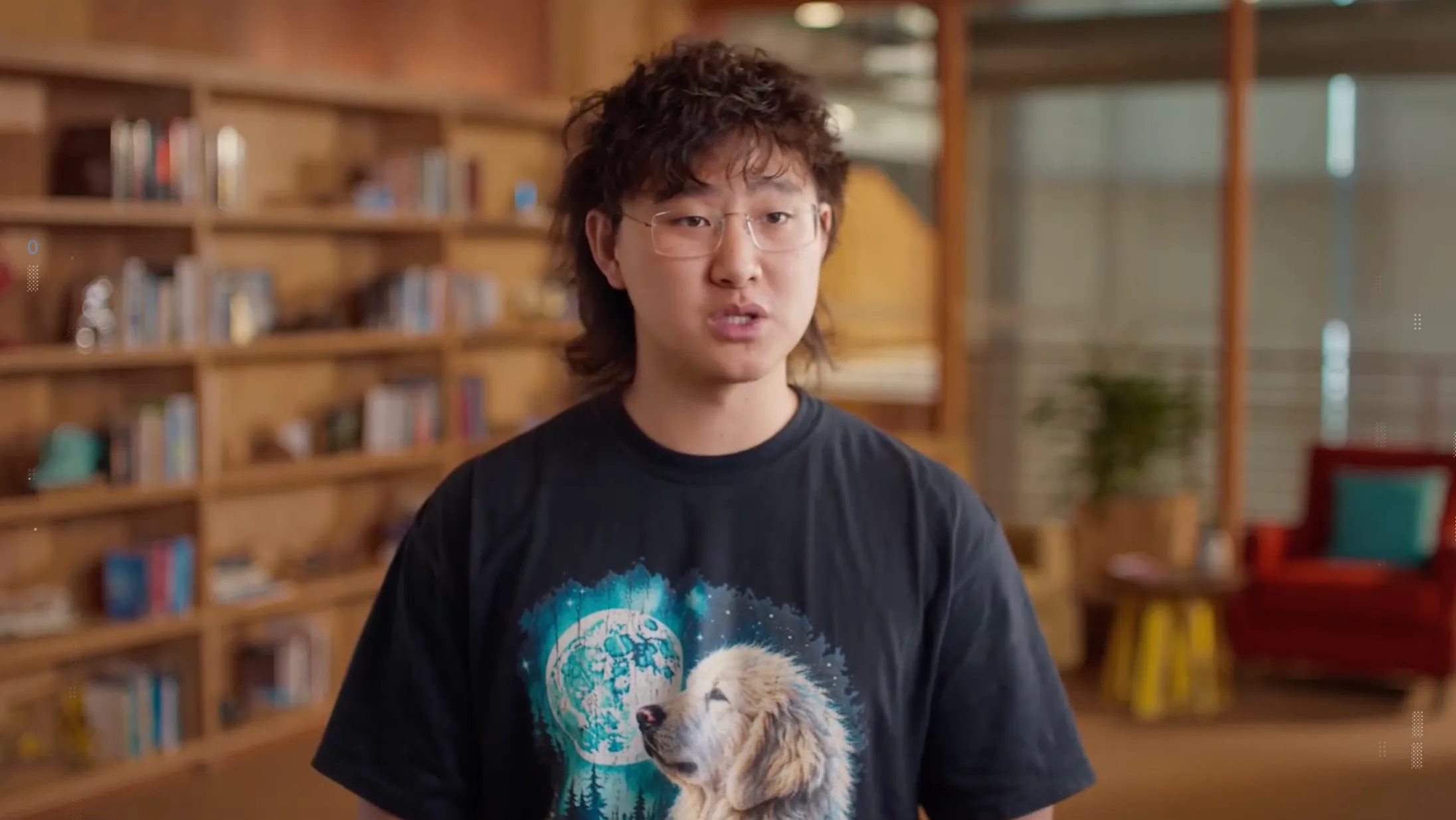
The vision articulated by Meta’s leadership is one of long-term utility. In a video accompanying the launch, research scientist Kavya Kopparapu emphasized the human-centric nature of the new architecture.
"We put a tremendous amount of effort into making sure your model can remember what’s important to you over days, weeks, months, and beyond," Kopparapu noted. This statement aligns with Meta’s broader corporate rhetoric, which describes these models as the "next step on our scaling ladder" and a "major leap toward personal superintelligence."
The emphasis is clear: Meta is no longer interested in being the best at solving a single, isolated math problem. They are interested in being the best at being a long-term digital companion.
Implications for the AI Landscape
The release of Wonder and Wonder Full has immediate, far-reaching implications for the artificial intelligence industry.
1. The End of the "Lightweight" Era
For the past year, Meta’s strategy appeared to be "efficiency first." By launching the Wonder series, Meta has confirmed that it has reached a level of computational maturity—likely thanks to the Prometheus data center—that allows it to sustain the high costs and energy requirements of frontier-level compute. This shifts the competitive landscape, as Meta now has a seat at the table with the likes of OpenAI, Google, and Anthropic.
2. The Subscription Economy
By gating the most powerful model (Wonder Full) behind a subscription service (Muse Code), Meta is clearly delineating its business model. This creates a tiered system: developers and casual users get the capable, API-driven Wonder, while professional power users are pushed into the premium subscription ecosystem. This is a classic "pro-sumer" strategy, similar to how Adobe or Microsoft structure their high-end software suites.
3. The Memory War
"Memory" is the next frontier of AI competition. If Meta can successfully prove that its models are better at remembering user context than GPT-6 or Claude (Opus), it could trigger a mass migration of power users. The ability to offload complex, multi-day project management to an AI that doesn’t "forget" the initial parameters is a massive value proposition for enterprise and creative workers.
4. Competitive Pressure on OpenAI and Anthropic
The fact that Wonder matches the performance of GPT-6 Astra is a significant blow to the "first-mover advantage" traditionally enjoyed by OpenAI. If Meta can achieve comparable results while leveraging its massive social media and hardware infrastructure, the barrier to entry for AI becomes even steeper for smaller startups, potentially consolidating the market into a "Big Four" of AI (Meta, OpenAI, Google, Anthropic).
Looking Ahead
As the industry digests this release, the focus will shift to real-world performance. Benchmarks, while useful, are often limited by the specific datasets used to create them. The true test of Muse Wonder will be its performance in the wild: how it handles edge cases, its reliability over extended timeframes, and whether the "active memory" feature creates genuine value or merely adds complexity.
For Meta, the Wonder launch is a high-stakes gamble. By committing to the frontier of model development, they are inviting deeper scrutiny from regulators, competitors, and the public. However, if the promise of "personal superintelligence" holds true, this week may be remembered as the moment when the digital assistant finally graduated from a search-engine-on-steroids to a true, persistent collaborator.
The arrival of the Prometheus-trained models proves one thing: Meta is back in the race, and it is playing for keeps.