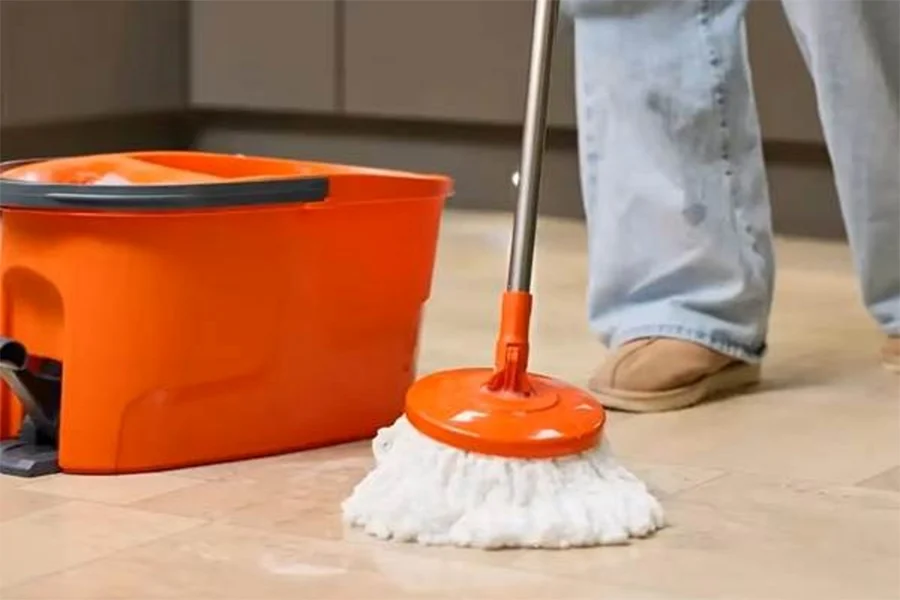
For four decades, the Huddersfield-based cleaning powerhouse Eco 360 Group has been a quiet titan of the British household goods industry. Best known for its flagship "Eco Bag" recycled bin liner range, the family-run enterprise has spent generations refining its manufacturing prowess and supply chain logistics. However, as the UK cleaning products market continues to evolve—now valued at a staggering £10.69 billion as of 2024—the company has set its sights on a new horizon.
With the launch and rapid expansion of its MACROMAX range of mops, buckets, and scourers, Eco 360 is demonstrating that legacy manufacturing expertise, when paired with modern digital agility, can disrupt even the most competitive sectors. By embracing the burgeoning e-commerce landscape through Temu’s Local Seller Program, the company has achieved what many brands take years to accomplish: significant market penetration in a matter of weeks.
The Evolution of a Manufacturing Legacy
The story of Eco 360 is one of resilience and reinvention. The business traces its roots back to the early 1990s, when the father of current Managing Director Paolo Margaglione took over a struggling entity and transformed it into a robust manufacturing operation based in Turkey. This pivot laid the foundation for the company’s current operational philosophy: full vertical integration.
Unlike many competitors who rely on third-party sourcing, Eco 360 maintains complete control over its manufacturing process. By producing all product moulds in-house, the company retains the ability to pivot designs, improve structural integrity, and optimize turnaround times at a pace that external contractors simply cannot match. This technical autonomy proved vital earlier this year when Margaglione decided to overhaul the MACROMAX line. By meticulously analyzing consumer feedback, the company redesigned everything from handle attachments to bucket ergonomics, effectively relaunching the brand with a product set that directly addressed common user pain points.
Today, the company operates a lean, high-efficiency structure: a 21-person team oversees the complex interplay of online operations in Huddersfield and distribution logistics in Preston. This infrastructure supports a diverse client base, ranging from high-street stalwarts like Robert Dyas and Morrisons to a growing direct-to-consumer digital audience.
Chronology: A Sprint to Market
The recent success of MACROMAX serves as a case study in strategic timing and digital adoption.
- 1990s: The foundation of the current manufacturing model is established, transitioning from a struggling venture to a streamlined production operation.
- 2024: The UK cleaning products market hits a valuation of £10.69 billion. Industry analysts forecast a consistent annual growth rate of 4.7%, driven by a significant migration of consumer shopping habits from brick-and-mortar stores to online marketplaces.
- Late December 2025: Eco 360 officially joins Temu’s Local Seller Program. Seeking to build visibility for MACROMAX without the luxury of a decades-long retail presence in the mop-and-bucket sector, Margaglione prioritizes rapid online listing.
- January – February 2026: Within eight weeks of the initial launch on the platform, the MACROMAX range surpasses 3,000 unit sales—a testament to the efficacy of the platform’s reach.
- First Half of 2026: Temu intensifies its engagement with the European business community, holding over 100 meetings with trade associations and chambers of commerce to identify and solve the logistical hurdles facing small-to-medium enterprises (SMEs).
Supporting Data: Navigating the Competitive Landscape
The cleaning products sector is notoriously saturated. With established household names and low-cost imports vying for shelf space, the margin for error is razor-thin. For Eco 360, the decision to leverage digital marketplaces was not merely a matter of convenience; it was a survival strategy.
Market data suggests that while the industry is growing at 4.7% annually, the nature of that growth is shifting. The intense competition is forcing a digital transformation. For Paolo Margaglione, the challenge was clear: how does a brand establish "household name" status in the digital age?
The metrics from the Temu Local Seller Program highlight the success of this strategy. The program, which allows domestic businesses to sell and fulfill orders locally, effectively removes the "delivery anxiety" that often deters online shoppers. By maintaining existing distribution systems in Preston while tapping into Temu’s traffic, Eco 360 achieved scalability without the need for additional capital expenditure or new infrastructure.
Official Perspectives: The Strategy Behind the Sale
"There’s real growth potential in Temu," says Paolo Margaglione. "We wanted to establish ourselves early. We see Temu as an alternative selling channel for a totally different audience from other platforms. It brings new revenue and brand exposure."
Margaglione’s philosophy is rooted in problem-solving. "We pride ourselves on producing quality products," he notes. "We want to find solutions for the consumer." By leveraging his company’s ability to iterate on product design based on real-time feedback, he has effectively bridged the gap between a traditional manufacturer and a modern e-commerce brand.
For its part, the marketplace provider has been keen to emphasize its commitment to the UK SME sector. Through the Local Seller Program, which currently operates in over 30 markets, the platform has sought to alleviate the friction points identified during their 2026 tour of European trade associations. By ensuring that local sellers can fulfill orders domestically, the platform not only reduces delivery times but also strengthens the ecosystem for companies like Eco 360 that rely on local warehousing.
Implications for the Future of British Retail
The trajectory of Eco 360 offers several implications for British businesses operating in the post-pandemic retail environment.
1. The Power of Vertical Integration
Eco 360’s ability to manufacture its own moulds remains its "secret sauce." In an era of global supply chain volatility, the ability to control the production line allows a company to react to customer feedback in real-time. Brands that rely solely on dropshipping or external manufacturing often lack the agility to iterate on product design, leaving them vulnerable to more nimble competitors.
2. The Multi-Channel Mandate
The success of MACROMAX proves that a diversified approach is essential. By maintaining traditional relationships with retailers like Morrisons while simultaneously pursuing high-growth digital channels, Eco 360 has insulated itself against the decline of the high street. The company’s success shows that digital marketplaces are not just for discount goods; they are viable conduits for established British manufacturers to reach new demographics.
3. Ambition Beyond Borders
The roadmap for 2030 is clear: Eco 360 aims to turn MACROMAX into a household name, mirroring the success of the Eco Bag line. However, the company is not stopping at the English Channel. Margaglione intends to use the UK as a testing ground for product quality and consumer demand before scaling into Europe. Germany, with its robust demand for durable, high-quality household goods, is already identified as the next key market.
Conclusion: A Blueprint for Scaling
As Eco 360 continues its expansion, it serves as a beacon for other family-run British firms. The transition from a legacy manufacturing operation to a tech-enabled, multi-channel retailer is rarely seamless, but the Huddersfield firm has shown that the combination of "hard" manufacturing skills—mould design, distribution logistics, and quality control—and "soft" digital strategy is a potent combination.
By prioritizing rapid adoption of new digital tools and maintaining a focus on the customer’s needs, Eco 360 is not just cleaning up the competition; it is setting the standard for how the next generation of British household brands will be built. With four decades of experience behind them and a clear path toward 2030, the company is well-positioned to ensure that MACROMAX becomes as ubiquitous in the British utility cupboard as the bin liners that started it all.