The modern world is paved with rubber. Every year, a staggering one billion tires reach the end of their functional lives, leaving a monumental footprint on our global landscape. For decades, these discarded tires—frequently referred to as "black gold" by those in the recycling industry—have presented a dual challenge: they are a significant environmental burden and a persistent public health hazard. From the risk of uncontrolled fires to serving as breeding grounds for disease-carrying mosquitoes, the improper disposal of tires is a systemic issue that demands innovative solutions.
While scientists have yet to develop a scalable method to turn an old tire back into a brand-new one, a burgeoning circular economy is proving that "end-of-life" is merely a misnomer. Through a combination of stringent government legislation and high-tech material processing, tires are being diverted from landfills and reincarnated into essential products—ranging from high-performance hockey rinks and fitness flooring to specialized equestrian mats that enhance animal welfare.
The Regulatory Framework: Driving Accountability through IPR
The transition from waste to resource is not accidental; it is driven by rigorous policy. Jurisdictions globally are moving away from passive waste management toward active producer responsibility. Nowhere is this more evident than in Ontario, Canada, which has implemented one of the most stringent Individual Producer Responsibility (IPR) models in the world.
Unlike Extended Producer Responsibility (EPR) programs, which often rely on collective industry stewardship, IPR mandates that individual producers are directly accountable for the tires they introduce into the market. Under this system, manufacturers must ensure their products are recovered and recycled based on total weight. This creates a transparent, auditable trail that spans the entire lifecycle of the tire—from the moment it leaves the dealership until it is transformed into a secondary material.

To navigate these complex requirements, the not-for-profit organization eTracks was established. Acting as the connective tissue between producers, collection sites, and processors, eTracks manages a massive logistics network. With over 5,500 collection points—including auto dealerships and independent repair shops—spread across a territory 1.5 times the size of Texas, the organization utilizes its sophisticated eSRP (e-Sustainability Recovery Platform) to trace approximately 13 million tires annually. This digital ledger ensures that every tire collected is accounted for, eliminating the "leakage" that often occurs in less regulated markets.
Chronology: The Journey of a Tire
The lifecycle of a tire, once it reaches its "retirement," is a feat of modern industrial engineering. The process is a disciplined sequence of collection, separation, and transformation.
- Collection and Verification: Tires are gathered at retail and automotive sites. Through the eSRP system, the tires are logged and tracked, ensuring they are destined for certified processing facilities rather than illicit dumping grounds.
- Deconstruction: Upon arrival at a facility like Evolve Recycling in Brantford, Ontario—a premier processor and key partner of Northwest Rubber—the tire is stripped of its three primary components: steel, fiber, and rubber.
- Refining: The raw rubber is fed into industrial-grade grinders. As the material is crushed, a sophisticated array of high-powered magnets and air-suction systems work in tandem to pull out any residual steel wire and textile debris.
- Granulation: The resulting clean rubber is processed through secondary grinders, emerging as uniform pellets known as "crumb rubber." These pellets serve as the fundamental raw material for a new generation of rubber-based products.
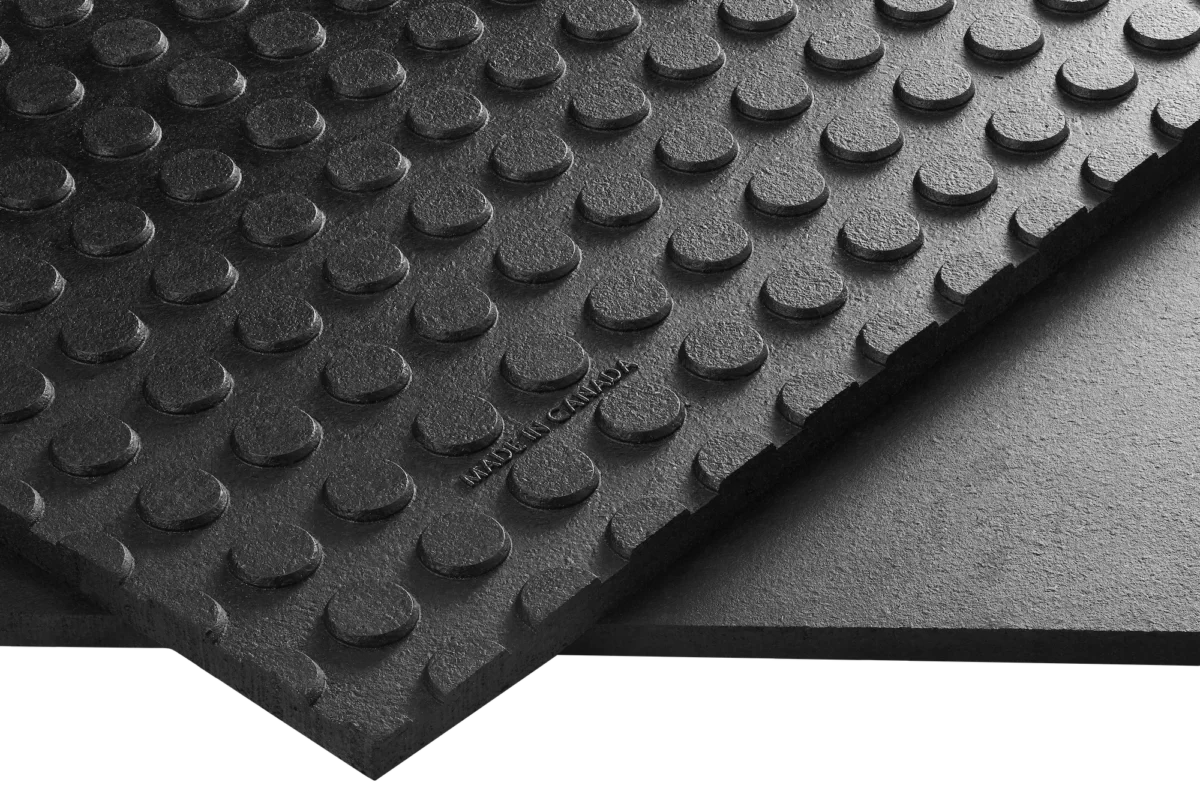
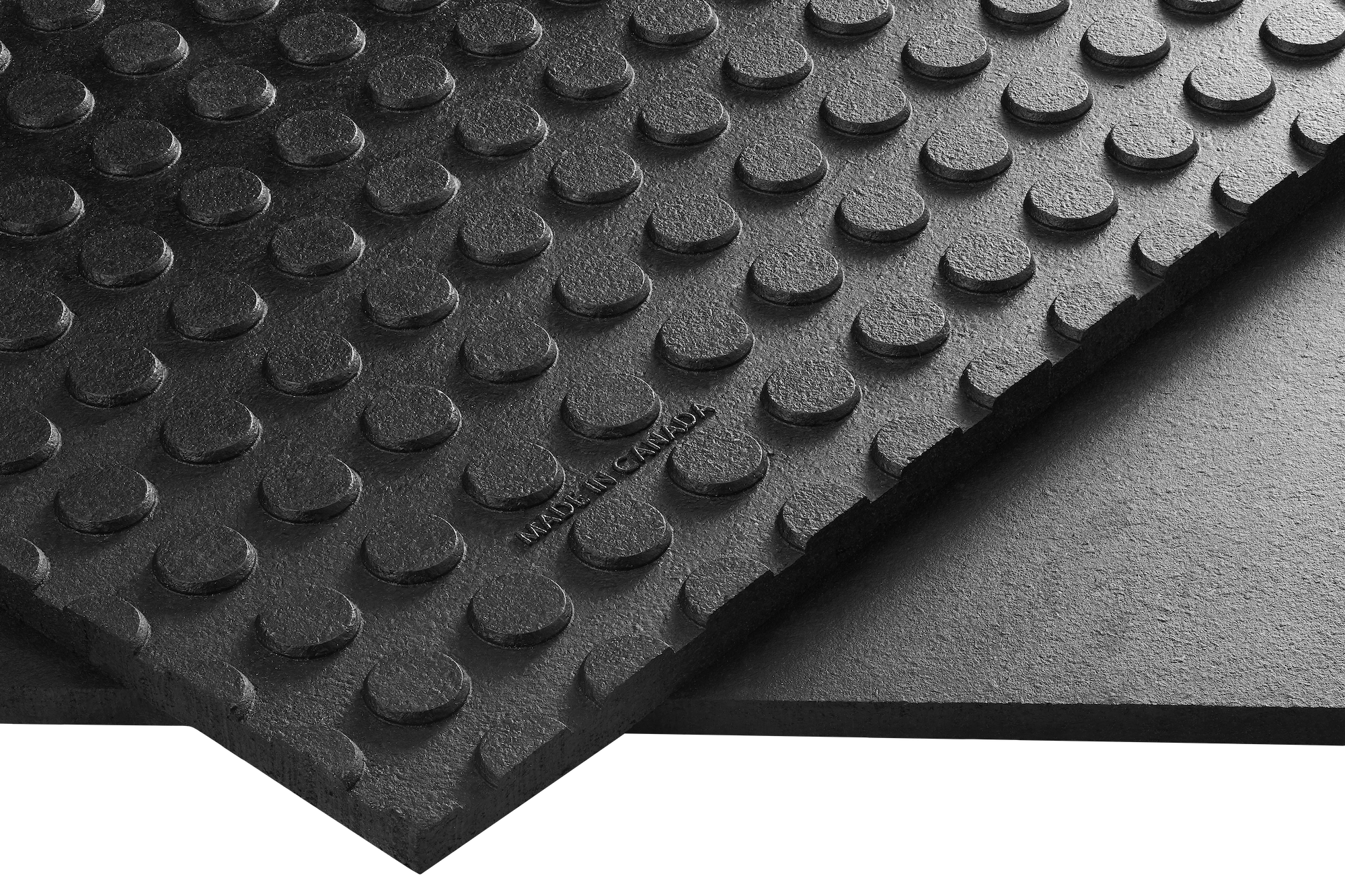
- Reincarnation: This crumb rubber is then integrated into manufacturing processes—mixed with binding agents and molded under high pressure—to create everything from playground surfaces to industrial mats.
Supporting Data: Economic and Environmental Impact
The scale of the tire recycling industry is immense. Northwest Rubber, a global leader in the field, has been a pioneer in this space for nearly 60 years. By repurposing more than 160 million tires, the company has effectively diverted millions of tons of material from landfills, reducing the demand for virgin rubber and minimizing the carbon footprint associated with harvesting and transporting natural latex or petroleum-based synthetic materials.
The efficacy of this model is best illustrated by the performance of the products themselves. The dairy and equestrian sectors provide a clear case study in how recycled materials outperform traditional alternatives. Research published in the Journal of Dairy Science has indicated that rubber flooring, compared to standard concrete, significantly improves cow comfort, which is directly correlated with higher milk yields and reduced rates of injury. By providing a cushioned, non-slip surface, these recycled mats are not just an environmental win—they are an economic catalyst for the agricultural industry.
Official Responses: Voices from the Frontlines
The transition toward a truly circular economy requires a shift in how we define "recycling." According to Melissa Carlaw, Vice President of Communications and Sustainability for eTracks, the industry must be cautious about its terminology.
"For us, it’s critical that we know where the material comes from in Ontario and where it ends up," Carlaw explains. "A tire isn’t truly recycled just because it’s been shredded. It has to become part of something useful again."
This sentiment is echoed by David Pruim, CFO of Northwest Rubber. Discussing the technical application of recycled materials, Pruim highlights the complexity of the manufacturing process: "If you’ve played soccer or football on an artificial turf field, the same rubber pellets that you see on that surface is what we get. We then put that in the press, along with a couple of other ingredients, and we produce rubber flooring."
However, industry leaders are the first to admit that the job is not yet finished. While the collection and processing side has matured, the "end-of-life" for the recycled product itself remains a challenge. "It could be done," Pruim notes regarding the potential for recycling the rubber mats once they eventually wear out. "We just don’t have another mechanism in the market to recover those used mats, clean them and grind them up. It’s more of a logistical challenge, frankly, than anything else."

The Implications: Moving Toward a Circular Future
The implications of these developments extend far beyond the rubber industry. By creating a closed-loop system, provinces and nations are proving that industrial growth does not have to come at the expense of environmental health.
The primary barrier remaining is the development of a "cradle-to-cradle" recovery system. Currently, we have mastered "cradle-to-gate"—collecting a used tire and turning it into a useful mat. The next frontier is "gate-to-cradle"—recovering that mat at the end of its second life and turning it back into a new rubber product.
This requires investment in reverse logistics and a standardized approach to product design that considers recyclability from the initial prototype phase. As it stands, the combination of legislative pressure and private-sector ingenuity is moving the needle. Organizations like eTracks and manufacturers like Northwest Rubber are proving that when accountability is mandated and technology is applied effectively, the mountains of waste that define our modern era can be transformed into the foundations of a more sustainable future.
The journey from a worn-out tire on a highway to a cushioned mat in a barn is more than just an industrial process; it is a blueprint for how society can begin to reconcile its consumption habits with the finite limits of our planet. As we continue to refine these systems, the vision of a truly circular economy—where every product is seen as a resource in transition—becomes increasingly within reach.