Brussels/Podgorica – As May unfurls with its characteristic European fanfare, marking Europe Day and celebrating the enduring project of peace and cooperation, a significant milestone is being etched in the Western Balkans. Montenegro, a small nation with ambitious aspirations, has taken a crucial step towards European Union membership, initiating the drafting of its Accession Treaty. This development, while largely technical, carries immense symbolic weight and practical implications for both Montenegro and the broader EU, which is grappling with internal reforms and the geopolitical imperative of further enlargement.
Key Developments: A Treaty Drafted, Ambitions Set
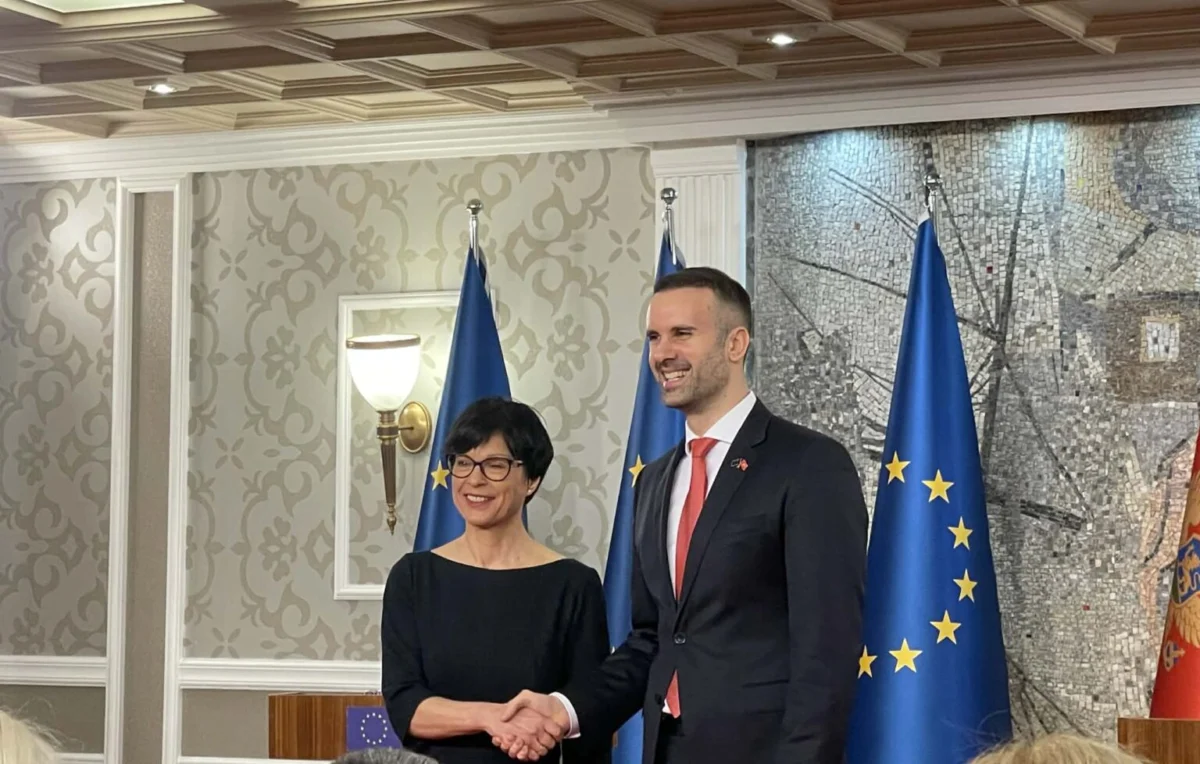
The month of May, typically a period of introspection and celebration for the European Union, has been particularly significant for Montenegro. Marking two decades of independence, the nation received a symbolic yet substantial "gift" from its European partners: an agreement to form a working group tasked with drafting the Accession Treaty. This marks the commencement of the final phase of negotiations, moving the question from "if" to "when" and "how quickly" Montenegro will become the 28th member state.
While the Montenegrin government has publicly targeted 2028 for full accession, a timeline that raises eyebrows in Brussels, sources close to the government suggest a focus on managing public expectations. Even if the 2028 deadline proves overly ambitious, the end of this decade appears a realistic prospect for Montenegro’s integration into the EU, aligning with a potential new wave of enlargement. This comes after the longest period in the EU’s history without admitting new members, with Croatia holding the record for the longest tenure as the "newest" member for 13 years.
A Deep Dive into the Process: Lessons from Croatia and Beyond
The establishment of a working group for drafting the Accession Treaty places Montenegro in a similar position to Croatia 17 years ago. Croatia’s working group was formed in December 2009, and the country officially joined the EU in July 2013. This historical precedent offers a tangible timeframe, suggesting a multi-year process involving rigorous legal and political scrutiny.
The Montenegrin Accession Treaty is expected to introduce new safeguards. Brussels has learned valuable lessons from the democratic backsliding observed in countries like Hungary, Poland, and Slovakia after their accession. Consequently, the treaty is anticipated to incorporate strengthened preventive measures to mitigate the risk of such reversals.
EU Reform Agenda: Preparing for a Larger Union
In parallel with the accession process for candidate countries, the EU institutions have been engaged in a concerted effort to reform themselves from within, preparing for the logistical and financial implications of absorbing new members. Internal discussions within the European Commission highlight the profound consequences of further enlargement, not only on the functioning of institutions but also on the Union’s financial architecture.
The EU, with its current 27 member states, already faces challenges in maintaining seamless operations. The prospect of accommodating more members necessitates a re-evaluation of its internal mechanisms. Various reform proposals are being circulated, with a strong emphasis on avoiding treaty changes that would require unanimous consent from all member states – a notoriously difficult hurdle to overcome.
The Geopolitical Imperative of Expansion
A draft document under development within the European Commission underscores the heightened importance of enlargement in the current geopolitical landscape. The integration process, the document argues, has "never been as crucial as in the current geo-global environment." The Commission is meticulously analyzing the challenges that enlargement will pose to existing member states and institutional functioning. Factors such as territorial size, population, development levels, and the potential for significant labor migration are under close scrutiny.
Internal calculations suggest that admitting all Western Balkan countries, along with Eastern Partnership nations, could increase the EU’s population by approximately 15%, while its total GDP would rise by only around 4%. The strategic implications of integrating Ukraine, for instance, would significantly extend the EU’s border with Russia, whereas the Western Balkans region is already largely surrounded by EU territory. Kosovo remains the sole country in the region not directly bordering the EU.
Despite these calculations, some EU member states maintain that internal reforms are paramount. The Commission’s draft paper advocates for a parallel approach, where the accession process and internal reforms proceed in tandem. The overarching principle is to "deepen while widening," ensuring the support of citizens in both current and future member states.
Navigating Institutional Hurdles: The Voting System Conundrum
A persistent institutional challenge for the EU remains the unanimity voting system. While European Commission President Ursula von der Leyen has called for a shift to qualified majority voting (QMV) on less sensitive issues, achieving this very change requires unanimity, creating a paradoxical impasse. Smaller EU member states are particularly hesitant to relinquish their veto power, underscoring the complexity of reaching consensus on such fundamental reforms. Nevertheless, the European Commission believes there is scope for changes within the existing treaty framework.
The EU frequently finds itself paralyzed by the veto of a single nation. North Macedonia stands as a prime example, its progress repeatedly stalled by the vetoes of its neighbors. Ironically, this country was once considered the most advanced in the region, having signed its first contractual agreement with the EU in 2001, predating Croatia.
Decisions regarding enlargement, including the opening of negotiation chapters, are being discussed among EU bureaucrats as areas where QMV could be implemented, while unanimity would be reserved for final accession decisions and the conclusion of the process.
Montenegro’s Trajectory: A Test Case for Future Accessions
As Montenegro, with its population of just over 600,000, emerges as the most likely candidate for the next accession, its treaty becomes a crucial test and model for future agreements. While Montenegro’s integration does not present major financial or institutional challenges, its symbolic significance is immense. It demonstrates that enlargement is possible and realistic, provided aspiring nations commit to the necessary reforms.
The celebrations of Europe Day in Brussels, filled with music and crowds, are accompanied by a palpable sense of anticipation for an event unfolding approximately 1,500 kilometers away. The day that marked the end of fascism and the dawn of modern Europe also witnessed a significant political shift in Budapest, Hungary, where a new political leadership assumed power after 16 years. These symbolic convergences underscore the profound interconnectedness of European narratives.
The European Commission remains optimistic about leveraging the current positive momentum. Recent Eurobarometer surveys indicate that 56% of EU citizens support the admission of new member states, the highest percentage in two decades. This public backing is a valuable asset that EU decision-makers are keen to preserve.
As the ink dries on preliminary agreements and working groups convene, the path to full EU membership for Montenegro, and indeed for other aspiring nations, remains a complex tapestry woven with diplomatic negotiations, internal reforms, and the ever-evolving geopolitical landscape. The successful integration of Montenegro will not only be a testament to its own efforts but will also serve as a crucial indicator of the EU’s capacity and willingness to embrace a larger, more diverse future.