As the global sugar industry undergoes a rapid digital transformation, the traditional paradigms of supply chain management are being dismantled. For sugar mills, ethanol producers, and molasses distributors, the ability to maintain precise inventory control is no longer just an operational advantage—it is a competitive necessity. Yet, for decades, the industry has been hamstrung by the physical realities of remote storage, where limited access to power and connectivity rendered real-time tracking an elusive goal.
The emergence of autonomous radar sensors, specifically the VEGAPULS Air, is bridging this divide, offering a high-tech solution to an age-old logistical bottleneck. By marrying 80 GHz radar technology with cloud-based analytics, producers are finally gaining the visibility required to optimize production, streamline logistics, and mitigate the risks of human error.
The Core Challenge: The "Black Hole" of Remote Storage
The sugar production lifecycle is inherently complex, involving diverse by-products and intermediate storage stages. Molasses, a critical byproduct used in everything from ethanol production to animal feed, serves as the perfect case study for the industry’s logistical hurdles. Unlike refined sugar, which is often bagged and palletized, molasses requires liquid storage in tanks that are frequently situated at the fringes of production facilities or at isolated distribution terminals.
The Failure of Traditional Methods
For years, the industry relied on manual oversight. Operators were tasked with periodic site visits to check mechanical gauges or dip-sticks, manually logging the levels, and relaying that information back to a central office. This methodology is fraught with systemic weaknesses:
- Latency: Data is often outdated by the time it reaches the decision-makers.
- Human Error: Manual transcription leads to inaccurate stock records, resulting in poor planning.
- Operational Expense: The labor cost of deploying personnel to remote, often hazardous environments to perform basic inspections is significant.
- Inaccessibility: Infrastructure limitations (lack of electricity or Ethernet cabling) made the installation of traditional wired level transmitters prohibitively expensive.
Chronology of Digital Adoption in Sugar Processing
To understand the impact of autonomous sensing, one must look at the evolution of measurement technology within the sector:

- 1990s–2000s: The "Manual Era." Inventory was managed via physical check-ins and paper-based ledger systems. Production schedules were reactive rather than proactive.
- 2010–2018: The "Wired Automation Era." Larger mills adopted ultrasonic and wired radar systems. While effective for main tanks near power grids, remote tanks remained "blind spots" due to the high cost of trenching power and communication cables.
- 2019–2023: The "Connectivity Gap." The rise of IoT (Internet of Things) began to offer promise, but early battery-operated sensors lacked the precision required for volatile industrial environments.
- 2024–Present: The "Autonomous Era." With the launch of specialized, battery-powered radar solutions like VEGAPULS Air, the industry has achieved a "deploy and forget" capability, where sensors can function for years without external support.
Supporting Data: Why Radar Outperforms Contact-Based Systems
The transition to radar technology, specifically 80 GHz frequency, is driven by the physics of measurement stability. Unlike mechanical float systems or ultrasonic sensors, radar is largely immune to the environmental variables that define sugar and molasses processing.
Precision Amidst Variability
Molasses is a viscous, high-density substance. Its properties can shift based on temperature, chemical composition, and ambient moisture.
- Density Independence: Because radar measures distance via electromagnetic waves rather than buoyancy or physical contact, it is unaffected by changes in the density or viscosity of the liquid.
- Atmospheric Resilience: Ultrasonic systems often fail due to vapor or temperature gradients near the tank surface. Radar signals penetrate these layers without signal attenuation.
- Maintenance Profile: With no moving parts, radar sensors experience minimal mechanical wear. In remote sites where maintenance teams are rarely present, this "solid-state" reliability is paramount.
The VEGAPULS Air: A Technological Deep Dive
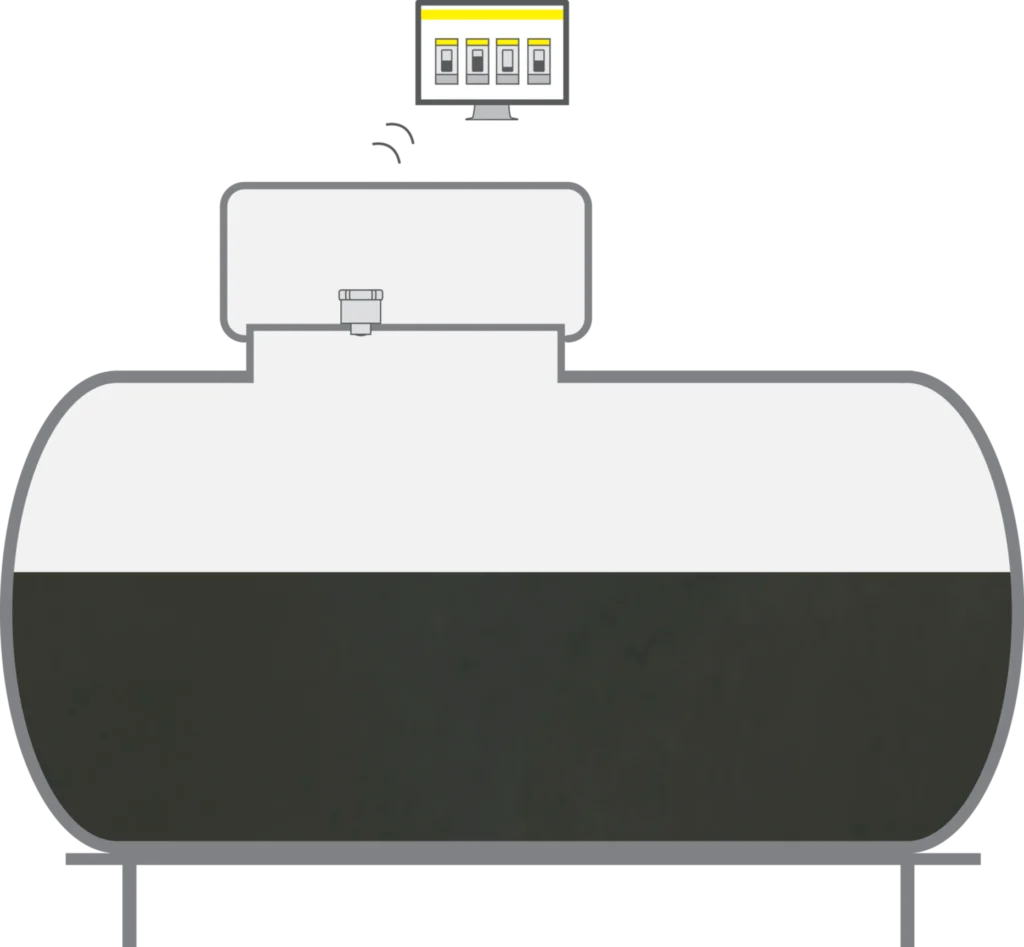
The VEGAPULS Air functions as a self-contained, autonomous unit. By utilizing LTE-M and NB-IoT (Narrowband IoT) connectivity, the device transmits data directly to the cloud without needing a local Wi-Fi or hardwired gateway.
The Energy Equation
The primary engineering feat of the VEGAPULS Air is its power management. By utilizing high-efficiency internal batteries, the device maintains a lifecycle measured in years rather than months. Its ability to "sleep" between measurements and "wake" only to transmit data ensures that the battery life is maximized, making it the first truly viable solution for off-grid industrial tanks.
Cloud Integration: The VEGA Inventory System
Data is only as valuable as the insights it provides. The VEGA Inventory System acts as the centralized nervous system for these remote sensors. It transforms raw distance measurements into actionable business intelligence:

- Inventory Trends: Long-term analytics help predict seasonal consumption patterns.
- Threshold Alarms: Real-time notifications alert logistics managers when stock hits a critical threshold, preventing both overstocking and production stoppages.
- Multi-Site Visibility: An operations manager in a head office can view the inventory status of twenty different tanks across the country on a single dashboard, providing a holistic view of the company’s "available-to-sell" inventory.
Official Perspectives and Industry Implications
Industry leaders are increasingly citing the "Visibility Dividend" as a key driver for ROI. When stakeholders have real-time access to accurate data, the entire supply chain becomes leaner.
Logistics and Transportation Optimization
Perhaps the most significant impact is on the "Last Mile" of the supply chain. Before autonomous monitoring, tankers were often dispatched based on estimations, leading to frequent "emergency" deliveries—which are the most expensive way to transport liquid goods.
"By shifting from reactive scheduling to demand-based logistics, we are seeing a 15–20% reduction in transport costs for our clients," notes an industry expert familiar with the integration of VEGA systems. "When the supply chain knows exactly when a tank will be empty, they can optimize routes, consolidate loads, and avoid the ‘dead-heading’ of trucks returning empty from remote sites."
Digital Transformation as a Strategic Goal
The adoption of these technologies is a core component of the broader Industry 4.0 movement within the sugar sector. Beyond just tracking molasses, these sensors provide a blueprint for how mills can digitize other critical assets, such as fuel, water, or chemical storage, effectively turning the entire mill facility into a transparent, data-driven entity.
Future Outlook: Beyond Inventory
The implications of this technology extend beyond simple inventory management. As these systems become more prevalent, the data gathered will likely be integrated into broader Enterprise Resource Planning (ERP) systems.

Imagine a system where the radar sensor automatically triggers a purchase order in the SAP or Oracle system when a tank hits a 10% capacity, while simultaneously calculating the most cost-effective shipping route. This level of automation is not merely a "nice-to-have"—it is the future of resilient manufacturing.
Addressing the Sustainability Mandate
Furthermore, the move toward automated monitoring supports corporate sustainability goals. By reducing the frequency of site visits, companies lower their carbon footprint associated with vehicle travel. Additionally, by preventing spills through accurate overfill prevention and optimizing logistics to reduce fuel consumption, the sugar industry is aligning its operations with global ESG (Environmental, Social, and Governance) targets.
Conclusion
The convergence of 80 GHz radar technology and low-power, wide-area network (LPWAN) communication is proving to be a game-changer for the sugar industry. By removing the physical barriers to data collection, the VEGAPULS Air and similar autonomous systems are empowering producers to break free from the constraints of manual oversight.
As the industry continues to navigate the complexities of global supply chain disruptions and fluctuating demand, the transition to real-time, autonomous inventory management will be a defining characteristic of the most successful enterprises. The "digitalization of the tank" is no longer a futuristic concept—it is a present-day reality that is helping sugar producers secure their position in an increasingly efficient, transparent, and competitive global market.