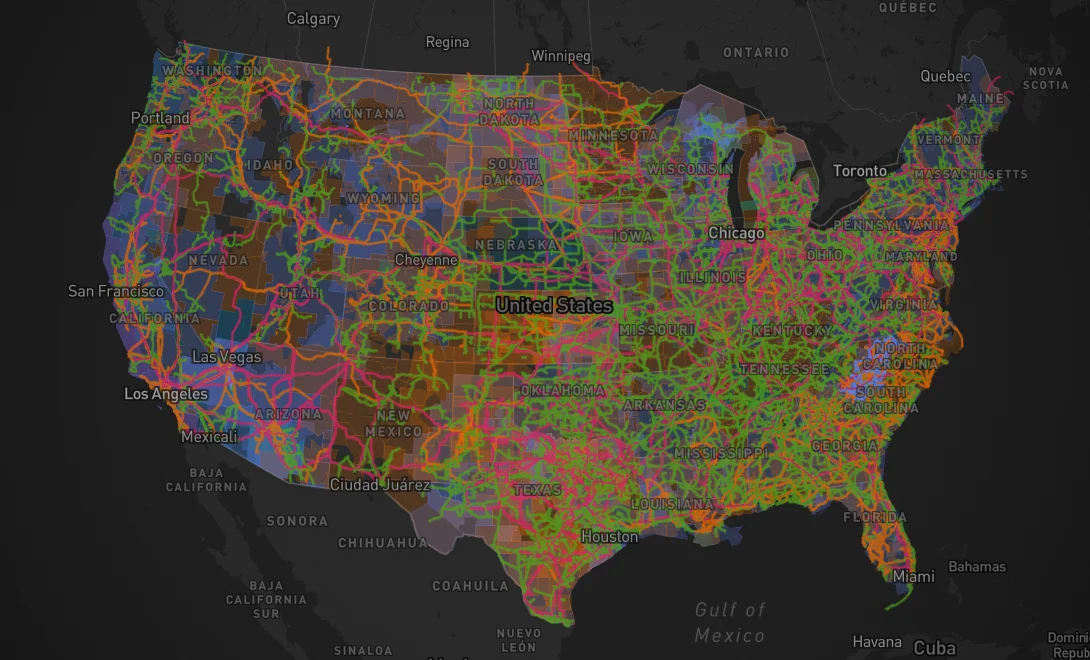
As the United States power grid undergoes a period of unprecedented transformation—driven by the rapid integration of renewable energy, the electrification of transportation, and the rising demand from AI-driven data centers—the task of maintaining a coherent view of the nation’s infrastructure has become a Herculean challenge. For decades, information regarding the U.S. bulk power system has been fragmented, siloed within private utility databases, or obscured behind cumbersome regulatory filings.
To bridge this information chasm, Texture, a technology firm specializing in artificial intelligence and energy systems, has launched CommonGrid. Described as an "open model of U.S. energy infrastructure," CommonGrid is a bold experiment in digital crowdsourcing, designed to function as a "Wikipedia for the power grid." By enabling anyone to view, cite, and edit data regarding utilities, grid operators, and physical assets, the platform seeks to transform a hundred disparate, private records into a single, reliable, public source of truth.
Main Facts: The Wikipedia Model for Energy
At its core, CommonGrid is a collaborative, open-source repository of the United States’ electrical skeleton. It maps out the complex web of grid operators, investor-owned utilities (IOUs), electric cooperatives, and the physical power plants that anchor the system.
The architecture of the platform is intentionally transparent. Every data point—from the capacity of a specific solar farm to the geographic service territory of a rural cooperative—is attributed to a contributor and linked to a verifiable source. To ensure data integrity, Texture has implemented a moderation layer: an elected team reviews proposed changes for accuracy before they are merged into the platform’s hourly snapshots. This "wiki-style" governance ensures that while the platform is open to public contribution, it maintains the professional rigor required for energy sector planning.
Chronology of a Fragmented System
To understand why CommonGrid is a milestone in infrastructure management, one must look at the history of data opacity in the U.S. energy sector.
- The Era of Silos (1990s–2010s): Following the deregulation of many wholesale electricity markets, data became increasingly decentralized. Utilities maintained internal GIS (Geographic Information System) maps to manage their assets, but these were rarely shared with third parties, researchers, or even neighboring utilities.
- The Rise of Digital Mapping (2015–2022): As open-source tools like OpenStreetMap (OSM) gained popularity, small pockets of the energy community attempted to map grid infrastructure. However, these efforts were often "read-only" and lacked the mechanisms to keep up with the hyper-fast pace of modern utility updates, such as asset retirements or new interconnection approvals.
- The Texture Initiative (2023–2025): Recognizing that AI models for energy management were only as good as the data they consumed, Texture began developing a framework that could accommodate real-time updates.
- The Launch (September 2026): Texture officially released CommonGrid, transitioning the project from an internal tool to a public-facing, crowdsourced asset. By releasing the data under the Open Database License (ODbL) 1.0, the company mirrored the strategy used by OpenStreetMap, effectively turning the grid into a public-domain resource.
Supporting Data: Infrastructure at Your Fingertips
CommonGrid is not merely a static map; it is a dynamic database designed for both human researchers and automated systems. Texture has prioritized accessibility, ensuring that the platform serves developers as much as it serves policymakers.
Technical Accessibility
For those looking to integrate grid data into their own software, the platform offers:
- REST API: A robust interface allowing for real-time querying. Users can pull data with a free key (up to 5,000 requests per hour), ensuring that startups and research labs can build energy-centric applications without prohibitive costs.
- GitHub Integration: For heavy data users, the project provides weekly snapshots of the entire database in SQL or GeoJSON formats. This allows for offline analysis, long-term trend tracking, and custom geospatial modeling.
The Scope of Coverage
The platform currently encompasses a vast array of energy nodes, including:
- Investor-Owned Utilities (IOUs): High-level mapping of service territories and rate structures.
- Electric Cooperatives: Detailed insights into rural electrification footprints.
- Generation Assets: Power plants, substations, and major transmission hubs.
- Municipal Utilities: A key area of focus for future growth, where local knowledge is being solicited to refine boundary accuracy.
Official Perspectives: The Philosophy of Collaboration
The driving force behind CommonGrid is the belief that the energy transition is too fast for any single entity to track. Victor Quinn, co-founder and CTO of Texture, argues that the model of centralized data is obsolete.
"No single company can keep an accurate model of the U.S. grid on its own," Quinn noted during the platform’s launch. "Utilities launch programs, rates change, assets get retired, and the people who know about those changes first don’t work here. So we borrowed the model that works for Wikipedia: anyone can propose a change, and every change carries its source and its history."

Sanjiv Sanghavi, co-founder and CEO of Texture, echoed this sentiment, emphasizing the inefficiency of the status quo. "The grid is changing faster than any one organization can keep up with," Sanghavi explained. "Every co-op and utility we work with has rebuilt some version of the same map—who serves where, what programs exist—and each one ends up with a slightly different answer. CommonGrid makes that a shared public record instead of a hundred private ones."
The team at Texture acknowledges that while the data for IOUs is robust, the "last mile" of the mapping process lies with municipal utilities. Because these boundaries are often smaller and less documented in national registries, Texture is actively calling for local energy experts to contribute their knowledge, effectively turning every grid-connected citizen into a potential cartographer.
Implications: A New Frontier for Energy Research
The release of CommonGrid represents a paradigm shift for the energy sector. Its implications extend far beyond simple convenience, touching on grid reliability, academic research, and the acceleration of decarbonization.
1. Accelerating Decarbonization
Policy researchers often struggle to identify where the grid is most "congested" or where renewable energy projects face the most significant interconnection hurdles. By providing an open-source map of infrastructure, CommonGrid allows environmental groups and developers to identify ideal locations for solar and wind deployments, potentially shaving years off the planning and permitting process.
2. Democratizing Energy Policy
For too long, the technical details of the grid have been accessible only to industry insiders and lobbyists. CommonGrid lowers the barrier to entry for local community groups, municipal governments, and NGOs. By empowering these groups to understand their local grid configuration, they can participate more effectively in Public Utility Commission (PUC) hearings and energy planning sessions.
3. Strengthening Grid Resilience
In an era of increasing climate-related disasters, understanding the topology of the grid is essential for disaster response. When storms or wildfires damage critical infrastructure, having a crowdsourced, up-to-date map can assist emergency responders and utility crews in visualizing the extent of the impact, particularly in areas where utility maps are outdated or unavailable to the public.
4. Commercial Innovation
Because the platform is released under the Open Database License (ODbL) 1.0, companies are free to build commercial products on top of CommonGrid. This creates a "rising tide" effect where the underlying map data is improved by the private sector, and those improvements are then shared back to the public repository. It is a virtuous cycle of data refinement that could lead to the next generation of energy management software.
The Road Ahead: Challenges and Opportunities
Despite the excitement surrounding the launch, the project faces significant hurdles. Maintaining data accuracy across thousands of utilities—each with different reporting standards—is a task that requires sustained community engagement. The reliance on a moderation team to verify edits is a bottleneck that may need to scale as the platform grows.
Furthermore, there are inherent security considerations. While the data included in CommonGrid is generally public-facing, critics sometimes argue that aggregating sensitive infrastructure data could provide a "roadmap" for bad actors. Texture maintains that the platform avoids publishing sensitive cybersecurity information, focusing instead on the systemic topology that is necessary for engineering and planning purposes.
As the energy sector continues to shift toward a decentralized, net-zero future, tools like CommonGrid will be vital. By fostering a culture of transparency and collective intelligence, Texture is not just mapping the grid; they are helping to build the framework for a more resilient and democratic energy system. Whether the project can truly achieve "Wikipedia-level" ubiquity remains to be seen, but the launch of CommonGrid marks a significant, and perhaps necessary, step toward a modernized, open-source energy future.