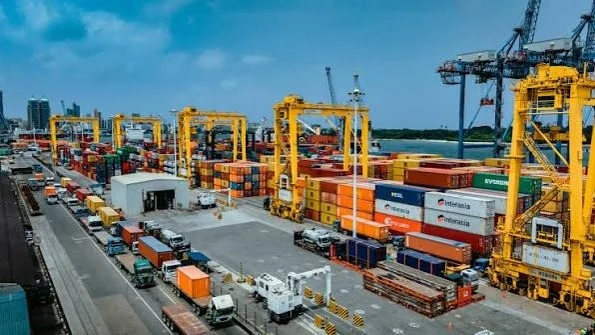
DAR ES SALAAM, Tanzania — The Dar es Salaam Port is undergoing a historic transformation, shedding its reputation for congestion to become a high-efficiency nexus for East and Central African trade. By marrying strategic infrastructure investment with modernized operational management, Tanzania is successfully positioning itself as the premier Indian Ocean gateway for the Great Lakes region and the mineral-rich Copperbelt.
The State of Play: Record Volumes and Record Speed
The narrative of Dar es Salaam in 2026 is one of dual success: the port is not only processing more cargo than ever before, but it is doing so at a pace that is fundamentally altering the regional logistics landscape. According to the Tanzania Ports Authority (TPA), the port handled a record 33.7 million tonnes of cargo in the 2025/26 financial year. This represents a staggering upward trajectory, climbing from 23.7 million tonnes in 2023/24 and 27.7 million tonnes in 2024/25.
This surge in volume is accompanied by a dramatic improvement in efficiency metrics. The World Bank’s 2025 Container Port Performance Index (CPPI) ranked Dar es Salaam 255th globally, with a standardized score of -7.75. While this may seem modest, it represents a monumental leap from the 2021 score of -176. This shift reflects a systemic reduction in vessel waiting times and a significant optimization of handling procedures at the quay.
Perhaps more telling are the granular operational figures provided by terminal operators. DP World, which assumed management of specific terminal operations in April 2024, reported a 90% reduction in discharge times by July 2026. Cargo that once languished for over 300 hours now clears in less than 28 hours, a change that has sent shockwaves of optimism through regional supply chains.
A Chronology of Transformation
The current success of the Dar es Salaam Port did not happen overnight. It is the result of a deliberate, multi-year strategy aimed at de-bottlenecking Tanzania’s primary trade artery.
- 2020–2023: The Foundation. The Dar es Salaam Maritime Gateway Project (DMGP) began in earnest, focusing on the heavy lifting of civil engineering. This phase saw the reconstruction and deepening of existing berths and the dredging of the entrance channel and turning basin. These physical upgrades were essential to accommodate the larger, modern container vessels that define contemporary global shipping.
- 2024: The Shift in Management. In April 2024, the arrival of new private operators, including DP World and Tanzania East Africa Gateway Terminal Limited, marked a transition from public-sector-led operations to a public-private partnership (PPP) model. This infusion of private capital led to immediate upgrades in cargo-handling equipment, terminal operating systems, and yard management.
- 2025: Scaling for Growth. As the infrastructure improvements matured, the port began to absorb record-breaking volumes. During this period, the TPA launched intensive marketing efforts in regional hubs like Lubumbashi, DRC, to solidify the port’s role as the primary outlet for the Copperbelt.
- 2026: The Efficiency Breakthrough. By mid-2026, the operational gains became statistically undeniable. The focus shifted from merely moving goods to maintaining high-velocity throughput despite the unprecedented increase in volume.
Data-Driven Growth: The Regional Footprint
The growth of the Dar es Salaam Port is a barometer for the economic health of the hinterland. Tanzania is no longer just serving its domestic market; it has become the maritime engine for the Democratic Republic of Congo (DRC), Zambia, Rwanda, Malawi, and Burundi.
The DRC has emerged as the most significant user of the port, accounting for nearly 47% of all transit traffic in 2024/25, totaling 5.995 million tonnes. Zambia followed with 3.51 million tonnes, Rwanda with 1.72 million tonnes, Malawi with 675,200 tonnes, and Burundi with 425,774 tonnes.
These figures illustrate a supply chain that stretches from the Indian Ocean deep into the heart of the continent. The commodities moving through these corridors are the lifeblood of the global economy: copper and cobalt from the DRC, agricultural exports, machinery, fuel, and essential manufactured goods. The ability of the port to facilitate this trade is directly tied to the economic stability of the countries it serves.
Official Responses and Strategic Vision
The Tanzania Ports Authority has been proactive in communicating these improvements to international stakeholders. During a recent trade mission to Lubumbashi, TPA officials highlighted that the port is not only faster but more reliable.
"The growth we are seeing is not accidental," noted a TPA representative during the mission. "By reducing the average handling time for container vessels to approximately three days, we are lowering the cost of doing business for our neighbors. Our goal is to ensure that the Dar es Salaam corridor is the most cost-effective and time-efficient route for the Copperbelt."
Private sector partners have echoed this sentiment, emphasizing that the investment in terminal infrastructure—yards, cranes, and digital tracking—was specifically designed to meet the demands of a high-growth regional market. DP World’s rapid reduction in discharge times is viewed by the Tanzanian government as a proof-of-concept for the benefits of foreign direct investment in public infrastructure.
Implications: The Infrastructure Question
While the maritime gains at Dar es Salaam are clear, the ultimate success of this trade corridor depends on what happens beyond the port gates. For landlocked nations, a port is only as valuable as the road and rail connections that link it to the interior.
The Inland Challenge
The pressure is now shifting to Tanzania’s inland connectivity. If vessels can be turned around in 28 hours, but cargo sits at a border crossing or on a bottlenecked railway for weeks, the maritime efficiency gains are effectively neutralized. Consequently, the Tanzanian government is intensifying its focus on:
- Rail Modernization: Upgrading the central railway lines to ensure that high-volume cargo can move from the port to the Great Lakes efficiently.
- Dry Ports: Establishing inland container depots to clear customs and decongest the immediate port area.
- Border Harmonization: Working with regional blocs to digitize customs procedures, reducing the non-tariff barriers that historically plagued the corridor.
A Competitive Landscape
Dar es Salaam operates in a competitive environment. With other African nations investing heavily in their own ports on both the Atlantic and Indian Oceans, Tanzania’s advantage is not guaranteed. The "African Infrastructure Question" has evolved from "Do we have a port?" to "Which port offers the most reliable, end-to-end supply chain?"
The ports that will ultimately win the battle for regional cargo are those that can successfully bridge the gap between the efficiency of the quay and the reliability of the hinterland.
Conclusion: The Next Frontier
Tanzania has successfully cleared the first hurdle: proving that Dar es Salaam can handle the scale and speed required by modern global trade. The recent operational data confirms that the port is no longer a bottleneck, but a catalyst.
The next phase of this development will be the true test. Can Tanzania maintain these record-breaking turnaround times while volumes continue to climb? Can it harmonize its inland infrastructure to match the world-class speed now seen at the waterfront?
If the trend of the last three years is any indication, the outlook is positive. Dar es Salaam is well-positioned to serve as the backbone of an interconnected East and Central African economy, bridging the gap between the global markets of the Indian Ocean and the immense productive potential of the African interior. For regional traders, miners, and manufacturers, the Dar es Salaam Port is no longer just a facility; it is the vital link to a more prosperous, connected future.