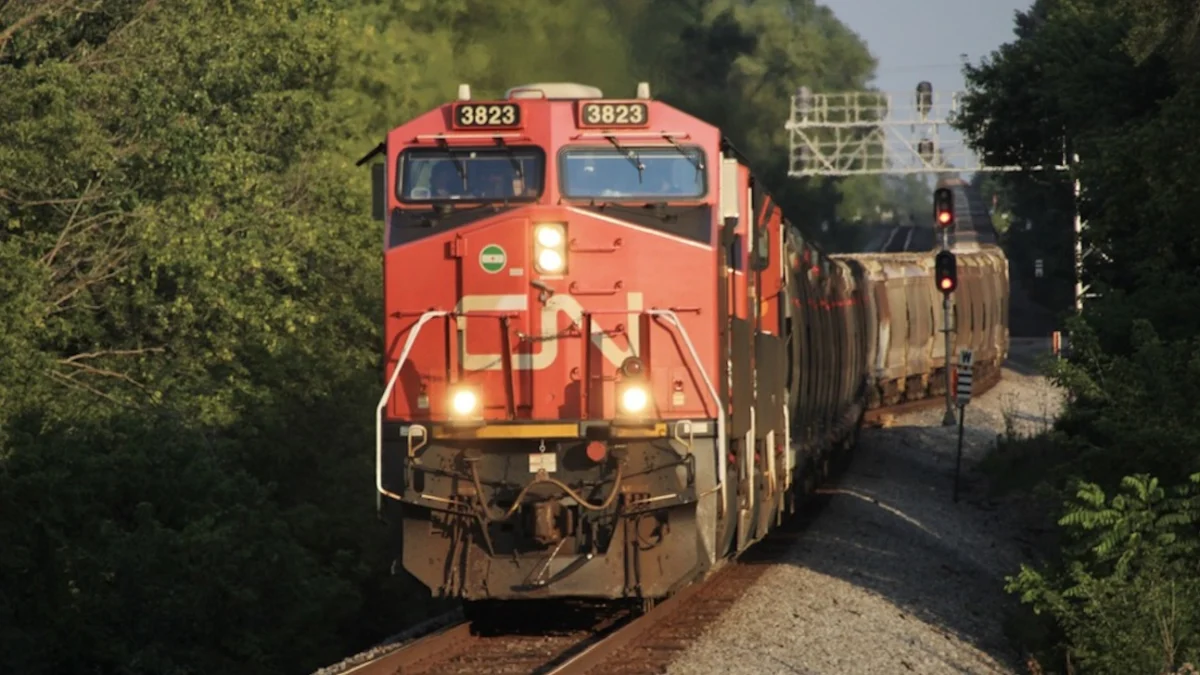
Canadian National Railway (CN) has signaled a period of robust growth and operational refinement, announcing on Friday that it is raising its financial guidance for the remainder of the year. The Montreal-based rail giant, a critical artery for North American trade, reported a strong second quarter, marked by double-digit revenue growth and improved profitability. This upward revision reflects management’s confidence in the railway’s current trajectory, fueled by strategic capacity investments and disciplined execution across its vast network.
The Financial Picture: A Solid Performance
During the earnings call, held prior to the opening of financial markets, CN Chief Executive Tracy Robinson expressed optimism regarding the company’s momentum. “The engine is running well,” Robinson stated. “We’re executing against our strategy, and we can see the results.”
Supported by this operational success, CN has revised its annual outlook, now anticipating mid-to-high single-digit earnings growth, supported by low single-digit volume growth. This is a notable departure from the company’s previous forecast, which had anticipated flat volumes and only low single-digit earnings growth.
The second-quarter figures provide the foundation for this optimism. CN reported operating income of US$1.26 billion, a 9% increase over the same period last year. Revenue saw an even more impressive climb, rising 11% to reach US$3.37 billion. When adjusted for one-time items, earnings per share rose 11% to $1.48.
However, the quarter was not without its headwinds. The railway’s operating ratio—a key measure of efficiency where a lower number is better—came in at 62.5%, representing an increase of 0.8 points. Management noted that high fuel prices acted as a 2.1-point drag on the ratio, suggesting that the underlying operational efficiency would have been even stronger had energy costs remained stable.
Operational Milestones and Network Fluidity
Behind the top-line numbers, the operational mechanics of the railroad are showing signs of improvement. Chief Operating Officer Patrick Whitehead emphasized that the network’s performance remained remarkably consistent despite handling higher volumes.
“The network is running well. Car velocity and network train speed were largely flat year over year while handling stronger volumes and maintaining solid customer service,” Whitehead noted.
Crucially, the railway achieved its best-ever fuel efficiency figures for a second quarter and the first half of a fiscal year. This efficiency was mirrored by a 6% increase in locomotive productivity and a 13% jump in train and engine crew productivity, gains largely attributed to the company’s strategy of running longer, more efficient trains.
A significant portion of this success is being credited to recent infrastructure investments in Western Canada. These capacity expansion projects are now paying dividends in the form of increased fluidity and velocity. These improvements are vital, as they allow CN to handle record-breaking shipments of grain and potash, alongside heightened volumes of refined petroleum products and natural gas liquids. In the Western Region specifically, metrics such as car velocity, train speed, and dwell times saw improvements of approximately 3%.
Segmented Outlook: A Mixed Bag of Commodity Demand
While the aggregate view is positive, the company’s outlook varies significantly by commodity. Chief Commercial Officer Janet Drysdale provided a granular look at the market, noting that the railway expects sustained demand for petroleum and chemicals, grain, domestic intermodal, and automotive traffic.
Conversely, the outlook for metals, minerals, and coal remains neutral, reflecting the broader economic uncertainty currently facing industrial sectors. Most concerning, perhaps, is the negative outlook for forest products, fertilizer, and international intermodal segments, which face pressures from cooling global demand and inventory adjustments.
Resilience in the Face of Natural Challenges
In addition to financial and operational metrics, the call addressed the environmental challenges currently facing the region. As wildfires continue to burn across portions of northern Ontario and British Columbia, the company confirmed that its operations and infrastructure remain unaffected.
The management team highlighted that they are maintaining a vigilant stance, closely monitoring the fire activity. Furthermore, CN has proactively deployed its fleet of specialized firefighting trains to assist in mitigation efforts, demonstrating both social responsibility and a commitment to protecting its own assets from climate-related disruptions.
Strategic Implications: The Path Forward
The decision to raise guidance is more than just a reaction to a strong quarter; it is a signal of confidence in CN’s long-term strategic plan. By prioritizing capacity expansion and disciplined train planning, the company has managed to absorb growth while simultaneously improving network fluidity.
For investors, the shift in guidance represents a pivot from defensive maneuvering to a growth-oriented mindset. The ability to maintain high service levels while managing the volatility of fuel costs and shifting global trade patterns positions CN as a resilient player in the North American logistics landscape.
The emphasis on "running longer trains" and increasing crew productivity indicates that CN is focused on optimizing its existing footprint rather than simply expanding its labor or asset base. This "doing more with less" approach is a hallmark of modern railroading, aimed at maximizing shareholder value while maintaining competitive service rates for shippers.
Comparative Market Context
CN’s performance arrives at a time when the broader rail industry is under close scrutiny. Other major carriers, such as Union Pacific and Norfolk Southern, have also reported on their financial health recently. Union Pacific, for instance, has similarly posted strong results and raised its outlook, suggesting that the North American rail sector as a whole is experiencing a recovery phase.
However, the industry is not without its controversies. Recent discussions regarding mergers and regulatory deals, such as the Union Pacific-Canadian National agreement, have sparked debate among industry analysts and competitors. Critics, including rival BNSF, have argued that such deals could "undermine" competitive fairness in the market. As the industry continues to consolidate and evolve, CN’s ability to remain independent and operationally superior will be critical to its long-term viability.
Industry Networking and Future Developments
As the rail sector continues to navigate these complexities, industry leaders are looking toward upcoming events to share knowledge and set future agendas. For stakeholders and professionals in the freight industry, the FreightWaves-sponsored events later this year, including the Brokerage Compliance Symposium and the F3: Future of Freight Festival, represent critical opportunities to discuss these trends. These gatherings will focus on the intersection of technology, regulation, and operational excellence, themes that are central to the future success of companies like CN.
Conclusion: A Barometer for the Economy
The financial report from Canadian National serves as a reliable barometer for the broader North American economy. As a carrier of essential commodities—from the grain that feeds the world to the petroleum products that power industries—CN’s performance is inextricably linked to industrial and agricultural output.
The fact that the company is raising its guidance suggests that management believes the underlying economy remains resilient enough to sustain growth through the end of the year. While challenges remain, particularly in sectors like forest products and international intermodal, the railway’s ability to optimize its network and navigate external pressures provides a stable outlook for the remainder of 2026.
As CN moves into the second half of the year, all eyes will be on whether they can maintain this velocity and continue to convert strategic investments into consistent, long-term shareholder value. The "engine is running well," and for now, the path forward appears clear for the Canadian rail giant.