The landscape of North American logistics is undergoing a significant transformation, driven by massive infrastructure investments and a concerted push by global companies to localize their supply chains within Mexico. This week’s Borderlands Mexico report highlights three pivotal developments: the long-awaited completion of the Port of Brownsville’s channel deepening, a strategic move into Querétaro by specialty chemical distributor Palmer Holland, and the potential $500 million infusion into Northeast Texas for battery-material manufacturing. Together, these stories underscore a broader trend of regional integration, technological advancement, and a tightening of the logistics corridor between the United States and Mexico.
The Port of Brownsville: A Generational Leap in Maritime Capacity
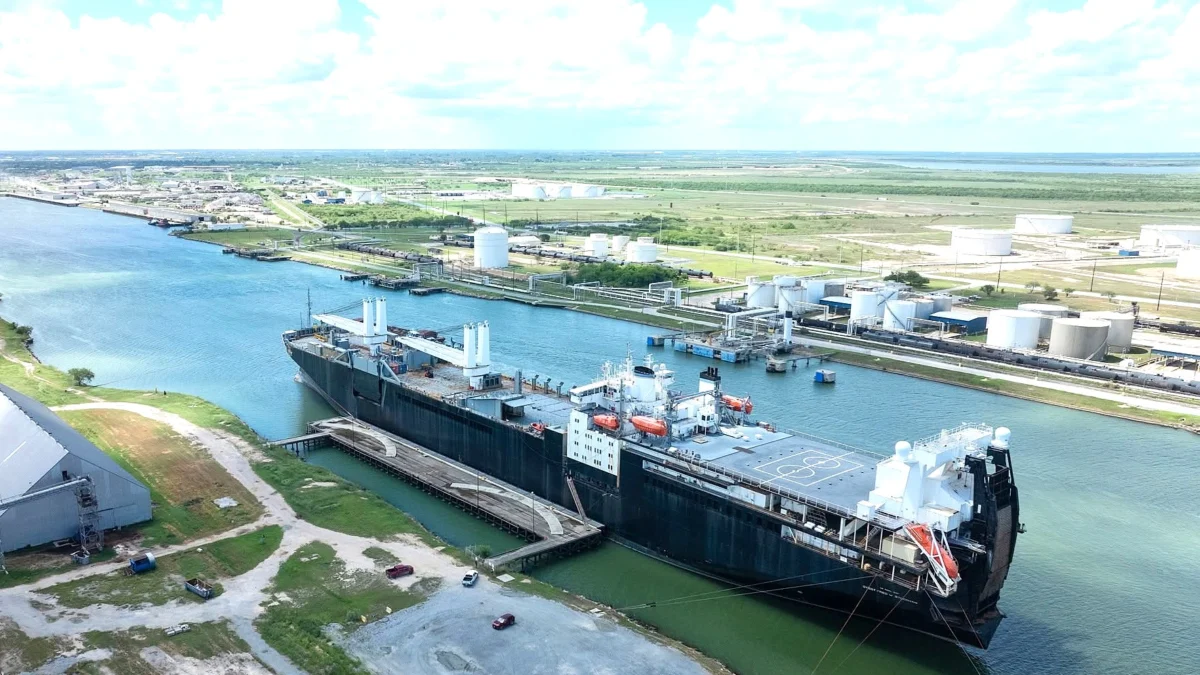
The most significant infrastructure milestone of the week occurred in South Texas, where the Port of Brownsville officially announced the completion of the Brazos Island Harbor Improvement Project. This $295.2 million endeavor represents a transformative moment for the port, which serves as a vital gateway for U.S.-Mexico trade.
The Scope of the Project
The project, which has been in the planning stages for decades, involved deepening the 17-mile-long Brownsville Ship Channel by 10 feet. Specifically, the main navigation route was dredged from 42 feet to 52 feet, while the entrance and jetty channels were increased from 44 feet to 54 feet.
Located at the southernmost tip of Texas, the Port of Brownsville occupies a unique position as the only deep-water seaport situated directly along the U.S.-Mexico border. This geographic advantage makes it an indispensable node in the movement of steel, petroleum products, and industrial equipment. With more than 80% of its trade volume tied to Mexico, the port’s operational capacity is a direct barometer for the health of cross-border industrial commerce.
Official Responses and Strategic Vision
The completion of this project was not merely a construction achievement but a strategic repositioning of the port to compete on a global scale.
“The deeper channel changes what the Port of Brownsville can do operationally,” said William Dietrich, CEO and Port Director, in an official statement. “It increases our ability to accommodate larger, more fully loaded vessels, improve cargo efficiency, and compete for maritime business that previously faced depth limitations.”
For the Brownsville Navigation District, the project represents the culmination of a long-term vision. Chairman Sergio “Tito” Lopez highlighted the generational impact of the investment, noting, “This is a generational change. This is going to transform our port tremendously.” By removing the depth limitations that previously hindered larger vessels, the port is now positioned to capture new maritime business, potentially diverting trade that might have otherwise bypassed the region due to logistical constraints.
Palmer Holland’s Strategic Entry into the Mexican Market
In a move reflecting the increasing complexity and demand for localized distribution, Cleveland-based specialty chemical and ingredient distributor Palmer Holland has officially expanded its operations into Mexico. This marks the company’s first physical footprint in the country, a key component of its broader strategy to solidify its influence across the North American and Latin American markets.
Operational Footprint
The expansion is comprehensive, involving more than just a sales office. Palmer Holland has established a fully operational legal entity in Mexico, complete with warehouse operations in Querétaro—a hub known for its concentration of aerospace and automotive manufacturing. To ensure seamless service, the company has deployed locally based account managers and Spanish-speaking operations personnel.
The Rationale for Expansion
According to CEO Tim Skufca, the expansion is a “natural evolution” of the company’s growth trajectory. The move is designed to address the persistent challenges of the modern supply chain: responsiveness and continuity. By moving inventory closer to the end user, Palmer Holland aims to provide faster response times and more robust technical support to its Mexican customer base. This localized approach is increasingly common among specialty distributors who find that navigating the regulatory and logistical environment of Mexico is best achieved through a boots-on-the-ground presence.
TexAmericas Center: A Potential $500M Battery-Materials Hub
In Northeast Texas, the TexAmericas Center is positioning itself as a central player in the burgeoning North American energy storage market. The facility is currently the target of a proposed $500 million investment aimed at building a commercial-scale battery-materials manufacturing plant.
The Joint Venture
The proposed project is a partnership between EnergyX and Wildcat Discovery Technologies. The vision involves the development of a lithium iron phosphate (LFP) cathode active material manufacturing facility. EnergyX has already secured site control for approximately 330 acres within the TexAmericas Center industrial complex, signaling a strong intent to move forward.
Economic and Technological Implications
The project is ambitious, with an estimated production capacity of 15,000 metric tonnes of LFP cathode active material per year in its initial phase. This material is a critical component in the production of batteries for electric vehicles (EVs), energy storage systems, and specialized applications such as drones and defense platforms.
The proximity of the site to EnergyX’s existing “Project Lonestar” lithium plant and the U.S. Army’s Red River Army Depot creates a synergistic industrial ecosystem. TexAmericas Center, which spans nearly 12,000 acres, provides the necessary infrastructure for such large-scale operations, including an on-site 350-car rail yard and an extensive internal rail network.
While the project is still subject to financing, final approvals, and the exercise of purchase options, the scale of the potential investment highlights the growing importance of domestic battery supply chains. Should the project proceed, it would serve as a major anchor for industrial development in the Texarkana region.
Implications for the Future of North American Logistics
The convergence of these three developments—port expansion, specialty distribution, and advanced energy manufacturing—reveals several key themes currently defining the North American trade corridor.
1. Supply Chain Resilience
The common thread across these stories is the drive for resilience. Whether it is the Port of Brownsville deepening its channel to ensure that modern, larger ships can berth without delay, or Palmer Holland establishing local warehouses to bypass cross-border transit volatility, the emphasis is on minimizing disruption. Companies are moving away from “just-in-time” models that rely on long, fragile supply chains in favor of “just-in-case” models that rely on localized regional hubs.
2. The Rise of the "Nearshoring" Corridor
Mexico’s role as the primary manufacturing partner for the U.S. continues to intensify. The investment in Brownsville directly supports the flow of raw materials and finished goods that are the lifeblood of Mexican manufacturing. Similarly, Palmer Holland’s expansion into Querétaro acknowledges that the customer base in Mexico is growing more sophisticated, requiring high-level technical support that can only be provided locally.
3. Energy Transition Infrastructure
The proposed battery-materials plant at TexAmericas Center highlights the intersection of industrial policy and the energy transition. As the U.S. looks to reduce its reliance on foreign sources for battery minerals and components, inland industrial parks with heavy rail access and existing utility infrastructure—like TexAmericas—become prime candidates for the next wave of “green” industrialization.
4. Long-term Economic Planning
The Port of Brownsville’s project stands as a testament to the importance of long-term economic planning. In an era where infrastructure projects often face delays or budget overruns, the successful completion of a 10-year vision for the Brazos Island Harbor serves as a model for how public-private partnerships can drive regional competitiveness.
Chronology of Developments
- 2010s (Early Planning Phase): The Brownsville Navigation District initiates the long-term planning for the Brazos Island Harbor Improvement Project to address depth limitations.
- 2020–2023: Initial construction phases of the dredging project begin, with environmental impact assessments and funding secured.
- 2024: EnergyX establishes a presence in Northeast Texas, initiating demonstration-scale projects near the Red River Army Depot.
- Early 2026: Palmer Holland announces its formal expansion into Mexico, establishing a legal entity and securing warehouse space in Querétaro.
- Mid-2026: The Port of Brownsville officially announces the completion of the $295.2 million deepening project, marking a new operational era for the port.
- Current Status: EnergyX and Wildcat Discovery Technologies evaluate the final investment decision for the $500 million TexAmericas battery facility, with industry stakeholders closely monitoring the timeline for project commencement.
Conclusion
The latest developments in the U.S.-Mexico logistics corridor reflect a region in transition. From the deep-water capabilities now available in South Texas to the high-tech industrial manufacturing being proposed in the northeast of the state, the region is actively upgrading its capacity to handle the demands of 21st-century trade. For logistics professionals and stakeholders in the North American supply chain, these shifts offer both significant opportunities for growth and a reminder that the geography of commerce is being constantly rewritten by infrastructure, localization, and the urgent need for sustainable energy components.