In a strategic move that defies its own physical footprint, Sam’s Club, the wholesale retail giant owned by Walmart, recently descended upon New York City—a market where it currently operates no brick-and-mortar locations—to make a bold statement about the future of health and wellness.
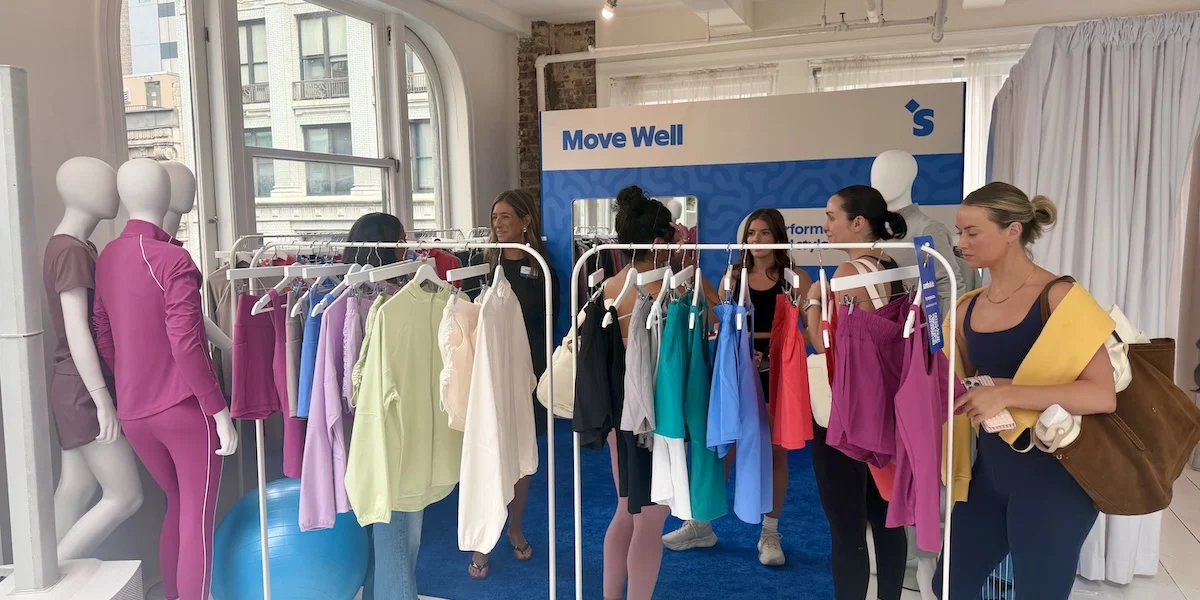
On Thursday, the retailer hosted its inaugural "Sam’s Wellness Club," an immersive, high-profile event situated in a chic Midtown Manhattan loft. By curating an experience that bridged the gap between wholesale utility and lifestyle aspirationalism, Sam’s Club signaled a pivot in how it intends to communicate with modern consumers: moving from a focus on bulk savings to a focus on holistic, accessible well-being.
The Evolution of the Wholesale Ecosystem
For decades, the "warehouse club" model was defined by high-volume, low-cost essentials. However, as consumer demographics shift and the "wellness economy" explodes, Sam’s Club is repositioning its massive product assortment as a cohesive ecosystem.
The Midtown event served as a physical manifestation of this strategy. Attendees—a curated mix of media, influencers, and merchants—were invited to navigate a space that functioned more like a luxury wellness retreat than a wholesale warehouse. The setup showcased a cross-category integration that is central to the company’s new narrative: attendees could move from a group sculpt workout class led by fitness creator Jenna Palek to a station featuring organic smoothies, then to displays of high-tech beauty devices and premium apparel.
This, according to Kaity Whitmire, who oversees the baby, health/beauty, and over-the-counter medicine categories at Sam’s Club, is the "true" Sam’s Club experience. "Wellness has been a part of our strategy for a long time; it’s one of the top three things on our members’ minds," Whitmire told Modern Retail. "What this experience is really for is to demonstrate how it comes together as an ecosystem."
Chronology of a Strategic Pivot
The transition toward a wellness-forward brand identity did not happen overnight. Over the past several years, Sam’s Club has systematically laid the groundwork for this transformation:
- 2023: The company announced a major quality-control milestone, confirming that 96% of its private-label "Member’s Mark" food and beverage products were reformulated to remove over 40 problematic ingredients, including high-fructose corn syrup and synthetic dyes.
- Early 2024: The company began deeper integration of health-tech into its member benefits, acknowledging that its core demographic is increasingly interested in longevity and medical support.
- Mid-2024: Sam’s Club forged a high-profile partnership with Weight Watchers (WW). This move was specifically designed to provide members with access to clinical support, including resources for GLP-1 medication users, signaling the company’s intent to remain relevant in the era of medicalized weight management.
- October 2024: The "Sam’s Wellness Club" pop-up in New York City marked the first time the brand used an experiential marketing event to define its health strategy in a territory where it lacks physical stores, emphasizing that its digital and retail influence is national, regardless of physical proximity.
Supporting Data: Why Wellness Wins
The data driving these decisions is clear. Consumers are no longer compartmentalizing their shopping habits. They are not merely buying "groceries" or "medicine"; they are shopping for a lifestyle.
Sam’s Club executives have noted that modern shoppers are looking for "trusted and affordable solutions" to meet their health goals. The shift is evident in the products currently trending on the warehouse floor. By analyzing social media trends such as "fibermaxxing" and the "proteinization" of everyday snacks, the merchant team at Sam’s Club has become more agile.
"The team goes back and looks and asks, ‘Do we have things across the assortment today that meet that objective?’" Whitmire explained. This internal alignment allows the brand to marry trending topics—like high-protein diets—with the affordability of bulk purchasing. It is a value proposition that resonates particularly well during periods of inflation: the ability to buy premium, health-conscious goods at a lower unit price than at traditional health-food boutiques.
Official Responses and Executive Vision
The vision for this transformation is being steered by the top levels of the organization. Myron Frazier, Chief Merchandising Officer at Sam’s Club, has been vocal about the necessity of this shift. In an exclusive interview, Frazier emphasized that consumer expectations are evolving at a breakneck pace.
"Consumer expectations around health and wellness are changing rapidly," Frazier stated. "People want trusted, affordable solutions. We know our members are focused on healthier living, and this partnership [with Weight Watchers] helps us bring that to them in a more accessible way."
This sentiment is echoed by the merchandising team, who are tasked with curating a "thoughtful and intentional" experience. The goal is to strip away the overwhelming nature of the "big box" store and replace it with a narrative that guides the member on their wellness journey. Whether it is an electronic face mask, high-protein supplements, or fitness gear, the products are being presented as tools for a broader objective.
Implications: The Rise of the Creator Economy
Perhaps the most significant implication of the New York City event is Sam’s Club’s explicit embrace of the creator economy. By inviting influencers like Matt James and Jenna Palek, the retailer is acknowledging a fundamental shift in retail psychology: customers no longer rely solely on product descriptions or store labels to make purchasing decisions. They rely on social proof.
"People are experiencing products differently now than they ever have before," Whitmire noted. "It’s no longer okay just to read a product detail page. You want to hear firsthand from someone how it works, you want to see how it works, you want to engage in a different way."
This strategy mirrors tactics previously employed by its parent company, Walmart. From "Walmart Delivers" trucks in Brooklyn to fashion pop-ups featuring "Free Assembly" and "Scoop" collections, the conglomerate has realized that New York City—while not a primary location for their big-box stores—is the "mecca" for trendsetting, influencer culture, and media exposure.
Conclusion: A New Retail Paradigm
The "Sam’s Wellness Club" event was more than a PR stunt; it was a blueprint for the future of wholesale retail. By proving that they can curate a premium, lifestyle-focused experience, Sam’s Club is working to shed the perception that "wholesale" means "low-quality."
As the lines between grocery, pharmacy, and fitness continue to blur, Sam’s Club is positioning itself as a one-stop-shop for the holistic consumer. By leveraging its massive purchasing power to keep these wellness products affordable, the company is betting that members will continue to reward them with loyalty, provided the brand can continue to tell a story that feels as personal as it is professional.
As they look toward the future, the challenge for Sam’s Club will be maintaining this high-touch, curated feel within the vast, high-volume environment of their physical clubs. However, if their success in the creator space and their rapid adaptation to wellness trends are any indication, the warehouse of the future may look significantly more like a wellness center than a supply depot.