In the contemporary corporate landscape, the phrase "do more with less" has become the perennial mantra of marketing leadership. It is a sentiment that often triggers a collective wince among marketing professionals—a paradoxical directive demanding ever-expanding pipeline targets despite shrinking budgets and thinning resources. For many, the instinctual reaction is to accelerate production: more blog posts, more webinars, more social media campaigns, and more whitepapers.
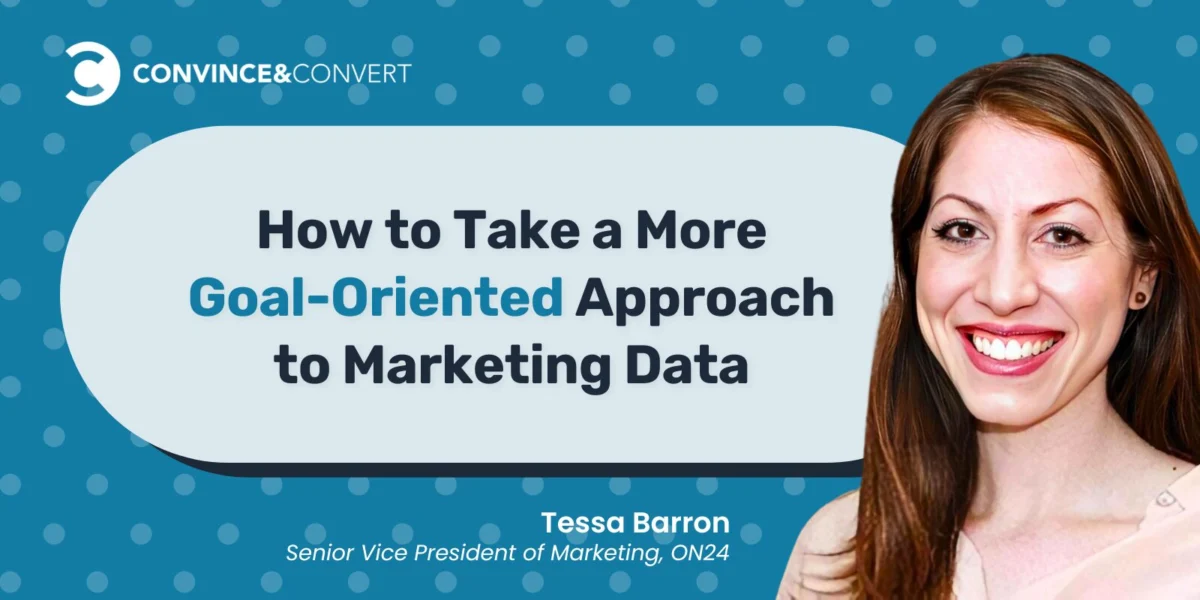
However, according to Tessa Barron, former Senior Vice President of Marketing at ON24, this approach is fundamentally flawed. In her recent appearance on the Data-Driven Decisions podcast, Barron argued that the solution to the resource-pipeline gap is not to work harder or faster, but to fundamentally shift from a "tactic-oriented" mindset to a "goal-oriented" one. By reevaluating how we capture data and how we define the role of marketing in the sales cycle, organizations can transcend the exhaustion of the "do more" cycle and achieve sustainable growth.
The Evolution of the Marketing Mandate
The catalyst for this necessary shift is the profound transformation in consumer behavior, particularly in the post-pandemic era. Audiences today are more discerning, bombarded by digital noise, and highly protective of their time. Yet, despite these structural shifts in the market, many marketing departments remain anchored to the same execution models they employed three or four years ago.
"We as marketers have to check in with ourselves and ask: ‘Have we changed? Are we still doing what we were doing years ago?’" Barron notes. If the answer is yes, she argues, it is an immediate red flag. Relying on the "tried-and-tested" playbook is no longer a path to success; in an era of diminishing returns, executing the same tactics with higher volume does not guarantee higher output.
The core of the issue lies in the sequence of operations. Most teams begin with a tactical plan—for instance, "We need to run four webinars in Q1." This approach is inherently backward. Instead, Barron advocates for a goal-first methodology. An objective should be framed as: "In Q1, we need to achieve a 10% uplift in our pipeline target or acquire X number of new, qualified accounts." By starting with the outcome, the tactics become secondary, chosen specifically because they are the most effective vehicles to reach that defined destination.
Decoding Intent: The Shift from "Data" to "Signals"
The digital transformation of the last decade has left marketing teams drowning in data. With CRM systems, marketing automation platforms, and web analytics, marketers have more information at their fingertips than ever before. However, raw data is often indistinguishable from noise.
Barron advocates for a linguistic and strategic pivot: marketers should stop looking for "data" and start looking for "signals." A signal is not merely a page view or a click; it is a specific behavioral indicator that correlates with a buyer’s propensity to convert.
The Art of the "Signal Trap"
Once a high-value signal is identified, the goal is to create "traps"—structured interactions that allow prospects to voluntarily provide information that qualifies their intent. ON24, as a platform, specializes in this, offering over 20 interactive elements—such as live polling, targeted surveys, and real-time Q&A—that transform passive content consumption into an active data-gathering exercise.
The power of this strategy is best illustrated by two distinct industry case studies:
- The Cloud Provider Strategy: A technology company struggling to regain market share identified that prospects using a specific cloud provider were 10 times more likely to convert into a sales opportunity. Rather than relying on broad-based demand generation, they embedded a direct question into their webinar registration and live session: "Which cloud provider are you currently utilizing?" This simple, high-intent data point allowed them to instantly segment their most promising prospects.
- The Pharmaceutical Insight: In the medical sector, a firm sought to reach physicians with specific patient needs. By hosting an educational webinar on therapeutic breakthroughs and asking, "How would you rate the risk of your current patient base (High, Medium, or Low)?", they were able to identify doctors managing high-risk patients. These respondents signaled immediate, high-value needs, allowing the marketing team to hand off a significantly more qualified lead to their sales counterparts.
Synergizing Sales and Marketing: The Frontline Feedback Loop
A significant contributor to the "do more with less" tension is the often-tenuous relationship between sales and marketing. Marketing teams frequently design content or landing pages to satisfy internal KPIs—such as lead volume—without verifying if those leads are actually useful to the sales team.
Barron suggests that marketers should step outside their silos and engage directly with the sales organization. The most effective way to refine a marketing strategy is to shadow the sales team and ask: "What questions do you ask a prospect to determine if they are qualified?"
Salespeople exist on the front lines. They hear the hesitations, the objections, and the specific pain points that never make it into a whitepaper. By aligning marketing’s data capture efforts with the qualifying questions used by the sales team, marketing can "prime the pump," providing salespeople with a clear, documented picture of the prospect before they even pick up the phone.
Crucially, Barron emphasizes that while marketing builds the "net" to capture potential leads, it is the sales team that creates the pipeline. The role of the marketer is to optimize the "little steps" in between—the journey from initial interaction to a qualified pipeline opportunity.
Bridging the Gap: The Micro-Optimization Framework
Once the goal is set and the signal is defined, the final stage of this framework is the optimization of the user journey. Marketers often overlook the "small" friction points that prevent a lead from becoming a pipeline opportunity.
Key areas for immediate optimization include:
- Lead Form Friction: Are the forms too long? Do they ask for redundant information that adds no value to the signal?
- Contextual Messaging: Is the communication tailored to the specific stage of the buyer’s journey, or is it a generic blast?
- Cross-Departmental Consistency: Does the messaging from the website match the messaging the prospect hears during a webinar or receives in a follow-up email?
Barron posits that by focusing on these micro-conversions, marketers can "turn the dials" of their strategy to gain better results without needing to increase their overall output. By fixing a broken lead form or refining the copy on a landing page, a team can improve conversion rates by a significant margin without spending a single extra dollar on media or content production.
Communicating Value to Stakeholders
The final hurdle in this transition is reporting. When a marketing team shifts its focus from vanity metrics (like total webinar attendees) to signal-based metrics (like "number of high-intent prospects identified"), they must bring the rest of the company along.
Stakeholders and executives outside of the marketing function often struggle with the technical complexities of attribution. To bridge this, Barron advocates for radical simplicity. Data should be presented in visually engaging, easily digestible formats that link specific strategies directly to financial outcomes.
When a marketing leader can present a dashboard that says, "We shifted our focus to target cloud-provider usage, and as a result, our conversion rate to sales opportunity increased by 15%," the narrative shifts from "we need more budget" to "we have a highly effective, data-backed engine."
Implications for the Future of Marketing
The shift proposed by Barron is a move toward professional maturity. It suggests that the future of marketing is not defined by the sheer volume of assets produced, but by the intelligence of the signals captured. In an economic environment where "more" is rarely an option, the ability to be surgical with data, highly collaborative with sales, and relentlessly goal-oriented is a competitive advantage.
By discarding the "do more" mindset, organizations can stop chasing the tail of unsustainable growth and begin building a more efficient, signal-driven pipeline. It is a transition that requires honesty, a willingness to kill off underperforming "tried-and-tested" tactics, and a deep, empathetic understanding of both the customer and the sales team. For those willing to make the shift, the rewards are clear: a more predictable pipeline, a more engaged audience, and a marketing team that is finally viewed as a direct driver of business revenue.
To learn more about implementing these strategies and to hear deeper insights from industry experts, the full series of the Data-Driven Decisions podcast is available to listeners seeking to modernize their marketing operations.