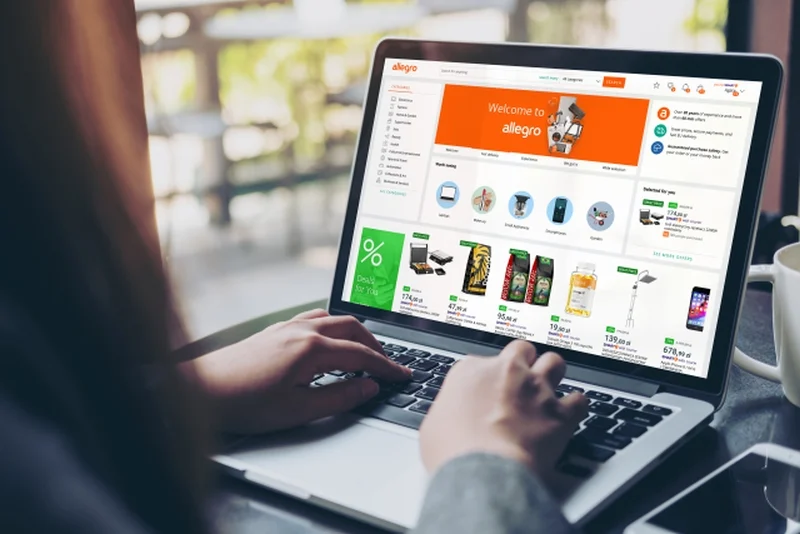
In a strategic move that underscores the evolving landscape of European e-commerce, Allegro—the undisputed titan of the Polish digital marketplace—has officially extended its services to consumers in Ukraine. While the company has opted against establishing a dedicated, localized platform within Ukrainian borders, it has integrated cross-border shipping capabilities directly into its primary Polish domain, Allegro.pl. This development represents a significant bridge in regional trade, allowing Ukrainian shoppers to access a vast inventory of goods previously restricted to the Polish market.
Main Facts: A Cross-Border Shift
The expansion, announced via a formal update in the Allegro Help Center, marks a pivotal change in the company’s international strategy. Rather than replicating the localized marketplace model successfully deployed in Czechia, Slovakia, and Hungary, Allegro is leveraging its existing infrastructure in Poland to facilitate direct-to-consumer exports to Ukraine.
The service is now live, supported by updated terms and conditions that explicitly govern the logistics and legalities of shipping to a war-torn nation. To ensure compliance with international trade regulations and to uphold the integrity of the platform, Allegro has implemented strict vetting processes. Most notably, the company has explicitly prohibited the resale of products purchased on its platform to Russia, Belarus, or any territories currently occupied by Russian forces. Furthermore, the company has extended its "Allegro Buyer Protection" program to cover shipments to Ukraine, providing a necessary layer of security for customers navigating the uncertainties of cross-border logistics during a period of conflict.
Chronology: The Evolution of a Regional Powerhouse
To understand the significance of this move, one must view it against the backdrop of Allegro’s recent operational history.
The Consolidation Phase
Earlier this year, Allegro made headlines by offloading its operations in Slovenia and Croatia. This decision, while surprising to some, was framed by leadership as a strategic "streamlining" of financial results. The objective was to consolidate resources and focus on core markets where the company could maintain a dominant competitive edge.
The Growth Trajectory
While scaling back in the Balkans, the Allegro Group has seen explosive growth in its core metrics. During the first half of the current year, the company reported a Gross Merchandise Value (GMV) increase of nearly 14 percent compared to the same period in the previous year. Even more telling of its international ambition is the surge in its international GMV, which climbed by approximately 65 percent. This upward trajectory provided the financial cushion and operational confidence required to look eastward toward Ukraine.
The Pivot to Ukraine
The decision to open up to Ukraine was not an overnight endeavor. It involved months of logistical planning, legal review, and the modification of the platform’s Terms and Conditions. By integrating Ukraine into its existing Polish shipping infrastructure, Allegro has bypassed the immense capital expenditure required to launch a new, local subsidiary, opting instead for a leaner, more agile entry model that serves the immediate needs of Ukrainian consumers.
Supporting Data: By the Numbers
The data surrounding Allegro’s performance suggests a company that is not merely surviving but thriving in a volatile economic climate.
- GMV Growth: The 14 percent aggregate GMV growth highlights the resilience of the Polish e-commerce sector. Despite inflationary pressures and supply chain challenges, the platform has maintained high consumer engagement.
- International Performance: The 65 percent increase in international GMV is perhaps the most critical metric for investors. It confirms that Allegro’s expansion into Czechia, Slovakia, and Hungary was not a vanity project but a high-yielding strategy. This performance indicator likely emboldened the executive team to test the Ukrainian market.
- Logistical Capacity: By utilizing its existing Polish fulfillment centers, Allegro is effectively scaling its operations without the overhead of additional regional offices. This allows for a higher margin on international transactions, provided that the logistics of cross-border customs are handled with the precision the company has built its reputation upon.
Official Responses and Policy Updates
The official communication from Allegro has been measured and precise, focusing on the technicalities of the update. The company’s announcement, which included an update to its Help Center, was accompanied by a clear set of restrictions designed to protect the platform from geopolitical complications.
Compliance and Ethics
The inclusion of strict clauses regarding the destination of goods is a testament to the heightened political climate. By prohibiting the movement of goods into Russia or Belarus, Allegro is aligning itself with broader European Union trade sanctions and moral imperatives. This is not merely a legal safety net; it is a brand-positioning move that reinforces the company’s commitment to supporting the Ukrainian economy while remaining compliant with international humanitarian and trade law.
Buyer Protection
The expansion of the "Allegro Buyer Protection" program is a critical component of this rollout. E-commerce in a country experiencing active conflict is fraught with risk—ranging from logistical delays to potential damage of goods. By guaranteeing that buyers have recourse, Allegro is effectively underwriting some of these risks, signaling to the Ukrainian consumer that they are a priority partner.
Implications: What This Means for the Future
For the Ukrainian Consumer
For the average Ukrainian shopper, this opens a window to a massive marketplace. Allegro offers a wider variety of goods, often at more competitive prices than what might be available through local retail channels currently strained by the war. It also provides access to high-quality European brands that may have limited distribution in Ukraine.
For the E-commerce Landscape
This move signals that major players are looking to integrate Ukraine more deeply into the European economic fabric. It is a form of "digital integration" that precedes formal economic alignment. If Allegro’s model succeeds in Ukraine, it may pave the way for other mid-sized European marketplaces to adopt similar cross-border shipping models, rather than risking the heavy investment of full-scale local launches.
Competitive Pressure
Polish retailers and logistics companies stand to benefit, but they will also face increased pressure. The efficiency of Allegro’s logistics network will set a new benchmark for cross-border delivery times to Ukraine. Local Ukrainian competitors will need to either enhance their own supply chains or focus on hyper-local services that international giants cannot easily replicate.
Geopolitical Considerations
Allegro’s entry into the Ukrainian market is inherently political. By normalizing trade links with Ukraine, the company is demonstrating a commitment to the country’s economic stability. The strict "no-resale" clauses act as a barrier to those who might attempt to use the platform for gray-market trade, ensuring that Allegro remains a clean, transparent partner in the region.
Conclusion
Allegro’s decision to open its digital doors to Ukraine is a landmark event in the maturation of the Central and Eastern European e-commerce market. By avoiding the pitfalls of a costly local launch and instead extending its robust, proven Polish infrastructure, the company has demonstrated both caution and ambition.
As the company continues to see double-digit growth, the success of this Ukrainian venture will likely serve as a blueprint for further expansion. It is a delicate balance—navigating the complexities of a war-affected nation while maintaining the high service standards that have made Allegro the premier e-commerce destination in Poland. For now, the move serves as a vital economic lifeline for Ukrainian consumers, while further solidifying Allegro’s position as a dominant, cross-border force in European digital trade.
The coming quarters will be telling. If the integration of logistics and customer service proves successful, we can expect to see further refinements to the platform, potentially including more localized support for the Ukrainian language or specialized shipping incentives. For the time being, however, the message is clear: Allegro is here, and it is ready to serve the Ukrainian market with the full weight of its considerable operational strength.