In the modern enterprise, the promise of data-driven decision-making often stalls at the "last mile"—the point where technical specifications must be translated into reliable, usable data products. While organizations have spent years building vast data lakes and warehouses, the challenge of maintaining quality, context, and accessibility remains persistent. Enter Entropy Data, a vendor attempting to solve this by synthesizing data contracts, semantics, and a marketplace model into a unified, platform-independent solution. By catering to both human users and autonomous AI agents, the company is carving out a niche as a critical layer in the evolving data infrastructure stack.
Main Facts: The Entropy Data Proposition
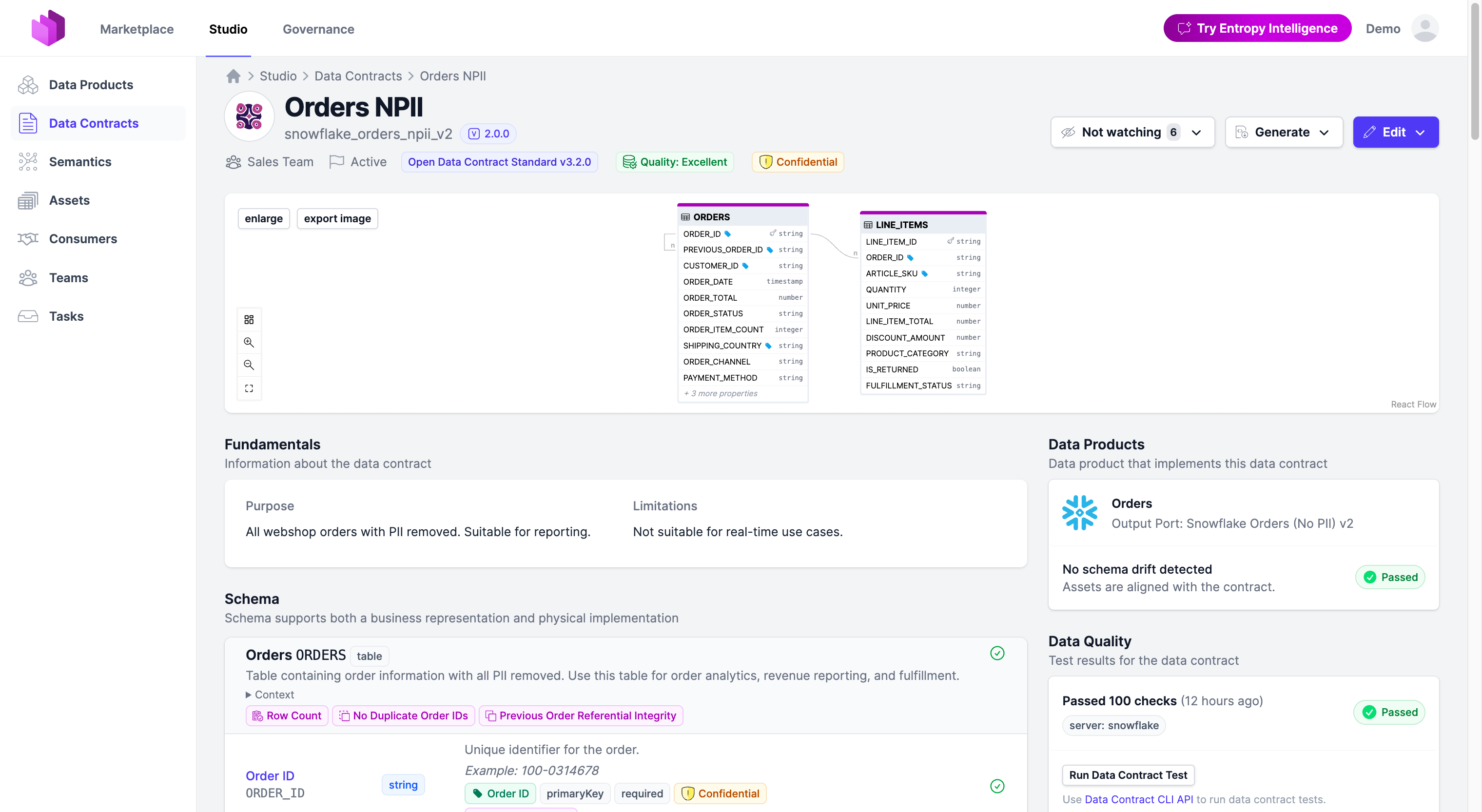
Entropy Data is a spin-off of the established IT consultancy INNOQ, officially operating as an independent entity for approximately one year. At its core, the platform serves as a standards-based, platform-independent data product marketplace. Unlike traditional data catalogs that act primarily as passive repositories for metadata, Entropy Data is designed to operationalize data products. It enables organizations to manage the full lifecycle—from initial specification and development to publication and access control.
The platform distinguishes itself through its commitment to open standards. By utilizing the Open Data Contract Standard (ODCS) and the Open Data Product Standard (ODPS), it ensures that metadata and product definitions are not locked into a proprietary vendor silo. This is a crucial differentiator for large enterprises that maintain multi-platform environments—using tools like Snowflake, Databricks, and dbt—and wish to retain sovereignty over their data architecture.
The platform is structured around three functional pillars:
- The Marketplace: A discovery and access layer that provides visibility into available data products.
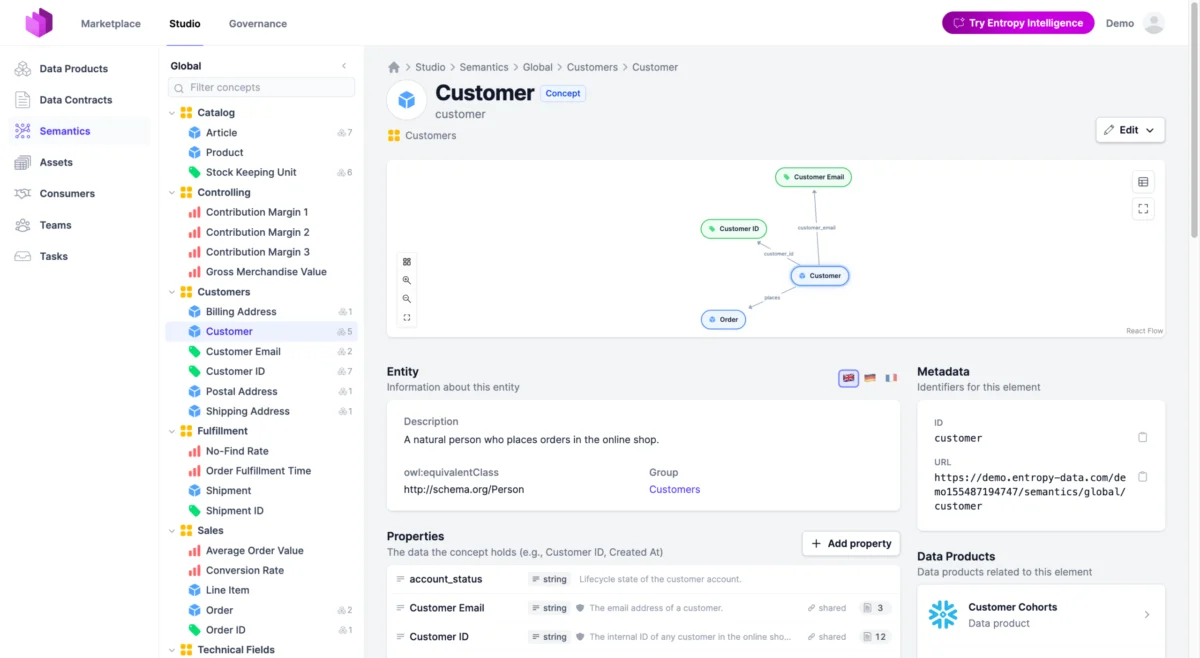
- Semantics: A shared ontology layer that translates technical data into business concepts, metrics, and relationships.
- The Data Product Builder: A framework that provides coding agents with the necessary context to automate the implementation of new data products.
Chronology: From Consultancy Roots to Market Maturity
The evolution of Entropy Data reflects a growing industry trend toward "Data Mesh" and "Data Product" architectures.
- 2023: The product, formerly known as "Data Mesh Manager" and "Data Contract Manager," is launched under the auspices of INNOQ to address the operational friction in managing data products.
- Late 2023 – Early 2024: The company transitions into an independent, stand-alone entity. Despite its small headcount of six employees, it achieves profitability through organic growth.
- Present Day: The company reports approximately one million euros in recurring license revenue and has secured a diverse customer base of 13 paying clients, including industry heavyweights such as Kuehne+Nagel, GEODIS, and DKB.
A significant part of the company’s growth strategy has been its aggressive open-source approach. Its Data Contract CLI currently sees roughly one million downloads per month, serving as a "top-of-funnel" indicator of widespread developer interest in standardizing data contracts. With over 1,000 GitHub stars for its core components, Entropy Data has established a strong developer-led reputation before even attempting to scale its enterprise software offering.
Supporting Data and Technical Architecture
The strength of the Entropy Data platform lies in its ability to abstract complexity without replacing the underlying infrastructure. The data itself remains housed in native platforms, while transformation workloads continue to run through existing tools like dbt. Entropy acts as a "lightweight metadata layer" that governs these disparate systems.
The Agentic Approach to Data Products
A notable feature is the platform’s support for AI-driven development. The coding agent operates within a four-layer context:
- Ontology: Providing the "why" and "what" of business meaning.
- Data Contract: Defining the "how" and the technical requirements.
- Skills: Codifying technical implementation requirements specific to the customer.
- Marketplace: Providing the inventory of existing products for reuse.
This framework allows agents to move beyond simple boilerplate code generation; they can actively request access to source data, generate transformation logic, and report lineage back to the platform. By supporting both "human-ready" (discovery and documentation) and "AI-ready" (machine-readable contracts) interfaces, Entropy Data ensures that the platform is as relevant for developers as it is for business analysts.
Purpose-Based Access Control
Perhaps the most innovative, albeit experimental, feature is the patent-pending "Purpose-Based Access Control." Instead of simple role-based permissions, the system checks whether a specific query aligns with the documented purpose of the data product. It can even intercept SQL execution to prevent potential re-identification of users in sensitive datasets—a critical requirement for companies operating under strict GDPR and compliance mandates.
Official Perspectives and Industry Positioning
While the company remains lean, its leadership emphasizes that the platform is not a "magic button" for data governance. It is a tool that requires an established product mindset within the client organization.
"Entropy Data is built for the data product owner," the company notes. It does not replace the need for domain-specific accountability. The platform provides the scaffolding—scores, lineage tracking, and drift detection—but the responsibility for data quality and semantic integrity remains with the human owners.
Industry analysts observe that Entropy Data’s competitive stance is unique. It does not try to compete with the feature-bloated catalogs of monolithic vendors. Instead, it positions itself as the "glue" that allows an organization to remain platform-agnostic. By avoiding vendor lock-in, it appeals to CTOs and CDOs who are wary of the "walled garden" approach taken by major cloud data warehouse providers.
Implications for the Future of Data Management
The rise of Entropy Data suggests three critical shifts in how enterprises will handle data in the coming years:
1. The Death of the Passive Catalog
The era of the "data graveyard"—a catalog where documentation goes to die—is ending. Organizations are shifting toward active, executable metadata. By embedding data contracts into the CI/CD pipeline via CLI tools, companies are ensuring that quality is tested at the point of creation, not discovered during an audit.
2. The Rise of the "Control Plane"
While Entropy Data currently functions primarily as a marketplace, its roadmap points toward a comprehensive control plane. The industry is signaling a move away from centralized, bottlenecked data governance teams toward decentralized, automated policy enforcement. For large organizations, the ability to automate "gates" (e.g., blocking a deployment if it violates a data contract) will be the difference between scaling data products and suffering from unmanageable technical debt.
3. AI-Native Data Engineering
The integration of coding agents into the product lifecycle is a glimpse into the near future. As data models become more complex, manual maintenance of ontologies and documentation will become impossible. Entropy Data’s semantic-first and reuse-first approaches demonstrate how AI can assist human owners in maintaining consistency across hundreds of disparate data products.
The Challenge Ahead
However, the path forward is not without hurdles. The platform’s reliance on the discipline of human owners is both a strength and a potential weakness. If an organization lacks the foundational data literacy or the "product culture" to maintain semantic models, the platform cannot compensate for that lack of rigor. Furthermore, the transition from a "Marketplace" to a true "Control Plane" will require the company to develop more robust enforcement mechanisms, such as multi-stage approval workflows and cross-platform policy execution.
Conclusion
Entropy Data has successfully identified a critical friction point in the data value chain: the disconnect between technical data infrastructure and business-level semantics. By championing open standards like ODCS and ODPS, the company offers a compelling alternative to proprietary vendor ecosystems.
For organizations that have matured beyond the "centralized data lake" phase and are now wrestling with the complexities of a data mesh or a distributed product-based model, Entropy Data provides a coherent, lightweight, and extensible path forward. While it remains a young company with a burgeoning ecosystem, its focus on "AI-ready" data and platform independence positions it as a vital player in the next generation of data management infrastructure. Success will ultimately depend on its ability to evolve from an informative dashboard into a robust, automated enforcement engine that can handle the rigorous demands of enterprise production environments.