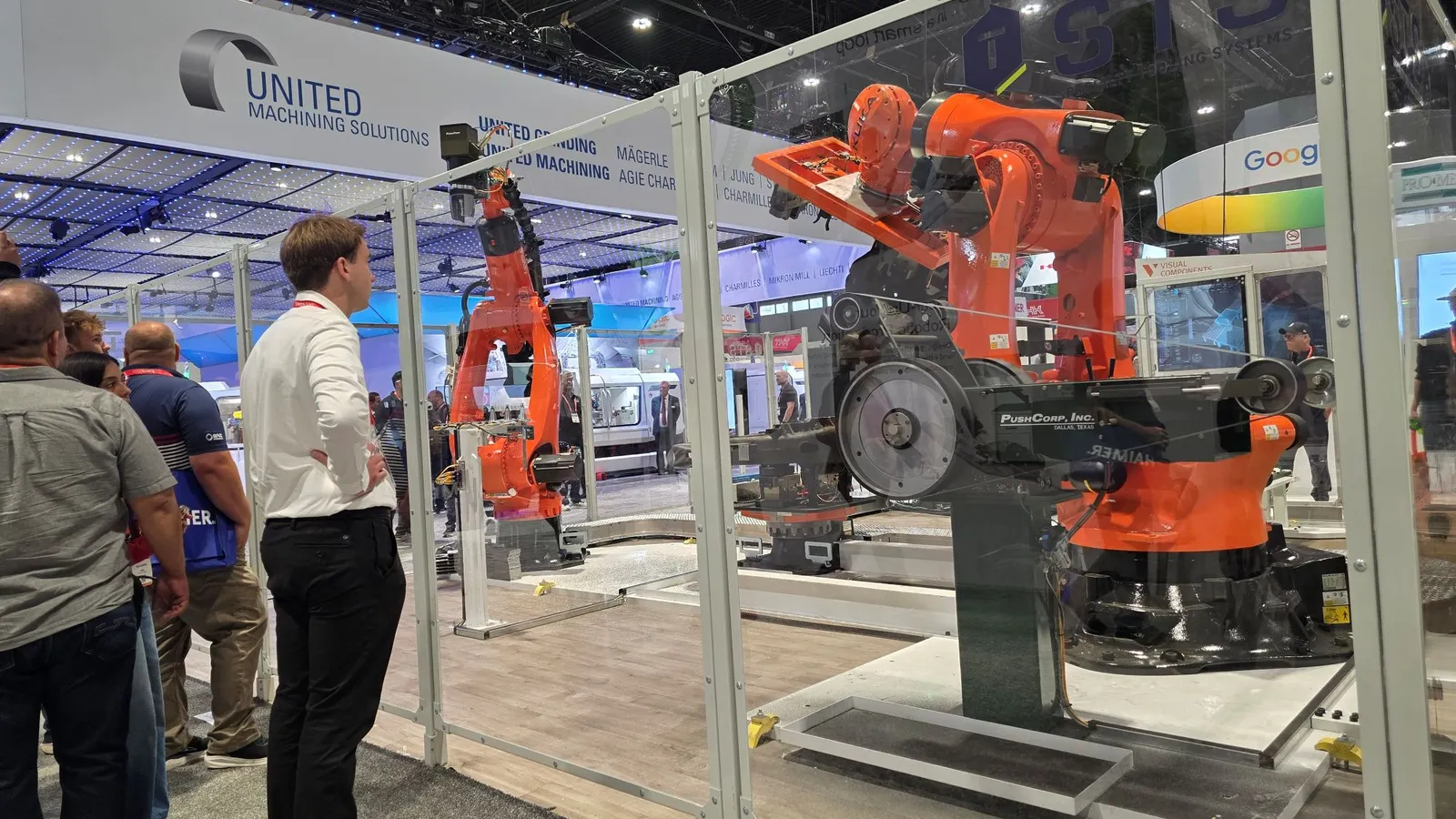
The manufacturing sector is currently gripped by a technological gold rush. From the factory floors of Chicago to the high-tech hubs of Europe and Asia, manufacturers are racing to implement automation, robotics, and artificial intelligence (AI) at a blistering pace. Industry projections suggest that the adoption of these technologies will more than double by 2030, promising unprecedented throughput, predictive maintenance, and operational efficiency.
However, as the excitement reaches a fever pitch, industry experts are sounding a note of caution. The rush to adopt “shiny new objects” often obscures a fundamental reality: technology is not a panacea for operational inefficiency. Without a robust foundation, high-dollar investments in automation can lead to expensive, systemic failure.
At the recent International Manufacturing Technology Show (IMTS) in Chicago, Sven Diedrich, Head of Digital Transformation and Business Solutions at Pinaxis, outlined a strategic framework designed to prevent these costly missteps. He argues that before a single robot is bolted to the floor, leaders must audit their organization across four essential pillars: People, Processes, Data, and Systems.
The Main Facts: Defining the Automation Trap
The primary risk in the current manufacturing landscape is the "siloed approach." Companies frequently purchase robotics for throughput, software for visibility, and AI for predictive analytics as independent, disconnected solutions. While each may deliver marginal gains in isolation, they rarely contribute to a holistic digital transformation.
Diedrich posits that the disconnect between these four pillars is the silent killer of ROI. "Are your people, processes, data, and systems actually aligned, or do they improve on their own in silos?" Diedrich asked. "That is what we come across a lot: There is a disconnect between the four pillars."
The core challenge is that companies often prioritize the "how" (the technology) over the "what" (the underlying operational maturity). A common hypothetical scenario involves a firm identifying a capacity bottleneck. Engineering and IT departments are tasked with automating the fix, only to discover—too late—that the organization’s data is inconsistent, the staff is untrained to maintain the system, and the automated process contradicts existing company protocols. The result is a high-cost environment that fails to meet production goals, proving that even the most advanced technology cannot compensate for a fragile foundation.
Chronology of Implementation: A Roadmap to Readiness
For manufacturing leaders, moving from the ideation phase to full-scale automation requires a phased, methodical approach.
- The Diagnostic Phase: Before procurement, companies must conduct an honest audit of their current state. This involves mapping out exactly where "tribal knowledge" exists and where processes rely on human intervention to compensate for structural weaknesses.
- The Alignment Phase: Once gaps are identified, stakeholders from IT (Information Technology) and OT (Operational Technology) must break down silos. This stage defines the rules of engagement, system ownership, and the specific metrics for success.
- The Pilot Phase: Implementing automation in a controlled environment. Crucially, the pilot should not be judged solely on output, but on the ability of the existing team to support, troubleshoot, and iterate the technology.
- The Scaling Phase: Once a pilot is successful, scaling involves more than a "copy-paste" of the setup. It requires adapting the system to the unique cultural and operational nuances of different sites, ensuring that the "four pillars" are present across every facility.
Supporting Data and Strategic Considerations
The urgency of this transition is supported by shifting global market demands. Beyond the "four pillars," manufacturers must also account for external pressures that dictate the feasibility of automation.
Energy Demands and Infrastructure
As factories become more automated, the sheer energy footprint of robotics and data-heavy AI processing increases. Energy costs are no longer a background utility expense; they are a primary driver of operational viability. Companies that fail to account for the power requirements of their new automated lines risk facing significant, unexpected overhead.
The Role of Physical AI
Testing is another hurdle. Unlike software, which can be patched remotely, physical AI—robotics that interact with the physical world—requires rigorous stress testing. If an automated system lacks the flexibility to handle minor variations in materials or environmental conditions, the "consistent" nature of a robot becomes a liability rather than an asset.
Official Perspectives: Breaking Down the Pillars
Diedrich’s framework offers a detailed breakdown of how organizations should evaluate their readiness across the four pillars.
1. People: The Overlooked Variable
Too often, the workforce is treated as an afterthought. "The equipment gets the attention, the software gets the attention, and the business case gets the attention, but not the people who need to use the automation technology," Diedrich noted.
True readiness requires a clear answer to four questions: Who owns the process? Who operates the solution? Who supports it? Who responds when it breaks? Furthermore, automation does not eliminate work; it changes the nature of work. It demands new skill sets, and organizations must bridge the gap between IT and OT to define these new roles. If a company assumes that existing staff can seamlessly pivot to managing advanced robotics without significant retraining and support, they are setting themselves up for failure.
2. Processes: Avoiding the "Efficient Waste" Trap
A common pitfall is the belief that automation will automatically fix a broken process. In reality, automation is an amplifier. "Automation can make a good process extremely efficient, but it can also make a bad process extremely efficient as well," warned Diedrich. If an organization digitizes a workflow that is already riddled with waste, they are simply "digitizing waste."
Furthermore, human operators often act as a buffer for process shortcomings—a phenomenon known as "tribal knowledge." When automation replaces these humans, those invisible gaps in the process are exposed, often leading to sudden, catastrophic failures because the machine cannot adapt as a human would.
3. Data: The Currency of AI
AI is only as good as the data it consumes. For automation to work, data must be trustworthy, fresh, and understood across the organization. This includes master data (item dimensions, materials), transactional data (inventory, orders), and process data (cycle times, quality signals). Without clean data, the predictive capabilities of AI become a "black box" that produces unreliable outputs.
4. Systems: The Communication Fabric
Systems must facilitate, not hinder, communication. When IT and OT exist in their own silos, the shop floor is often disconnected from the strategic goals of the business. A successful system ensures that information flows bi-directionally: the machine reports status to the system, and the system provides actionable, real-time insights to the operator.
Implications: The Path Forward
The overarching implication for the manufacturing sector is that automation is a management challenge, not just a technical one. The allure of industry 4.0 has led many firms to prioritize hardware over holistic transformation.
The transition to a highly automated factory is not a destination but a continuous process of improvement. Leaders must resist the pressure to "go all-in" before they have the infrastructure to support it. By grounding their strategy in the four pillars—people, processes, data, and systems—manufacturers can avoid the "mediocre automation environment" that Diedrich warns against.
In conclusion, the most successful manufacturers of the next decade will not necessarily be those with the most robots. They will be the ones who have done the difficult, unglamorous work of aligning their human capital with their technical infrastructure. As Diedrich emphasized, the goal is to build a system that is not only efficient but resilient enough to handle the inevitable complexities of the modern global supply chain. In an era of rapid technological change, the most effective competitive advantage remains a solid, well-connected foundation.