The week ending October 9, 2026, has proven to be a watershed moment for international relations, human rights advocacy, and domestic governance. From the halls of the Nobel Committee in Oslo to the streets of Paris and the contested borders of the Horn of Africa, the intersection of justice, protest, and power has dominated the global narrative.
Nobel Peace Prize 2026: The Intersection of Justice and Controversy
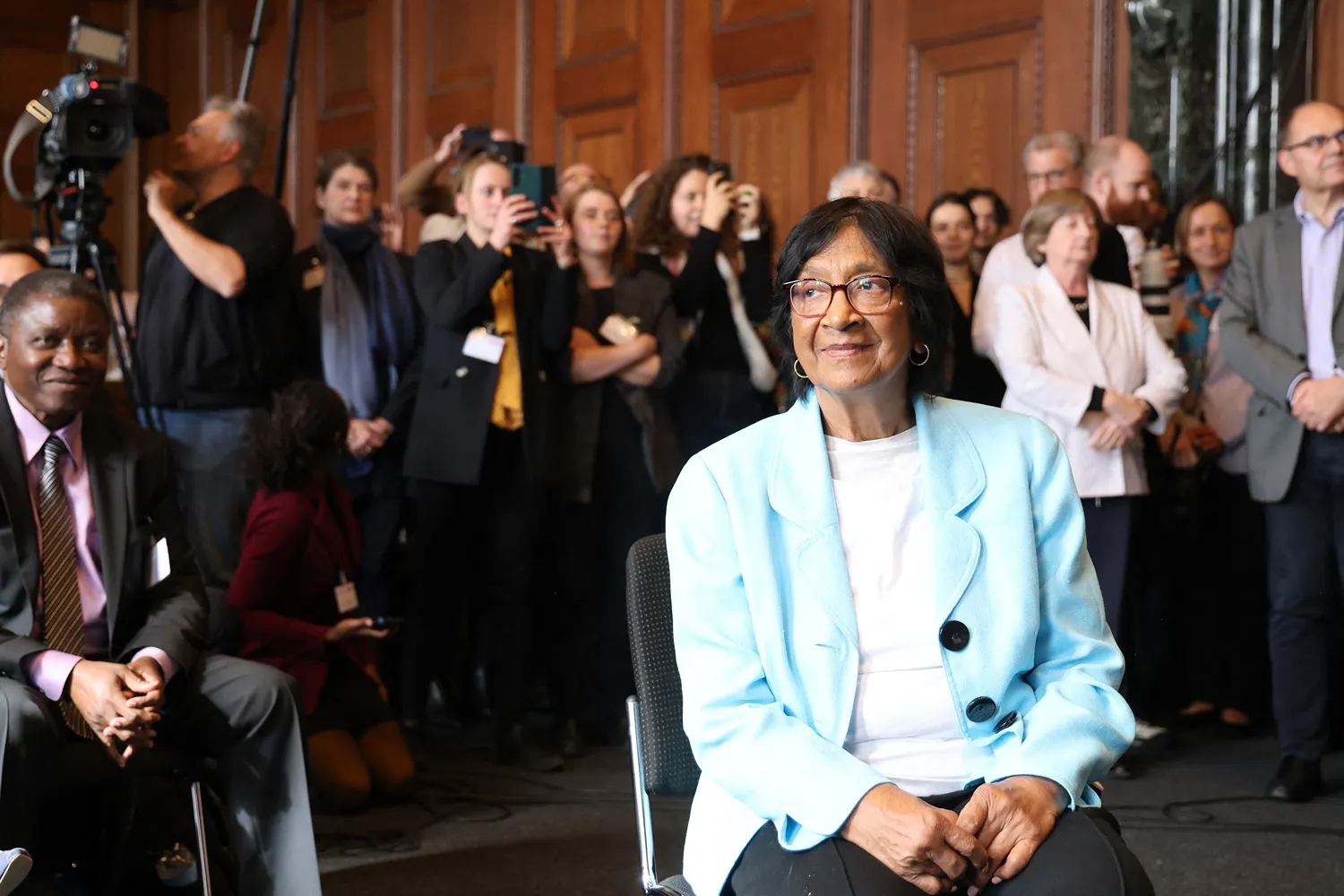
The 2026 Nobel Peace Prize has been awarded to Navi Pillay, the esteemed South African-born jurist whose career has spanned decades of landmark human rights litigation. Her selection by the Norwegian Nobel Committee is being hailed as a triumph for international rule of law, yet it has simultaneously ignited a firestorm of diplomatic condemnation from the United States and Israel.
The Life and Legacy of Navi Pillay
At 85, Pillay’s career is a roadmap of modern human rights jurisprudence. Her early years were defined by a relentless fight against the machinery of apartheid, where she served as a defense attorney for political prisoners, most notably Nelson Mandela. Her subsequent roles—as a judge on the International Criminal Tribunal for Rwanda, the International Criminal Court, and as the U.N. High Commissioner for Human Rights—have established her as a formidable architect of international legal standards. Currently, she serves as a judge on the International Court of Justice (ICJ), overseeing the ongoing genocide proceedings against Myanmar.
The Catalyst of Discord: The Gaza Inquiry
The primary friction point involves Pillay’s recent leadership of an independent U.N. commission investigating the conflict in Gaza. Her team’s 2025 findings—which alleged an explicit intent by Israeli authorities to destroy the Palestinian population in Gaza—sent shockwaves through the diplomatic community. The commission’s report concluded that the "highest echelons" of the Israeli government bore responsibility for atrocity crimes.
Israel’s categorical rejection of the findings was mirrored by the United States, which responded by withdrawing from the U.N. Human Rights Council. The tension has since escalated into a broader confrontation between Washington and the international judicial system.
Chronology of the Diplomatic Fallout
- September 2025: The U.N. commission, led by Pillay, releases its report alleging genocide in Gaza.
- October 2025: The United States officially withdraws from the U.N. Human Rights Council in protest of the commission’s mandate.
- August 2026: The Trump administration moves to formalize sanctions against the International Criminal Court (ICC), citing inherent bias against the U.S. and Israel.
- October 9, 2026: The Nobel Committee announces Navi Pillay as the recipient of the Peace Prize.
- October 9, 2026 (Evening): President Donald Trump characterizes the award as a "shameful" act that undermines the integrity of the Nobel institution.
Official Responses and Implications
The U.S. Stance
President Donald Trump took to Truth Social to lambast the Nobel Committee, arguing that the award signifies a departure from reality. "The Nobel Committee shamed itself beyond repair," Trump wrote. He further criticized Pillay’s credibility, labeling the investigation into Israel a "phony" endeavor and asserting that no individual was more deserving of the honor than himself. The White House continues to characterize the ICC and its associated bodies as rogue institutions that operate without regard for national sovereignty.
The Committee’s Defense
The Norwegian Nobel Committee remains steadfast in its decision. In their official statement, they argued that honoring Pillay is an essential act to "remind the world that the rule of law underpins the system we have set up to ensure peace." They emphasized that Pillay’s "independence, expertise, and steadfastness" make her the standard-bearer for justice in an era of global volatility.
Pillay’s Rebuttal
Speaking from Nuremberg—the site of the post-WWII trials that established modern genocide law—Pillay issued a stern warning regarding the global trend toward dismantling international justice. "Efforts to weaken international criminal justice endanger the progress painstakingly made since Nuremberg," she stated. "They risk returning us to a world in which power, rather than law, determines whose suffering matters."
Civil Unrest: The European Education Crisis
While the Nobel discourse focused on international law, the streets of Europe were occupied by a different kind of justice: the right to adequate education.
France: A Partial Victory
In France, student-led protests secured a significant, if partial, victory this week. Following three weeks of intense demonstrations, Education Minister Édouard Geffray pledged to deploy 3,000 qualified teachers to address chronic staffing shortages. The move, estimated to cost "several dozen million euros," is an attempt to stabilize an education system stretched to its breaking point.
However, the protests are far from over. With 141 schools still shuttered, student and teacher unions have scheduled a nationwide strike for Tuesday. Their demands now extend beyond staffing to address structural issues, including dilapidated infrastructure and severe classroom overcrowding. The scale of the unrest is historically significant, with over 6,800 arrests—the vast majority being minors—and hundreds of police injuries reported since the movement began.
Belgium: The Spread of Discord
The discontent has spilled across the border into Belgium. On Friday, students joined striking labor unions in Brussels to protest the high cost of living and austerity measures. The demonstration turned volatile, with police utilizing tear gas and water cannons against crowds that had swelled into the tens of thousands. The protesters highlighted a deteriorating French-language education system, citing systemic neglect and the rising cost of academic materials as primary grievances.
Geopolitical Instability: The Horn of Africa
The fragile peace in East Africa appears to have fractured entirely this week as Ethiopia and Eritrea leveled accusations of "all-out invasion" against one another.
The Ethiopian Allegation
In a formal letter to the U.N. Security Council, the Ethiopian government accused Eritrean forces of a deliberate incursion into its territory. Addis Ababa described the maneuver as a "blatant act of aggression" and invoked its inherent right to self-defense. Observers note that the underlying tension stems from Ethiopia’s landlocked status; Prime Minister Abiy Ahmed has previously labeled access to the Red Sea an "existential matter," a stance that has deeply alarmed the Eritrean leadership.
The Eritrean Counter-Narrative
Eritrea, conversely, views Ethiopia as the regional aggressor. Information Minister Yemane Gebremeskel characterized the recent events as the culmination of three years of unprovoked hostility. Asmara maintains that Ethiopia’s internal conflicts, particularly the collapse of the truce with the Tigray People’s Liberation Front (TPLF), are being used as a pretext for an expansionist agenda aimed at seizing the port of Assab. The situation has intensified to the point of active combat, with reports of drone strikes on both sides of the border throughout the week.
The "Cockroach" Movement: India’s Youth Rebellion
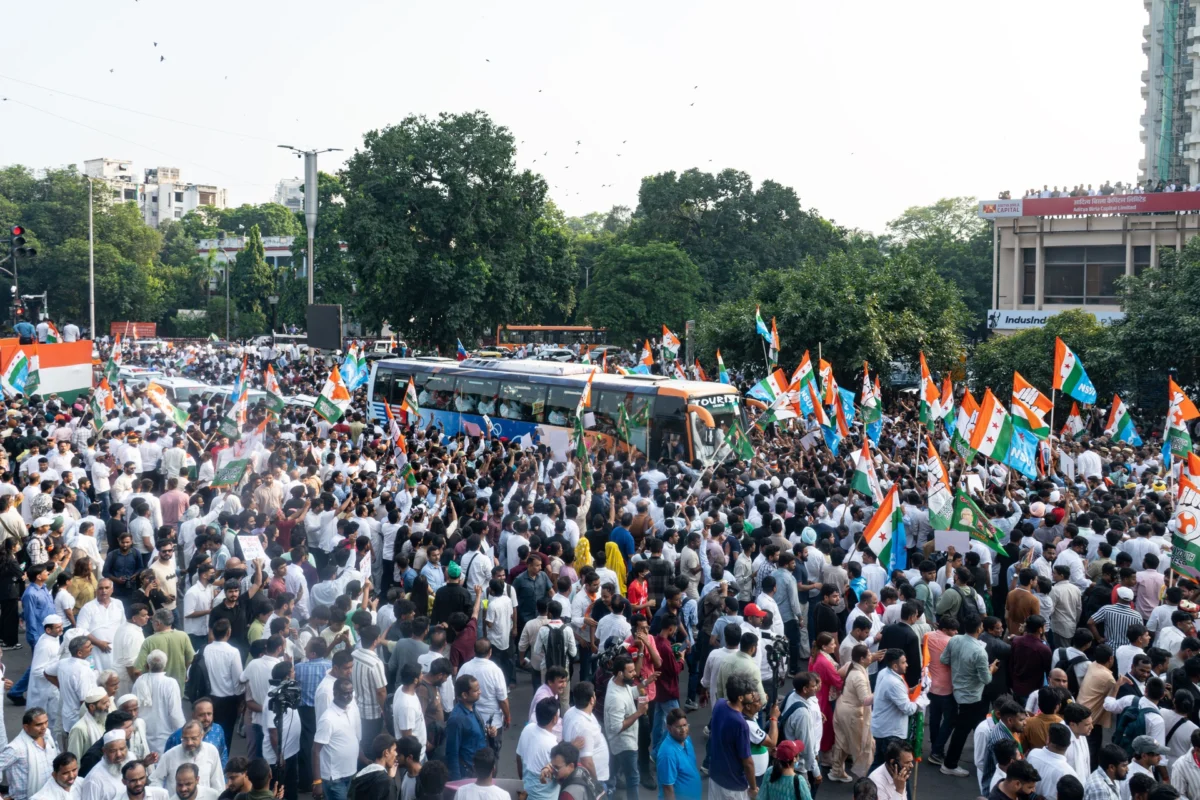
In New Delhi, the government has responded with heavy-handed security measures to contain the "Cockroach Janta Party" (CJP), a satirical youth movement born out of economic despair. The movement’s name is a reclamation of an insult hurled by India’s Supreme Court Chief Justice, who previously referred to the nation’s unemployed youth as "parasites" and "cockroaches."
The movement, which has gained significant traction on social media, is currently protesting an alleged election commission scandal. Opposition leaders claim that 130 million names have been purged from voter lists, disproportionately affecting minority communities. While the Bharatiya Janata Party (BJP) denies these allegations, citing routine verification and mortality records, the intensity of the protests has resulted in the closure of 57 metro stations and the cancellation of numerous train services across the capital.
A Diplomatic Oddity: Sports and Statecraft
Amidst the week’s heavy news cycle, a lighter moment of international cooperation occurred in Manila. Polish President Karol Nawrocki, on the first visit by a Polish head of state to the Philippines since 1973, took time from his diplomatic trade talks to engage in a boxing training session with Philippine cabinet secretary and boxing legend Manny Pacquiao. The meeting served as a surreal punctuation mark to a week characterized largely by deep-seated divisions.
Conclusion: The Path Ahead
The events of this week highlight a world in transition. Whether it is the legal battle over the definition of genocide, the struggle for equitable education in Western Europe, or the volatile reordering of the Horn of Africa, the common thread remains the tension between established systems of power and the rising demand for accountability. As the world looks toward the upcoming runoff election in Brazil—where the country will decide between incumbent Luiz Inácio Lula da Silva and Flávio Bolsonaro—the global community remains on a precipice, waiting to see if these conflicts will be resolved through diplomacy or further escalation.