By Editorial Staff
Published October 9, 2026
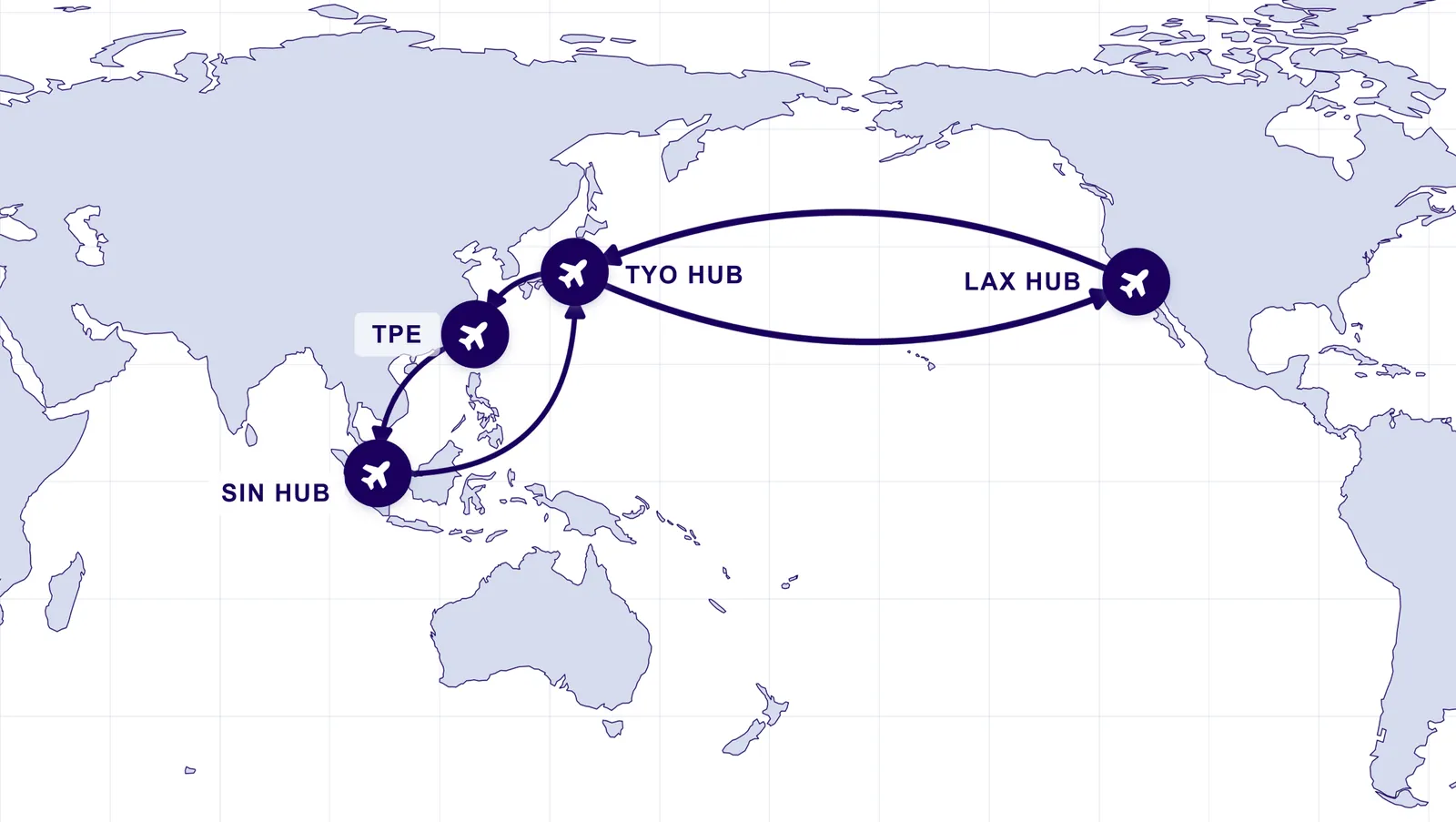
In a move designed to fortify the global digital infrastructure supply chain, logistics giant Nippon Express and Japan Airlines (JAL) have officially inaugurated a new, dedicated weekly air cargo circuit. This high-capacity route connects the critical gateway of Los Angeles (LAX) with key industrial and technology hubs in Asia—specifically Narita (NRT), Taiwan (TPE), and Singapore (SIN).
As the world continues to grapple with the exponential growth of generative AI and the massive expansion of global data centers, the necessity for reliable, heavy-lift air freight has reached a fever pitch. By deploying a 100-ton capacity freighter, the partnership aims to alleviate bottleneck pressures for semiconductor manufacturers and AI hardware providers, offering a bespoke solution for the transport of oversized server racks and sensitive digital infrastructure equipment.
Main Facts: A New Corridor for High-Tech Logistics
The collaboration between Nippon Express and Japan Airlines represents a targeted response to a shifting global trade landscape. The service is not merely a point-to-point connection but a sophisticated circuit designed to facilitate flexible logistics.
Key details of the operation include:
- Strategic Hubs: The route creates a vital artery between North America and the heart of Asia’s technology manufacturing sector.
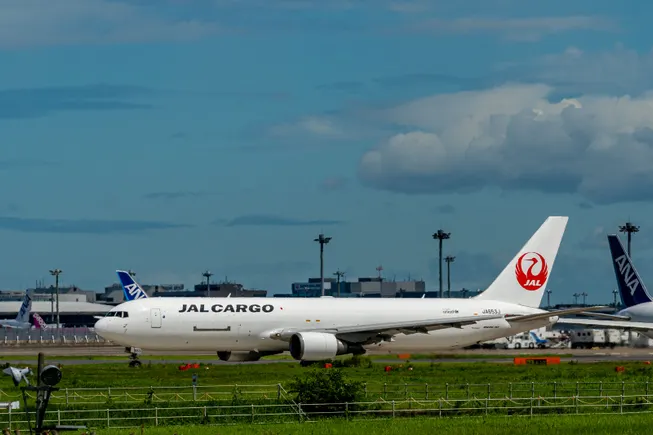
- Specialized Capacity: The utilization of 100-ton freighter aircraft allows for the movement of heavy, oversized cargo that standard passenger-belly freight often cannot accommodate.
- Operational Flexibility: The "circuit" design allows for the loading and unloading of cargo at each port of call. This enables logistics managers to design highly customized transport routes that serve not only the U.S. West Coast but also extend reach into Latin American markets.
- Intra-Asia Efficiency: Beyond the Transpacific leg, the service addresses a significant gap in the market: the lack of large-scale freighter capacity operating within Asia, specifically for high-value semiconductor components.
Chronology: The Road to the Transpacific Link
The launch of this service follows a sustained period of volatility and growth in the air cargo sector. To understand the significance of this development, one must look at the recent trajectory of the logistics industry:
- Mid-2024: The "AI Gold Rush" begins to put unprecedented pressure on global air freight capacity as demand for high-end GPUs and server hardware surges.
- Early 2025: Logistics providers observe a shift in shipping patterns, with companies moving away from standard maritime transit due to transit time risks, opting instead for the speed of air cargo to meet aggressive data center build-out timelines.
- June 2026: Global air cargo demand hits a notable milestone, posting a 7% year-over-year increase, largely buoyed by the tech sector, according to data from Xeneta.
- August 2026: Global semiconductor sales reach $159.7 billion, marking 18 consecutive months of growth. Regional data shows a 180% surge in sales across the Americas.
- October 2026: Nippon Express and JAL finalize the integration of their freighter circuits, officially commencing the new route to address the sustained high-tech demand.
Supporting Data: Why AI is Driving Air Freight
The economic engine behind this new route is the insatiable demand for semiconductor hardware. Recent statistics illustrate a market that is not just growing, but accelerating.
According to the World Semiconductor Trade Statistics (WSTS), the industry has surpassed the $1 trillion cumulative sales mark through August 2026. This data underscores the massive logistical effort required to support a decentralized, globalized tech ecosystem.

While AI-related cargo currently accounts for less than 10% of total global air cargo volume, its impact is disproportionately high. Unlike consumer goods, which are often shipped in smaller, predictable batches, AI hardware is bulky, heavy, and extremely sensitive to damage and time-to-market constraints.
Furthermore, the regional distribution of this growth is stark. The 143% growth in Asia-Pacific semiconductor sales highlights why Nippon Express and JAL are focusing so heavily on the NRT-TPE-SIN loop. By creating a circuit that links these nodes, the carriers are effectively reducing the "logistical friction" that previously slowed down the movement of components from fabrication plants to assembly centers and eventually to the data centers of the Americas.
Official Responses and Strategic Rationale
In their joint announcement, executives from both companies emphasized that this service is a direct response to the "digital infrastructure investment" era.
"The service enables the design of diverse transport routes and efficient transport operations," a spokesperson for the partnership noted. By allowing cargo to be managed at each port, the airlines are providing a "modular" logistics solution. For a company shipping server racks from Taiwan to a data center in the United States, the ability to have a reliable, dedicated, and heavy-lift freighter is a strategic advantage that far outweighs the premium cost of air freight compared to ocean transit.

The partnership also highlighted that the choice of Los Angeles as the North American anchor is deliberate. LAX remains the primary gateway for Transpacific trade, and by securing dedicated freighter slots there, Nippon Express ensures that cargo can be rapidly transshipped to inland destinations via truck or secondary air connections, effectively streamlining the final mile for tech giants.
Implications: The Future of the Transpacific Tradelane
The launch of this service by Nippon Express and JAL is symptomatic of a broader trend: the "specialization" of air cargo. Carriers are moving away from the "one-size-fits-all" model to compete in niche, high-growth corridors.
1. The Shift to Specialized Logistics
We are seeing a divergence in the air cargo market. While general freight remains subject to broader economic cycles, the "tech-hardware" lane is becoming increasingly decoupled from traditional consumer retail trends. This suggests that the air freight sector is becoming a strategic utility for the tech industry, similar to power or water.
2. Competitive Response from Other Carriers
The move by Nippon Express and JAL is likely to trigger a competitive response. DHL Global Forwarding, for instance, has already begun retooling its network, as evidenced by their new thrice-weekly service between Bangkok and Cincinnati. As these logistics giants race to secure capacity, we may see a "capacity war" that could either drive down prices for shippers or lead to a more efficient, high-tech logistics infrastructure globally.
3. Resilience and Stability
For semiconductor manufacturers, the greatest risk is the "supply chain interrupt." By utilizing a dedicated freighter circuit, shippers gain predictability. In an era where a delay in receiving specialized AI chips can cost a firm millions in potential cloud revenue, the reliability of the Nippon Express-JAL circuit is a value-add that goes beyond simple transportation.
4. Intra-Asia Integration
Perhaps the most overlooked implication is the focus on intra-Asia trade. Historically, air cargo was seen as a bridge between the East and West. Now, as manufacturing nodes become more integrated, the need for moving heavy components within Asia is becoming just as critical. This new circuit provides a blueprint for how airlines might serve the burgeoning regional demand for tech-logistics.
Conclusion: A New Era for Logistics
The collaboration between Nippon Express and Japan Airlines is more than a new flight route; it is a manifestation of the structural changes occurring in the global economy. As AI and semiconductors continue to dominate the investment landscape, the physical infrastructure—the planes, the hubs, and the circuits—must evolve to match the digital velocity of the goods they carry.
As we look toward the remainder of 2026 and into 2027, the success of this route will likely be measured not just by the volume of cargo moved, but by how effectively it enables the next wave of technological expansion. For the shippers, the carriers, and the end-users of the data centers being built across the globe, the path to the future is being paved in the sky.