In the high-stakes world of enterprise software, the difference between a transformative investment and a multi-million-dollar bottleneck often boils down to a single phase: the selection process. For those managing planning, reporting, and analytics infrastructures, the pressure to modernize is constant. Yet, after two decades of observing the implementation landscape, one truth remains immutable—the quality of the software solution is fundamentally limited by the quality of the decision-making process that precedes it.
When companies fail, the cracks rarely appear during the initial sales cycle. They emerge months after the ink has dried on contracts, long after consultants have been onboarded and organizational expectations have been set. To understand how to avoid these pitfalls, one must look beyond the polished marketing decks and examine the structural mechanics of how elite organizations choose their technology partners.
The Triggers of Transformation: Why Companies Change
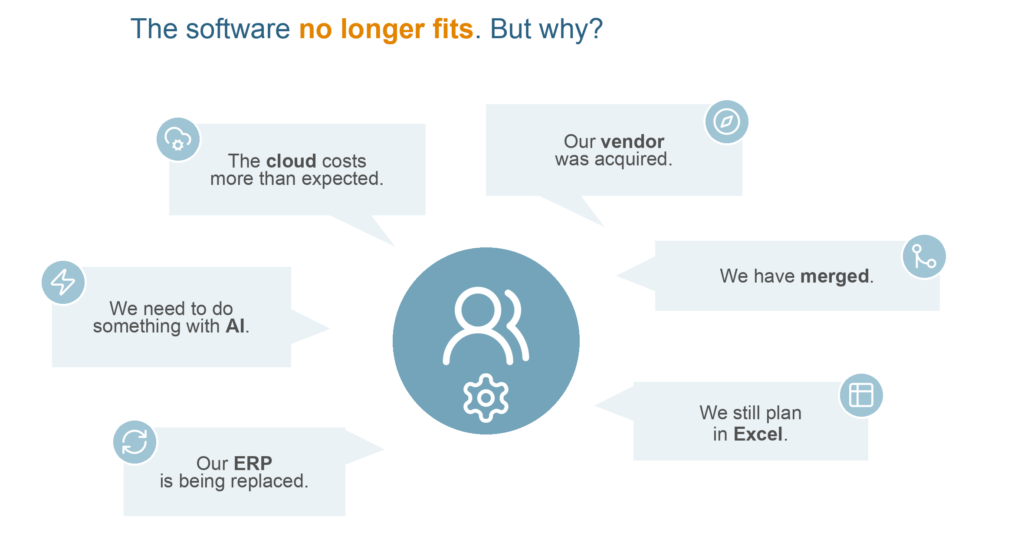
Modern software selection rarely happens in a vacuum. It is typically catalyzed by specific, often disruptive, organizational triggers:
- Vendor Instability: Acquisitions or shifts in product roadmaps can leave existing customers in a state of uncertainty regarding long-term support.
- Economic Pressures: Ballooning cloud infrastructure costs often force a reassessment of resource efficiency.
- Operational Shifts: Major ERP migrations or structural reorganizations frequently render legacy planning tools obsolete.
- The Excel Trap: While spreadsheets offer unparalleled flexibility, they introduce systemic risks regarding version control, scalability, and security that become untenable as companies scale.
These triggers create a sense of urgency. However, the market has become increasingly fragmented. Established platforms are retrofitting AI capabilities, while niche, cloud-native players are emerging with specialized feature sets. Most organizations possess deep knowledge of only two or three products—a dangerously narrow foundation upon which to base a multi-year investment.
Chronology of a Failed Process
Many organizations approach software selection with a "checklist" mentality, believing that a long list of requirements and a series of vendor presentations constitute a rigorous process. In practice, this often leads to a "false positive" selection.
The decline usually follows a predictable path:
- The Illusion of Rigor: The team builds a massive catalog of requirements, often generated with the help of AI or generic templates.
- The Presentation Bias: Vendors are invited to demo their platforms. Without a "target state" or a standardized testing script, the team is swayed by the most charismatic presenter or the most visually stunning dashboard, rather than the most functional tool.
- The Advisor Conflict: The organization relies on an implementation partner who has a vested interest in a specific software stack. Because this advisor earns revenue from licenses or professional services, their "neutral" recommendation is inherently colored by their own commercial ecosystem.
- Post-Contract Realization: Only after the software is deployed do the gaps in data integration, calculation logic, and maintenance overhead become apparent.
The Empirical Evidence: What BARC Research Reveals
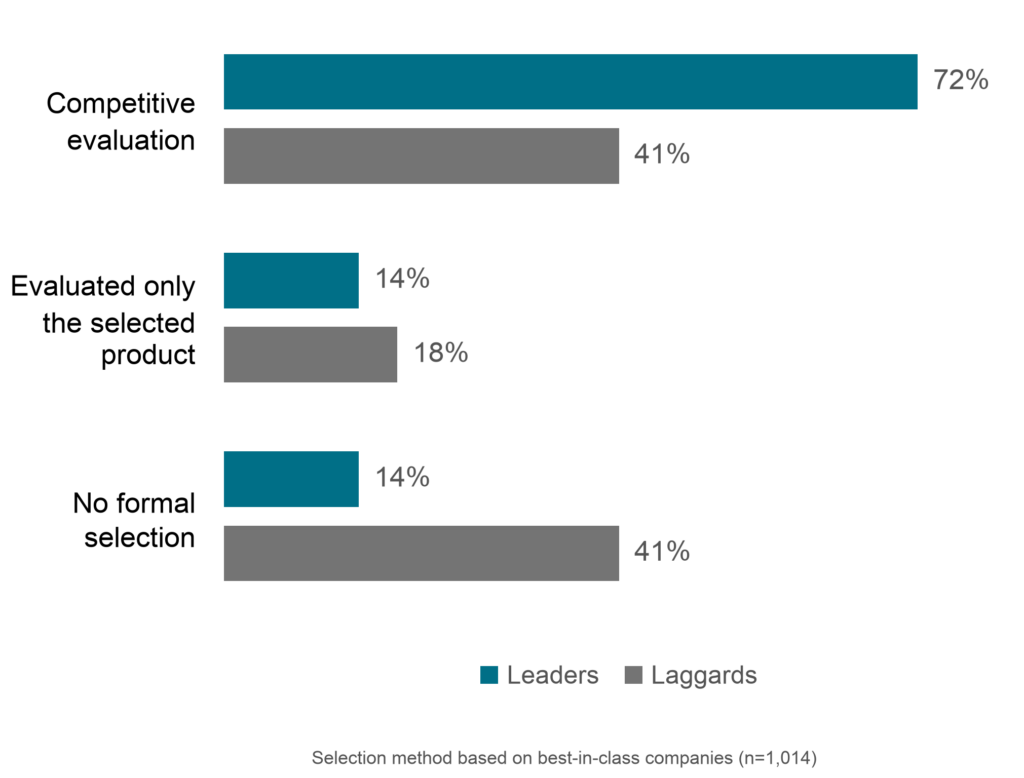
The correlation between a disciplined selection process and business success is not merely anecdotal; it is data-driven. According to the BARC BI & Analytics Survey, which analyzed 1,014 responses, there is a stark divide between industry "leaders" and "laggards."
- Competitive Evaluation: 72% of companies in the top tier of the Business Benefits Index conducted a formal, competitive evaluation before signing. In contrast, only 41% of laggards performed similar due diligence.
- The Cost of Inaction: Failing to properly vet a platform leads to more than just wasted budget. It results in low user adoption, functional gaps that require expensive custom coding, and ultimately, the need for an early "rip-and-replace" project that exhausts organizational morale.
The data suggests that the most successful companies treat software selection as a strategic exercise rather than a procurement task. They view the investment of time and internal budget as an insurance policy against future technical debt.
Defining the "Golden" Selection Process
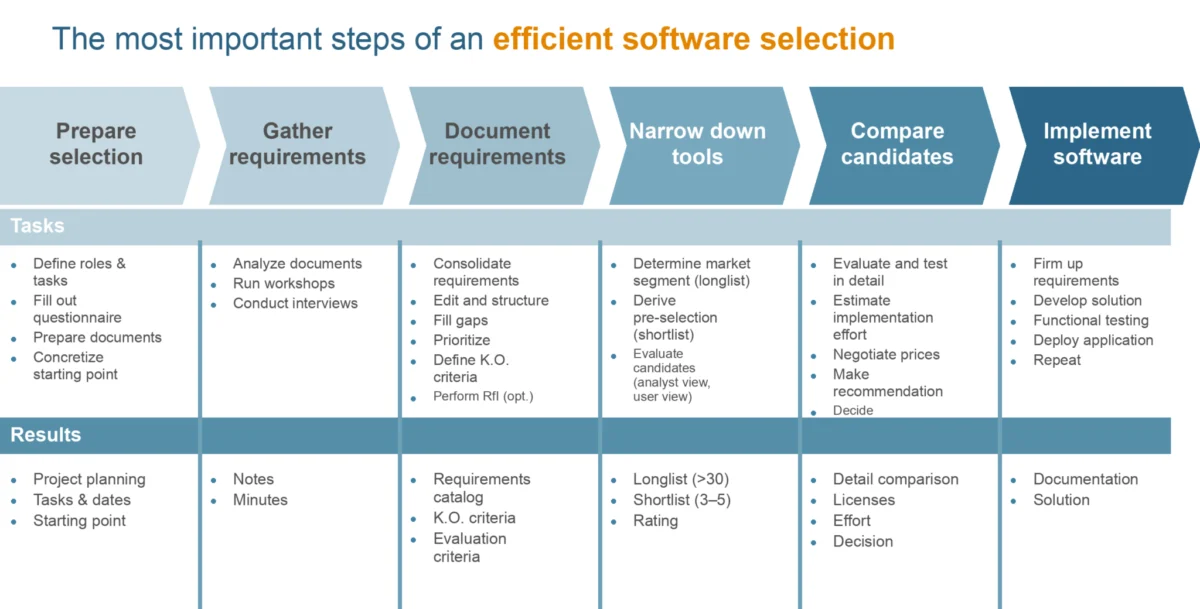
To break the cycle of ineffective selection, organizations must adopt a structured, six-phase approach that prioritizes objective reality over vendor rhetoric:
1. Defining the Target State
Before contacting a single vendor, the organization must articulate what "good" looks like. This involves defining the specific business, technical, and architectural requirements that the software must fulfill.
2. Market Screening
Avoid the trap of only considering known vendors. An independent market scan ensures that innovative, emerging solutions are not overlooked simply because they lack the marketing budget of legacy incumbents.
3. The Requirement Catalog
Questions should be specific and functional. Instead of asking, "Does this support planning?", ask, "How does this platform handle our specific calculation logic, and what is the effort required to modify these models in twelve months?"
4. Weighted Evaluation
Weighting criteria must be established before the first demonstration. Without this anchor, it is far too easy for a polished, high-end visual demo to cause stakeholders to lose sight of the project’s original business objectives.
5. Competitive Proof of Concept (PoC)
For significant investments, a PoC is non-negotiable. This is where the theoretical meets the practical. A well-designed PoC should force vendors to work with the client’s own data and test cases, effectively exposing how their implementation team handles real-world complexity.
6. Final Decision and Documentation
The final decision should be backed by a transparent scoring model. This ensures that even if the project faces friction during implementation, the team can look back at the decision criteria to understand the rationale and course-correct effectively.
The Role of Independent Advisory
The primary risk in the selection process is the conflict of interest inherent in the vendor-partner ecosystem. Independent analyst firms, such as BARC, serve as a critical check against this bias. By not selling software licenses, these firms provide an objective, data-backed view of product strengths and limitations.
"We do not sell software," notes the expert consensus. "Our objective is to provide a defensible decision for the client, regardless of which product ultimately wins." By utilizing independent, comparable research—such as the BARC Score—organizations can cut through the noise of sales marketing and focus on verifiable performance metrics.
Implications: The High Cost of the "Easy Path"
The decision to bypass a formal, competitive selection process is rarely driven by a desire for failure; it is driven by the desire for speed. However, in the realm of enterprise software, speed is an illusion. Choosing a product because it is familiar or because a partner recommended it saves weeks in the short term but often creates years of operational friction.
When software is selected without a rigorous, objective, and competitive evaluation, the organization inherits several long-term liabilities:
- Technical Debt: The system may be fundamentally unsuited to the company’s data architecture, leading to permanent "band-aid" solutions.
- Functional Limitations: Once the team is locked into a platform, they are at the mercy of the vendor’s roadmap. If the vendor does not prioritize the features the company needs, the organization is left with a platform that limits their competitive agility.
- Cultural Disenchantment: If a tool is difficult to use or fails to deliver on its promises, adoption rates plummet. A software project that fails to gain traction among its users is, by definition, a failed investment.
Conclusion: Preparing for the Future
The landscape of analytics and planning software is not static. As AI agents and sophisticated automation become standard, the criteria for "fit" will shift. Companies that want to remain leaders must evolve their selection methodologies accordingly.
The path forward is clear: define the business problem, engage a cross-functional team that includes both IT and business-process experts, and commit to a competitive proof of concept. For those seeking further guidance, industry events like the upcoming BI & Analytics Conference in Vienna offer a venue to deep-dive into the nuances of post-demonstration evaluation.
In the final analysis, software is not just a tool; it is the digital foundation upon which your business strategy is built. If the foundation is laid on the back of a rushed or biased decision, the structure will eventually show its weakness. Take the time to build it right.