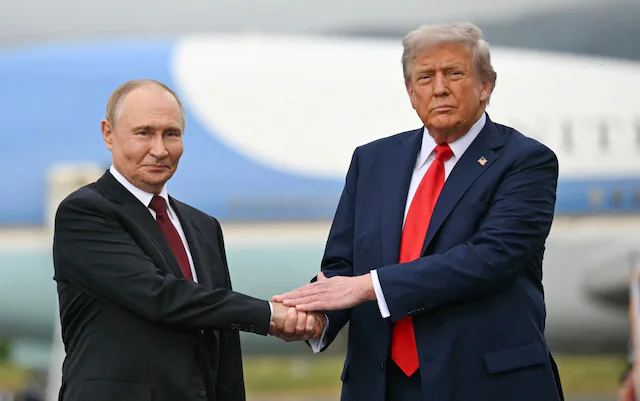
Washington D.C. / Moscow – October 9, 2026 – In a development poised to send reverberations across global energy markets and international diplomacy, U.S. President Donald Trump announced late Thursday night that Russia has agreed to supply millions of tons of oil to American and global markets. The agreement, forged during a telephone conversation between President Trump and Russian President Vladimir Putin, aims to significantly increase market supply and drive down soaring fuel prices.
The unexpected announcement, made by President Trump via his preferred social media platform Truth Social, outlined an immediate commencement of deliveries, with substantial quantities earmarked for the coming months. This bilateral accord marks a remarkable pivot in energy policy and U.S.-Russia relations, potentially reshaping the geopolitical landscape of global energy security.
Main Facts of the Agreement
President Donald Trump revealed the contours of the unprecedented energy deal following what he described as a "productive and frank" conversation with Russian President Vladimir Putin. The core of the agreement centers on Russia committing to supply substantial volumes of petroleum products to stabilize the volatile global energy market, with a specific focus on alleviating high fuel costs for American consumers.
According to Trump’s Truth Social post, the initial phase of the agreement will see Russia immediately dispatching over 300,000 tons of fuel oil to global markets. This will be swiftly followed by a commitment of an additional 500,000 tons in November. Beyond these immediate allocations, a further one million tons are slated for delivery shortly thereafter. Crucially, President Trump indicated that Russia is prepared to provide an additional three million tons within a short timeframe, contingent on the operational capacity of Russian refineries. The cumulative impact, Trump asserted, would be the injection of "millions of tons" of Russian oil into the global supply chain, a move he championed as a game-changer for energy prices.
"This is a TREMENDOUS deal for American families and businesses," Trump posted, echoing his long-standing focus on economic prosperity. "President Putin and I have agreed to flood the markets with Russian oil. You will see RECORD and RAPID price drops at the pump. We are making America energy affordable again!"
The agreement explicitly targets both American and broader international markets, suggesting a strategy to address global energy shortfalls and price inflation that have plagued economies worldwide. While the full financial details and logistical mechanisms of the deal remain undisclosed, the immediate implication is a direct challenge to existing market dynamics and potentially, the influence of organizations like OPEC+. The announcement immediately ignited intense speculation among market analysts, policymakers, and industry leaders regarding its potential short-term and long-term consequences.
Furthermore, in the same social media dispatch, President Trump reiterated his unyielding stance on Iran’s nuclear program. "Let me be clear," he wrote, "Tehran will NEVER be allowed to possess nuclear weapons. Our resolve on this is absolute." The inclusion of this statement within an energy announcement sparked further questions about potential linkages between the two issues, or if it simply reflected a broader summary of discussions held with President Putin.
Chronology of Events Leading to the Deal
The genesis of this landmark agreement is rooted in a complex interplay of global energy dynamics, geopolitical shifts, and the specific political priorities of the Trump administration in 2026.
Background: A Volatile Energy Landscape
The period leading up to late 2026 had been marked by persistent volatility in global energy markets. Following a tumultuous period of post-pandemic recovery, characterized by surging demand and often constrained supply, crude oil prices had remained stubbornly high. Geopolitical tensions in various regions, combined with underinvestment in new production capacity by major oil companies and the strategic decisions of the OPEC+ alliance, had created an environment ripe for price shocks. Many nations, including the United States, had been grappling with elevated inflation, with rising fuel costs being a significant contributing factor to consumer discontent and economic uncertainty. Domestic U.S. oil production, while substantial, had faced its own challenges, including regulatory hurdles and investor pressure for capital discipline, which prevented it from fully offsetting global supply shortfalls. The Biden administration, prior to Trump’s return, had frequently resorted to strategic petroleum reserve (SPR) releases to temper prices, a tactic that had its own limitations and critics.
The Call: Trump and Putin Engage
The crucial turning point came on Thursday, October 9, 2026, when President Trump initiated a telephone conversation with Russian President Vladimir Putin. While the full transcript of their discussion remains confidential, sources close to the White House suggest the call was lengthy and wide-ranging, covering not only energy but also aspects of international security and bilateral relations. It is understood that President Trump, driven by his campaign promise to "make America affordable again" and address consumer grievances over fuel prices, directly appealed to President Putin for a significant increase in Russian oil exports. The discussion likely focused on the logistical feasibility of such an increase, the potential impact on global markets, and the mutual economic benefits for both nations. For Russia, facing potential market access restrictions or looking to diversify its customer base amidst evolving geopolitical realities, the prospect of a direct deal with the U.S. and increased access to global markets would have been a compelling offer. The call, therefore, represented a convergence of economic imperatives and political opportunism for both leaders.

The Announcement: Truth Social Shakes the Market
Shortly after the conclusion of the call, at approximately 11:40 PM ET, President Trump took to Truth Social to break the news. His post, characteristic in its directness and declarative tone, immediately captured international headlines. The specific quantities – 300,000 tons immediately, 500,000 in November, one million thereafter, and a potential three million more – provided concrete figures that lent credibility to the scale of the agreement. The timing, late in the evening, ensured that the news would dominate the following day’s news cycles and allow markets to react at the opening bell. The strategic mention of the deal’s objective – "RECORD and RAPID price drops" – clearly articulated the administration’s primary goal and set public expectations.
Immediate Aftermath: Market Jitters and Political Reactions
The initial reaction to Trump’s announcement was swift and dramatic. Futures markets for crude oil, which had been trading at elevated levels, immediately showed signs of volatility, with some initial dips followed by cautious rebounds as traders absorbed the news. Energy analysts scrambled to assess the feasibility and actual market impact of the pledged volumes. Political commentators, meanwhile, began dissecting the broader geopolitical implications of a direct U.S.-Russia energy pact, especially given the historical context of strained relations and previous efforts by Western nations to reduce reliance on Russian energy. The announcement set the stage for a day of intense scrutiny, debate, and anticipation regarding the future trajectory of global energy and international relations.
Supporting Data and Market Context
The significance of the U.S.-Russia oil deal can only be fully appreciated within the broader context of global energy market dynamics and economic indicators in late 2026.
Global Oil Market Dynamics in 2026
At the time of President Trump’s announcement, benchmark crude oil prices, such as Brent crude and West Texas Intermediate (WTI), had been hovering consistently above $90 per barrel for several months, occasionally spiking past $100. This sustained high price environment was largely attributed to a combination of factors:
- Underlying Demand Growth: Global economic recovery, particularly in emerging markets, continued to drive robust demand for energy, outpacing supply adjustments.
- OPEC+ Production Discipline: The Organization of the Petroleum Exporting Countries and its allies (OPEC+) had maintained a strategy of managed supply, often opting for conservative production increases to support prices, despite calls from major consuming nations for more output.
- Geopolitical Supply Risks: Ongoing regional conflicts and political instability in key oil-producing regions, though not directly disrupting major supply lines, contributed to a "risk premium" in oil prices.
- Low Global Inventories: Commercial crude oil inventories in major consuming nations, including the U.S., were notably below their five-year averages, leaving little buffer against supply shocks.
- Limited Investment in Upstream: Years of pressure for energy transition and shareholder returns had led to underinvestment in new exploration and production capacity by major international oil companies, creating a long lead time for significant new supply to come online.
Russia, historically one of the world’s largest oil and gas producers, played a pivotal role in this landscape. Its production capacity, even amidst various international pressures, remained formidable, making any substantial increase in its exports a significant market event.
Economic Projections and Consumer Impact
Economists and analysts had been warning that persistent high energy prices posed a significant threat to global economic stability, potentially leading to a new wave of inflation or even stagflation. The average price of gasoline in the United States had reached historical highs, placing a considerable burden on household budgets and small businesses.
The proposed Russian oil influx, amounting to "millions of tons," translates into substantial volumes of crude and refined products. For context, one million tons of crude oil is roughly equivalent to 7.33 million barrels (assuming an average density). Therefore, an immediate supply of 300,000 tons represents approximately 2.2 million barrels, with subsequent deliveries adding tens of millions more barrels to the global market over a short period. This scale of injection, if fully realized, has the potential to:
- Reduce Fuel Prices: Direct increases in supply would likely push down crude oil prices, which would then translate into lower prices at the gasoline pump and for other petroleum products. Estimates suggested potential savings of 20-50 cents per gallon for consumers in the short term.
- Alleviate Inflationary Pressures: Lower energy costs would ease input costs for industries across the board, from manufacturing to transportation, thereby contributing to a broader deceleration of inflation.
- Boost Consumer Spending: Freed from higher fuel expenses, consumers would have more discretionary income, potentially stimulating other sectors of the economy.
- Support Industrial Growth: Industries heavily reliant on energy, such as aviation, shipping, and petrochemicals, would benefit from reduced operational costs, potentially leading to increased output and competitiveness.
Strategic Petroleum Reserve (SPR) Context
For years, the U.S. government had utilized its Strategic Petroleum Reserve (SPR) as a tool to mitigate supply disruptions and manage price spikes. Previous administrations had authorized multiple drawdowns from the SPR in response to specific crises or sustained high prices. This agreement with Russia offers an alternative, and potentially more sustainable, mechanism to address supply shortfalls. Unlike SPR releases, which are finite and draw down a strategic national asset, the Russian deal represents an increase in actual global production and availability, suggesting a more fundamental shift in supply dynamics rather than a temporary fix. It also allows the U.S. to preserve its SPR for true national emergencies.
Official Responses and International Reactions
The announcement of the U.S.-Russia energy deal immediately triggered a flurry of reactions from domestic and international actors, reflecting the profound implications of such an accord.
White House and Trump Administration
Following President Trump’s initial Truth Social post, senior administration officials quickly moved to amplify and contextualize the agreement. White House Press Secretary Sarah Matthews held an unscheduled press briefing, emphasizing the administration’s commitment to "energy affordability and economic prosperity for all Americans." She highlighted the deal as a testament to President Trump’s "bold diplomacy and unwavering focus on practical solutions to real-world problems."

"This agreement," Matthews stated, "is a direct response to the burdens faced by hardworking American families and businesses struggling with exorbitant fuel prices. President Trump has secured a pathway to significant and rapid price reductions, ensuring that America’s economic engine can run at full throttle."
Energy Secretary Rick Perry, in a separate statement, lauded the deal as a "masterstroke of energy statesmanship." He underscored the strategic benefits beyond price reduction, suggesting it could contribute to greater global energy market stability and diversify supply sources for consuming nations. "While we remain committed to domestic energy independence," Perry remarked, "global markets are interconnected. This deal injects critical supply precisely where and when it is needed, benefiting everyone."
Kremlin and Russian Officials
In Moscow, the response from the Kremlin was more measured but equally positive. Dmitry Peskov, President Putin’s press secretary, confirmed the telephone conversation and the general agreement to increase oil supplies. "President Putin and President Trump discussed matters of mutual economic interest, including global energy market stability," Peskov told reporters. "Russia, as a responsible and reliable energy supplier, is always ready to contribute to balancing the global supply and demand dynamics, especially when it benefits our economic partners."
Russian Energy Minister Alexander Novak echoed these sentiments, emphasizing Russia’s capacity to fulfill the agreed-upon volumes. "Our refining capabilities and production infrastructure are robust," Novak said. "We are confident in our ability to meet these commitments and support the stability of international energy prices. This agreement also underscores the potential for constructive economic engagement between major global players." The Russian narrative focused on their role as a stabilizing force in energy markets and the economic benefits for Russia through increased export revenues.
International Reactions
- European Union: Initial reactions from European capitals were mixed. While there was palpable relief at the prospect of lower energy prices, given Europe’s own struggles with high costs, there was also a degree of apprehension. EU Commission President Ursula von der Leyen issued a cautious statement, acknowledging the potential for market stabilization but also reiterating the EU’s long-term commitment to diversifying away from fossil fuels and reducing reliance on any single supplier. Some Eastern European nations, historically wary of Russian energy dominance, expressed concerns about the geopolitical implications of strengthening Russia’s hand in global energy.
- OPEC+ Countries: The deal was met with considerable surprise and potential alarm within the OPEC+ alliance. Ministers from Saudi Arabia and other Gulf states privately expressed concern about the potential for market oversupply, which could undermine their own production quotas and price management strategies. Publicly, Saudi Arabia’s Energy Minister, Prince Abdulaziz bin Salman, stated that OPEC+ would "monitor market developments closely" and "respond appropriately to maintain market balance and stability," hinting at potential adjustments to their own output plans if prices were to fall sharply. The deal could spark a new era of competition in the oil market.
- Energy Analysts and Economists: The analyst community largely welcomed the potential for price relief, with many revising their short-term price forecasts downwards. Dr. Evelyn Reed, a senior energy economist at the Global Energy Institute, commented, "This is a significant injection of supply, and if implemented effectively, it will certainly put downward pressure on prices. The question is the sustainability and the broader geopolitical trade-offs." However, some analysts cautioned against over-reliance on a single source and highlighted the logistical challenges of rapidly integrating such large volumes into existing supply chains.
- Political Opposition and Critics: Domestically, the deal drew sharp criticism from the Democratic opposition. Senate Majority Leader Chuck Schumer condemned the agreement, arguing it undermined U.S. energy independence and risked emboldening Russia on the global stage. "President Trump is once again prioritizing transactional deals over American values and long-term strategic interests," Schumer stated. "We should be investing in renewable energy and domestic production, not propping up foreign adversaries." Environmental groups also voiced strong opposition, lamenting a perceived step backward in climate action by increasing reliance on fossil fuels.
Implications of the Agreement
The U.S.-Russia energy deal carries profound and multifaceted implications, spanning geopolitical, economic, and environmental spheres.
Geopolitical Ramifications
The most immediate geopolitical implication is a potential recalibration of U.S.-Russia relations. After years of often strained ties, this energy pact suggests a transactional willingness to cooperate on issues of mutual economic benefit. It could herald a period of pragmatic engagement, where economic interests occasionally supersede traditional diplomatic friction points. However, it also raises questions about the consistency of U.S. foreign policy and its commitment to existing alliances, particularly those in Europe that have sought to diminish their reliance on Russian energy. Some critics argue that the deal could inadvertently legitimize Russia’s international standing and provide it with greater leverage on other global issues. The long-term impact on global power dynamics and existing sanctions regimes (if any were in place by 2026) will be closely watched.
Economic Impact
Economically, the primary goal of the deal is to lower energy prices, and if successful, this could have several positive knock-on effects. Reduced fuel costs would act as a substantial stimulus to the U.S. and global economies, easing inflationary pressures, boosting consumer confidence, and potentially averting a recession. Industries from agriculture to transportation would see their operating costs decrease, leading to greater profitability and competitiveness. However, there are also potential downsides:
- Impact on Domestic Producers: A sharp drop in oil prices due to increased Russian supply could negatively affect U.S. domestic oil and gas producers, making some projects less profitable and potentially slowing investment in future domestic production.
- OPEC+ Response: The deal could provoke a strong reaction from OPEC+ countries, potentially leading to a price war if they decide to increase their own production to maintain market share, or conversely, cut production to support prices, leading to further market volatility.
- Long-Term Price Stability: While short-term price relief is likely, the long-term stability hinges on the consistent fulfillment of Russian commitments and the broader evolution of global demand and supply.
Environmental Considerations
From an environmental perspective, the deal presents a complex dilemma. While lower fuel prices might offer short-term economic relief, they could also disincentivize the transition to renewable energy sources. Cheaper fossil fuels could reduce the economic attractiveness of investments in solar, wind, and electric vehicles, potentially slowing progress towards climate goals. Environmental advocacy groups have already voiced strong objections, arguing that the deal represents a step backward in the fight against climate change and an increased reliance on polluting fossil fuels. This will undoubtedly fuel ongoing debates about the balance between energy security, economic affordability, and environmental sustainability.
The Iran Nuclear Program Stance
The inclusion of President Trump’s firm statement on Iran’s nuclear program within the same announcement is particularly intriguing. This could signal a multi-pronged diplomatic strategy where Russia, a key player in the P5+1 negotiations, might be engaged in broader discussions regarding regional security. It could also be a strategic move by Trump to project strength on a critical foreign policy issue, demonstrating that economic cooperation with Russia does not equate to a softened stance on other perceived threats. The statement is likely to be interpreted differently by various actors: as a welcome reassertion of red lines by some allies, or as an unnecessarily provocative stance by others, particularly Iran and its regional partners. It adds another layer of complexity to the overall foreign policy implications of the energy deal.
Future Outlook
The immediate future will involve closely monitoring the implementation of the agreement: the actual flow of Russian oil, its impact on global benchmarks, and the reactions of various market participants. Further diplomatic engagement between Washington and Moscow is likely, as both nations navigate the complexities of this new energy partnership. The deal’s success will ultimately be measured not just by short-term price drops, but by its ability to foster sustainable market stability without compromising long-term strategic interests, environmental commitments, or international alliances. The world watches to see if this landmark agreement truly ushers in an era of affordable energy or simply reshuffles the geopolitical deck.