By Kenny Fisher | October 9, 2026
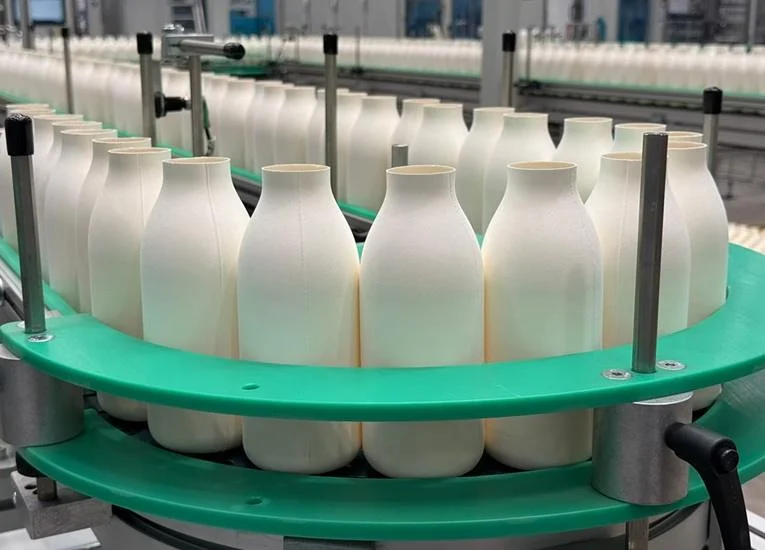
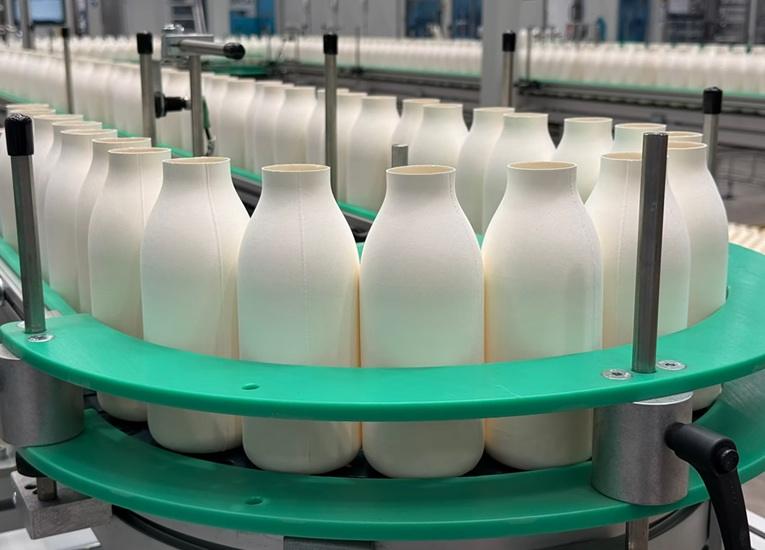
In a significant leap forward for the global sustainable packaging industry, Pulpex—a pioneering technology firm backed by a coalition of some of the world’s largest consumer goods companies—has officially opened its first commercial-scale fiber bottle manufacturing facility. Located near Glasgow, Scotland, the plant represents the successful transition of Pulpex’s proprietary paper-based technology from a specialized pilot project to a robust, industrial-scale manufacturing operation.
This development marks a critical turning point in the industry’s ongoing struggle to replace single-use plastics and energy-intensive glass with circular, low-carbon alternatives. With initial production capacity set at 40 million units per year and an ambitious roadmap toward one billion units annually, the Glasgow facility is poised to serve as the blueprint for a global network of sustainable manufacturing hubs.
Main Facts: A New Chapter in Sustainable Manufacturing
The Glasgow facility is the manifestation of years of research and development aimed at solving the "plastic problem" in consumer packaged goods (CPG). Unlike traditional composite packaging, which often hides plastic linings that complicate recycling, the Pulpex bottle is crafted entirely from sustainably sourced wood pulp.
The core innovation lies in the company’s fiber-forming technology, which creates a durable, liquid-resistant bottle that is fully recyclable through standard household paper and cardboard waste streams. By eliminating the hidden plastic layers often found in "paper-like" containers, Pulpex has developed a product that degrades readily in the natural environment and boasts a carbon footprint significantly lower than its glass or PET plastic counterparts.
The facility’s launch is not merely a localized success; it serves as a "reference plant" for Pulpex’s international strategy. By utilizing a "Manufacture under License" model, the company aims to decentralize production, allowing regional packaging manufacturers to produce these bottles closer to the end-user. This reduces the logistical carbon footprint of shipping empty bottles and ensures that production remains aligned with local recycling infrastructure.
The Chronology of Innovation: From Concept to Scale
The journey to the Glasgow facility was years in the making, defined by strategic collaborations and aggressive R&D cycles.
- 2020: The Genesis. Pulpex was established as a joint venture between Pilot Lite, a venture management firm, and Diageo, the global beverage giant. The intent was clear: create a scalable, high-performance alternative to traditional bottles for the spirits and beverage industry.
- 2021–2024: The Coalition Expansion. Recognizing the potential for industry-wide disruption, the company attracted a consortium of global heavyweights, including Unilever, PepsiCo, Castrol, Haleon, Estée Lauder, and Kraft Heinz. These partners provided the necessary capital, market expertise, and product-testing platforms to refine the technology.
- 2025: Financial Validation. The project received a major boost with a $78 million Series D financing round. This capital infusion, led by the UK’s National Wealth Fund and the Scottish National Investment Bank, provided the financial runway to finalize the construction of the Glasgow site.
- October 2026: Commercial Launch. The doors officially open in Glasgow, shifting the company’s focus from technological proof-of-concept to industrial output.
Supporting Data: Why Fiber is the Future
The shift toward fiber-based packaging is driven by both environmental necessity and economic pressure. According to data provided by Pulpex and industry analysts, the environmental impact of traditional packaging is unsustainable in the context of global climate targets.
- Production Capacity: The initial 40 million units per year capacity is already 90% pre-sold for the current financial year. This indicates a massive latent demand from major brands seeking to meet their ESG commitments.
- Supply Chain Integration: The company has already secured international manufacturing partnerships. Perlen Industrieholding has signed on to cover Switzerland, Austria, Italy, and southern Germany. Meanwhile, India-based Alternicq is expanding the reach into the Gulf Cooperation Council (GCC) and the Indian domestic market.
- ESG Alignment: The move comes as regulatory bodies tighten the screws on packaging waste. The EU’s Packaging and Packaging Waste Regulation (PPWR) and the UK’s Extended Producer Responsibility (EPR) regime are forcing manufacturers to take financial and operational accountability for the end-of-life of their packaging. Pulpex’s technology is explicitly designed to meet the rigorous criteria set forth by these new legislative frameworks.
Official Responses: Leaders Weigh In
The atmosphere at the Glasgow launch was one of triumph, with leadership emphasizing that the facility is a testament to the UK’s potential as a leader in green industrial technology.
Scott Winston, Managing Director & Chief Science and Sustainability Officer at Pulpex, remarked:
"With an initial capacity of 40 million units a year, Glasgow is the first step on our path to one billion units globally. It is exactly the kind of innovation-led manufacturing the UK’s Industrial Strategy champions: high-value UK intellectual property, advanced production, skilled jobs in Scotland, and a practical solution for a lower-carbon economy."
Sandy Westwater, CEO at Pulpex, added:

"The opening of our Glasgow facility marks the moment Pulpex moves from proving the technology to proving the industrial model. We have developed and industrialised a breakthrough packaging technology in the United Kingdom, and Glasgow is where partners and brand owners can now see it running."
These sentiments underscore a broader strategic narrative: that the "green transition" is not just a regulatory burden, but a commercial opportunity to lead in the development of new, high-value manufacturing IP.
Implications: The Road Ahead for CPG Brands
The implications of Pulpex’s scale-up are profound for the consumer goods industry. As brand owners face mounting pressure from consumers and investors to reduce plastic waste, the availability of a proven, scalable fiber alternative provides a clear pathway to compliance and brand differentiation.
1. Market Penetration
The immediate adoption by companies like Purely Scottish Natural Mineral Water and the cleaning brand smol serves as a bellwether. If these smaller-to-mid-sized players can successfully integrate the bottles into their supply chains, it will build the confidence required for larger FMCG (Fast-Moving Consumer Goods) corporations to commit to massive, multi-year conversion contracts.
2. The End of "Hidden" Plastic
One of the most significant hurdles for paper-based packaging has been the use of internal plastic liners to prevent liquid seepage. By successfully eliminating these, Pulpex is setting a new industry standard. Competitors will likely be forced to innovate in similar directions or face being labeled "greenwashers" by regulatory bodies and environmental watchdogs.
3. Regionalized Manufacturing
The "Manufacture under License" model is perhaps the most clever aspect of Pulpex’s strategy. By empowering regional partners to produce the bottles, Pulpex bypasses the carbon-heavy practice of transporting empty, air-filled containers across oceans. This creates a distributed manufacturing network that is more resilient to supply chain shocks and better aligned with local circular economies.

4. Economic and Regulatory Tailwinds
The investment from the National Wealth Fund and the Scottish National Investment Bank highlights a growing trend: governments are actively subsidizing the shift to a circular economy. As the EU and UK further refine their packaging waste regulations, companies that have already invested in fiber-based infrastructure will find themselves at a distinct competitive advantage, potentially avoiding the taxes and penalties that will inevitably target non-recyclable plastic packaging.
Conclusion
The opening of the Pulpex facility in Glasgow is more than just a ribbon-cutting ceremony; it is a signal that the "paper bottle" is no longer a futuristic concept, but a current reality. By bridging the gap between innovative laboratory science and high-volume industrial output, Pulpex has created a template for how the CPG industry can decouple growth from plastic waste.
While the road to one billion units annually is steep and requires significant international coordination, the foundation laid in Scotland provides a compelling argument for the viability of fiber-based alternatives. For brands, retailers, and consumers alike, the message is clear: the future of packaging is likely to be made of fiber, and the scale-up has officially begun.