Welcome back to Foreign Policy’s Latin America Brief. This week, we examine a landscape defined by seismic electoral shifts in Brazil, the complex diplomatic isolation of the Ortega regime in Nicaragua, and the surreal convergence of global pop culture and grassroots political mobilization. As the region navigates a period of economic volatility and ideological polarization, the following developments offer a window into the future of the Americas.
1. The Right-Wing Surge: Brazil’s Electoral Reckoning
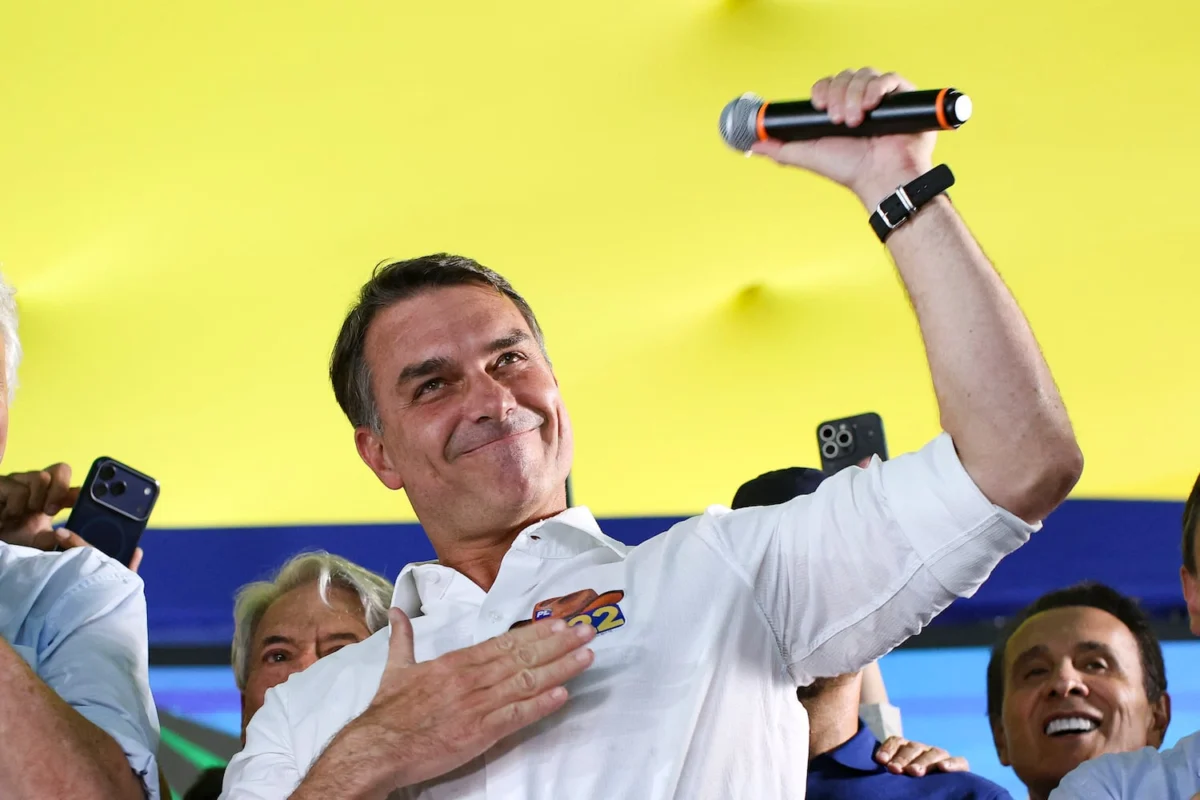
Brazil, the region’s largest democracy, finds itself at a defining crossroads following a general election that has fundamentally rewritten the nation’s political map. In a result that defied the expectations of most pre-election polling, Senator Flávio Bolsonaro surged to a lead in the first round of the presidential race, securing 47.03 percent of the vote compared to incumbent Luiz Inácio Lula da Silva’s 45.16 percent.
The Dynamics of the Vote
The results of last Sunday’s balloting were more than a mere statistical surprise; they signaled a profound crystallization of bolsonarismo as a durable, deep-seated force in Brazilian society. While Lula, a veteran of the political left, struggled to gain traction outside his traditional base, the Liberal Party (PL) dominated the legislative and gubernatorial landscape. By securing a plurality of governorships and expanding its footprint in both the Chamber of Deputies and the Senate, the PL has solidified its position as the preeminent force in Brazilian politics.
Political analyst Felipe Nunes of the firm Quaest suggests that the "Bolsonaro effect" was fueled by a late-stage migration of voters who had initially flirted with minor right-wing candidates but ultimately consolidated around the Senator to prevent a first-round victory for the left.
The Runoff Reality
As the nation prepares for the October 25 runoff, the historical context is grim for the incumbent. Since Brazil’s transition to democracy in the 1980s, no candidate who trailed in the first round of a presidential election has successfully overturned the deficit in the second. With the third, fourth, and fifth-place finishers in the first round representing the right-wing spectrum, the arithmetic of the runoff appears to favor the Bolsonaro camp.
2. Soul-Searching in the Lula Camp
Confronted with the stark reality of the polls, the Lula campaign has initiated a radical internal overhaul. President Lula himself candidly admitted to the shortcomings of his strategy, describing it as the "least organized" campaign he has led since his entry into national politics in 1989.
A Digital and Messaging Reboot
In an effort to bridge the widening gap with younger, social-media-savvy voters, the Workers’ Party (PT) has drafted a cohort of Gen Z and Millennial congresswomen-elect to spearhead a digital "force-task." The goal is to move beyond the traditional, history-heavy rhetoric that defined the early stages of the campaign.

This pivot includes the introduction of a new, populist-leaning slogan: "For working people, protection; for criminals, jail." This move acknowledges a strategic blind spot: the right’s successful monopoly on the discourse of public safety. While the government has objectively made progress in reducing violent crime, the perception of insecurity remains a powerful driver for the electorate, particularly among the lower-middle-class voters who populate the outskirts of Brazil’s sprawling urban centers.
The Gig Economy Divide
The disconnect between the Lula administration and the "new" working class—those employed in the gig economy as Uber drivers, delivery riders, and informal service workers—is profound. As noted by political observers, the PT’s traditional reliance on unionized labor structures fails to account for a workforce that prioritizes autonomy and flexibility over rigid, state-regulated employment contracts. When Lula pushed for legislation to regulate gig work, many of the very workers he intended to protect viewed the move as an existential threat to their income and independence.
3. Geopolitics: The OAS Turns the Screw on Nicaragua
While Brazil grapples with internal identity, the international community has shifted its gaze toward Managua. The Organization of American States (OAS) has moved from rhetorical condemnation to a more concrete, collective pressure campaign against the regime of Daniel Ortega.
A Coordinated Regional Response
The recent foreign ministers’ meeting in Washington was a rare display of regional consensus. Triggered by Ortega’s declaration that Nicaragua would host no further elections, the OAS unanimously outlined eight specific demands, ranging from the immediate release of political prisoners to the restoration of democratic electoral processes.
The significance of this move lies in the "120-day clock." Should the regime fail to show progress toward these benchmarks, the OAS has committed to reconvening to consider punitive measures. While military intervention has been strictly ruled out, experts like Manuel Orozco of the Inter-American Dialogue suggest that the focus will likely shift to targeted economic sanctions that hit the regime’s inner circle.
The U.S. Factor
Interestingly, the Trump administration has signaled its support for this multilateral approach. By allowing the OAS to take the lead, the U.S. avoids the optics of unilateral "imperialist" intervention while effectively isolating Managua. For the exiled Nicaraguan opposition, this shift offers a glimmer of hope, with leaders expressing readiness to return and engage in the country’s political life should the pressure campaign successfully force the doors open.
4. Cultural Phenomena: The "K-Pop Warriors"
Perhaps the most unexpected development in this election cycle is the intersection of global entertainment and political activism. The arrival of the K-pop juggernaut BTS in South America has served as more than just a musical tour; it has highlighted the changing cultural allegiances of a region long oriented toward the U.S. and Europe.

BTS and the New Activism
The band’s tour, which includes stops in Brazil, Argentina, Chile, Peru, and Colombia, has mobilized a demographic that is increasingly politically conscious. In a unique twist, the "K-pop warrior" phenomenon has seen fan clubs—historically dedicated to streaming stats and concert tickets—pivot to organizing for political causes. In Brazil, these groups have actively campaigned for the left in the wake of the first-round results, demonstrating a level of digital mobilization that traditional political machines struggle to replicate.
This trend is not isolated. In Peru, the emergence of "Q-pop"—a fusion of K-pop sensibilities and Indigenous Quechua culture—demonstrates how Latin American youth are remixing global trends to assert their own local identities.
5. Regional Snapshots: Panama and Chile
Panama’s "Reopen to Close" Strategy
Panama’s mining sector remains a volatile issue. Following a government panel’s recommendation to reopen the Cobre Panama copper mine—with the caveat that it must follow a "reopen to close" phaseout plan—the country is attempting to balance fiscal reality with environmental sustainability. While the plan could provide the government with much-needed revenue, the prospect of a 25-year phaseout period leaves both environmentalists and investors in a state of cautious uncertainty.
Chile’s Discontent
In Chile, President José Antonio Kast is facing significant domestic pushback following his decision to join the U.S.-led "Shield of the Americas" anti-crime initiative. Polls indicate a 60 percent disapproval rate for the president, who has struggled with high fuel prices and a public increasingly wary of military-centric solutions to civilian problems. The re-emergence of former leaders Gabriel Boric and Michelle Bachelet in the public discourse suggests that the Chilean political center-left is preparing for a robust challenge to Kast’s conservative agenda.
Looking Ahead: The October Calendar
As the region moves through October, three critical dates will define the coming weeks:
- October 12: The U.N. Security Council convenes to discuss the humanitarian and security situation in Colombia.
- October 19: A follow-up Security Council session will address the ongoing crisis in Haiti.
- October 25: The world will hold its breath as Brazil decides its future in a high-stakes presidential and gubernatorial runoff.
The coming weeks promise to be a crucible for Latin American leadership. Whether it is the potential consolidation of the far-right in Brazil, the diplomatic strangulation of autocracy in Nicaragua, or the evolving role of digital youth activism, the region remains a theater of profound, often turbulent, change.
Stay tuned to Foreign Policy for ongoing coverage of these and other vital developments across the Americas.