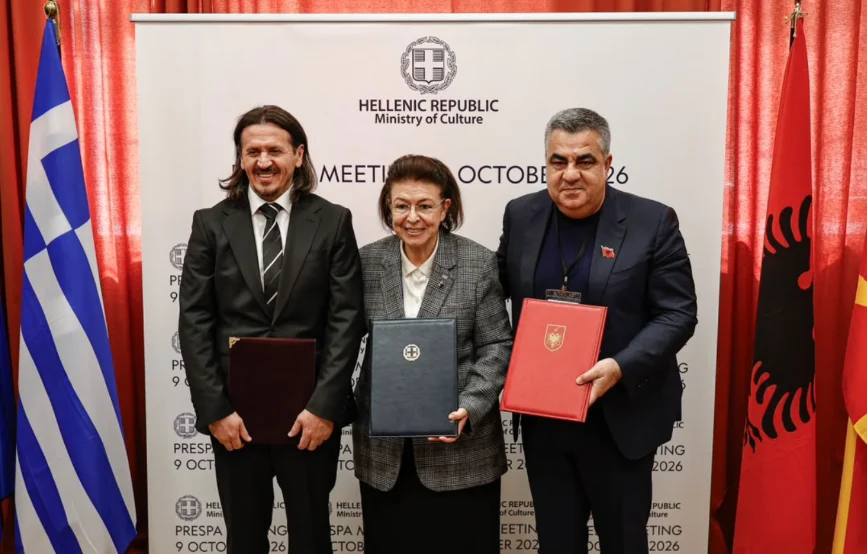
Prespës, Greece – In a landmark display of cross-border cooperation, ministers from Albania, Greece, and North Macedonia convened today in the Greek municipality of Prespës to formally launch a joint initiative aimed at securing UNESCO World Heritage status for the unique Prespa region. This collaborative effort underscores a shared commitment to protecting the region’s unparalleled natural and cultural wealth while fostering sustainable development for its communities.
The high-level meeting brought together the Albanian Minister of Culture, the Greek Minister of Culture and Sports, Ms. Lina Mendoni, and the North Macedonian Minister of Culture and Tourism, Mr. Sulejmani. Their presence signified a collective political will to embark on the rigorous process of preparing a trilateral nomination file for one of Europe’s most ecologically significant and historically rich transboundary areas.
Main Facts
Historic Trilateral Bid Launched
The Prespa region, a breathtaking landscape straddling the borders of Albania, Greece, and North Macedonia, is renowned for its twin lakes – Great Prespa and Small Prespa – and the surrounding mountainous terrain. Today’s gathering marks the official commencement of a joint bid to list this extraordinary area on the UNESCO World Heritage List. This ambitious undertaking is not merely about recognition; it is a profound statement of unity, highlighting how shared natural and cultural heritage can serve as a powerful catalyst for regional integration and peace.
The ministers articulated a common vision: to safeguard Prespa’s delicate ecosystems, preserve its ancient cultural monuments, and create enduring economic opportunities for the local populations through responsible, sustainable tourism. The trilateral nature of the candidacy itself is a testament to the transformative potential of dialogue and cooperation, moving beyond historical divisions to embrace a shared future.
A Region of Shared Heritage
Prespa is more than just a geographical location; it is a crucible where diverse histories, cultures, and natural wonders converge. Its lakes are among the oldest and deepest in Europe, home to endemic species and a critical stopover for migratory birds, including the iconic Dalmatian pelican. The surrounding landscape is dotted with centuries-old churches, monasteries, and archaeological sites that bear witness to a rich tapestry of civilizations, from ancient times through the Byzantine and Ottoman eras.
The ministers emphasized that Prespa’s intrinsic value lies not only in its individual components but in the synergistic interplay between its natural environment and the human imprint upon it. The communities living around the lakes have, for generations, developed unique cultural practices and a deep reverence for their natural surroundings, making the region a living cultural landscape that deserves global recognition and protection. This bid seeks to protect not just sites, but a way of life intrinsically linked to the land and water.
EU Backing for Feasibility
A significant boost to this trilateral endeavor comes from the European Union, which has pledged €2 million to finance the crucial feasibility study for the UNESCO candidacy. This substantial financial support underscores the EU’s commitment to regional cooperation, environmental protection, and cultural preservation in the Western Balkans and its neighboring member states.
The feasibility study is a critical first step in the lengthy UNESCO nomination process. It will involve extensive scientific research, environmental impact assessments, and detailed cultural heritage surveys across all three national territories. The findings will determine the precise boundaries of the proposed World Heritage site, identify its "Outstanding Universal Value" (OUV) – the core criterion for UNESCO inscription – and outline a comprehensive management plan to ensure its long-term preservation. The EU’s investment signals confidence in the region’s potential and the collaborative spirit driving this initiative.
Chronology of Cooperation and Heritage Efforts
The current trilateral UNESCO bid is not an isolated event but the culmination of years of persistent efforts towards cross-border cooperation and heritage preservation in the Prespa region. It builds upon a foundation of shared understanding and a growing recognition of the interconnectedness of this unique area.
A Legacy of Cross-Border Engagement
For decades, environmentalists, academics, and local communities have advocated for the integrated management and protection of the Prespa lakes basin. The ecological significance of the region, particularly its wetlands and biodiversity hotspots, naturally transcends national borders, necessitating a collaborative approach. Early initiatives often focused on scientific research, biodiversity monitoring, and local community engagement, laying the groundwork for more formal inter-state cooperation.
Various NGOs and international organizations have played a pivotal role in facilitating dialogue and implementing pilot projects aimed at environmental conservation and sustainable development. These efforts highlighted the practical benefits of working together, demonstrating that shared challenges could be more effectively addressed through joint strategies rather than fragmented national responses. These initial engagements gradually built trust and demonstrated the tangible advantages of a unified vision for Prespa.
From Prespa Agreement to UNESCO Ambition
The political landscape of the region underwent a significant transformation with the signing of the Prespa Agreement in 2018 between Greece and North Macedonia. This historic accord, which resolved a long-standing naming dispute, symbolized a new era of dialogue, reconciliation, and enhanced cooperation in the Balkans. While primarily a political agreement, its spirit of constructive engagement has undoubtedly paved the way for deeper collaboration on environmental and cultural issues, including the current UNESCO bid.
The agreement itself, named after the very region it impacts, served as a powerful metaphor for overcoming differences and forging a common path forward. It created a more conducive political environment for initiatives like the trilateral UNESCO candidacy, demonstrating that nations can come together to achieve common goals that benefit the entire region. The present bid can be seen as a direct extension of the cooperative ethos fostered by the Prespa Agreement, translating political rapprochement into concrete actions for heritage protection and sustainable development.
The Road to Nomination: A Detailed Process
The journey to UNESCO World Heritage inscription is a lengthy and meticulous process, demanding rigorous scientific, cultural, and administrative preparation. The launch of this trilateral bid marks the official entry into the initial phase, which typically involves several key stages:
- Tentative List Inclusion: For a site to be considered, it must first be included on the respective countries’ Tentative Lists, which is a national inventory of natural and cultural heritage sites that they intend to nominate for World Heritage status. Given the trilateral nature, coordination on this step is crucial.
- Feasibility Study (Current Phase): This critical stage, now funded by the EU, involves comprehensive research to define the precise boundaries of the proposed site, articulate its "Outstanding Universal Value" (OUV) based on UNESCO’s ten criteria, and assess the technical, legal, and financial viability of a successful nomination. It will identify the specific attributes that make Prespa exceptional on a global scale.
- Preparation of the Nomination File: Based on the feasibility study, a detailed nomination file will be compiled. This extensive document includes maps, photographic documentation, a detailed description of the site’s OUV, a justification for its integrity and authenticity, and a robust management plan outlining how the site will be protected and presented. For a trilateral nomination, this involves harmonizing legal frameworks and management strategies across three sovereign states.
- Evaluation by Advisory Bodies: Once submitted, the nomination file is reviewed by UNESCO’s advisory bodies: the International Council on Monuments and Sites (ICOMOS) for cultural sites and the International Union for Conservation of Nature (IUCN) for natural sites. These experts conduct field missions to verify the information and assess the site’s condition and management effectiveness.
- Decision by the World Heritage Committee: Finally, based on the recommendations of ICOMOS and IUCN, the 21-member World Heritage Committee makes the ultimate decision on whether to inscribe the site on the World Heritage List. This multi-year process requires sustained commitment, expert coordination, and unwavering political support from all three nations.
The trilateral nature of this bid adds layers of complexity, requiring unprecedented levels of coordination and harmonisation among the three countries’ cultural, environmental, and tourism ministries. However, it also presents an opportunity to set a new standard for transboundary heritage management and collaborative governance.
Supporting Data: The Wealth of Prespa
The Prespa region’s candidacy rests on its extraordinary natural and cultural assets, which collectively embody "Outstanding Universal Value" – the cornerstone of any UNESCO World Heritage inscription.
An Ecological Gem: The Lakes of Prespa
At the heart of the region lie the two ancient lakes, Great Prespa (shared by Albania, Greece, and North Macedonia) and Small Prespa (shared by Albania and Greece). These tectonic lakes, among the oldest in Europe, are vital freshwater ecosystems that support an exceptional array of biodiversity.
- Unique Biodiversity: The lakes are home to numerous endemic species of fish, amphibians, and invertebrates, making them critical hotspots for aquatic biodiversity. The surrounding wetlands, reed beds, and forests provide crucial habitats for a vast diversity of flora and fauna, including rare orchids and ancient juniper forests.
- Birdlife Sanctuary: Prespa is internationally recognized as an Important Bird Area (IBA) and a Ramsar site (wetland of international importance). It hosts significant populations of breeding waterbirds, including the largest breeding colony of Dalmatian pelicans in the world, as well as pygmy cormorants and great white pelicans. It also serves as a crucial stopover point for thousands of migratory birds annually.
- National Parks: Large parts of the Prespa basin are protected within national parks – Prespa National Park in Albania, Prespa National Park in Greece, and Pelister National Park (partially encompassing Prespa) in North Macedonia. These protected areas collectively aim to conserve the region’s natural heritage, though a coordinated transboundary management plan under UNESCO would elevate their effectiveness.
- Hydrological Significance: The hydrological system of Prespa is complex and fascinating. Small Prespa drains into Great Prespa, which in turn drains underground through karst fissures into Lake Ohrid, creating a unique interconnected system that has shaped both landscapes over millennia.
Cultural Tapestry: Historic Sites and Traditions
Beyond its natural splendor, Prespa boasts a rich human history, evidenced by a wealth of cultural heritage sites that span millennia. These sites reflect the successive layers of civilizations that have inhabited the region, leaving behind a legacy of archaeological treasures, religious monuments, and traditional architectural styles.
Albania’s Contributions: Maligrad and Beyond
On the Albanian side, the island of Maligrad in Small Prespa Lake is a focal point of cultural significance. Here lies the Church of St. Mary, a 14th-century Byzantine-era cave church adorned with exquisite frescoes. The recent restoration of these mural paintings, along with the installation of lighting for both the church and its access path, has significantly enhanced its appeal and ensured its preservation for future generations. This initiative forms a key part of Albania’s contribution to the joint bid, showcasing its commitment to safeguarding its cultural treasures.
Furthermore, the Sterjo Spasse Museum House in Gollomboç commemorates one of Albania’s most prominent writers, Sterjo Spasse, whose literary works often depicted the life and landscapes of Prespa. The preservation of his ancestral home as a museum offers visitors a glimpse into the region’s cultural identity and intellectual heritage, enriching the overall cultural and tourist offerings of the area. Other less-known sites, including ancient settlements and other smaller chapels, also contribute to the region’s historical narrative.
Greece’s Rich Heritage in Prespa
The Greek part of Prespa, particularly around the villages of Psarades and Agios Germanos, is equally rich in cultural heritage. The Church of Agios Germanos, a magnificent 11th-century basilica, is renowned for its impressive architecture and frescoes, standing as a testament to the region’s Byzantine past. Numerous hermitages and rock-cut churches, hidden along the lakeshores and in the surrounding hills, speak to centuries of monastic life and spiritual devotion.
Archaeological findings, including remnants of ancient settlements and fortifications, attest to continuous human presence since prehistoric times. The traditional architecture of the Prespa villages, characterized by stone houses and a harmonious integration with the natural environment, further adds to the cultural landscape. The Greek Prespa National Park actively promotes cultural heritage alongside environmental protection, making it a natural partner in this trilateral initiative.
North Macedonia’s Cultural Links
While the larger Lake Ohrid is already a UNESCO World Heritage site (recognized for both its natural and cultural significance, including the city of Ohrid itself), the North Macedonian portion of Great Prespa offers unique cultural attributes that would complement a trilateral inscription. Sites like the Preobrazba Monastery near German and other medieval churches and archaeological remains further enrich the historical narrative of the entire Prespa basin.
The existing UNESCO expertise gained from the management of the Ohrid site provides valuable experience for North Macedonia in navigating the complexities of the nomination process. The cultural traditions, folklore, and shared intangible heritage among the communities across the borders also form a crucial part of the region’s identity, demonstrating a living cultural continuum.
Sustainable Tourism and Economic Empowerment
A core objective of the UNESCO bid is to leverage the region’s heritage for sustainable economic development. Inscription on the World Heritage List typically leads to increased international recognition, attracting more visitors and investment. However, the emphasis here is on "sustainable" tourism, ensuring that growth benefits local communities and does not compromise the very values that attract tourists.
- Local Opportunities: The development of sustainable tourism infrastructure and services will create new job opportunities for local residents, from hospitality and guiding to the production of traditional crafts and organic agricultural products.
- Infrastructure Development: Planned investments include improving tourist accommodation, developing visitor centers, enhancing transportation links, and establishing marked trails for hiking, cycling, and birdwatching. These improvements will enhance the visitor experience while maintaining the ecological integrity of the area.
- Community Involvement: Crucially, local communities will be actively involved in the planning and implementation of tourism strategies, ensuring that their needs and perspectives are integrated, and that they are the primary beneficiaries of increased tourism. This participatory approach is essential for the long-term success and sustainability of the initiative.
EU’s Pivotal Role and the ACT4PRESPA Project
The European Union’s financial commitment of €2 million for the feasibility study is not its only contribution to the region’s development. The ACT4PRESPA project, also financed by the EU, exemplifies ongoing cross-border collaboration in Prespa. This project unites institutions from all three countries in a concerted effort for the conservation, digitalization, and promotion of the irreplaceable heritage of both Great and Small Prespa.
ACT4PRESPA focuses on practical actions, such as developing common methodologies for heritage conservation, creating digital archives of historical documents and cultural artifacts, and implementing joint promotional campaigns. It serves as a vital precursor to the UNESCO bid, fostering institutional collaboration, building technical capacity, and raising awareness about the region’s unique values among local populations and potential visitors. These collaborative projects demonstrate a tangible commitment to the shared heritage, building momentum for the larger UNESCO objective.
Official Responses and Vision
The ministerial meeting provided a platform for each country’s representative to articulate their nation’s commitment and vision for the Prespa UNESCO bid, emphasizing the transformative potential of this trilateral initiative.
Voices of Unity and Preservation
The joint statements from the three ministers resonated with themes of unity, shared responsibility, and a forward-looking perspective for the Prespa region. Their collective presence and coordinated message underscored the seriousness and depth of their commitment to this ambitious project.
Albanian Minister Emphasizes Shared Vision
The Albanian Minister of Culture highlighted the profound significance of this joint undertaking, stating, "Prespa unites us through its nature, history, and culture. We want to protect this wealth and create more opportunities for the communities living here and more sustainable tourism." The minister underscored Albania’s dedicated efforts in restoring critical heritage sites like St. Mary’s Church in Maligrad and preserving cultural landmarks such as the Sterjo Spasse Museum House, which are vital components of the region’s cultural tapestry. "These projects are not just about preserving stones and murals; they are about investing in the soul of Prespa, enriching the cultural and tourist offerings, and empowering our local communities," the minister added, emphasizing the holistic approach to heritage protection and local development. The Albanian government sees this bid as a powerful tool for cultural diplomacy and regional stability.
Greek Minister Highlights Environmental Stewardship
Greece’s Minister of Culture and Sports, Ms. Lina Mendoni, emphasized the imperative of environmental protection and the unique ecological value of the Prespa lakes. "The Prespa basin is an ecological treasure, a wetland of international importance that demands our collective and unwavering commitment to its preservation," Ms. Mendoni stated. She underscored the long history of Greek engagement in protecting its portion of the Prespa National Park and the significance of a harmonized, transboundary management plan under UNESCO’s umbrella. "This trilateral candidacy is a testament to our shared responsibility not just for our cultural past but for the ecological future of this precious region. It sets a precedent for how neighboring nations can collaborate to safeguard common natural heritage for generations to come." The Greek minister also highlighted the historical and archaeological richness of the Greek Prespa, which will contribute significantly to the cultural criteria of the UNESCO nomination.
North Macedonian Minister on Regional Synergy
The North Macedonian Minister of Culture and Tourism, Mr. Sulejmani, conveyed enthusiasm for the collaborative spirit and the potential for regional synergy. "Our experience with the UNESCO World Heritage site of Ohrid provides us with valuable insights into the rigorous process and the immense benefits of inscription," Mr. Sulejmani remarked. "Extending this model of protection and sustainable development to the Prespa region, in partnership with our neighbors, is a natural and necessary step. This initiative will not only elevate the international profile of Prespa but also strengthen the bonds of friendship and cooperation between our three countries." The minister emphasized the importance of integrating cultural tourism with natural heritage protection, ensuring that visitors experience the full spectrum of Prespa’s uniqueness. He also spoke of developing joint tourist itineraries and fostering artistic, sports, and youth exchanges, seeing them as integral to the broader vision of a united and thriving Prespa.
Implications: A Future Forged in Cooperation
The Prespa region’s trilateral UNESCO World Heritage bid carries profound implications that extend far beyond mere recognition. It represents a strategic investment in the region’s future, promising benefits across environmental, economic, and social spheres, while also serving as a powerful model for regional cooperation.
Bolstering Regional Integration
Perhaps the most significant implication of this joint bid is its potential to further solidify regional integration and foster deeper ties between Albania, Greece, and North Macedonia. The very act of collaborating on such a complex and high-profile project necessitates extensive dialogue, coordination, and mutual understanding among governmental bodies, experts, and local communities from all three countries. This process will inevitably build trust, bridge administrative gaps, and create lasting institutional frameworks for cross-border cooperation.
The success of the Prespa bid could serve as a blueprint for other transboundary heritage initiatives in the Balkans, demonstrating that shared challenges and aspirations can indeed unite nations. It reinforces the spirit of the Prespa Agreement, translating political reconciliation into tangible, cooperative action that benefits all parties.
Enhanced Environmental Protection
For a region as ecologically sensitive as Prespa, UNESCO inscription brings with it a powerful mandate for enhanced environmental protection. The rigorous requirements for World Heritage status demand a comprehensive and harmonized management plan that ensures the long-term conservation of the lakes’ unique biodiversity, water quality, and fragile ecosystems.
This will likely lead to:
- Stricter Conservation Measures: Implementing and enforcing stricter regulations on pollution, land use, and resource extraction across all three national parks.
- Coordinated Monitoring: Establishing joint scientific research and monitoring programs to track environmental health, biodiversity trends, and the impacts of climate change.
- Sustainable Resource Management: Promoting sustainable fishing practices, responsible agricultural methods, and eco-friendly tourism initiatives to minimize human impact on the environment.
- International Support: UNESCO status often attracts additional international funding and technical assistance for conservation efforts, bolstering local capacities.
Economic Prosperity and Local Opportunities
The "UNESCO effect" is well-documented: inscription often leads to a significant increase in tourism, which can be a powerful engine for local economic development. However, the focus in Prespa is on "sustainable tourism," ensuring that economic benefits are broadly distributed and do not come at the expense of the environment or local culture.
Potential economic benefits include:
- Increased Tourist Influx: Greater international visibility will attract more visitors, leading to higher demand for accommodation, dining, and local services.
- Job Creation: Direct and indirect job creation in the hospitality sector, guiding services, local crafts, and sustainable agriculture.
- Infrastructure Investment: Stimulating investment in local infrastructure, such as roads, visitor centers, and renewable energy projects.
- Promotion of Local Products: Enhanced market access for traditional agricultural products (e.g., Prespa beans), handicrafts, and other local goods.
- Diversification of Economy: Reducing reliance on traditional sectors and fostering new entrepreneurial ventures related to eco-tourism and cultural experiences.
Global Recognition and Cultural Diplomacy
Achieving UNESCO World Heritage status confers immense prestige and global recognition upon the Prespa region. This international spotlight will not only raise awareness about its natural and cultural significance but also project a positive image of the three collaborating nations as responsible stewards of global heritage.
From a cultural diplomacy perspective, the bid showcases:
- Shared Identity: The ability of diverse cultures to recognize and celebrate their shared heritage.
- Peacebuilding: The potential of cultural and environmental cooperation to transcend political differences and foster lasting peace.
- Enhanced Visibility: Elevating the region’s profile on the global stage, attracting researchers, artists, and cultural enthusiasts.
Navigating the Path Ahead: Challenges and Commitment
While the prospects are bright, the path to UNESCO inscription is fraught with challenges. The complexity of managing a trilateral nomination across different administrative systems, legal frameworks, and national priorities requires sustained political will, meticulous planning, and robust technical expertise.
Key challenges include:
- Harmonization of Legislation: Ensuring consistent environmental and heritage protection laws and policies across all three countries.
- Stakeholder Engagement: Effectively involving and empowering local communities, NGOs, and private sector actors in the planning and management processes.
- Capacity Building: Developing the technical and managerial capacities of local institutions to implement the comprehensive management plan.
- Long-term Funding: Securing sustainable funding mechanisms for the ongoing management and preservation of the site post-inscription.
- Balancing Development and Conservation: Striking a delicate balance between promoting tourism and economic growth while rigorously protecting the fragile natural and cultural values.
Despite these hurdles, the unified front presented by the Albanian, Greek, and North Macedonian ministers demonstrates a clear and unwavering commitment to overcoming them. The launch of this trilateral UNESCO bid for the Prespa region is more than just an administrative process; it is a powerful declaration of shared vision, a testament to the enduring power of cooperation, and a hopeful step towards a sustainable and prosperous future for one of Europe’s most cherished landscapes.