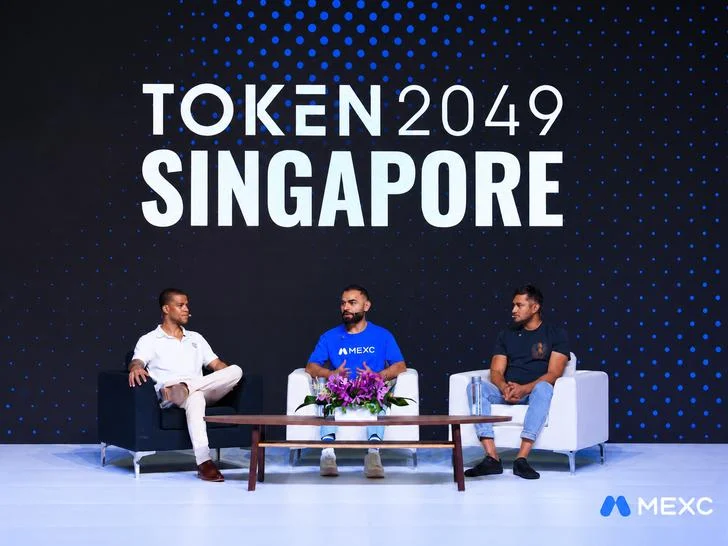
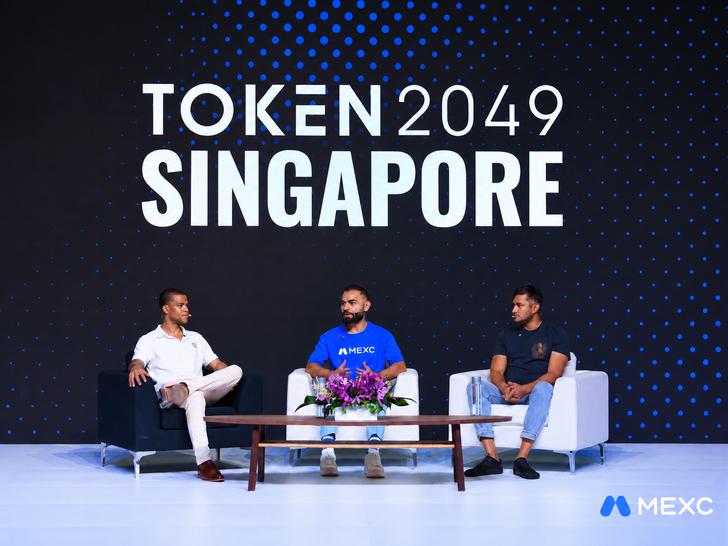
October 9, 2026 — As the digital asset landscape matures, the long-standing silos between cryptocurrency markets and traditional finance (TradFi) are beginning to crumble. At the prestigious TOKEN2049 conference in Singapore, leaders from two of the industry’s most influential entities—MEXC and Payward (the parent company of Kraken)—converged to discuss a vision for a unified, 24/7 global financial ecosystem.
The panel, featuring MEXC CEO Vugar Usi Zade and Payward Co-CEO Arjun Sethi, served as a landmark moment in the industry’s trajectory. Their discourse moved beyond the hype of price cycles, focusing instead on the structural shifts required to democratize finance, bridge the gap between asset classes, and foster a collaborative environment that prioritizes the retail user.
Main Facts: A New Paradigm for Global Trading
The core thesis presented by both executives is that the future of finance lies in the elimination of friction. Currently, financial markets are fragmented by geography, asset type, and operating hours. Blockchain technology, according to the panelists, is the catalyst that will finally render these limitations obsolete.
MEXC, known for its pioneering 0-fee model and expansive multi-asset reach, is positioning itself as a central gateway for this evolution. Payward, leveraging its robust global infrastructure and deep regulatory experience in the United States, represents the institutional backbone of this transition. Together, they argued that the "next five years" will be defined by the consolidation of these disparate systems into a singular, liquid, and always-on global platform.
Key Takeaways:
- Always-On Markets: The industry is moving toward a 24/7 model where traditional market hours become a relic of the past.
- Retail as the Catalyst: Unlike previous cycles led by speculative institutions, the next wave of adoption will be driven by retail demand for seamless asset movement.
- Strategic Collaboration: The shift from a "winner-takes-all" competitive mindset to a collaborative ecosystem is essential for scaling global financial infrastructure.
- Infrastructure Connectivity: The technical challenge of the decade is not just trading tokens, but enabling the flow of collateral across borders and asset classes.
Chronology: The Road to Convergence
The partnership between these industry giants did not emerge in a vacuum. It is the culmination of years of technical development and regulatory navigation within the crypto-asset space.
- 2018–2022 (The Foundation): Both MEXC and Payward focused on building deep liquidity and trust within their respective niches—MEXC as a high-speed, retail-focused Asian powerhouse, and Payward as a secure, globally recognized institution.
- 2023–2025 (The Regulatory Pivot): As governments began to clarify the legal status of digital assets, the two companies aligned their strategies to emphasize transparency and compliance as prerequisites for mass-market integration.
- September 2026 (The TOKEN2049 Summit): The panel discussion in Singapore formally signaled that both entities are moving beyond exploratory talks into an active phase of strategic alignment.
- October 2026 (The Future Outlook): Following the event, the industry now anticipates a series of integrated service offerings and cross-platform infrastructure improvements intended to harmonize the user experience across the crypto and TradFi spectrum.
Supporting Data: The Infrastructure Challenge
During the panel, Arjun Sethi provided a critical insight into the "plumbing" of the financial world. He noted that while "24/7 trading" sounds like a simple consumer benefit, it is a monumental technical hurdle.
"24/7 trading really means: how do you bring all that collateral into one place?" Sethi explained. The challenge lies in the interoperability of ledger systems. Traditional banks operate on batch-processing cycles, while blockchains operate on real-time consensus. To bridge this, platforms like MEXC and Payward are investing heavily in:
- Cross-Chain Settlement Layers: Reducing the time it takes to move assets between disparate liquidity pools.
- Tokenized Real-World Assets (RWA): As stocks, bonds, and commodities are increasingly represented on-chain, the demand for a single platform that handles both Bitcoin and tokenized equities has skyrocketed.
- Liquidity Aggregation: By pooling assets, these platforms minimize slippage for retail traders, effectively lowering the cost of entry for the average investor.
Vugar Usi Zade’s perspective complements this, focusing on the user experience. "Retail will be the main driver," Zade noted. By lowering barriers—specifically through MEXC’s signature 0-fee structure—the platform is effectively capturing a generation of users who expect the same speed from their brokerage as they do from their social media feeds.
Official Responses: A Shared Vision
The synergy between the two leaders was palpable, marking a departure from the combative tone that has historically characterized crypto exchanges.
Vugar Usi Zade (CEO of MEXC):
Zade emphasized that the goal is not to "replace" traditional finance but to optimize it. "Over the next five years, we’ll see a convergence toward a singular platform where asset classes and investments can move quickly and smoothly," he stated. He highlighted that MEXC’s strength lies in its "retail-first" approach, providing deep liquidity for perpetual markets that span both digital and traditional assets.
Arjun Sethi (Co-CEO of Payward/Kraken):
Sethi underscored the necessity of partnership. "The only way to do that is to partner with folks, including MEXC, to be able to help succeed in their core markets," he said. He pointed to the need for a "Global Financial Infrastructure" that can withstand the rigors of 24/7 operations while maintaining the transparency and security that modern users demand.
Implications: The Future of Global Trading
The collaboration between MEXC and Payward holds significant implications for the global financial markets.
1. The Democratization of Asset Classes
By merging crypto-trading agility with TradFi security, these platforms are effectively lowering the floor for entry into sophisticated financial instruments. Users who were previously excluded from global derivatives markets will soon find these tools accessible through simplified, single-gateway interfaces.
2. The End of Geographical Arbitrage
As infrastructure becomes more connected, the ability for platforms to operate in silos based on regional regulation will diminish. This will force a global standard of compliance, where platforms that provide the best user experience and the most transparent data will dominate the market, regardless of their original headquarters.
3. A New Era of Trust and Transparency
Both executives agreed that trust is the ultimate currency. As the crypto industry becomes more intertwined with the traditional banking system, the scrutiny from regulators and users will only intensify. The shift toward "transparency-first" infrastructure—where audits, reserves, and transaction history are verifiable in real-time—will become the new gold standard for the industry.
4. Competitive Efficiency
The shift from competition to collaboration allows for a "division of labor" in the financial sector. Payward’s deep experience in the U.S. markets and institutional-grade infrastructure, combined with MEXC’s rapid retail execution and diverse asset coverage, creates a powerful ecosystem. This partnership model serves as a blueprint for how other firms might survive the coming consolidation phase of the crypto economy.
Conclusion: Bridging the Divide
The TOKEN2049 Singapore panel was more than a corporate announcement; it was a roadmap for the next phase of the digital asset revolution. By acknowledging that the future belongs to interconnected, 24/7 markets, MEXC and Payward have set a precedent for a more cohesive financial landscape.
As we look toward 2030, the vision articulated by Vugar Usi Zade and Arjun Sethi suggests a world where the distinction between "crypto" and "finance" fades away. In its place will be a single, globalized system that empowers retail users to "MEXCmize" their opportunities, trade with fewer barriers, and participate in a truly borderless economy.
For the retail investor, this evolution promises a future of greater choice, lower costs, and unparalleled access—provided that the industry remains committed to the principles of collaboration, infrastructure integrity, and, above all, the relentless pursuit of transparency.
Risk Disclaimer: This content does not constitute investment advice. Given the volatility of financial markets, including digital assets, tokenized assets, and traditional financial products, investors should carefully assess market conditions, underlying asset fundamentals, and potential financial risks before making any investment or trading decisions.