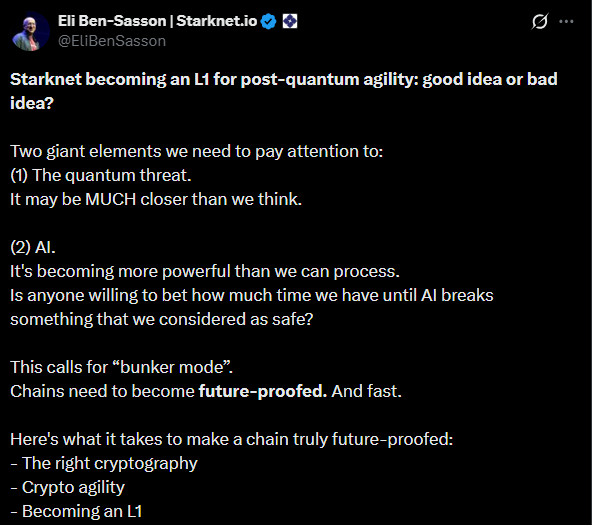
In a move that has sent shockwaves through the blockchain industry, Starknet—a prominent Ethereum Layer 2 (L2) scaling solution—is evaluating a fundamental architectural pivot: transitioning into a standalone Layer 1 (L1) blockchain. Spearheaded by Eli Ben-Sasson and his development team, the initiative stems from a growing impatience with Ethereum’s projected timeline for achieving quantum resistance. As the threat of AI-driven cryptographic attacks looms larger, the Starknet team argues that waiting until 2029 for Ethereum’s native security upgrades is a gamble the ecosystem cannot afford to take.
This potential departure represents more than just a technical migration; it highlights a deep-seated ideological rift within the crypto community regarding the best path forward in an era of rapid technological disruption.
Main Facts: The "Quantum-Resistant" Imperative
The core of Starknet’s argument rests on the escalating vulnerability of current cryptographic standards. As advanced artificial intelligence models grow increasingly capable of solving complex mathematical problems, the security of existing blockchain protocols is being re-evaluated. Ben-Sasson and his team have identified the year 2027 as their internal target to achieve full quantum resistance—two years ahead of the current Ethereum roadmap.
"Right now, we’re reliant on the security of Ethereum, and many parts of it are not quantum-safe," Ben-Sasson stated. "If we become an L1, we’ll replace that layer with a quantum-resistant layer that utilizes advanced hashing algorithms."
For the Starknet team, this is a matter of "post-quantum agility." By detaching from the L2 framework, they believe they can iterate faster, deploy proprietary security patches, and shield their users from the looming threat of quantum computing, which many believe could render current ECDSA (Elliptic Curve Digital Signature Algorithm) signatures obsolete.
Chronology of the Crisis
The realization that blockchain security is under immediate threat did not happen overnight. The timeline of this unfolding saga can be summarized as follows:
- Early 2026: Researchers begin reporting that AI models are showing unexpected proficiency in identifying vulnerabilities in standard encryption protocols.
- Mid-2026: Starknet leadership initiates internal discussions regarding the limitations of the Ethereum L2 dependency, specifically noting the constraints of Ethereum’s "Bunker Mode" proposals.
- September 2026: The Starknet team publicly floats the idea of transitioning to an independent L1 architecture to prioritize quantum-safe hashing.
- October 2026: The announcement sparks a sharp debate among industry leaders, including Vitalik Buterin and Charles Hoskinson, while triggering a massive 50% price rally in the STRK token as speculative interest mounts.
Ethereum’s Divided Reaction: A House Divided
The proposal to pivot has exposed a significant lack of consensus regarding how to defend the Ethereum network against AI and quantum threats. An Ethereum researcher recently proposed a "Bunker Mode" migration, a strategy intended to hide public keys and mitigate the risks posed by address reuse.
However, the proposal has faced stiff resistance from high-level voices. Ethereum co-founder Vitalik Buterin has expressed deep reservations about the efficacy of such a migration. Furthermore, Buterin has publicly questioned the reliance on "lattice-based" cryptography—a popular candidate for post-quantum security—arguing that current AI models could potentially compromise these systems as well. Instead, Buterin favors a refined approach to hash-based cryptography.
This stance has drawn sharp criticism from elsewhere in the industry. Cardano’s Charles Hoskinson publicly challenged Buterin, slamming the Ethereum co-founder for a perceived lack of empirical evidence to support his dismissal of lattice-based security. The public sparring underscores a larger issue: there is currently no industry-wide agreement on how to survive a post-quantum world.
Supporting Data and Market Dynamics
The market’s reaction to the Starknet L1 announcement has been as volatile as the technology itself. Following the news, the STRK token saw a meteoric rise, gaining over 50% in value within 48 hours, even as the broader cryptocurrency market experienced a period of heavy sell-offs. This suggests that investors are viewing Starknet’s "quantum-safe" narrative as a potential long-term value driver, or at the very least, a compelling differentiator in a crowded L2 market.
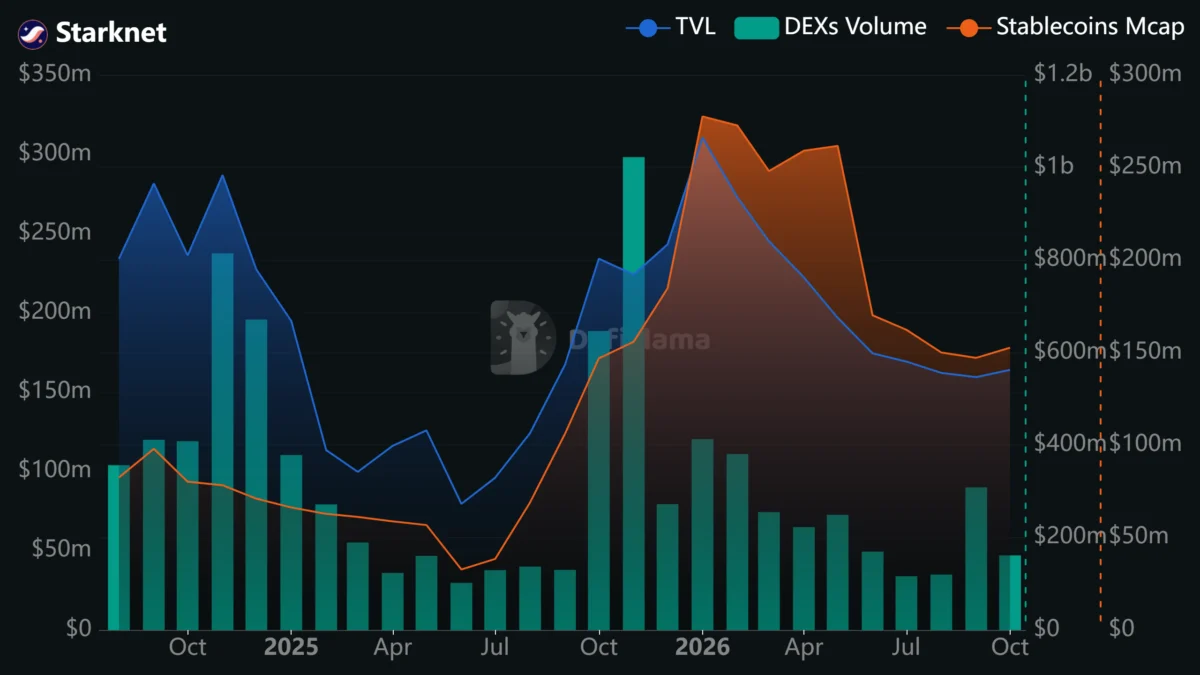
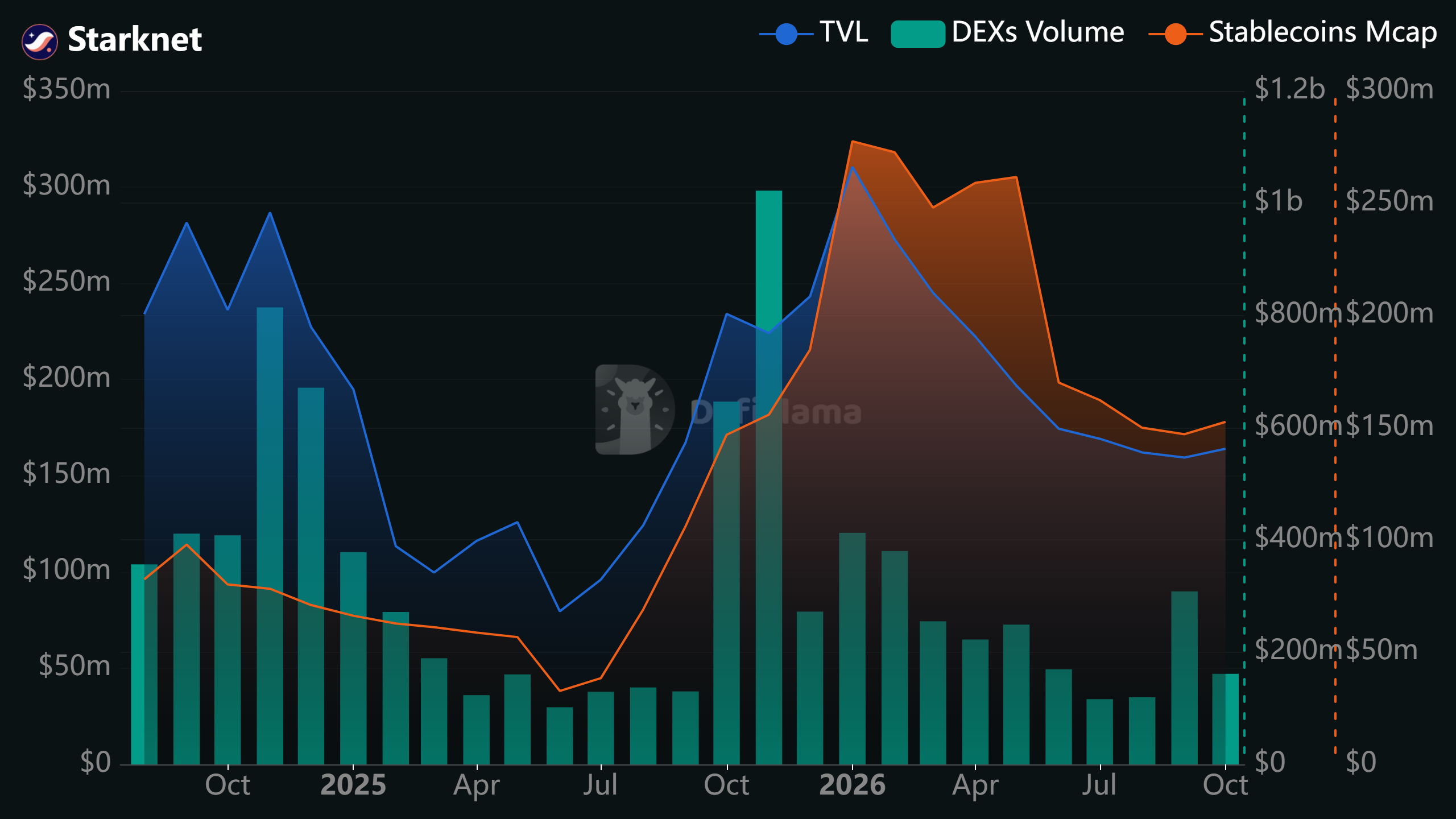
However, the underlying data paints a more complex picture. Starknet’s Total Value Locked (TVL) has faced significant headwinds. DeFiLlama data indicates that the network’s TVL has been slashed by nearly half, dropping from $310 million to approximately $160 million. This decline in liquidity reflects the uncertainty inherent in the platform’s future. Investors are left to weigh the ambitious promise of a quantum-hardened L1 against the reality of a shrinking ecosystem that is currently losing ground to competing L2s.
Official Responses and Industry Criticism
The industry response to the L1 pivot has been polarized. Some developers support the push for technological sovereignty, while others view it as an abandonment of the Ethereum vision. Analyst Gabriel Shapiro was among the most vocal critics, characterizing the move as "hateful" toward the Ethereum ecosystem.
"Yes, please do it; it’s obvious you hate Ethereum," Shapiro remarked in response to the news. Such comments highlight the sentiment among some Ethereum maximalists who view Starknet’s potential exit not as a technical evolution, but as a betrayal of the collaborative spirit of the Ethereum L2 movement.
Starknet’s leadership, however, maintains that this is not about "hating" Ethereum, but about survival. They argue that the speed of AI development necessitates a move away from the bureaucracy of Ethereum Improvement Proposals (EIPs), which they feel are too slow to address a threat that could arrive sooner than 2029.
Implications: The Future of Blockchain Security
The implications of a successful (or failed) transition by Starknet are profound. If the team succeeds in building a robust, quantum-resistant L1, it could set a new standard for blockchain security, forcing Ethereum to accelerate its own roadmap or risk losing other L2s to similar paths of independence.
Conversely, if the project fails to gain traction or encounters significant technical hurdles during the migration, it could serve as a cautionary tale for other scaling solutions. The transition from an L2 to an L1 is a monumental engineering feat that requires deep liquidity, a robust validator set, and the trust of developers and users alike.
1. The Challenge of "Post-Quantum Agility"
Starknet’s goal of "post-quantum agility" implies a system that can update its cryptographic primitives without requiring hard forks or disruptive network upgrades. This is the "holy grail" of blockchain security. If achieved, it would make the network inherently more adaptable to the rapid advancements in AI-driven cryptanalysis.
2. The Threat of Centralization
Critics also point out that by moving to an L1, Starknet risks losing the decentralized security benefits inherited from Ethereum. A smaller, independent validator set is inherently more vulnerable to censorship or 51% attacks compared to the massive, globally distributed Ethereum network. Starknet must prove that its "quantum-safe" hash algorithms can compensate for the potential loss of decentralized security.
3. The Survival of the Fittest
As noted in recent industry reports, several L2s have already begun to shut down due to a lack of product-market fit. Starknet’s pivot can be seen as a defensive maneuver designed to carve out a unique niche before the L2 space consolidates further. By positioning itself as the only "quantum-hardened" blockchain, it hopes to attract security-conscious institutional capital that might otherwise avoid current L2 architectures.
Conclusion
The debate surrounding Starknet’s transition to an L1 is a microcosm of the larger struggle facing the entire cryptocurrency industry: how to balance the need for innovation and speed with the inherent risks of a rapidly evolving threat landscape. While the community remains divided over whether the 2027 timeline is a visionary goal or a reckless, marketing-driven ambition, one thing is certain: the conversation around quantum readiness has moved from the fringes of academic discussion to the center of market-moving decision-making.
Whether or not Starknet ultimately chooses to sever its ties with Ethereum, the project has successfully forced the industry to confront the "AI threat" head-on. As the clock ticks toward 2029, the pressure on Ethereum to provide a concrete, fast-tracked solution will only intensify, and the actions of projects like Starknet will likely define the next chapter of blockchain infrastructure development. For now, the crypto world waits—not just for a solution to the quantum threat, but to see which vision of the future will hold the most weight when the next wave of technological disruption finally arrives.