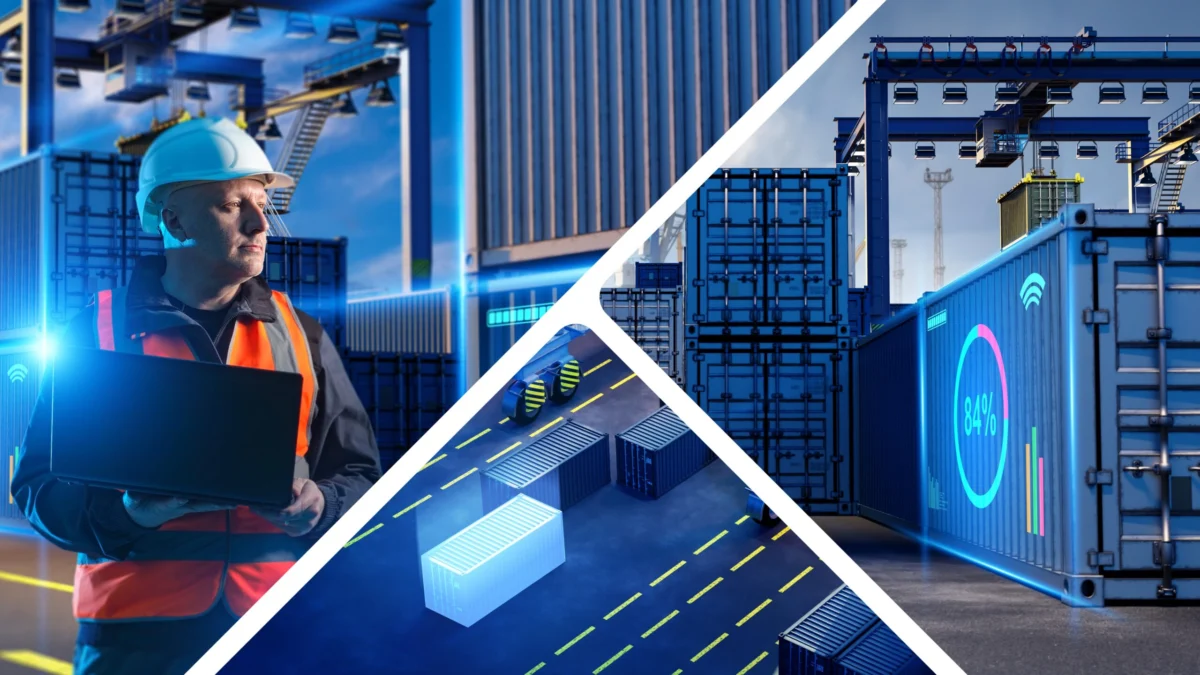
Walk into a modern, state-of-the-art distribution center today, and you will notice a striking quietude. The frantic, human-led chaos that defined logistics for decades has been replaced by a rhythmic, choreographed dance. Autonomous shuttles glide silently through towering storage racks, compact robots ferry totes between processing stations with unerring precision, and high-speed sorters fan out parcels with a velocity impossible for human hands to replicate.
However, the most significant transformation in these facilities is not the metal and motors—it is the digital "brain" governing them. The shift from brute-force machinery to sophisticated, real-time coordination is the defining theme of the logistics industry as it enters a period of unprecedented expansion. According to the latest figures from Global Market Insights, the logistics automation market is undergoing a seismic shift, poised to grow from a valuation of USD 35.9 billion in 2025 to a staggering USD 104.9 billion by 2035.
The Main Facts: A Decade of Exponential Growth
The data paints a picture of a sector moving from niche adoption to industry-wide necessity. With an expected compound annual growth rate (CAGR) of 11.5%, the market is on track to triple its value in just ten years.
This growth is not merely a byproduct of technological hype; it is a fundamental response to the "logistics squeeze." As global supply chains become more complex and consumer expectations for near-instant delivery harden, companies are finding that manual processes are no longer just inefficient—they are a liability.
The market breakdown reveals where the capital is flowing:
- Hardware (58%): Representing roughly USD 21 billion in 2025, this segment encompasses the physical infrastructure—AS/RS systems, conveyors, palletizers, and mobile robotics.
- Software (26%): The "intelligence layer," comprising warehouse management systems (WMS) and transportation management systems (TMS).
- Services (15.6%): The critical human layer, covering consulting, systems integration, and ongoing maintenance.
Chronology of a Revolution
The evolution toward the automated warehouse did not happen overnight. To understand the current trajectory, one must look at the historical markers that brought us to the "Orchestration Era."
- Pre-2015: The Mechanization Phase. Logistics hubs focused on fixed infrastructure—long conveyor belts and massive, static sorters designed for high-volume, uniform goods.
- 2015–2020: The E-commerce Awakening. The "Amazon Effect" forced retailers to handle individual items rather than pallets. This necessitated the first wave of Goods-to-Person (G2P) robotics.
- 2021–2024: The Resilience Pivot. Following global supply chain disruptions, companies prioritized visibility. Sensors, IoT, and early Digital Twin technologies were deployed to map real-time movement.
- 2025–2026: The Intelligence Handoff. The current period marks a departure from hardware-first strategies. Market leaders are now prioritizing "orchestration"—the ability to make diverse, heterogeneous fleets of robots and software systems communicate seamlessly.
- 2027–2035: The Projected Scaling. Analysts forecast a decade of mass adoption among mid-market firms, driven by modular, cloud-native automation that allows for incremental, low-risk upgrades.
Supporting Data: Why Companies are Spending
The surge in investment is driven by four primary pressures that have fundamentally altered the economics of distribution.
1. The E-commerce Paradigm Shift
Modern logistics no longer moves pallets; it moves parcels. The transition from wholesale distribution to item-level e-commerce has multiplied the number of fulfillment sites required. To compete, retailers must place inventory closer to the end consumer, leading to a sprawling network of micro-fulfillment centers that require the precision of automation to stay profitable.
2. The Labor Paradox
Despite fears that robots will eliminate jobs, the reality is more nuanced. Aging demographics and chronic labor shortages in North America and Europe have made traditional, high-intensity warehouse work increasingly difficult to staff. Automation is acting as a force multiplier: it offloads repetitive, physically taxing tasks—such as heavy lifting and constant walking—to machines, allowing the human workforce to transition into higher-value roles in supervision, maintenance, and exception management.
3. Visibility as a Survival Metric
After the systemic shocks of the early 2020s, "blind spots" in the supply chain are no longer acceptable. Companies are investing heavily in sensors and tracking tech to achieve total inventory visibility. The goal is to shrink the time between a disruption and a corrective action to near zero.
4. Technological Maturity
We have crossed a threshold in AI capability. Modern robots are now equipped with advanced computer vision and machine learning, allowing them to handle items of varying shapes, sizes, and textures. This removes the "human-in-the-loop" requirement that previously hindered the deployment of robotics in environments with diverse product inventories.
Official Responses and Industry Sentiment
The industry’s shift toward orchestration is reflected in the actions of the sector’s giants. No single player dominates the market; the top five suppliers—KION, Daifuku, TGW Logistics, SSI Schaefer, and Honeywell—collectively control only 22.2% of the market. This fragmentation has created an open ecosystem for innovation.
"The competitive advantage is no longer found in the fastest conveyor belt," notes an analyst from Global Market Insights. "It is found in the orchestration layer—the software that decides which task goes where and when."
Recent industry partnerships highlight this focus on integration:
- Siemens and KION: In April 2026, the two firms announced a digital-twin partnership, allowing operators to simulate warehouse processes in a virtual environment before a single bolt is turned on the physical floor.
- DHL Supply Chain: With over 8,000 collaborative robots already in service, DHL is scaling its robot-coordination platform from 30 sites to over 100, aiming to create a standardized "language" for its heterogeneous robotic fleets.
- Otto Group: The company is currently working with NVIDIA and Reply to develop an advanced coordination layer across 120 logistics locations, specifically designed to reduce the "friction" between disparate legacy software and modern robotics.
Implications: The Road Ahead
As the market expands toward its 2035 goal, several key implications emerge for businesses looking to scale their operations.
The Rise of the Mid-Market
While large enterprises currently account for two-thirds of spending, small and mid-sized businesses (SMBs) are growing at a faster rate—13.2% annually compared to 12.4% for large firms. This is enabled by a shift in the buying model: instead of the "all-at-once" facility overhauls of the past, SMBs are leveraging modular robots and cloud-based software to automate their worst bottlenecks first.
The Regional Split
Demand is geographically distinct. North America, led by the U.S. (USD 10.9 billion in 2025), remains the largest market due to mature fulfillment ecosystems. Asia-Pacific serves as the growth engine, with China leading the way. Meanwhile, European markets like Germany face a unique challenge: retrofitting legacy infrastructure. Suppliers there must innovate "non-stop" solutions, installing automation around existing operations that cannot afford a moment of downtime.
The Risk of the "All-or-Nothing" Approach
Automation is not a panacea. High upfront costs and the complexity of integrating with legacy ERP systems remain significant barriers. The industry is reaching a consensus that "step-by-step" modularity is the winning strategy. Businesses that attempt to over-engineer their initial rollout often find that the system is too rigid to adapt to changing consumer demands.
Final Analysis: The Future is Orchestrated
The next decade of logistics will be defined by the ability to harmonize. The winners will not necessarily be the companies that buy the most hardware, but those that invest in interoperability.
For the modern logistics operator, the mandate is clear: start with the most painful bottleneck, prioritize software that integrates cleanly with existing systems, and focus on the human transition. The capital is flowing into the orchestration layer, and in a world where speed and precision are the only currencies that matter, the smartest machines are those that know how to work as one.
Source: Global Market Insights – Logistics Automation Market Analysis