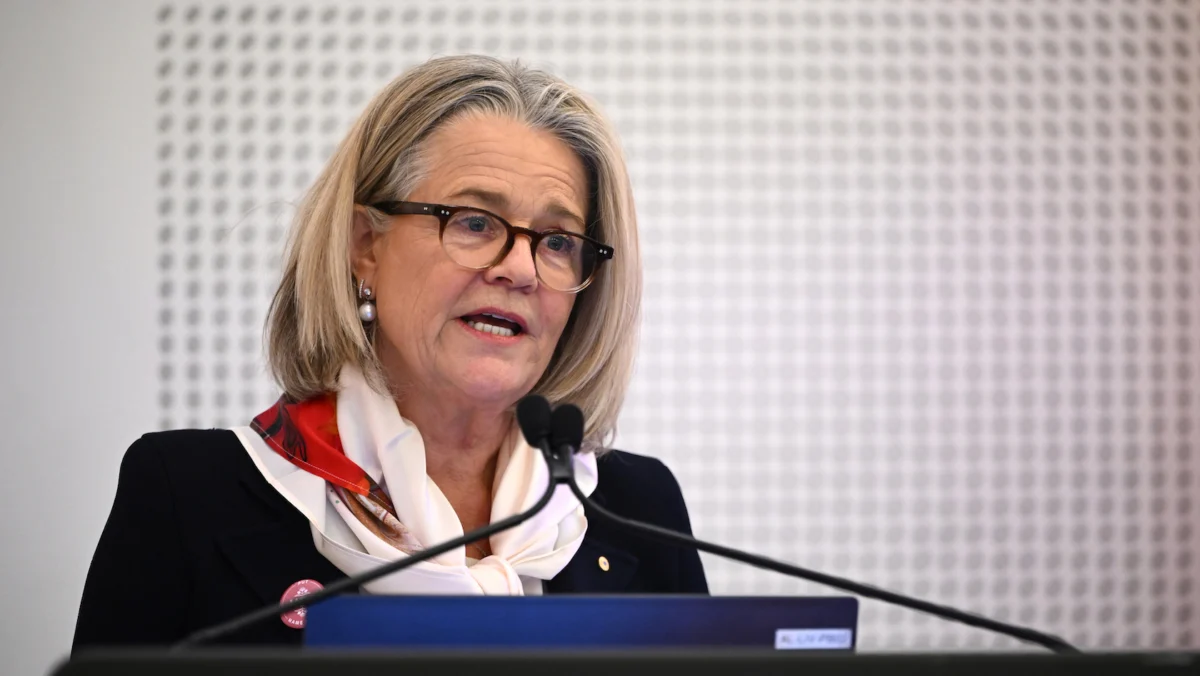
In a landmark move to reshape the venture capital landscape for female entrepreneurs, Nicola Forrest’s Coaxial Foundation has announced a strategic partnership with global venture capital firm Antler. The collaboration involves a significant commitment of up to $30 million, designed to bolster early-stage startups while specifically targeting the systemic funding disparities that often leave women-led ventures undercapitalized.
This injection of capital serves as the cornerstone for Antler’s third Australian fund, which is targeting a minimum of $70 million. By combining institutional-grade investment with non-dilutive grants, the partnership aims to provide a robust, long-term runway for founders operating in the notoriously difficult "valley of death"—the precarious phase between inception and securing Series A funding.
The Core Mechanics of the Partnership
The $30 million commitment from the Coaxial Foundation is bifurcated into two primary tranches. First, $20 million is allocated as a Limited Partner (LP) commitment to the Antler Australia Fund III, operating under the federal Early Stage Venture Capital Limited Partnership (ESVCLP) program. This portion of the funding adheres to the same market-standard terms as other institutional LPs, ensuring that the fund remains aligned with traditional VC performance expectations.
The second, and perhaps more transformative, component is a $10 million allocation specifically earmarked for "Momentum," a new initiative powered by Coaxial. This initiative is designed to provide direct financial support to women founders without requiring them to surrender equity, thereby preserving their ownership stakes during the most vulnerable stages of their company’s development.
The "Momentum" program operates through a dual-grant structure:
- Initial Grant: Eligible women-founded companies receive a $60,000 grant at the time of Antler’s initial investment.
- Milestone Grant: A second $60,000 grant is unlocked at the next funding milestone, contingent upon an external investor underwriting the round.
Beyond these grants, Coaxial has committed to providing 15% of the capital for follow-on rounds, effectively de-risking these investments for other market participants. Combined with Antler’s existing 33% follow-on commitment, this provides a powerful 48% anchor, significantly increasing the likelihood of successfully closing a funding round. According to Antler general partner Michael Kron, these combined mechanisms could see some startups receive upwards of $1 million in total support within their first 12 months.
A Chronology of Collaboration and Growth
The launch of Antler Australia Fund III marks the latest chapter in a rapid expansion for the firm’s local operations. Since establishing its Australian presence seven years ago, Antler has become a dominant force in the domestic ecosystem, processing over 23,000 applications and building a portfolio of more than 130 active startups.
The firm’s evolution in Australia has been marked by a series of increasingly ambitious funds. Following the success of its inaugural investments, the firm launched a $77 million second fund in early 2024, which also saw an accelerated push into the Queensland market with a Brisbane launch.
The introduction of the Coaxial partnership arrives at a time when the venture market is experiencing a period of profound bifurcation. On one side, the industry is witnessing a "gold rush" of massive capital injections into AI-focused megafunds, largely concentrated in Silicon Valley. Conversely, the "inception" and "pre-seed" stages—the bedrock of future innovation—are facing a liquidity crunch. By anchoring the third fund, Coaxial is essentially doubling down on the "earliest of the early" stage, ensuring that promising founders do not fall through the cracks during this period of macroeconomic uncertainty.
Supporting Data: Why Female Founders Outperform
The rationale behind the Coaxial partnership is not merely rooted in social impact; it is driven by hard data. Antler’s internal performance metrics suggest that backing female founders is a superior investment strategy.
According to Michael Kron, all-women founding teams within the Antler portfolio have consistently outperformed their peers, delivering a 2.6x return on initial investment compared to the 2.1x return generated by the fund’s broader, mixed-gender portfolio.
Over its seven-year history in Australia, Antler has invested $19 million into 56 women-founded companies involving 66 individual founders. These ventures have collectively raised $109 million in subsequent funding, achieving a total post-money valuation of $355 million. These figures provide a compelling rebuttal to the persistent myth that investing in female-led enterprises is a "charity" play. Instead, the data suggests that these businesses represent a high-alpha opportunity that has been historically overlooked by conventional venture capital models.
Official Responses and Strategic Vision
The partnership was born from a shared recognition of the structural barriers preventing talented women from scaling their ideas. Nicola Forrest, a prominent philanthropist and advocate, emphasized that the issue is not a lack of talent, but a lack of infrastructure.
"There is no shortage of talented, ambitious women in Australia," Forrest stated upon the announcement. "Antler has a strong history of successfully supporting founders from inception and as they scale, which is exactly the gap Coaxial wants to help close for Australian female founders."
For founders like Skye Theodorou, co-founder and CEO of the startup Upcover, the impact of such a program is life-changing. Theodorou, who was backed by Antler before her company was fully formed, noted that the Momentum initiative fundamentally changes the calculus for prospective founders. "Momentum means the next founder gets the same shot, and she gets it without having to choose between her idea, her family and her income," she said.
From the firm’s perspective, the $1 million investment over four years into internal resources is a tactical commitment to improving deal flow. By equipping the Antler team with the resources to actively scout and support female founders, the firm is attempting to institutionalize a more inclusive investment pipeline, moving away from "network-based" sourcing that has historically disadvantaged women and minority founders.
Implications for the Future of Australian Venture Capital
The implications of the Coaxial-Antler partnership extend far beyond the individual startups receiving the $120,000 grants. It signals a shift in how the Australian venture market views risk.
1. Defensibility through Capital
In the current climate, capital has become a competitive moat. Kron notes that for many startups, the mere ability to secure funding is a "defensibility" factor. By providing a clear, pre-committed path to follow-on funding, Antler is giving its portfolio companies a massive advantage in attracting talent and scaling operations, effectively shielding them from the "valley of death."
2. Policy and Regulatory Headwinds
The partnership arrives at a time of debate regarding Australian tax policy, particularly concerning proposed changes to capital tax structures and potential impacts on startup incentives. While Kron remains optimistic about the resilience of the Australian ecosystem, he warns that any unintended consequences of policy shifts will disproportionately affect female founders, who already face steeper barriers to entry.
Furthermore, Kron touched upon the sensitive topic of "flipping"—where Australian startups re-incorporate as US entities to access deeper capital markets. He suggested that if domestic policy does not remain competitive, the partnership’s work in nurturing early-stage talent might inadvertently feed the US ecosystem, as companies seek to relocate sooner in their life cycles.
3. A Model for Other VCs
By demonstrating that it is possible to structurally increase female representation in venture-backed portfolios without sacrificing returns, Antler and Coaxial are setting a template for other VC firms. The use of non-dilutive grants combined with equity-based co-investment is a sophisticated mechanism that solves the "undercapitalization" problem without the complexity of traditional secondary markets or complex debt instruments.
Conclusion
The partnership between the Coaxial Foundation and Antler represents a sophisticated, data-backed intervention in the Australian startup ecosystem. By addressing the "valley of death" with a combination of non-dilutive grants and a robust follow-on funding strategy, the initiative acknowledges that the path to success for a founder is as much about financial runway as it is about innovation.
As the Australian tech sector matures, the success of the Momentum initiative will be a bellwether for the industry. If the current trend of female-led outperformance continues, the model pioneered by Coaxial and Antler may well become the gold standard for venture capital firms worldwide, proving that the most successful portfolios of the future are those that are the most inclusive of the present.