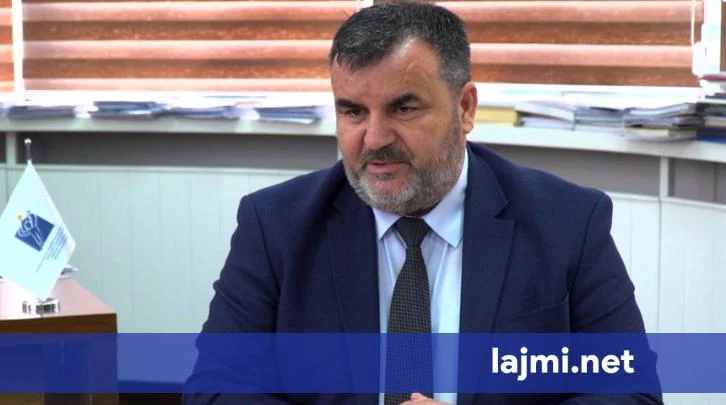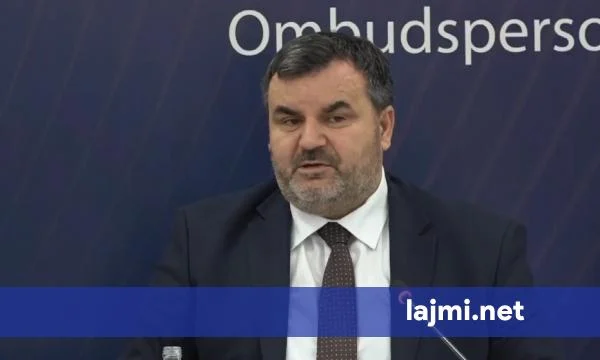
Pristina, Kosovo – A recent surge in judicial fees, mandated by a new Administrative Instruction, has ignited widespread concern across Kosovo, with the Ombudsman, Naim Qelaj, leading the charge against what he describes as "disproportionate financial barriers" to accessing justice. Speaking at a pivotal roundtable organized by the Institute for Judicial Administration (IAP) and the Group for Legal and Political Studies (GLPS), Qelaj underscored the profound implications of these increases on citizens’ fundamental rights, advocating for a balanced and proportional approach to judicial taxation.
The debate, which centered on the "Impact of the Administrative Instruction for the Unification of Judicial Fees on the Realization of the Right to Access to Justice," brought to light startling figures and legal ambiguities that threaten to undermine the very principles of an equitable legal system. Critics argue that the steep hikes, in some cases reaching an astonishing 600 percent, risk alienating vulnerable populations and deterring individuals from seeking legal recourse, thereby eroding public trust in the rule of law.
Escalating Judicial Fees Threaten Access to Justice in Kosovo
The core of the controversy lies in the recently implemented Administrative Instruction for the Unification of Judicial Fees. While ostensibly aimed at streamlining and standardizing court costs, its practical effect has been a dramatic escalation in the financial burden placed on litigants. Ombudsman Naim Qelaj, a key figure in the defense of citizens’ rights, articulated his deep apprehension regarding this development during the IAP and GLPS organized discussion.
"In our opinion, we have raised concerns regarding the significant increase in certain judicial fees, additional payments, and the exercise of legal remedies, as well as the procedural consequences of their non-payment," Qelaj stated emphatically. He further elaborated, "These elements, taken together, can create disproportionate financial barriers for citizens seeking judicial protection." His warning highlights a critical juncture for Kosovo’s justice system, where the administrative necessity of funding court operations must be carefully balanced against the constitutional right of every citizen to access legal redress. The Ombudsman’s office, acting as an independent guardian of human rights, views these fees not merely as financial transactions but as potential gatekeepers to justice, particularly for those with limited economic means.
The discussions at the roundtable served as a crucial platform for stakeholders to dissect the multifaceted challenges posed by the new fee structure. The primary concern is that by making justice financially prohibitive, the state inadvertently creates a two-tiered system: one for those who can afford the escalating costs, and another for those who cannot, effectively denying them their legitimate right to seek judicial remedy.
The Ombudsman’s Stance: Proportionality and Balance
Ombudsman Qelaj’s intervention was not merely a critique but a call for fundamental reform based on principles of proportionality and balance. He stressed that while the state undoubtedly holds the exclusive right to impose judicial fees as a mechanism for funding its justice system, this power must be exercised responsibly and with careful consideration of its societal impact.
"The establishment of judicial fees must be done in a balanced manner, so that they do not represent an obstacle for citizens in accessing justice," Qelaj asserted. This principle is central to ensuring that the judiciary remains accessible to all, irrespective of their socio-economic status. He emphasized that any fee structure must be "equivalent and well-analyzed" to prevent it from becoming a deterrent. The Ombudsman’s office, through its formal opinion on the matter, has meticulously detailed these concerns, urging a comprehensive review of the Administrative Instruction. Their stance is rooted in the conviction that the state’s responsibility extends beyond merely providing a judicial system; it must actively ensure that this system is genuinely accessible and equitable for all its citizens. This means designing a fee structure that is fair, transparent, and, crucially, does not inadvertently exclude segments of the population from seeking legal protection for their rights.
A Chronology of Concern: From Public Outcry to Official Scrutiny
The Ombudsman’s formal opinion and the subsequent roundtable discussion were not isolated events but rather the culmination of growing public dissatisfaction and persistent advocacy from civil society organizations. The genesis of this official scrutiny can be traced back to widespread public reactions and direct requests from various civil society groups that initially sounded the alarm regarding the dramatic increases in judicial fees.
Qelaj himself acknowledged the crucial role played by these public and civil society voices in prompting the Ombudsman’s office to act. "The idea or the fact why we have come out with such an opinion stems from public reaction, the requests we have received from several civil society organizations, but also the very sensitivity of the topic of judicial fees, as an exclusive right of the state to impose them, but which must always be balanced, equivalent, and well-analyzed, so as not to present an obstacle in accessing justice," he explained. This collaborative dynamic, where citizen concerns are amplified by civil society and then addressed by independent institutions like the Ombudsman, highlights a vital mechanism for democratic accountability in Kosovo.
The initial public outcry emerged as citizens began to encounter the new, significantly higher fees when attempting to file lawsuits, appeals, or other legal requests. Anecdotal evidence quickly coalesced into a broader pattern of concern, prompting organizations dedicated to legal reform and human rights to investigate further. These civil society groups, often on the front lines of assisting citizens with legal issues, recognized the potential for these fees to create systemic barriers, particularly for marginalized communities. Their organized petitions and public statements provided the necessary impetus for a formal institutional response.
Beyond Fees: Institutional Responsibility
Beyond the immediate financial implications of the new fees, Qelaj’s opinion delves into a broader, more fundamental issue: the overarching responsibility of state institutions to guarantee genuine access to justice. He stressed that the discussion transcends mere tariff adjustments and touches upon the foundational relationship between institutional competence and state obligations.
"This opinion addresses an issue that goes beyond the impact of judicial fees; it addresses the relationship between the competence of institutions to regulate the functioning of the judicial system and the state’s obligation to guarantee that every citizen has a real opportunity to seek the protection of their rights," Qelaj declared. This perspective elevates the debate from a technical discussion about fee schedules to a fundamental discourse on governance and human rights. It posits that the state’s role is not just to establish a legal framework but to actively ensure that this framework is accessible and effective for every individual. This means critically examining whether administrative instructions, even if legally permissible in their narrow scope, might inadvertently undermine broader constitutional rights and state obligations. The Ombudsman’s intervention serves as a reminder that the judiciary, while needing resources, must never become an exclusive domain for the affluent, but rather remain a cornerstone of democratic governance accessible to all.
Startling Figures: Data Revealing Drastic Increases
The abstract concerns voiced by the Ombudsman were given concrete weight by Liridon Salihi, Projects Manager at GLPS, who presented alarming data illustrating the extent of the fee increases. Salihi not only highlighted the drastic percentages but also raised critical legal questions regarding the very authority behind these changes.
Salihi unequivocally stated that the administrative instruction had led to judicial fee increases ranging from 20 to an astounding 600 percent. To illustrate the severity, he provided specific examples that paint a clear picture of the new financial hurdles facing citizens. For instance, lawsuits concerning the legality of legal or sub-legal acts, which previously incurred a fee of 50 Euros, have now skyrocketed to 250 Euros – a 400% increase. Even more striking are the non-monetary requests in the context of intellectual property, which have seen their fees jump from 50 Euros to 350 Euros, representing a staggering 600% increase.
"Let’s not forget that with this administrative instruction, we have fees that have increased from 20 to 600%. For example, in lawsuits related to the legality of legal or sub-legal acts, the fee was initially 50 Euros, now it is 250 Euros. Or, for example, even for these non-monetary requests in the context of intellectual property, which once were 50 Euros, now we have them at 350 Euros," Salihi detailed, providing tangible evidence of the dramatic shifts. These figures are not mere statistics; they represent real financial burdens on individuals and businesses, potentially forcing them to abandon legitimate claims simply because they cannot afford the prohibitive court costs.
The Legal Quagmire: Questioning the Mandate
Beyond the numerical shock, Salihi introduced a critical "first dilemma" regarding the very legal basis of these fee increases. He questioned whether the Kosovo Judicial Council (KGJK), under the Law on the Kosovo Judicial Council, possesses the authority not just to unify judicial fees but also to determine their specific amounts and heights for various judicial services.
"As the first dilemma, we have said that it is the legal basis. The Ombudsman also said it, although the Law on the Kosovo Judicial Council gives the KGJK competence to unify judicial fees, in fact, should this be seen as a right also for setting, and for the height of fees for certain services provided by the judiciary?" Salihi probed. This question strikes at the heart of the rule of law, querying whether the KGJK has overstepped its mandate or interpreted its powers too broadly. While the unification of fees might be within its purview to ensure consistency across courts, setting the amount of those fees, particularly such substantial increases, could be argued to require a more robust legislative process, potentially involving the Assembly, to ensure democratic oversight and public accountability. The lack of clarity on this legal mandate creates significant uncertainty and opens the door for challenges to the legitimacy of the entire fee structure. If the legal basis is weak, the entire Administrative Instruction could be vulnerable to legal challenges, further complicating access to justice and potentially leading to a wave of litigation regarding fee legality.
Official Responses and Potential Repercussions
As of the current report, explicit official responses from the Kosovo Judicial Council (KGJK) or the Ministry of Justice regarding the Ombudsman’s opinion and the GLPS findings have not been extensively publicized. However, the gravity of the concerns raised by the Ombudsman and civil society demands a prompt and comprehensive reaction from these key institutions.
It is anticipated that the KGJK, as the body responsible for issuing the Administrative Instruction, might defend its actions by emphasizing the necessity of self-funding mechanisms for the judiciary. They could argue that increased fees are crucial for ensuring the efficient functioning of courts, investing in infrastructure, and maintaining judicial independence by reducing reliance on general budget allocations. Another potential argument could be that higher fees deter frivolous lawsuits, thereby streamlining court processes and reducing backlogs. However, these justifications must be weighed against the fundamental right to access justice and the potential for disproportionate impact on citizens.
The Ministry of Justice, responsible for broader legal policy, would also be expected to engage in this dialogue. Their response could involve initiating a review process, proposing amendments to the Administrative Instruction, or even suggesting a legislative solution if the legal basis for the KGJK’s authority is indeed found to be ambiguous. A comprehensive official response would ideally include a transparent explanation of the rationale behind the increases, a detailed impact assessment on different socio-economic groups, and a commitment to engage with civil society and the Ombudsman’s office to find a balanced solution. Failure to address these concerns robustly and transparently could further erode public trust in the judicial system and invite international scrutiny regarding Kosovo’s adherence to rule of law principles. The call for official clarification and constructive dialogue is paramount to resolving this contentious issue.
Broad Implications for Kosovo’s Rule of Law and Citizens
The issue of escalating judicial fees in Kosovo extends far beyond mere administrative adjustments; it touches upon the very fabric of the rule of law, democratic governance, and the fundamental rights of its citizens. The implications of these drastic increases are multifaceted and potentially far-reaching.
Impact on Vulnerable Populations
Perhaps the most immediate and concerning implication is the disproportionate impact on vulnerable populations. Low-income individuals, marginalized communities, and those already struggling financially are precisely the groups most likely to be deterred from seeking justice due to prohibitive court fees. A single mother seeking child support, a worker challenging an unfair dismissal, or a small business owner pursuing a debt could find the initial costs of litigation an insurmountable barrier. This creates a de facto exclusion from the justice system, effectively denying them their legitimate rights and reinforcing existing socio-economic inequalities. When justice becomes a luxury, the promise of equality before the law becomes an empty one.
Deterrent to Legal Recourse
Beyond outright exclusion, the increased fees act as a significant deterrent to legal recourse for a broader segment of the population. Even those who might eventually afford the fees could be discouraged by the initial outlay, particularly for cases where the potential financial gain or non-monetary relief might be uncertain or relatively small compared to the court costs. This chilling effect means that legitimate grievances go unaddressed, injustices persist, and the principle of legal accountability is weakened. When citizens are dissuaded from challenging unlawful acts or defending their rights, it undermines the very purpose of a judicial system and erodes public trust in the state’s ability to protect its citizens.
Economic Ramifications
The economic implications are also significant. For businesses, especially small and medium-sized enterprises (SMEs), increased judicial fees can add another layer of operational cost and risk. The example of intellectual property cases, where fees have surged by 600%, is particularly alarming. Innovation and economic growth often rely on the ability to protect intellectual assets. If the cost of defending patents, trademarks, or copyrights becomes prohibitive, it could stifle innovation, discourage investment, and place local businesses at a disadvantage. Furthermore, if contract disputes or debt recovery become too expensive to pursue through the courts, it could create an environment of legal uncertainty, making it riskier to conduct business and potentially leading to a less vibrant economy.
International Standards and Best Practices
Kosovo’s judicial fee structure must also be viewed through the lens of international standards and best practices. The right to a fair trial and access to a court is enshrined in Article 6 of the European Convention on Human Rights, to which Kosovo aspires to align. While states have the right to impose fees, these must not impair the essence of the right of access to a court, nor should they impose an excessive burden on the litigant. European Court of Human Rights jurisprudence emphasizes that fees must be proportional to the litigant’s means and the complexity of the case, and that a lack of financial means should not lead to a denial of justice. Kosovo’s current trajectory, with its dramatic fee increases, risks falling short of these fundamental international benchmarks, potentially drawing criticism from international partners and bodies monitoring its progress in rule of law.
The Path Forward: Dialogue and Reform
Addressing this critical issue requires a multi-pronged approach rooted in comprehensive review, transparent dialogue, and potential legislative reform. The first step must be a thorough and independent impact assessment of the current fee structure, taking into account socio-economic factors and potential barriers to justice. This assessment should inform a constructive dialogue involving the KGJK, the Ministry of Justice, the Ombudsman, civil society organizations, legal professionals, and citizen representatives.
Potential solutions could include:
- Revisiting the Administrative Instruction: Amending the instruction to introduce more progressive fee scales, capped amounts for certain types of cases, or exemptions/reductions for vulnerable groups.
- Legislative Clarity: If the legal basis for the KGJK’s authority to set fee amounts is indeed ambiguous, a legislative solution from the Assembly might be necessary to clearly define roles and ensure democratic oversight.
- Alternative Funding Mechanisms: Exploring alternative or supplementary funding sources for the judiciary that do not place an undue burden on litigants, such as increased state budget allocations or targeted international aid.
- Public Legal Aid Expansion: Strengthening and expanding the legal aid system to ensure that citizens, regardless of their financial status, can access necessary legal representation and advice.
Conclusion
The debate surrounding Kosovo’s escalating judicial fees is a critical test for its commitment to the rule of law and the fundamental right to access justice. The concerns raised by Ombudsman Naim Qelaj and civil society, supported by the stark data presented by Liridon Salihi, paint a clear picture of a system at risk of becoming inaccessible to many. The significant increases, particularly the multi-fold surges for specific case types, threaten to create insurmountable financial barriers, disproportionately affecting the most vulnerable and deterring legitimate legal recourse.
It is imperative that the Kosovo Judicial Council and the Ministry of Justice engage proactively and transparently with these concerns. A balanced approach is not merely desirable but essential – one that ensures the efficient functioning and financial sustainability of the judiciary without sacrificing the foundational principle of equal access to justice for all citizens. Failure to address this issue comprehensively risks undermining public trust, hindering economic development, and deviating from international human rights standards. The path forward demands urgent dialogue, careful reconsideration, and a steadfast commitment to justice that is truly accessible to every citizen of Kosovo.