As geopolitical landscapes shift and domestic political scandals ripple through the halls of power, the Foreign Policy Situation Report provides a comprehensive analysis of the week’s most critical developments. From the activation of a high-stakes defense pact in the Middle East to a sprawling espionage investigation in Germany and the ongoing volatility surrounding the Trump administration, the following report examines the forces shaping our current global order.
I. The Mecca Pact: A Litmus Test for Middle Eastern Stability
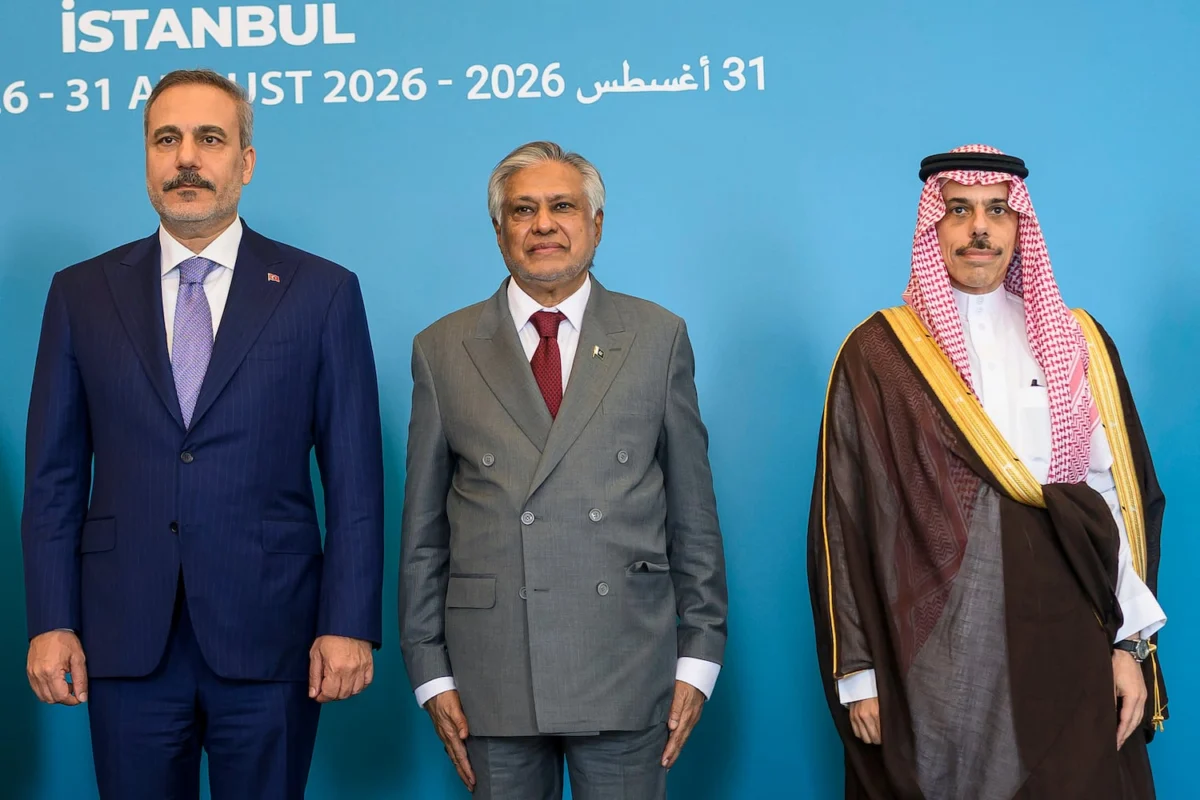
The ink on the Mecca Joint Defense Agreement was barely dry before it faced its first major crucible. Signed in early August by Saudi Arabia, Pakistan, and Turkey, the pact was formally triggered this Monday, marking a definitive escalation in the regional response to the Yemen-based Houthi militant group.
The Strategic Shift
The activation of the agreement comes at a precarious time for Riyadh. The Houthi rebels have intensified their campaign, targeting the Saudi capital, Riyadh, and launching coordinated strikes against multiple regional airports. While the Saudi-led coalition has engaged in retaliatory maneuvers for some time, the formal invocation of the Mecca Pact suggests a transition from bilateral ad-hoc support to a structured, tripartite military framework.
The Roles of Ankara and Islamabad
Despite the formal agreement, both Turkey and Pakistan have exercised significant caution regarding their operational involvement. Turkish Foreign Minister Hakan Fidan clarified that while Ankara is actively evaluating methods to bolster Saudi defenses, it has firmly ruled out participation in offensive military operations. Complicating matters further, the Turkish parliament has yet to ratify the agreement, leaving the legal basis for Turkish intervention reliant on existing bilateral frameworks.
Pakistan, conversely, has assumed a leadership mantle within the pact, appointing retired Lt. Gen. Nauman Mahmood as the collective’s first secretary-general. This move signals a deep commitment to the alliance’s administrative and tactical integration. However, the Pakistani government remains sensitive to international optics, vehemently denying reports—such as those published by the New York Times—that suggested Pakistani fighter jets were directly involved in kinetic strikes against Houthi positions.
II. Geopolitical Implications: Why the Pact Matters
The decision to activate the Mecca Pact serves as more than a tactical response; it is a profound geopolitical signal. Experts suggest that the Saudis are looking to transform a theoretical defense agreement into a tangible deterrent.
The Existential Threat
"The Houthis pose an existential threat to Saudi Arabia," explains April Longley Alley, a senior fellow at the Washington Institute for Near East Policy. "They are a much more formidable opponent than they were when the war first started." Alley notes that the speed with which the pact was triggered indicates that Saudi leadership is desperate to ensure the agreement functions as a real-world security guarantee rather than merely a diplomatic formality.
Economic and Security Calculus for Pakistan
For Pakistan, the stakes are inextricably linked to economic stability. The Houthi conflict has turned the Bab el-Mandeb strait—a critical maritime artery—into a dangerous chokepoint for global energy supplies. As Uzair Younus, a partner at The Asia Group, points out, "The Houthis cannot be allowed to do what they’re doing because it would mean an economic and political crisis in Pakistan."
Beyond energy security, Islamabad’s commitment is also a strategic "in-kind" investment. By securing Saudi goodwill through military cooperation, Pakistan hopes to bolster its own long-term strategic position, particularly in the context of its ongoing, volatile rivalry with India.
III. Domestic Upheaval: The Trump Administration’s Scandal-Plagued Week
While the Middle East grapples with war, the U.S. political scene has been rocked by a series of controversies involving key Trump-aligned figures and administrative personnel.

The Guilfoyle Controversy
The Wall Street Journal recently unveiled a report detailing an unusual financial request made by U.S. Ambassador to Greece Kimberly Guilfoyle. Prior to her Senate confirmation, Guilfoyle reportedly approached a Trump campaign donor, Eric Deters, asking him to settle a $100,000 credit card balance with American Express. While the transaction did not occur, the revelation has cast a spotlight on the financial conduct of high-level appointees and the intersection of personal debt and public office.
Advisors Under Fire
Simultaneously, President Trump found himself defending two top political advisors, James Blair and Chris LaCivita. Reports surfaced that the pair had been advising the pro-Russian government of Republika Srpska in Bosnia and Herzegovina ahead of recent elections. Following intense public and media scrutiny, the President took to Truth Social to distance himself, labeling them "outside consultants" and threatening termination should their external work present an irreconcilable conflict of interest.
The Hegseth Regret
The internal fissures within the Republican Party were further exposed this week by Senator Thom Tillis, who, in his new book, candidly admitted that his vote to confirm Secretary of Defense Pete Hegseth remains the "biggest regret" of his professional career, highlighting ongoing friction within the administration’s security apparatus.
IV. Intelligence and Espionage: The German Scandal
In Europe, a significant national security crisis has erupted following the arrest of August Hanning, the 80-year-old former head of Germany’s Federal Intelligence Service (BND).
Allegations of Treason
Hanning is accused of "treasonous espionage," specifically the unauthorized retention and potential transfer of classified intelligence. Authorities allege that Hanning received over 2,000 sensitive documents from a former aide, utilizing these materials for private consulting work long after his retirement. While Hanning’s legal defense team acknowledges his possession of confidential files, they adamantly deny that he shared these secrets with foreign intelligence agencies or received illicit compensation. The case represents a severe breach of protocol and has triggered a broader review of internal security procedures within the German intelligence community.
V. Chronology of Upcoming Global Events
As the international community navigates these crises, the following dates will be pivotal in determining the trajectory of global diplomacy:
- October 9: The Nobel Peace Prize winner is announced.
- October 11: Saudi Arabia hosts the International Energy Forum; the World Health Summit commences in Berlin.
- October 12: Ethiopia hosts the 65th session of the Intergovernmental Panel on Climate Change; IMF/World Bank annual meetings begin in Bangkok.
- October 14: FBI Director Kash Patel is expected to visit Moscow. Concurrently, Dublin hosts the International AI Summit.
- October 15: The European Council convenes a two-day leaders’ summit in Brussels to discuss regional security.
VI. Supporting Data: The AI Domain Boom
The intersection of technology and political rhetoric has manifested in an unexpected way this week. Following President Trump’s rebranding of Artificial Intelligence as "super intelligence," there has been a massive surge in demand for domain names ending in ".si"—the country code for Slovenia.
Official data from the Slovenian registrar indicates a record-breaking spike in registrations, reaching nearly 22,000 in a single day on October 5. Hostinger, a private registrar, confirmed that the majority of this traffic originated from the United States, illustrating how even casual political branding can drive global digital infrastructure shifts.
VII. Conclusion: The "Orange Plague" and the New Normal
Perhaps no image better encapsulates the current atmosphere in European diplomatic circles than the arrival of a gold-plated, nude statue of Donald Trump at the European Parliament in Strasbourg. Titled "The Orange Plague" and created by artist Jens Galschiot, the statue—which depicts a nude Trump holding a golf club and the scales of justice—serves as a physical manifestation of the polarizing nature of modern American foreign policy.
As the world heads into a dense season of summits and high-stakes diplomacy, the combination of regional military pacts, domestic financial scandals, and the rise of "super intelligence" underscores a period of high volatility. Whether the Mecca Pact can effectively deter the Houthis or whether the scandals plaguing the Trump administration will impact the midterms, the coming weeks are set to redefine the global status quo.