In the modern digital landscape, the paradox of choice has become the primary adversary of the marketing professional. Marketing leaders today are not suffering from a lack of information; they are drowning in a sea of white noise. Every day, the average executive’s inbox is besieged by a relentless deluge of industry reports, “must-read” white papers, LinkedIn think-pieces, and a cacophony of podcast episodes.
The fundamental problem is no longer content production—it is content filtration. For marketing leaders who must discern what matters and why, the traditional firehose of information has become a barrier to strategic thinking. In response to this shifting reality, Convince & Convert (C&C) has undergone a radical transformation of its own email marketing strategy, rebranding its long-standing newsletter ON to a new, insight-driven publication: The Trendline.
The Core Problem: Why "More" is No Longer Better
For years, the standard playbook for brand newsletters has been a straightforward, if increasingly obsolete, format: the “listicle of links.” These emails served as digital bulletin boards, aggregating headlines and directing traffic back to a central blog or hub. While this model was effective in the early days of content marketing, it has reached a point of diminishing returns.
As content mediums have matured, the bar for quality has risen exponentially. What successfully captured audience attention five or ten years ago is now easily ignored or relegated to the "promotions" tab. Marketing leaders, burdened by the rapid pace of change, do not have the time to click through a dozen links to figure out if a story is worth their attention. They demand immediate, actionable value.
The shift at Convince & Convert was not born of a whim, but of a hard-nosed assessment of their own audience’s behavior. By moving away from a medium-based organization (blog posts vs. podcasts) to a value-based, editorialized approach, the firm is attempting to solve the "Attention Economy" crisis. They are betting that in an era of AI-generated filler and algorithmic saturation, the most valuable commodity is not content, but context.
Chronology of a Rebrand: From ‘ON’ to ‘The Trendline’
The evolution toward The Trendline was a methodical process rooted in data-driven introspection.
- The Baseline: For years, C&C maintained ON, a newsletter that effectively served as a repository for the firm’s various outputs—podcasts, blog posts, and research. While successful in driving traffic, it required the reader to do the "heavy lifting" of synthesis.
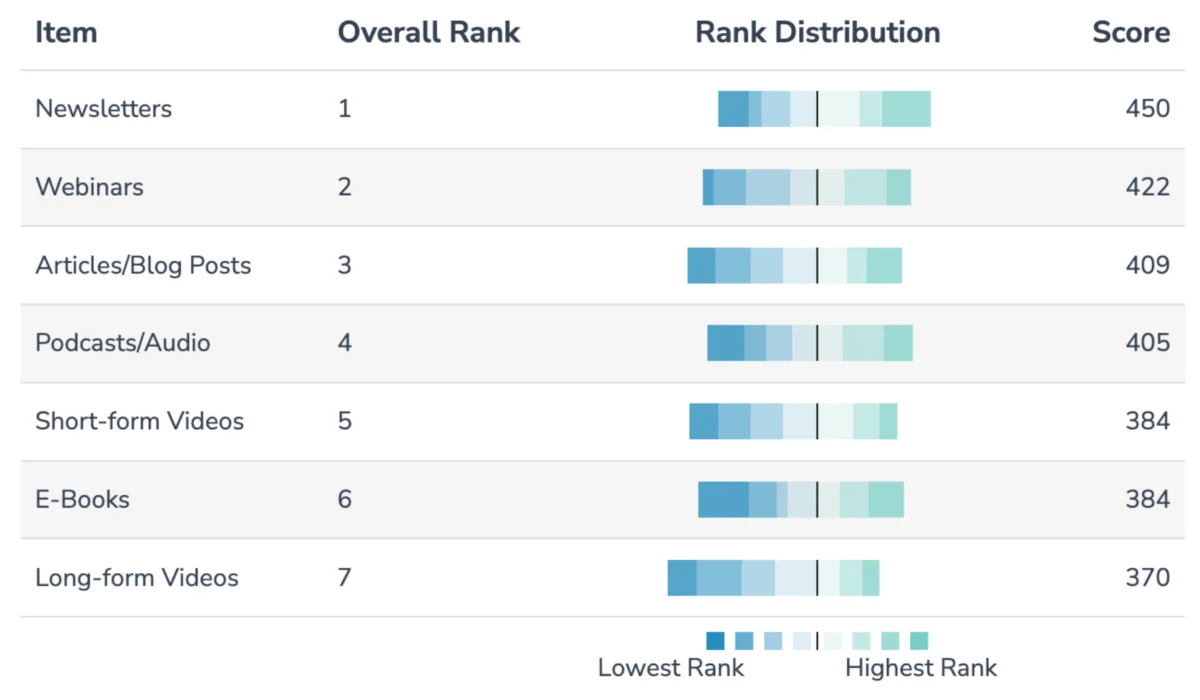
- The Discovery Phase: The team conducted extensive audience research, specifically surveying marketing leaders to identify their preferred consumption habits. The findings were stark: newsletters were ranked as the primary, preferred way to stay informed, significantly outperforming short-form video, webinars, and podcasts.
- The Realization: It became clear that the audience wasn’t just looking for content; they were looking for a "debrief." They needed a trusted lens through which to view the industry’s chaotic news cycle.
- The Execution: The decision was made to retire ON and build The Trendline. The new format was designed to be consumed entirely within the email client, prioritizing strategic takeaways over "click-through" metrics.
Supporting Data: Why Newsletters Still Rule
The decision to lean into the newsletter format is backed by clear, unequivocal audience feedback. In the most recent annual survey conducted by C&C, the firm asked marketing leaders to rank seven distinct content formats based on their preference for learning about industry trends.
The results were decisive: Newsletters were almost twice as likely to be ranked first than any other medium.

This statistic reveals a profound psychological shift in the professional reader. In a world where video and audio can be passive or interruptive, the newsletter remains an intentional act of consumption. It is a "lean-in" medium. When a professional opens a well-curated newsletter, they are signaling a desire for intellectual stimulation and professional growth.
Furthermore, the data suggests that leaders are increasingly weary of the "link-click" requirement. They are looking for "smart summaries"—pieces that don’t just report on what happened, but explain what it means and why it matters. The success of independent, curator-led newsletters (such as the author’s own creativity newsletter) reinforces the idea that when a brand provides a unique, human-centric perspective, it creates a level of trust that a simple RSS-feed-style email never could.
Official Perspectives: The Strategy Behind the Shift
The leadership at Convince & Convert characterizes this shift not as a lateral move, but as a commitment to higher-order value.
"Marketing leaders don’t need more content in their inboxes," explains the leadership team. "They need less content, but the content they do consume needs to help them make smarter decisions."
The new editorial philosophy behind The Trendline is centered on four pillars of transformation:
- Editorial Debriefing: Moving from a "list of links" to a "curated briefing." Each section of the newsletter now explains the "why" behind the news, rather than just the "what."
- Internalized Value: The content is written to be self-contained. While links are provided for those who want to dig deeper, the core insight is delivered in the email itself, respecting the reader’s time.
- Strategic Hierarchy: The newsletter is organized by importance and impact rather than by the medium of origin.
- Interactive Engagement: The introduction of "Sound Off," a polling feature, allows for real-time engagement that provides the company with clearer, more qualitative data than the "muddy" metrics of traditional open and click-through rates.
The firm’s approach is a direct reflection of how senior leaders—such as CMOs—consume information. When presenting to high-level decision-makers, one learns quickly that they do not have time for twenty charts or a long preamble. They need the "so what" immediately. By applying this "CMO-level" standard to their own marketing communications, C&C is setting a new benchmark for B2B content delivery.
Implications for the Broader Marketing Industry
The shift at Convince & Convert serves as a microcosm for a broader trend: the "Unbundling of Content." As audiences become more sophisticated, they are turning away from generalist content mills and toward specialized, curated, and highly editorialized channels.
1. The Death of the Link-Farm
Brands that rely on "link-farming"—simply pushing traffic from an email to a blog—are increasingly at risk of irrelevance. If a reader can find the summary in their inbox, they have no incentive to click. Brands must now decide if they want to be a destination (the website) or a utility (the newsletter). In many cases, the utility wins.

2. The Rise of "Editorial Authority"
The future of email marketing lies in the "editorial lens." It is not enough to share a news story; the brand must explain the implications of that story within the context of their specific industry. This requires a shift in hiring, moving from content creators to content strategists and curators.
3. Trust as a Metric
Engagement metrics like open rates and click-through rates are notoriously unreliable due to privacy changes (like Apple’s Mail Privacy Protection). Smart brands are now looking for "ownable engagement metrics"—polls, direct replies, and reader feedback loops. These metrics provide a clearer picture of how much trust the audience places in the brand’s voice.
4. The "Less is More" Mandate
Content strategy is moving toward a "less is more" philosophy. By publishing less frequent, higher-quality, and more insightful content, brands can cut through the noise. The goal is to become a "signal" in a world of static.
Conclusion: Lessons for the Modern Marketer
For any brand looking to refine its email marketing strategy, the lesson from The Trendline is clear: start by auditing the reader’s experience. Ask yourself, "Is this email asking my audience to work for me, or am I working for them?"
When rethinking a content strategy, the primary objective should be the delivery of value upfront. Whether you are a small agency or a global corporation, the goal is the same: to help your audience learn, think, and solve problems more effectively. In an era where trust and attention are the hardest currencies to earn, a well-curated, insightful newsletter is no longer just a marketing tactic—it is a competitive advantage.
As the industry continues to evolve, those who treat their newsletters as a strategic resource—rather than a traffic-generation tool—will be the ones who command the attention of the modern marketing leader. To succeed, one must stop adding to the noise and start providing the filters.