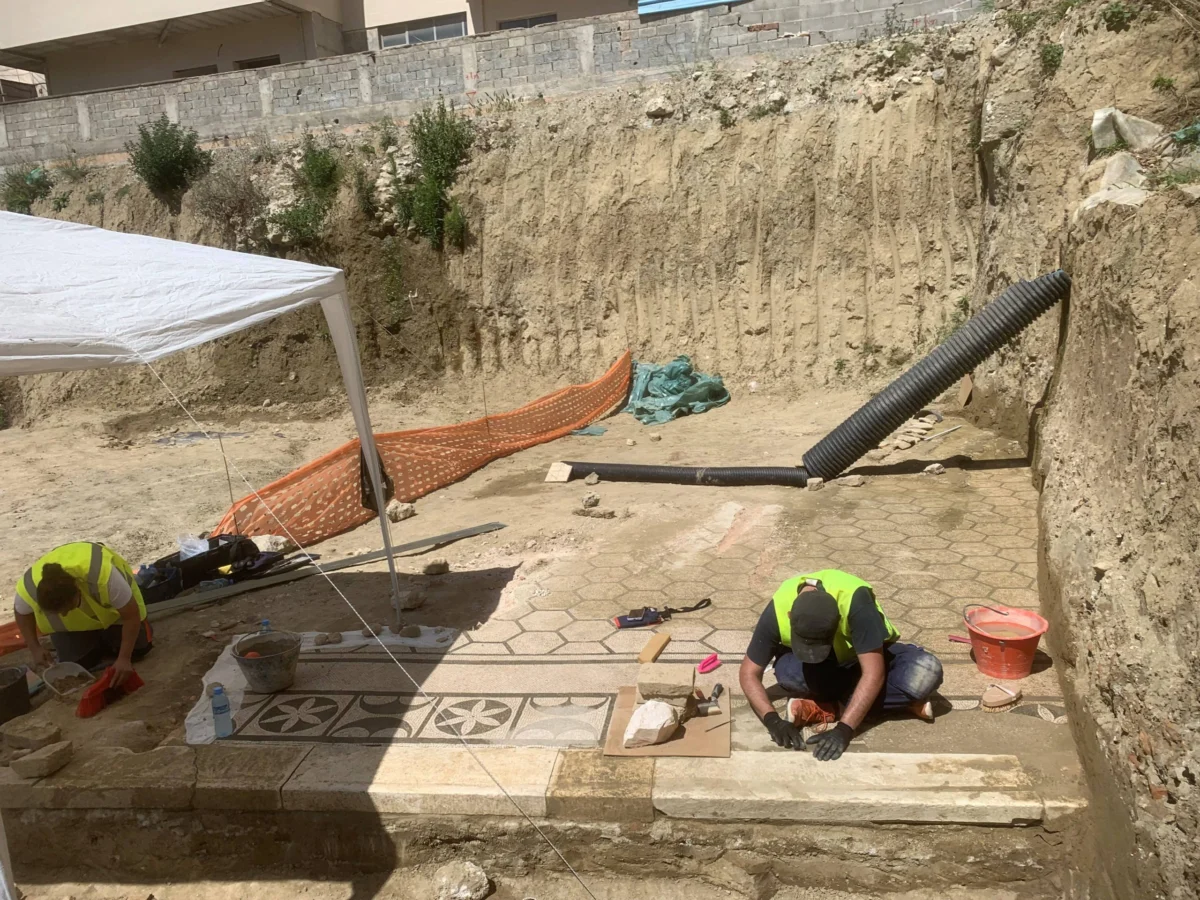
Durrës, Albania – August 28, 2025 – A significant archaeological discovery has been made beneath the site of the future "Gjergj Kastrioti" middle school in Durrës, Albania. Excavations have revealed the remains of a Roman-era villa, complete with intricate mosaics, thermal baths, and frescoes. This remarkable find, however, presents a complex challenge: how to integrate a modern educational facility with a precious historical treasure, ensuring the preservation of both.
The site, which has remained largely undeveloped, has been the focus of an archaeological expedition that yielded the astonishing discovery. While the expedition’s work was intended to pave the way for comprehensive excavation and preservation, the impending construction of the new school has brought these efforts into sharper focus. The Municipality of Durrës has now approved the project for the "Gjergj Kastrioti" school, designed by the Spanish architectural firm Toni Girones, which aims to harmonize the new building with the archaeological findings.
The municipality confirmed that the project has been submitted and the allocated funding has been approved within the municipal budget. The project is currently in the procurement phase for its implementation. This development signals a commitment to proceeding with the school’s construction while acknowledging the historical significance of the unearthed Roman villa.
A Glimpse into Roman Durrës: The Archaeological Marvel
The unearthed Roman villa represents a significant addition to our understanding of Durrës’ rich past, a city with a history stretching back millennia. The presence of a villa of this magnitude suggests a level of prosperity and sophistication in Roman Durrës, known then as Dyrrachium. The discovery of mosaics, particularly, offers a window into the artistic tastes and craftsmanship of the era. These intricate floor coverings, often depicting mythological scenes, geometric patterns, or daily life, were a hallmark of wealthy Roman residences.
Beyond the mosaics, the identification of thermal baths points to the importance of public and private hygiene and social interaction in Roman society. These complexes were not merely functional but were also centers for leisure and community. The mention of frescoes, though not detailed in the initial reports, further enhances the potential for understanding the decorative arts and the aesthetic sensibilities of the villa’s inhabitants.
The ongoing work of the archaeological expedition, led by Professor Luan Përzhita, has been crucial in uncovering these layers of history. However, the approaching construction phase has instilled a sense of urgency among the archaeological community, raising concerns about the long-term preservation of the site.
Navigating the Intersection of Past and Future: The School Project
The "Gjergj Kastrioti" school, named after the iconic Albanian national hero, was itself a casualty of the devastating earthquake that struck Albania on February 26, 2019. For the past five years, students and teachers have been temporarily relocated to two other schools. The rebuilding of "Gjergj Kastrioti" is therefore a priority for the educational infrastructure of Durrës.
The architectural design by Toni Girones, with local support from architect Indrit Hamiti’s firm, endeavors to create a symbiotic relationship between the school and the archaeological site. The project proposes that the new school’s foundation will occupy approximately 25% of the total site area, strategically placed in the southern part of the square. This careful placement aims to minimize the footprint on the most sensitive archaeological zones.
Hamiti elaborated on the design philosophy, stating that the foreign architect has found a balanced solution by positioning the school centrally within the square. The ground floor atrium is envisioned as a focal point, integrating archaeological elements. This approach suggests a desire to not only house the school but to create an educational environment that actively engages with the historical context.
A Delicate Balancing Act: Preservation and Progress
The challenges of this project are multifaceted. For years, the archaeological expedition has been working with the hope that the entire area would remain available for excavation. The recent approval of the school project has shifted the focus to how the archaeological discoveries can be preserved and potentially showcased within the new school’s design.
Durrës archaeologists had previously proposed the creation of an alternative museum on the land freed up by the ongoing discoveries. Some also suggested the former rectorate building of UAMD on Rruga e Currilave as a potential location for the new school. These proposals highlight the different perspectives and priorities within the community regarding the site.
Professor Përzhita has expressed his concerns about the future of the archaeological discovery. "It will be problematic if the rains begin," he warned, indicating the vulnerability of exposed artifacts to the elements. He further added, "Let’s hope we don’t have damage, but this will be understood when we reopen the villa that has been covered for a long time." This statement underscores the critical need for immediate and effective preservation measures as construction approaches.
Përzhita also noted that he had not yet been privy to the tender specifications concerning the archaeological aspects of the project, suggesting a potential gap in communication or planning regarding the integration of archaeological preservation into the construction contract.
Integrating Heritage into the Urban Fabric: A New Archaeological Itinerary
The proposed school design goes beyond simply coexisting with the archaeological site. It aims to actively connect it with the city’s broader heritage landscape. The school will feature two entrances, one of which will be dedicated to tourists. This dual-access design is intended to transform the site into a new archaeological itinerary for the coastal city, linking the Durrës Archaeological Museum with the recent discoveries near the school.
Architect Indrit Hamiti further emphasized the potential for revitalizing ancient pathways and enhancing tourist experiences. He suggested that these pathways could better serve visitors, potentially extending towards other significant historical sites like the amphitheater and the Church of St. George in Kodër-Vilë. This vision positions the "Gjergj Kastrioti" school not just as an educational institution but as a gateway to Durrës’ extensive historical narrative.
Hamiti also offered his perspective on the timeline for developing such a complex. "Archaeological excavation and its musealization will require more time. In my opinion, the school will have a faster construction process, without forgetting that this way we are recovering a treasure," he concluded. This statement acknowledges the longer timescale for archaeological work while expressing confidence in the efficiency of the school’s construction and the value of preserving the historical find.
Official Responses and Future Outlook
The Municipality of Durrës has articulated its commitment to a project that balances modern needs with historical preservation. Their statement regarding the submission of the project and the ongoing procurement process indicates a clear intention to move forward. The engagement with a Spanish architectural firm like Toni Girones suggests an effort to bring international best practices in urban planning and heritage integration to the project.
The involvement of local architects like Indrit Hamiti is crucial for ensuring that the project is sensitive to the specific context of Durrës and its archaeological heritage. Hamiti’s insights into the design and his emphasis on a balanced approach offer reassurance that the integration of the Roman villa is being carefully considered.
However, the concerns raised by Professor Përzhita highlight the ongoing need for clear communication and collaboration between the municipality, the archaeological team, and the construction contractors. The successful integration of the Roman villa will depend on meticulous planning, adequate funding for archaeological preservation, and a shared commitment to safeguarding this invaluable piece of history for future generations.
The future of the "Gjergj Kastrioti" school site in Durrës stands as a testament to the complex, yet potentially rewarding, challenge of modern development in historically rich environments. The unearthed Roman villa represents not just a relic of the past, but a living opportunity to educate, inspire, and connect the community with its deep historical roots, creating a unique educational and cultural landmark for Durrës and Albania. The successful realization of this project could set a precedent for how other historically significant sites can be managed and developed in the future.