By PYMNTS | October 7, 2026
The global artificial intelligence (AI) investment cycle, once characterized by unbridled enthusiasm and exponential capital expenditure, has entered a period of sophisticated maturation. According to a comprehensive report released Wednesday (Oct. 7) by Citi Wealth, the industry is currently navigating the “early-to-middle stages” of a buildout that is increasingly defined by tactical discipline rather than speculative fervor. As the market enters this pivotal phase, the narrative surrounding AI infrastructure is shifting from broad-based accumulation to a rigorous focus on profitability, margin sustainability, and macroeconomic headwinds.
Main Facts: A Shift in Market Sentiment
The Citi Wealth report underscores a fundamental transition in how institutional investors view the AI sector. While the promise of generative AI remains undiminished in the eyes of long-term strategists, the “noise” surrounding the sector has become increasingly deafening. Citi identifies four primary headwinds currently pressuring the AI investment cycle:
- The Cost of Capital: A higher interest rate environment has fundamentally altered the calculus for massive infrastructure projects, forcing firms to justify AI expenditures with clearer paths to Return on Investment (ROI).
- Model Proliferation: The rise of increasingly capable open-weight models is disrupting the competitive landscape, challenging the moat-like status of proprietary, closed-source LLMs.
- Regulatory Scrutiny: Governments worldwide are intensifying their oversight of AI development, focusing on data privacy, copyright, and the potential for market monopolization.
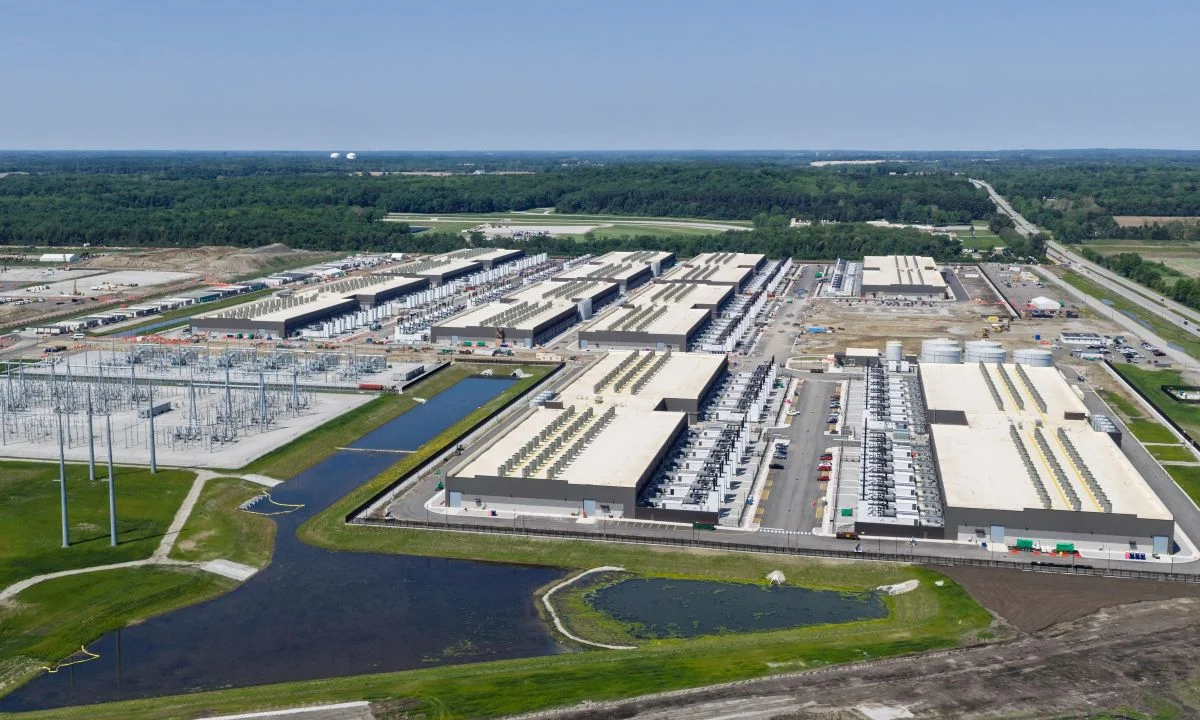
- Infrastructure Costs: The sheer capital intensity required to build and maintain next-generation data centers has reached a level where stakeholders are demanding greater transparency regarding efficiency and energy consumption.
Despite these hurdles, the fundamental demand signals remain robust. Semiconductor consumption continues to outpace supply, and U.S. core capital goods orders—a bellwether for industrial investment—showed resilience in the first half of 2026. Furthermore, export data from tech-heavy economies like South Korea and Taiwan suggests that AI remains a primary engine of global industrial growth.
Chronology: The Evolution of the AI Investment Narrative
The current moment is the culmination of a multi-year trajectory that has seen AI move from a research curiosity to a core macroeconomic pillar.
- Early 2023: The "ChatGPT Moment" triggers an explosion of venture capital and corporate R&D funding into generative AI.
- Late 2024 – 2025: A period of massive, unchecked capital expenditure (CapEx) as "hyperscalers" (Amazon, Google, Microsoft) engage in an arms race to secure GPU inventory and power capacity.
- July 2026: The Bank for International Settlements (BIS) issues a cautionary report, warning that excessive debt-fueled AI investment could lead to a systemic "boom-to-bust" cycle, drawing parallels to previous technological bubbles.
- Mid-July 2026: Leaked Treasury Department documents surface via NOTUS, suggesting that U.S. regulators are actively modeling the potential economic shockwaves of an AI market correction, explicitly citing the dotcom crash of the early 2000s as a cautionary tale.
- October 2026: Citi Wealth releases its Q4 outlook, officially framing the current environment as a transition into the "middle stages" of the cycle, characterized by higher scrutiny and a move toward vertical integration.
Supporting Data: The Case for Resilience
Citi Wealth’s analysis remains cautiously optimistic, specifically regarding the competitive positioning of industry leaders. The report explicitly maintains a preference for "diversified semiconductor exposure" as a core holding for U.S. large-cap portfolios.
The bank’s strategic pivot centers on the concept of "vertical integration." Citi posits that hyperscalers—those entities controlling the stack from Large Language Models (LLMs) down to physical compute infrastructure and custom-designed chips—are entering the next phase of the cycle from a position of relative strength. This integration serves as a structural advantage that smaller, less diversified players cannot easily replicate.
Conversely, the market is currently holding its breath for earnings data from giants like Samsung Electronics. Analysts are parsing these upcoming reports for signs that the memory chip margin expansion, which has been a primary driver of the AI boom, may have reached its ceiling. Preliminary third-quarter results from Samsung, expected Thursday (Oct. 8), will serve as a litmus test for whether the demand for high-bandwidth memory (HBM)—the fuel for AI processors—is still accelerating or beginning to plateau.
Official Responses and Expert Perspectives
The debate regarding AI sustainability has transcended private financial analysis, entering the halls of global economic policy.
The Bank for International Settlements (BIS) has been the most vocal institutional critic, highlighting that while technological innovation is a net positive, the financialization of AI investment presents systemic risks. The BIS report from July warned that if capital continues to flow into AI projects that lack fundamental economic utility, the eventual market correction could be severe, impacting not just technology firms, but the broader financial sector that financed their growth.
Simultaneously, the U.S. Treasury’s internal draft report—which draws parallels to the dotcom bubble—indicates that federal regulators are no longer viewing the AI sector as a purely private market concern. The concern is that an "AI bubble" could create interdependencies between speculative tech companies and the banking system, potentially triggering economic "shockwaves" if the sector experiences a significant valuation adjustment.
Implications: The Road Ahead
As the industry moves into the late 2026 and 2027 window, several implications become clear:
1. The Era of Selective Investment
Investors are moving away from the "buy everything" strategy of 2024. The new mandate is to identify firms that can demonstrate high margins and sustainable demand. The days of speculative CapEx are likely over, replaced by a focus on tangible enterprise utility.
2. The Memory Chip Margin Debate
The cooling pace of price increases for specialized memory chips in Q3 2026 is a critical signal. If margins contract further, the profitability of the entire semiconductor supply chain could be squeezed, forcing chipmakers to rethink their pricing power in an environment where supply is finally beginning to catch up to demand.
3. Regulatory Integration
The regulatory environment is no longer a "future threat" but a "present reality." Companies that fail to account for the costs of compliance, environmental mandates regarding data center energy usage, and anti-trust scrutiny will likely face higher volatility in their stock performance.
4. The Resilience of Hyperscalers
Citi Wealth’s focus on the competitive advantages of hyperscalers suggests a "flight to quality." As the AI buildout enters its middle stage, the market is likely to reward companies that own their own infrastructure. By controlling the LLMs, the data centers, and the chips, these companies insulate themselves from supply chain disruptions and vendor lock-in, creating a more sustainable ecosystem for long-term growth.
Conclusion
The AI investment cycle is undergoing a necessary, if painful, transition. The "growing noise" identified by Citi Wealth is the sound of a market attempting to reconcile the immense promise of artificial intelligence with the harsh realities of macroeconomics.
While the specter of a dotcom-style bubble remains in the background of regulatory discourse, the current data suggests a sector that is not collapsing, but rather "growing up." The next year will be defined by the ability of companies to turn their massive infrastructure investments into verifiable, sustainable profit. Whether the AI buildout continues its trajectory or faces a significant correction will depend largely on the earnings reports, chip demand, and capital efficiency metrics to be revealed in the coming quarters. Investors and policymakers alike are currently in a "wait-and-see" mode, looking to industry leaders to prove that the AI revolution is as economically durable as it is technologically profound.