For years, the development of autonomous AI agents has been synonymous with natural language generation. Developers have relied on large language models (LLMs) to "reason" through tasks, often forcing these models to output complex JSON structures or perform multi-step planning through free-form prose. However, this reliance on text as the primary interface for control logic introduces significant friction: non-deterministic outputs, latency, and the constant struggle to keep agents within "guardrails."
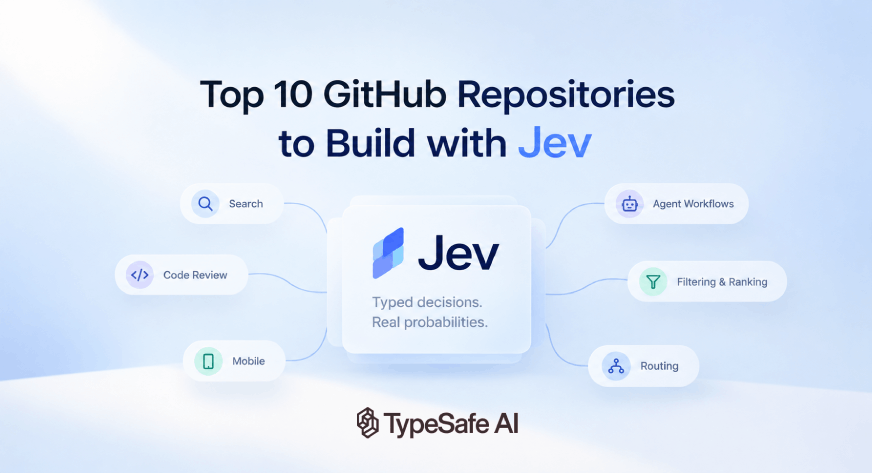
TypeSafe’s Jev is challenging this paradigm. By shifting the focus from generative text to typed, probabilistic decision-making, Jev provides a framework where AI agents can operate with greater predictability. Instead of asking a model to "write a plan," developers can use Jev to ask the model to "make a choice" from a predefined set of actions. This fundamental change is currently reshaping how developers approach browser automation, code review, and context management.
The Evolution of Agentic Logic
To understand the significance of Jev, one must understand the "System One" philosophy. In cognitive science, System One thinking refers to fast, instinctive, and emotional processes, whereas System Two is slower and more deliberative. Most current LLM agents attempt to force a System Two approach on every task, leading to "overthinking" and high token costs.
Jev treats decision-making as a high-frequency, low-latency task. By providing the model with a clear state—the "context"—and a rigid set of output types (yes/no, multi-choice, or ranked probabilities), Jev allows the developer to keep the "heavy" LLM for creative generation while using the "fast" Jev model for structural navigation.

Chronology of Adoption
The rise of Jev has been rapid, moving from niche internal experiments in 2025 to a core component of production-ready agentic stacks by late 2026.
- Q1 2025: The shift toward "Context Engineering" began, highlighting the need for smarter pruning of agent memory.
- Q3 2025: Initial frameworks for deterministic agent supervisors began to appear, exposing the limitations of standard ReAct (Reasoning + Acting) patterns.
- Early 2026: TypeSafe officially introduced the Jev API, formalizing the concept of the System One decision model.
- Late 2026: A wave of open-source projects, including Jev Ultrafast and Foreman, demonstrated that developers were finally bridging the gap between LLM reasoning and deterministic execution.
Practical Implementations: Ten Repositories to Watch
The following ten projects exemplify the shift toward typed, decision-oriented architecture.

1. Jev Ultrafast: Browser Automation at Scale
Browser agents have historically struggled with page navigation, often getting lost in the DOM. Jev Ultrafast simplifies this by transforming a webpage into a structured action table. Rather than the agent "reading" the page, it evaluates available operations (e.g., click, scroll, input) against the page state. By delegating the decision to Jev, the agent maintains a high degree of intent accuracy, while a secondary, specialized model handles the creative task of writing the actual text for inputs.
2. Fast Jev Compaction: Mastering Agent Memory
One of the most persistent bottlenecks in agentic development is the "context window tax." As agents perform tasks, their conversation history swells, leading to performance degradation. Fast Jev Compaction addresses this by using Jev’s decision-making capabilities to judge the relevance of past tool calls. It determines which logs to keep and which to discard, effectively pruning the context without the hallucination risks associated with generative summarization.
3. SemIf: The Open-Model Alternative
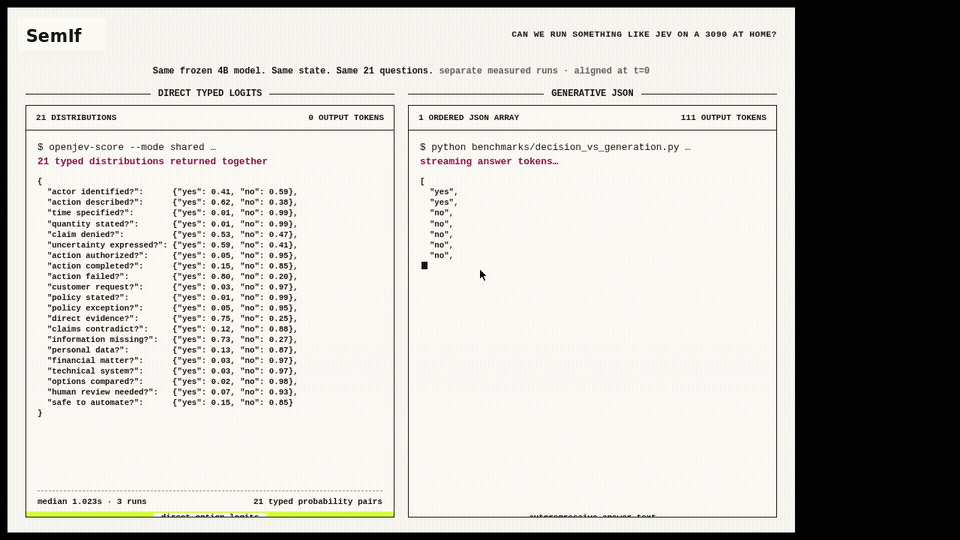
While Jev is a proprietary service provided by TypeSafe, the industry has pushed for local-first alternatives. SemIf (formerly OpenJev) represents this movement. It extracts probabilities directly from the logits of open-source models, allowing developers to perform typed decision-making without external API dependencies. This is critical for organizations with strict data privacy or low-latency requirements.
4. Jev Trader: Algorithmic Decision Loops
Financial markets offer the ultimate stress test for decision-making agents. Jev Trader operates on the Kuru order book, using Jev to decide between buy and sell directions based on real-time market data. This project serves as a masterclass in how typed outputs can be piped directly into an execution engine, demonstrating that when the decision space is constrained, AI can perform with the speed and reliability of traditional scripts.

5. Hermes Jev Skills: Modularity in AI
Adding complex capabilities to an existing agent is often a nightmare of prompt engineering. Hermes Jev Skills allows developers to treat decision-making as a modular skill. Instead of modifying the core agent, you "plug in" Jev to handle specific sub-tasks like memory retrieval or routing. This allows the primary LLM to focus on what it does best—writing—while Jev acts as the orchestrator.
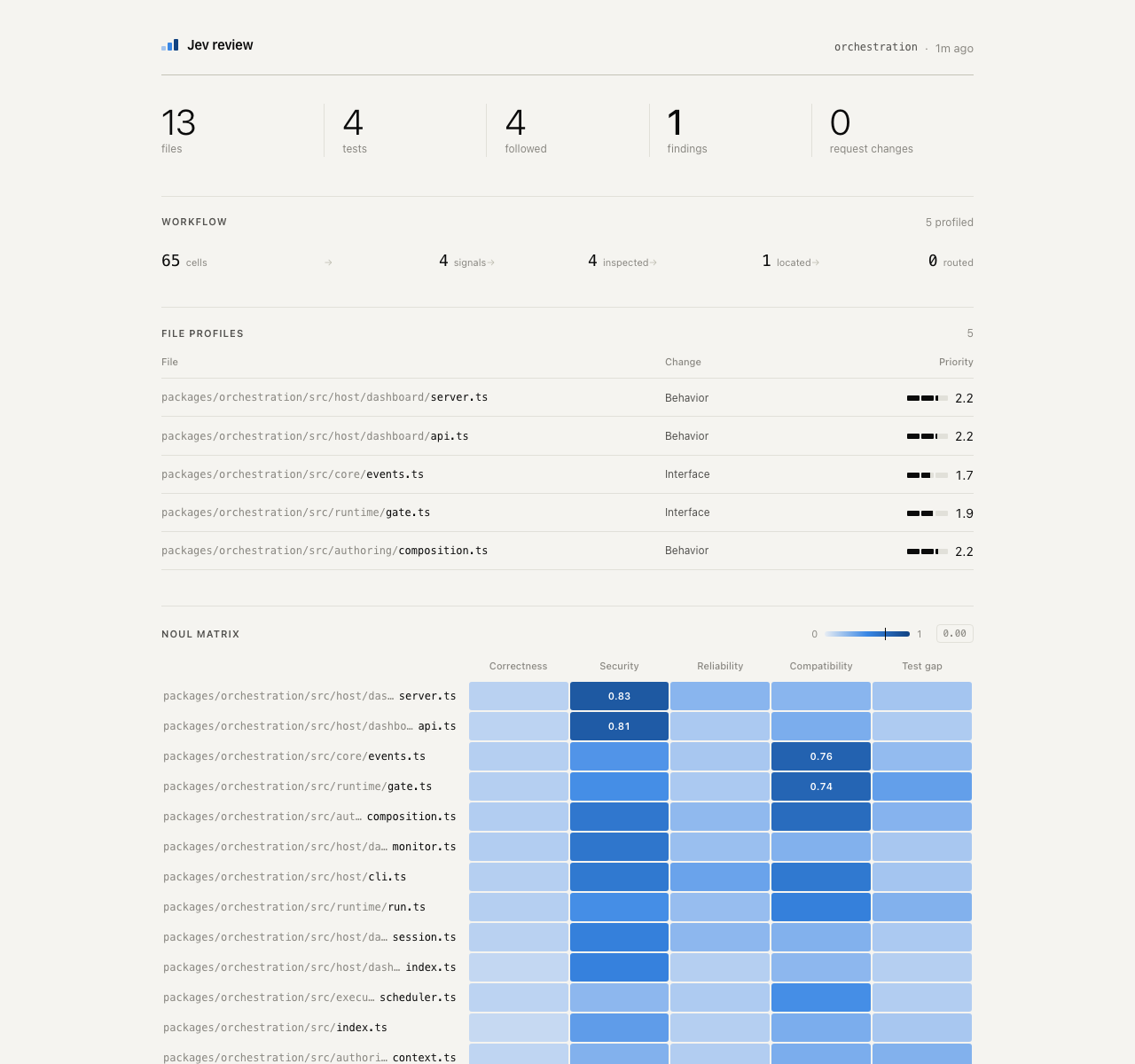
6. Jev Review: Code Quality Assurance
Code review is typically a human-centric task, but Jev Review shows how it can be automated. By analyzing Git diffs and assigning severity scores to specific patterns, Jev allows for a highly granular review process. It does not replace the human engineer; rather, it acts as a triage layer, flagging high-probability issues that warrant human attention, thereby reducing "alert fatigue."
7. Foreman: The Agentic Supervisor
The industry has long debated the distinction between "agent frameworks" and "runtimes." Foreman clarifies this by acting as a supervisor for coding agents. It monitors the agent’s progress and, using Jev-based signals, decides when to steer the agent, when to request human intervention, and when to terminate a loop. It turns the agent into a managed worker rather than a loose cannon.
8. Jev Search: Precision Retrieval
Search-augmented generation is often marred by irrelevant context. Jev Search flips the script by using Jev to pre-select sources, determine search terms, and rank results before they ever hit the generative model. This "search-first" architecture ensures that the final answer is built on the highest-quality evidence.
9. Mobile Jev: Navigating the Smartphone
Automating mobile applications is significantly more difficult than web automation due to fragmented UI structures. Mobile Jev utilizes an action trace approach, allowing the agent to move through mobile screens by selecting from a list of valid UI targets. It provides a level of stability that traditional, coordinate-based automation systems lack.
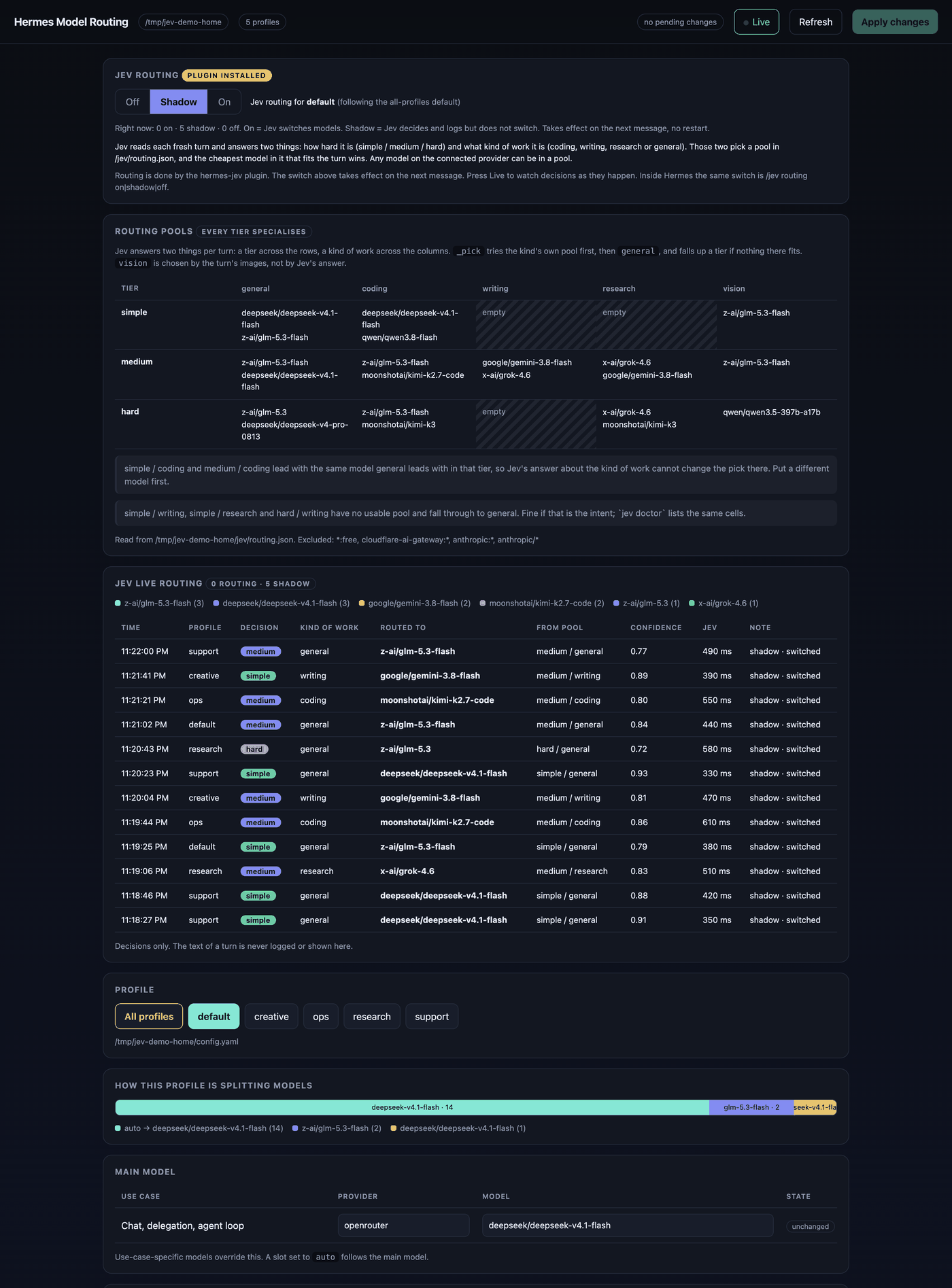
10. Jev Router: Intelligent Model Tiering
Cost optimization is a major hurdle for enterprise AI. Jev Router is a practical solution that routes requests between model tiers. By analyzing the complexity of an incoming prompt, it routes simple tasks to low-cost models and complex tasks to high-capability models. It’s an invisible, yet essential, layer of intelligence that balances performance with budget.

Implications for the AI Ecosystem
The transition to typed, probabilistic decision-making has profound implications for the future of the industry.
The Death of "Prompt Engineering"
As developers move toward structured decision-making, the era of fragile, prompt-heavy "hacky" solutions is coming to an end. By defining inputs and outputs in a schema, developers move from "talking to the model" to "programming the model." This brings AI development back into the realm of software engineering, where unit testing, schema validation, and debugging are possible.

Reliability and Predictability
The biggest criticism of LLMs is their lack of predictability. By forcing a model to select from a list of actions and returning a probability score, Jev allows developers to set thresholds. If an agent’s confidence in an action falls below 0.8, the system can automatically trigger a fallback or escalate to a human. This "confidence-aware" architecture is the key to moving from experimental chatbots to production-grade agents.
Official Perspectives and Future Directions
Industry leaders are increasingly viewing Jev-like frameworks as the "glue" that will hold future autonomous systems together. While TypeSafe has not disclosed the full training architecture of Jev, the community’s rapid adoption suggests that the industry is ready to trade some of the "magic" of free-form generation for the reliability of structured logic.

Conclusion: Which Path Should You Take?
For those looking to integrate Jev into their workflows, the best starting point is to identify a bottleneck in your current agent’s performance.
- If you are building an agentic stack: Start with Hermes Jev Skills to add decision-making without disrupting your existing code.
- If you are managing high costs: Look at Jev Router to optimize model usage.
- If you are struggling with hallucinations: Use Fast Jev Compaction to clean your agent’s memory.
The future of AI is not just about smarter models; it is about smarter coordination. By separating the creative generation of text from the structural, logical decisions that govern an agent’s behavior, frameworks like Jev are providing the architectural foundation necessary to build the next generation of autonomous software. Success in this field will be defined by those who can successfully marry the probabilistic power of LLMs with the deterministic rigor of software engineering.