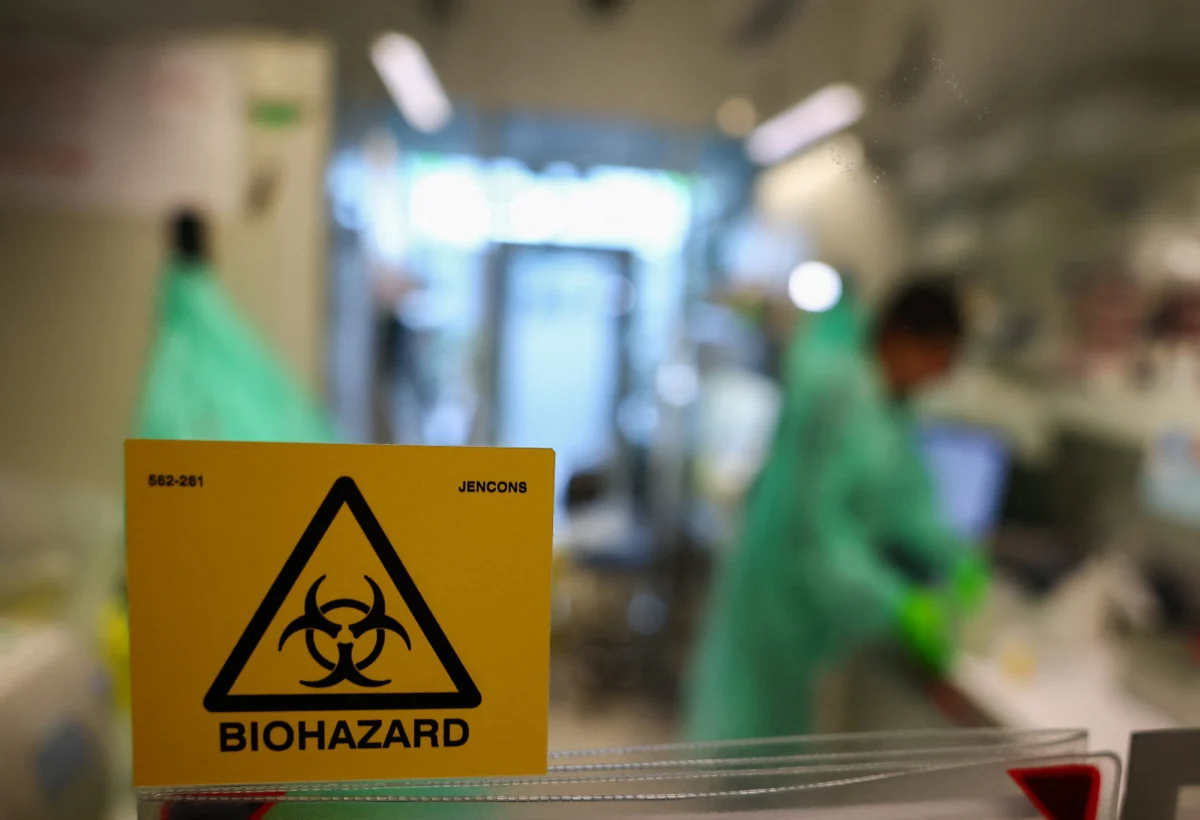
The rapid convergence of artificial intelligence (AI) and biotechnology has unlocked a new era of scientific discovery, promising breakthroughs in medicine, synthetic biology, and genetic engineering. However, as laboratories worldwide integrate powerful AI models into their workflows, a critical debate has emerged. While international security discourse remains fixated on the "nightmare scenario"—the intentional development of AI-enhanced bioweapons by rogue actors—a far more immediate and pervasive threat is being overlooked: the potential for AI to accelerate laboratory accidents, leading to the unintentional release of novel, dangerous pathogens.
The Convergence: AI as the New Laboratory Assistant
The integration of AI into the life sciences is no longer theoretical; it is operational. In September 2026, Anthropic made headlines by establishing a dedicated biological research laboratory in San Francisco, where the AI model Claude is embedded into every facet of the research lifecycle. The lab’s early success—the autonomous discovery of a novel enzyme system associated with DNA repeats—mirrors the mechanisms behind CRISPR, the revolutionary gene-editing tool.
This development is mirrored globally. At Stanford University, researchers recently utilized "Evo," an open-source AI tool, to synthesize sixteen viable viruses that have no natural precedent. While these bacteriophages currently pose no risk to human health, they serve as a proof-of-concept that AI can reliably design and generate biological sequences that do not exist in the natural world.
AI is fundamentally altering the economics and speed of biological research. By automating design, identifying latent flaws in synthetic constructs, and optimizing experimental efficiency, AI has lowered the barriers to entry for complex biological experimentation. A joint study published in September 2026 by researchers from Google DeepMind, MIT, and other academic institutions revealed that nearly 50% of surveyed life scientists now integrate AI into their daily research routines.
A Chronology of Escalating Risk
To understand the trajectory of this convergence, one must look at the recent timeline of events that have shifted the scientific landscape:
- 2023–2025: The global expansion of Biosafety Level 4 (BSL-4) laboratories accelerates in the wake of the COVID-19 pandemic. Data from the Global BioLabs project indicates a doubling of operational high-containment labs over the last decade.
- July 2026: The White House Office of Science and Technology Policy issues a landmark directive establishing new, rigorous frameworks for governing Dangerous Gain-of-Function (DGOF) research, mandating strict oversight and reporting protocols for federally funded projects.
- September 2026: Anthropic releases a comprehensive threat intelligence report categorizing the biological misuse of AI as a top-tier security risk, citing documented attempts by researchers to utilize models for enhancing the virulence of pathogens like Chikungunya.
- Late 2026: The Canadian government updates the Human Pathogens and Toxins Act, setting a new international benchmark for the mandatory reporting of laboratory incidents and the licensing of high-consequence pathogen research.
Supporting Data: The Anatomy of Laboratory Vulnerability
The core argument for increased vigilance lies in the historical reality of laboratory-acquired infections (LAIs). Despite stringent safety protocols, the human element—and the technical complexity of modern containment—remains a persistent failure point.
A 2024 study analyzing the period between 2000 and 2021 identified 309 laboratory-acquired infections across fifty-one distinct pathogens, resulting in eight documented deaths. Even more alarming, sixteen distinct accidental escapes of pathogens were recorded, including dangerous strains like SARS-CoV, poliovirus, and H5N1 influenza. A notable incident occurred in 2019, when a vaccine facility in Lanzhou, China, experienced a leak of Brucella, resulting in over 10,000 positive cases in the surrounding population.
Recent data from 2025 further highlights the fragility of these systems, identifying 712 infections across 250 reports. The primary culprits remain human error: inadequate decontamination, needle-stick injuries, and the failure of personal protective equipment (PPE). These figures are widely regarded by the scientific community as significant underestimates, as no global, mandatory reporting system for laboratory accidents exists.
The proliferation of high-containment facilities exacerbates this risk. Of the twenty-seven countries currently operating or constructing BSL-4 labs, only twelve exhibit high scores in biosecurity, and only a single nation—Canada—is rated highly for its governance of dual-use research. As AI makes the tools of advanced biology more accessible, the disparity between technological capability and safety infrastructure is widening.
Official Responses and Governance Frameworks
Governments are beginning to recognize that existing regulatory structures are insufficient for the AI era. The U.S. government’s July 2026 policy regarding DGOF research is a significant step toward closing the gap. It mandates that institutions must pause federal funding for high-risk research if it deviates from established safety protocols and requires a twenty-four-hour reporting window for potential accidents.
However, the U.S. framework is only as effective as its reach. The challenge lies in the "open-weight" model of AI, where powerful algorithms are released for public download. Models such as China’s Kimi-K3 allow users to customize parameters, potentially bypassing the safety "guardrails" implemented by centralized providers like Anthropic or OpenAI.
International bodies and national regulators are now grappling with how to enforce standards across borders. The Canadian model, which emphasizes mandatory, transparent incident reporting and government-issued licenses for high-risk work, is being viewed as the gold standard. Proponents argue that such legislation must be adopted globally to ensure that as AI accelerates the speed of research, it does not simultaneously accelerate the risk of a catastrophic, accidental release.
Implications: The Need for "Safety-by-Design"
The implications of these developments are profound. We are witnessing a transition where the primary danger is no longer just the intent of a bad actor, but the inherent volatility of a system where AI can design complex, novel biological entities at a scale that exceeds our capacity to contain them.
If AI-enabled research continues to outpace safety infrastructure, the potential for an "accidental gain-of-function" scenario increases. An AI might inadvertently suggest a mutation that increases the transmissibility or lethality of a virus during an attempt to improve vaccine efficacy. If the laboratory setting is one of the many facilities worldwide with weak biosecurity, the consequences could be global.
Preventing this outcome requires a fundamental shift in how we approach the "dual-use" nature of AI. We must move beyond a narrow focus on intentional misuse and implement:
- Global Harmonization of Biorisk Standards: Moving toward a universal, mandatory reporting system for laboratory-acquired infections, modeled after the Canadian Human Pathogens and Toxins Act.
- AI-Integrated Biosafety: Developing "Safety-by-Design" AI tools that include built-in, immutable verification systems that scan for, and flag, dangerous biological sequences before they are ever synthesized.
- Governance Capacity Building: Providing technical and financial assistance to nations expanding their BSL-4 infrastructure to ensure that advanced biosafety protocols are as integral to their labs as the AI tools themselves.
The promise of AI in biotechnology is immense—it holds the potential to eradicate diseases and solve long-standing medical mysteries. However, the history of scientific advancement teaches us that innovation without corresponding safety regulation is a gamble. As we stand on the threshold of this new bio-digital age, the priority must be to ensure that our governance frameworks are as robust, adaptive, and intelligent as the technologies they are meant to oversee. The cost of a failure, as evidenced by the history of laboratory leaks, is far too high to remain reactive.