In an era defined by the urgent need for decarbonization, the construction sector—a primary engine of global economic growth—faces a significant existential challenge. Concrete, the world’s most widely used building material, is also a massive contributor to global carbon emissions. However, a groundbreaking University of Melbourne research spinout, R2Crete, is turning the tide. By transforming discarded landfill concrete into high-value, low-carbon building components, the startup is poised to reshape the Australian construction landscape. With a fresh $750,000 in pre-seed funding and a pilot plant currently under construction, R2Crete is moving rapidly from the confines of the laboratory to the industrial frontline.
The Core Innovation: Turning Waste into Wealth
At the heart of the R2Crete value proposition is a patented chemical and mechanical process designed to solve one of the construction industry’s most persistent headaches: the circularity of concrete. Currently, millions of tonnes of concrete are demolished and relegated to landfill each year, where they occupy vast amounts of space and represent a total loss of embedded energy.
R2Crete’s proprietary technology does not merely crush old concrete into road base—a low-value application—but instead separates it into its original components. By reclaiming up to 75% of the cement contained within waste concrete, the company creates a high-quality cement replacement and clean aggregates. This dual-action approach drastically reduces the industry’s reliance on the extraction of virgin materials such as sand, gravel, and limestone, the mining of which further degrades local ecosystems.
By integrating these recycled components back into new concrete mixes, R2Crete estimates a 50% reduction in carbon emissions compared to conventional concrete. This achievement is critical for a sector struggling to meet net-zero targets, as the production of traditional Portland cement is responsible for roughly 8% of global CO2 emissions.
A Chronology of Innovation: From Campus to Commercialization
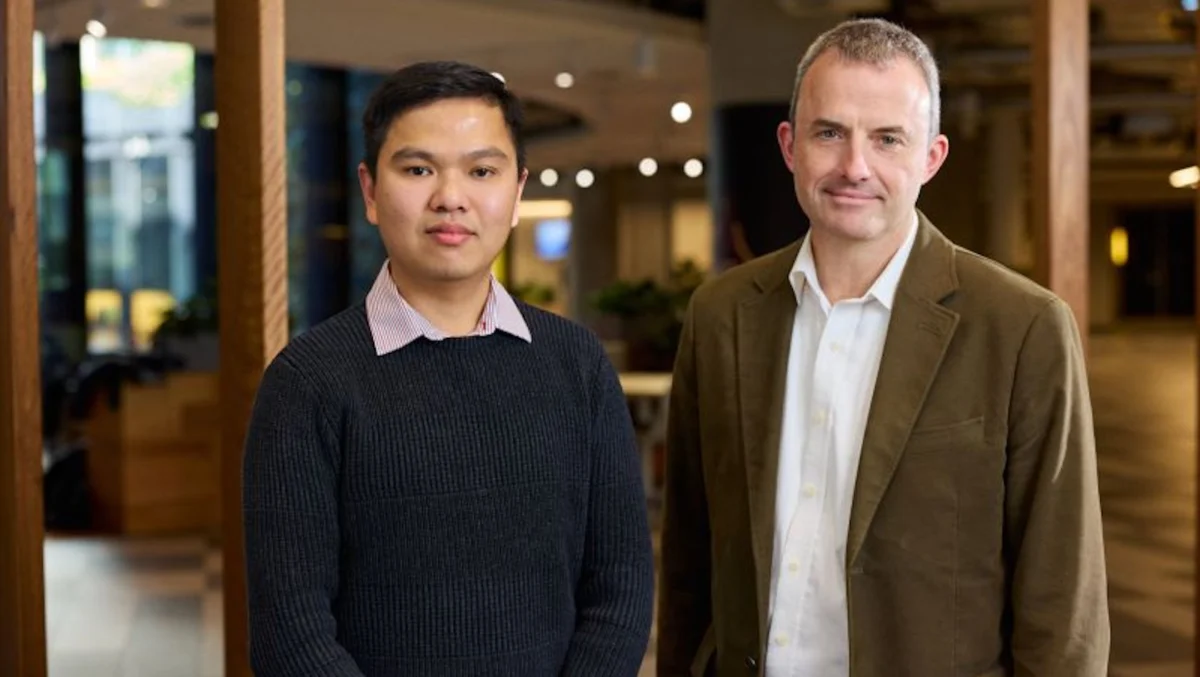
The journey of R2Crete is a masterclass in the institutional support of deep-tech research. The technology was pioneered by Dr. Tuan Nguyen, a senior lecturer at the University of Melbourne, whose research into sustainable construction materials provided the scientific bedrock for the company.
Recognizing the immense commercial potential of his findings, Dr. Nguyen joined forces with Managing Director Warren Overton and Professor Mahdi Miri Disfani to form R2Crete. The transition from academic research to commercial startup was supported by a robust ecosystem of university-led initiatives.
- Early Stages: The team initially secured support from the University of Melbourne’s Proof-of-Concept Fund, which allowed them to refine their methodology and prove the viability of their separation process.
- Translational Growth: The founders participated in the "Translating Research at Melbourne" (TRAM) program, which helped them develop a business model suited to the rigorous demands of the construction sector.
- Governmental Backing: Further momentum was gained through Australia’s Economic Accelerator (AEA) Ignite program, which provided the necessary capital to scale the bench-top experiments into a process ready for engineering validation.
- The Current Milestone: The recent $750,000 pre-seed round, led by the University’s Genesis Pre-Seed Fund and research commercialization investor Uniseed, represents the final leap toward industry validation. This capital is being deployed immediately to build a pilot plant, with construction slated for completion by the end of 2026.
The Pilot Plant: A Crucible for Scalability
The upcoming pilot plant is not merely a production facility; it is a critical proving ground. In the construction materials sector, the gap between "lab-scale success" and "commercial-scale reliability" is where many promising startups falter.
The facility will be tasked with demonstrating that R2Crete’s process can maintain the structural integrity and performance standards of conventional concrete while being produced in a cost-effective manner. If the pilot plant confirms these performance metrics, the implications for the wider market are profound. With field trials scheduled to commence in early 2027, the startup is already engaging in high-level discussions with prospective industry partners eager to secure a competitive edge in the burgeoning green building market.
Supporting Data: The Magnitude of the Challenge
To understand why R2Crete is garnering such significant investor interest, one must look at the staggering scale of the problem. Australia alone generates an estimated 7 million tonnes of concrete waste annually. Under current practices, the majority of this material is either crushed for low-grade fill or discarded in landfills.
The environmental cost of this waste is compounded by the high energy intensity of cement production. Cement is created by heating limestone and clay to extreme temperatures—often exceeding 1,400 degrees Celsius—in kilns fueled by fossil fuels. By replacing a significant portion of this "virgin" cement with reclaimed material, R2Crete is effectively decoupling construction growth from the carbon-heavy extraction of raw materials.
The economic argument is equally compelling. As carbon taxes, ESG (Environmental, Social, and Governance) reporting requirements, and green procurement policies gain traction, construction firms are under increasing pressure to source sustainable materials. R2Crete provides a solution that is not only environmentally superior but, according to the founders, economically viable.
Official Perspectives: The Investor Rationale
The involvement of Uniseed, one of Australia’s most experienced research commercialization funds, underscores the perceived long-term value of the project. Jeffrey Bourne, an investment manager at Uniseed, highlighted why R2Crete was chosen for their portfolio.
"R2Crete’s process stands out for its ability to produce high-quality recycled and low-carbon materials for concrete production in a cost-effective and efficient manner," Bourne stated. "We believe R2Crete is well-positioned to become a leader in sustainable construction materials, and we’re proud to back their journey from research to commercial reality."
Warren Overton, Managing Director of R2Crete, echoed this sentiment, emphasizing the strategic importance of the funding. "Securing this funding from Genesis and Uniseed is a pivotal moment for R2Crete," he said. "It enables us to move from laboratory success to real-world commercial deployment. Our pilot plant will demonstrate that high-value recycled aggregates and cement replacement products can be produced reliably, cost-effectively, and at scale."
Broader Implications for the Built Environment
The emergence of R2Crete comes at a time when the "Built Environment" is being scrutinized as never before. Governments across the Asia-Pacific region are tightening regulations regarding waste management and carbon reporting. For property developers and infrastructure contractors, the ability to utilize circular, low-carbon materials will soon shift from a "nice-to-have" to a "must-have" requirement.
Furthermore, the success of R2Crete signals a broader trend in the Australian startup ecosystem: the maturation of deep-tech spinouts. By leveraging university research and combining it with venture-grade commercial discipline, teams like R2Crete are addressing "hard problems" that require years of scientific inquiry.
As the pilot plant moves toward its 2027 launch date, the industry will be watching closely. If R2Crete succeeds, it will prove that the path to a sustainable future is not just about inventing new materials, but about better managing the ones we already have. By closing the loop on concrete, the startup is not just building a business—it is laying the foundation for a more resilient and sustainable infrastructure for the next century.
In conclusion, the $750,000 investment is more than a financial injection; it is a validation of a new paradigm in construction. With the combined expertise of the University of Melbourne and the strategic backing of Uniseed, R2Crete is well-equipped to turn the concrete of the past into the sustainable infrastructure of the future. The transition from waste to worth is underway, and for the construction industry, it could not come at a more critical time.