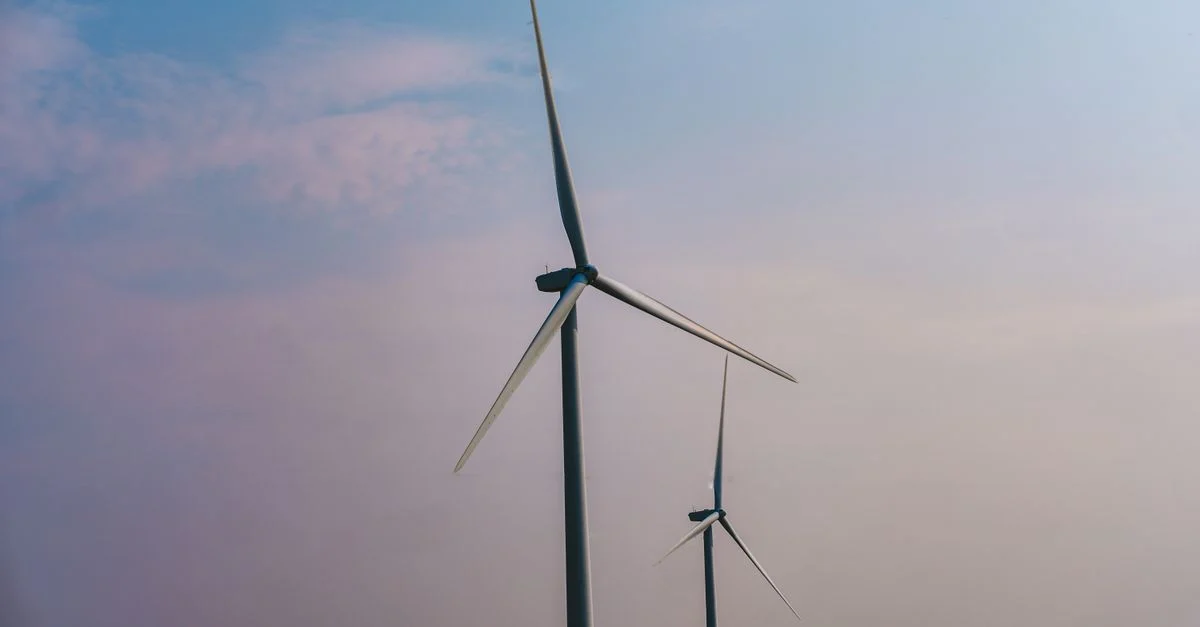
For over a century, the heartbeat of the global economy has been synchronized with the burning of fossil fuels. Coal, oil, and natural gas provided the caloric density required to build the modern world, powering the Industrial Revolution, global transport, and the electrification of cities. Yet, this reliance came with a dual price: profound environmental degradation and a precarious dependence on energy imports, often tethering national sovereignty to the volatile geopolitics of resource-rich regions.
Today, that model is undergoing a structural collapse. The rapid, unprecedented deployment of renewable energy is no longer merely an environmental crusade; it has evolved into a fundamental economic and geopolitical transformation. As solar panels, wind turbines, and battery arrays proliferate, they are rewriting the rules of industrial policy and national security.
Main Facts: The New Energy Paradigm
The transition is defined by the shift from fuel-intensive energy production to capital-intensive technology deployment. Unlike fossil-fuel plants, which require a constant stream of combustible fuel, renewable energy generators are "front-loaded" in their costs. Once a solar farm or wind turbine is installed, the marginal cost of the energy it produces is near zero.
However, this transition is complex. It involves:
- Decarbonization: Eliminating direct emissions by replacing combustion-based power with low-carbon alternatives.
- Electrification: Expanding the reach of electricity into heating, transport, and heavy industry to reduce overall carbon footprints.
- Systemic Integration: Moving from a centralized, unidirectional grid to a flexible, smart network capable of managing variable inputs.
A Chronology of the Transition
The path to our current energy reality was not linear, but rather a series of accelerating waves:
- 1990s – The Niche Era: Renewables were largely viewed as expensive, experimental, and subsidized alternatives. Solar and wind were seen as supplemental, often requiring heavy government intervention to remain viable.
- 2000s – The Scaling Phase: The "German Energiewende" and early Chinese manufacturing investments began to drive economies of scale. The cost of silicon-based photovoltaics began its long, steep decline.
- 2010s – The Competitive Pivot: For the first time, in many global markets, the Levelized Cost of Electricity (LCOE) for onshore wind and utility-scale solar dropped below the cost of coal and gas generation.
- 2020s – The Geopolitical Catalyst: Global supply chain shocks, exacerbated by the conflict in Ukraine, transformed energy security from an environmental concern into a primary national security objective.
- 2025 and Beyond – The Industrial Race: Governments are now shifting from "adoption" to "domestication," focusing on domestic supply chains for batteries, critical minerals, and manufacturing capacity.
Supporting Data: The Economics of the Shift
The transformation is supported by compelling metrics. According to recent industry data, the cost of solar energy has plummeted by nearly 90% over the last decade. This price drop has fundamentally altered the investment landscape.
While the upfront environmental footprint of manufacturing wind turbines and lithium-ion batteries is significant—requiring the extraction of copper, lithium, nickel, and rare earth elements—the long-term efficiency gains are clear. A wind turbine, for instance, typically pays back the energy used in its manufacture within six to nine months of operation, while providing clean electricity for 20 to 25 years.
Furthermore, the surge in "electrified demand" is creating a new floor for market growth. The proliferation of electric vehicles (EVs), the adoption of heat pumps for residential heating, and the massive power requirements of AI-driven data centers are creating a surge in demand that only renewable-heavy grids can realistically meet without violating climate commitments.
Official Responses: Strategic Industrial Policy
Governments worldwide are no longer playing the role of passive regulators; they are active architects of the energy market.
In the United States, the Inflation Reduction Act (IRA) has funneled billions into domestic manufacturing, attempting to "onshore" the production of solar modules and battery cells. Similarly, the European Union’s "Green Deal Industrial Plan" seeks to counter international competition by fast-tracking permitting processes and subsidizing domestic clean-tech production.
However, this has led to a new form of "Green Protectionism." Nations are competing fiercely to control the supply chains of the future. As one energy policy analyst noted, "The scramble for energy security has become a scramble for the minerals that build the security." Countries are increasingly creating strategic reserves of critical materials, mirroring the historical stockpiling of oil.
Implications: The Challenges of a Renewable Future
Despite the optimism, the transition faces three distinct, non-trivial challenges:
1. The Intermittency Trap
Solar and wind are variable. A grid reliant on these sources requires "firming" capacity. This has placed a premium on battery storage and "long-duration" storage technologies like pumped-storage hydropower and green hydrogen. Without these, the grid remains vulnerable to "dunkelflaute"—periods of low wind and limited sun that can last for days.
2. The Infrastructure Bottleneck
The physical grid is perhaps the greatest barrier to the energy transition. In many countries, the "queue" to connect new renewable projects to the national grid is years long. We are seeing a mismatch between where power is produced (wind-swept plains or sunny deserts) and where it is consumed (urban centers and industrial hubs). This requires a multi-trillion-dollar overhaul of global transmission infrastructure.
3. Geopolitical Reconfiguration
As we pivot away from fossil fuel imports, we risk creating new dependencies. If a nation produces its own solar panels but relies on a single foreign power for the lithium to make the batteries and the wafers to build the panels, have they truly achieved energy independence? The shift from a "fuel-based" economy to a "material-based" economy is changing the map of international relations.
A Balanced Energy Mix
The transition will not result in a uniform global energy system. Geography remains destiny. Countries with vast geothermal potential, like Iceland, or massive hydropower, like Norway, will follow different paths than those with abundant solar irradiation, like Australia or the Middle East.
Nuclear energy is also experiencing a renaissance, increasingly viewed by policymakers as a necessary "baseload" partner to variable renewables. The emerging consensus is that the future energy system will be a hybrid—a complex, intelligent, and highly interconnected mosaic of renewables, storage, and, where appropriate, low-carbon baseload power.
Conclusion: The Point of No Return
For the modern economy, the debate has shifted. It is no longer a question of whether renewable energy will become the backbone of our power systems, but how quickly we can modernize our infrastructure to support it.
The transition is not merely a matter of replacing smokestacks with wind turbines; it is a fundamental redesign of how societies produce, store, and consume energy. It is an economic evolution that rewards innovation, infrastructure investment, and supply chain resilience. While the path ahead is fraught with the challenges of mineral mining, grid upgrades, and complex industrial policy, the trajectory is locked in. The global economy is entering an era where energy is increasingly local, increasingly digital, and fundamentally cleaner—a transformation that will define the industrial character of the 21st century.