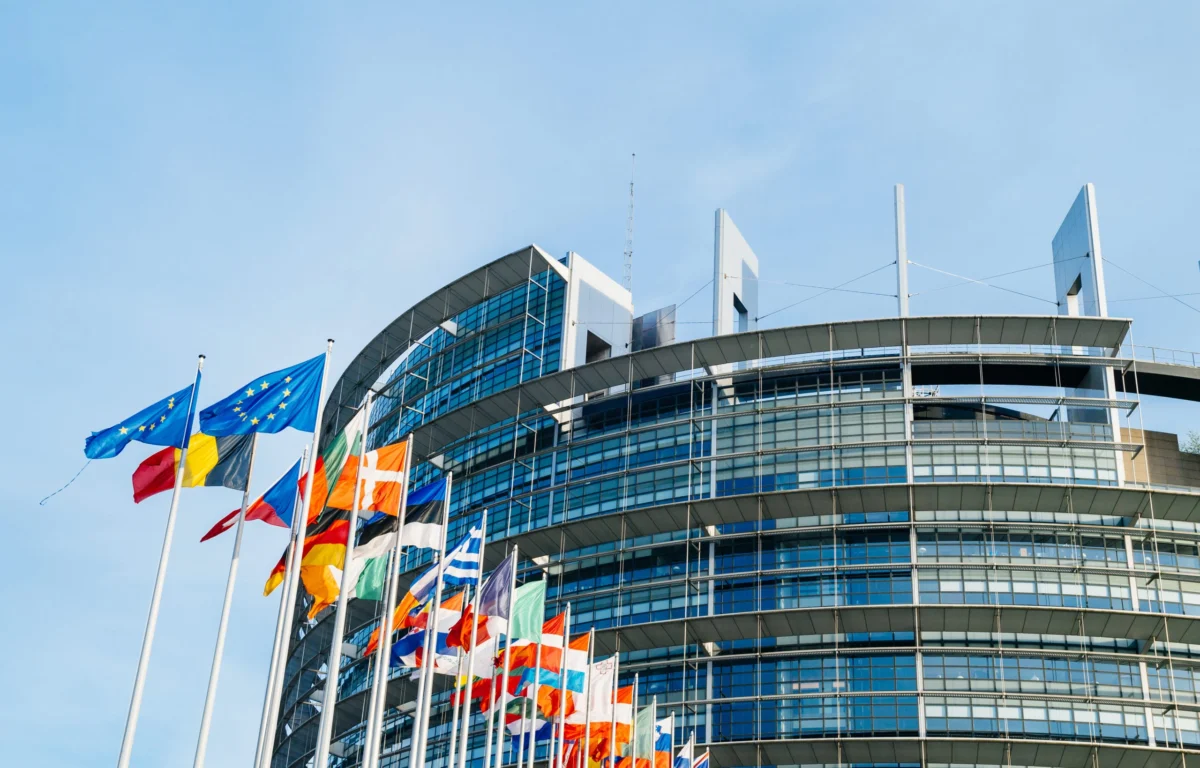
The European Union is currently navigating a contentious debate that pits the bureaucratic ideal of a frictionless Single Market against the hard reality of national fiscal sovereignty. At the heart of this conflict is the European Commission’s (EC) proposed revision to the Tobacco Excise Directive (TED), a move that has ignited concerns over whether Brussels is overstepping its mandate by attempting to impose uniform social and health policies on diverse member states.
While the pursuit of a harmonized Single Market is a cornerstone of the European project, the current trajectory of the TED revision suggests that the EU is drifting away from its role as an economic coordinator and toward that of a paternalistic regulator. By standardizing excise duties on nicotine products, the Commission risks undermining the ability of individual nations to tailor their fiscal and public health strategies to their unique economic and social landscapes.
Chronology of a Regulatory Shift
The Tobacco Excise Directive was originally designed to prevent tax arbitrage and ensure that the cross-border movement of goods would not be stifled by widely divergent fiscal regimes. However, the market for nicotine has changed dramatically since the last meaningful update to the directive.
In July 2025, the European Commission unveiled a comprehensive proposal to overhaul the framework, arguing that the existing rules were rendered obsolete by rapid innovation. The rise of e-cigarettes, heated tobacco, and nicotine pouches has created a "patchwork" of taxation across the continent. Under the proposed update, the EU seeks to bring these modern alternatives under the same umbrella of minimum excise taxation as traditional combustible cigarettes.
The legislative process is currently moving through the Council and the European Parliament, with proposed implementation timelines stretching into 2028 and beyond. The proposal sets an aggressive schedule for minimum excise duty hikes, moving from a 10 percent threshold for new nicotine products in 2028 to a 50 percent minimum by the early 2030s.
The Tension Between Health and Economics
The EU’s legal framework is built on the principle of "conferred powers"—the Union can only act within the competencies granted to it by member states. Notably, taxation is not a direct EU competence. Member states retain the sovereign right to determine their own tax bases and rates, as these are intrinsically linked to political accountability and national budget planning.
However, the EU utilizes a loophole: it may issue directives to harmonize tax laws if divergent national policies create distortions of competition within the Single Market. Herein lies the tension. The Commission justifies its intervention by citing the need for a level playing field. Yet, critics argue that the proposal is less about market facilitation and more about implementing a "one-size-fits-all" health policy.
While the EU has a mandate to promote health, it lacks the authority to harmonize national tobacco legislation. This legal ambiguity has led to a "mission creep," where the Commission uses fiscal policy as a Trojan horse to regulate products that it cannot legally regulate through health directives.
Supporting Data: The Case for Regulatory Diversity
The economic and health realities across Europe are not uniform. France, for instance, faces a severe illicit trade problem, with estimates suggesting that nearly 40 percent of cigarettes consumed are purchased outside the legal market. This is a direct consequence of high tax rates. Conversely, Bulgaria and Germany operate under vastly different economic conditions, income levels, and enforcement capabilities.
A uniform tax rate might be sustainable in a wealthy, high-income economy but could prove ruinous or unenforceable in a country with a large informal sector or proximity to lower-tax non-EU neighbors. Furthermore, the evidence regarding harm reduction is increasingly difficult for policymakers to ignore. Research from Public Health England and other institutions consistently demonstrates that e-cigarettes and modern oral nicotine products are significantly less harmful than combustible tobacco.
Despite this, the EC proposal treats all nicotine products as equivalent. By imposing heavy minimum excise taxes on less harmful alternatives, the directive effectively penalizes consumers for switching to products that carry a 95 percent lower risk profile than traditional cigarettes. Economic models suggest that such tax hikes discourage smokers from transitioning to lower-risk products, thereby trapping them in the cycle of combustible tobacco use.
The "Swedish Experience" as a Benchmark
The most compelling counter-argument to the Commission’s centralized approach is the success of Sweden. As the only EU member state to have effectively achieved a smoking rate below 6 percent, Sweden stands as the gold standard for public health. This result is not a coincidence; it is the product of a long-standing cultural and regulatory acceptance of snus and, more recently, modern oral nicotine pouches.
Sweden’s experience demonstrates that harm reduction is a viable pathway to eradicating the most dangerous forms of tobacco use. Yet, instead of encouraging this model, the EU is moving toward a policy that mirrors the prohibitions seen in countries like France, Belgium, and the Netherlands—nations where harm-reduction alternatives are often heavily taxed or outright banned.
The divergence between the "Swedish model" and the "Brussels model" raises a fundamental question: Should the EU force member states to adopt a failing policy of prohibition, or should it allow nations to implement evidence-based harm-reduction strategies?
Official Responses and Political Implications
The Commission maintains that its proposal is necessary to prevent tax-induced smuggling and to provide legal certainty for the Single Market. In its policy communications, the EC acknowledges that member states retain primary responsibility for tax collection, yet it insists that the current lack of harmonization is an obstacle to trade.
However, many member state representatives are pushing back. There is growing concern that the "harmonization" goal is being used to mask a desire for higher, centralized tax revenues. When the EU sets a floor for excise taxes, it implicitly dictates the tax burden on citizens, stripping national parliaments of their primary lever for managing local economic behavior.
Furthermore, the focus on "distortions of competition" is increasingly viewed as a pretext. If a country chooses to have lower taxes to stimulate its economy or to encourage healthier lifestyle choices, that is a sovereign decision. Labeling these choices as "distortions" suggests that the Commission believes there is only one "correct" way to tax nicotine—a belief that ignores the diverse democratic preferences of the EU’s 27 member states.
The Future of the Single Market
The proposed revision to the Tobacco Excise Directive serves as a litmus test for the future of the European Union. If Brussels continues to centralize authority over areas that are fundamentally domestic, it risks deepening the divide between the European bureaucracy and the citizens of its member states.
True harmonization should be about reducing friction, not increasing uniformity. A healthy Single Market should allow for regulatory competition, where member states can learn from one another—adopting, for example, the Swedish approach to harm reduction—rather than being forced into a monolithic system that ignores local evidence and national sovereignty.
As the legislative process continues, the European Commission must address the glaring inconsistencies in its proposal. It must reconcile the goal of a functional market with the evidence-based reality that nicotine products are not all equal in their health impact. If the goal is truly to protect the health of European citizens, then the EU should be championing policies that reduce harm, not those that stifle innovation and punish those who choose less dangerous alternatives.
In the final analysis, the Tobacco Excise Directive should aim to harmonize the rules of the market, not the values of the nations within it. National governments remain the best judges of their own economic conditions and public health needs. For the EU to succeed in the long term, it must recognize that a "Single Market" is not synonymous with a "Single Policy." Diversity, rather than forced uniformity, is what will ultimately strengthen the European Union in the face of evolving global challenges.