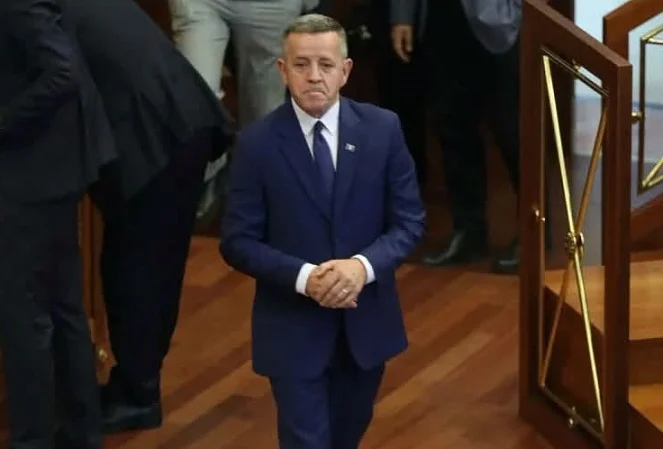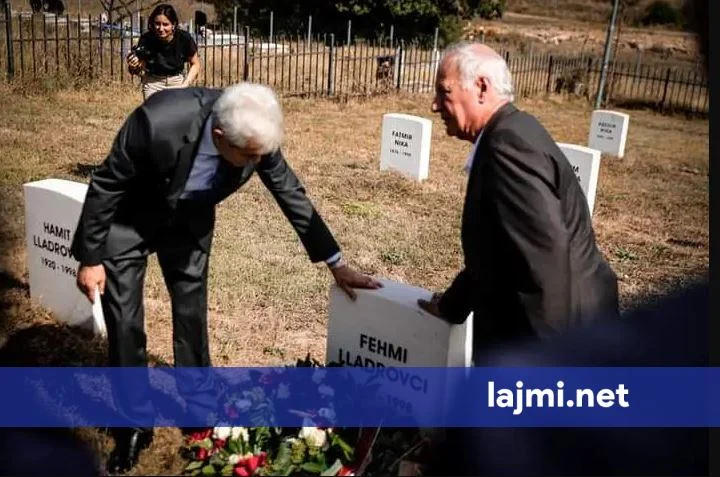
Skopje, North Macedonia – September 22, 2026 – Ali Ahmeti, the esteemed leader of the Democratic Union for Integration (BDI), today paid a profound tribute to the legendary figures of Kosovo’s liberation struggle, Fehmi and Xhevë Lladrovci, marking the 28th anniversary of their heroic fall. In a heartfelt commemoration shared via social media, Ahmeti hailed the couple as integral members of a generation of unwavering activists who dedicated their lives to the arduous pursuit of Kosovo’s freedom. His words resonated with a deep personal connection, underscoring the enduring legacy of the Lladrovcis and the sacrifices that paved the way for an independent Kosovo.
Ahmeti’s tribute was more than a formal remembrance; it was a personal homage to a close comrade, a shared journey of ideals, and a testament to the ultimate sacrifice made for national self-determination. He highlighted Fehmi Lladrovci not just as a fellow combatant but as a confidant, a kindred spirit, and a partner in the earliest, most clandestine efforts towards liberation, long before the formal establishment of the Kosovo Liberation Army (KLA). The poignant message served as a powerful reminder of the foundational struggle and the profound human cost of freedom, particularly for those who spearheaded the movement from its nascent stages.
The Lladrovci Legacy: Architects of Resistance
Fehmi and Xhevë Lladrovci stand as towering figures in the pantheon of Kosovo’s national heroes, their names synonymous with unwavering dedication, courage, and ultimate sacrifice. Their story is not merely one of individual heroism but of a couple united in their commitment to a singular, paramount ideal: the liberation of their homeland from Serbian oppression. They embodied the spirit of resistance that simmered for decades under totalitarian rule, eventually erupting into armed struggle.
A Duo United in Ideal and Sacrifice
Fehmi Lladrovci, born in 1956, and Xhevë Krasniqi-Lladrovci, born in 1957, were intellectuals and activists whose lives became inextricably linked with the destiny of Kosovo. Fehmi was a prominent figure within the Albanian national movement, known for his incisive political thought and his organizational skills. He was a vocal opponent of the Yugoslav regime’s policies towards Albanians, actively engaging in clandestine political activities and intellectual discourse that sought to awaken national consciousness and galvanize resistance. Xhevë, a lawyer by profession, was equally committed, providing not only intellectual support but also actively participating in the logistical and operational aspects of the burgeoning movement. Their home, like many others of dedicated patriots, often served as a clandestine meeting point, a sanctuary for planning, and a hub for disseminating information vital to the cause.
What makes the Lladrovcis’ story particularly compelling and deeply symbolic is their shared journey into armed resistance. Unlike many couples separated by war, they chose to fight side-by-side, their marital bond strengthening their resolve on the battlefield. This duality of their struggle – as partners in life and partners in war – elevated their status beyond mere combatants; they became an enduring symbol of national unity, collective sacrifice, and the profound personal commitment required to achieve national aspirations. Their decision to return to Kosovo from their exile in Germany to join the armed struggle demonstrated a level of commitment that inspired countless others. They did not merely advocate for freedom from afar; they actively participated in its most dangerous and decisive phases.
Precursors to the KLA: A Shared Path with Ahmeti
Ali Ahmeti’s personal recollection sheds critical light on the formative years of the liberation movement, emphasizing his deep, long-standing camaraderie with Fehmi Lladrovci. Ahmeti described Fehmi as a "close friend, fellow thinker, fellow activist, and fellow combatant," with whom he "shared the path of efforts for Kosovo’s freedom long before the creation of the Kosovo Liberation Army." This statement is crucial for understanding the evolutionary nature of the KLA and the broader national movement.
Before the KLA officially emerged as a uniformed, organized military force in the mid-1990s, the ground for armed resistance was meticulously prepared by a network of dedicated activists. This pre-KLA phase was characterized by clandestine organizing, political education, weapons procurement, and the establishment of logistical channels, often operating from diaspora communities. Figures like Fehmi Lladrovci and Ali Ahmeti were at the forefront of these efforts, working in the shadows, risking imprisonment and death to build the infrastructure for future armed struggle. Their collaboration highlights the intellectual and strategic depth that underpinned the KLA’s eventual formation. It was a period of intense ideological debate, strategic planning, and the forging of unbreakable bonds between individuals who believed fiercely in an independent Kosovo. Ahmeti’s words vividly paint a picture of shared ideals, sleepless nights, and dangerous undertakings that defined this crucial, often overlooked, phase of the struggle.
Chronology of Commitment: From Activism to Armed Struggle
The journey from a simmering discontent to an organized armed uprising was a protracted and perilous one for Kosovo. The Lladrovcis, along with Ali Ahmeti and countless others, navigated this complex transition, demonstrating a profound understanding of the historical moment and an unyielding will to challenge the status quo.
The Genesis of Resistance: A Generation Unyielding
Ahmeti’s reference to Fehmi and Xhevë as "part of that generation of activists of the national movement who never reconciled with subjugation" encapsulates the decades-long struggle against Serbian hegemony within Yugoslavia. Following the suppression of Albanian protests in 1981 and the subsequent erosion of Kosovo’s autonomy in the late 1980s, a strong national movement emerged, encompassing both peaceful resistance led by figures like Ibrahim Rugova and a more radical wing advocating for armed struggle. The Lladrovcis belonged to this latter group, believing that true liberation could only be achieved through direct confrontation.
This generation of activists grew up under an oppressive regime that systematically discriminated against Albanians, denying them fundamental rights and cultural expression. Their refusal to "reconcile with subjugation" was not merely a political stance but a deeply ingrained conviction forged by years of injustice. They engaged in various forms of resistance: organizing protests, publishing underground literature, forming political parties (some legal, some clandestine), and building networks both domestically and within the Albanian diaspora. Many, like the Lladrovcis, sought refuge and organized abroad, particularly in Western Europe, where they could more freely articulate their demands and gather support. These early efforts were critical in laying the ideological and organizational groundwork for what would become the KLA. They fostered a sense of national identity, articulated the demand for self-determination, and identified the need for a military component to achieve their goals.
The Emergence of the KLA and the Drenica Front
By the mid-1990s, as peaceful resistance proved insufficient against escalating Serbian repression, the Kosovo Liberation Army began to emerge as a viable force. The KLA, initially a small, loosely organized guerrilla group, gained momentum as disillusioned youth and seasoned activists like the Lladrovcis joined its ranks. Their experience in clandestine organization and their intellectual acumen were invaluable in shaping the KLA’s early strategy and operations.
The Drenica region, a historically rebellious heartland in central Kosovo, quickly became the epicenter of the armed uprising. Its rugged terrain and the deep-seated patriotic spirit of its inhabitants made it an ideal base for guerrilla operations and a formidable challenge for Serbian forces. The Lladrovcis, upon their return to Kosovo, immediately immersed themselves in the KLA’s activities in Drenica. Fehmi Lladrovci became a crucial commander, known for his strategic mind and leadership qualities, while Xhevë served as a dedicated combatant and organizer, often working directly with the local population to secure support and resources. Their presence in Drenica, a region that bore the brunt of Serbian military operations, underscored their commitment to fighting on the front lines, embodying the spirit of self-sacrifice that characterized the KLA’s early phase. This region would ultimately witness their final, heroic stand.
The Battle of Drenica: A Pivotal Sacrifice
The Drenica region, often referred to as the "cradle of the KLA," was a battleground of immense strategic and symbolic importance during the Kosovo War. It was here, amidst fierce fighting, that Fehmi and Xhevë Lladrovci made the ultimate sacrifice, cementing their place in history.
September 22, 1998: A Day Etched in Memory
Ahmeti’s Facebook post vividly recalls the tragic day: "On September 22, 1998, in the battle of Drenica, Fehmiu and Xheva fell side by side, just as they had lived: together in life, in ideal, and in struggle." This poignant description encapsulates the profound unity of their lives and their deaths. The year 1998 marked a significant escalation of the conflict in Kosovo, with Serbian forces launching major offensives to crush the KLA and terrorize the civilian population. Drenica, being a stronghold, was a primary target.
The battle in which the Lladrovcis fell was part of a larger, brutal Serbian offensive aimed at breaking the KLA’s resistance and clearing the region of any Albanian presence. The fighting was intense, often hand-to-hand, with KLA fighters, despite being outgunned and outnumbered, offering fierce resistance. The specific engagement on September 22, 1998, saw Fehmi and Xhevë fighting alongside their comrades, demonstrating extraordinary bravery in the face of overwhelming odds. Their decision to stand their ground, even when faced with imminent danger, underscored their unyielding belief in the cause. Their simultaneous fall in battle, as a married couple, fighting for the same ideal, created a powerful narrative of shared sacrifice that deeply resonated with the Albanian population and became an enduring symbol of the war. It was a moment of profound loss but also of immense inspiration, reinforcing the resolve of those who continued the fight.
The Strategic Importance of Drenica
Drenica’s significance in the Kosovo War cannot be overstated. Geographically, its rugged, mountainous terrain provided natural cover for guerrilla operations, making it difficult for the more conventional Serbian army to effectively control. Historically, Drenica had a long tradition of Albanian resistance against various occupying forces, imbuing its people with a strong sense of national pride and defiance. This combination made it a natural base for the KLA.
Throughout 1998, Serbian military and police forces launched multiple large-scale "anti-terrorist" operations in Drenica, often employing indiscriminate shelling, massacres, and ethnic cleansing tactics against Albanian civilians. The objective was clear: to destroy the KLA’s operational capacity, eliminate its leadership, and break the will of the local population that supported it. Battles in Drenica, such as the one in which the Lladrovcis perished, were not isolated skirmishes but critical engagements within a broader strategic effort by Serbia to assert control. The KLA’s ability to withstand these offensives, even at great cost, demonstrated its resilience and its growing capacity to challenge the Serbian regime. The sacrifices made in Drenica, including that of the Lladrovcis, were instrumental in sustaining the armed struggle and ultimately drawing international attention to the atrocities committed in Kosovo, paving the way for NATO intervention in 1999.
Supporting Data and Broader Context
The commemoration of figures like Fehmi and Xhevë Lladrovci extends beyond mere historical recollection; it is a vital act of nation-building, reinforcing collective memory and identity in a young state. Their story is intricately woven into the fabric of independent Kosovo.
The Pantheon of National Heroes
In post-war Kosovo, Fehmi and Xhevë Lladrovci are revered as national heroes, their names immortalized in street names, monuments, and educational institutions. They represent the embodiment of patriotism, self-sacrifice, and the unwavering pursuit of freedom. Their joint sacrifice, in particular, resonates deeply, serving as a powerful narrative of unity and shared purpose within the broader national struggle. They are frequently cited as examples of the bravery and dedication that defined the KLA and the entire liberation movement.
The act of remembering martyrs like the Lladrovcis is not just about honoring the dead; it is about educating the living. It ensures that the younger generations understand the immense sacrifices made for the freedoms they now enjoy. National memory in Kosovo is a dynamic process, continuously shaped by political discourse, educational curricula, and public commemorations. Figures like the Lladrovcis provide tangible links to the past, reminding citizens of the foundational values upon which the state was built. Their legacy is a constant call to uphold the ideals of freedom, justice, and sovereignty for which they laid down their lives.
Echoes of Sacrifice in a Free Kosovo
Ahmeti’s concluding words, "The flag for which you gave your lives today flies free," encapsulate the profound significance of the Lladrovcis’ sacrifice in the context of contemporary, independent Kosovo. Their struggle, along with that of thousands of others, ultimately led to the liberation of Kosovo and its declaration of independence in 2008. The free-flying flag is the tangible manifestation of their ideals, a symbol of a dream realized through immense suffering and sacrifice.
However, the "free Kosovo" they fought for still faces numerous challenges. These include strengthening democratic institutions, fostering economic development, achieving full international recognition, and confronting the legacy of the war, including the ongoing pursuit of justice for war crimes. In this context, the legacy of Fehmi and Xhevë Lladrovci serves as a powerful source of inspiration. Their dedication reminds current leaders and citizens alike of the importance of unity, perseverance, and unwavering commitment to national interests. Their story reinforces the idea that true freedom requires constant vigilance and an unyielding commitment to justice and democratic principles. The echoes of their sacrifice continue to resonate, urging the nation to build upon the foundations they laid, striving for a future worthy of their ultimate gift.
Official Responses and Enduring Implications
The commemoration by a prominent political figure like Ali Ahmeti holds significant weight, not only as a personal tribute but also as a reflection of collective national memory and political discourse.
Ali Ahmeti’s Enduring Tribute
Ali Ahmeti’s consistent and deeply personal tributes to Fehmi and Xhevë Lladrovci underscore his own pivotal role in the liberation movement and his enduring commitment to preserving its memory. As a former high-ranking KLA commander and now a leading political figure in North Macedonia, Ahmeti is a living witness to the events he recounts. His words carry the authority of firsthand experience, lending authenticity and emotional depth to the commemoration. His statement, "Brother Fehmi, 28 years after your fall, I miss you just the same," reveals a raw, personal grief that transcends political rhetoric. It humanizes the struggle, reminding everyone that behind the grand narratives of war are deeply personal losses and unbreakable bonds of comradeship.
By actively participating in such commemorations, Ahmeti reinforces the narrative of heroic sacrifice and the legitimacy of the armed struggle for Kosovo’s independence. His tributes serve to honor the fallen, but also to solidify the historical understanding of the KLA’s role and the broader national movement. In the complex political landscape of the Balkans, where historical narratives are often contested, such clear and heartfelt affirmations from key figures are vital for shaping national identity and remembering the price of freedom.
Collective Remembrance and State Honoring
While Ahmeti’s tribute is personal, it also mirrors a broader pattern of collective remembrance in Kosovo and among Albanians in the region. The state of Kosovo officially marks the anniversaries of significant battles and the falls of national heroes. These commemorations often involve state ceremonies, military honors, speeches by the President, Prime Minister, and other political leaders, as well as public gatherings, cultural events, and memorial visits. Schools often include lessons about the Lladrovcis and other martyrs in their curricula, ensuring that their stories are passed down through generations.
The collective honoring of martyrs is crucial for consolidating national identity and strengthening patriotic sentiment. It provides a shared historical narrative that unites the nation, transcending political differences. The Lladrovcis, with their powerful story of a couple fighting and falling together, are particularly potent symbols in this collective memory, representing the unity and resolve of the Albanian people during their darkest hours. These state-sponsored and public commemorations ensure that their sacrifice is not forgotten but remains a cornerstone of Kosovo’s national ethos.
Legacy and the Future of Kosovo
The legacy of Fehmi and Xhevë Lladrovci extends far beyond their individual acts of heroism; it profoundly impacts the present and future trajectory of Kosovo. Their lives and deaths serve as a powerful reminder of the values that underpin the modern Kosovar state: freedom, self-determination, and the courage to fight for what is right. For current and future generations, their story is a source of inspiration to uphold these values, to defend the hard-won independence, and to continue building a democratic and prosperous society.
Their enduring message is one of unwavering commitment to a cause greater than oneself. In a world increasingly fragmented, their story of unity in life, ideal, and struggle offers a timeless lesson on the power of collective action and shared purpose. As Kosovo navigates its path forward, striving for stability, reconciliation, and full integration into the international community, the spirit of Fehmi and Xhevë Lladrovci remains a guiding light. Their sacrifice stands as a perpetual testament to the indomitable will of a people determined to live free, ensuring that the flag for which they gave their lives will indeed continue to fly free, forever. Glory eternal to them and all martyrs of the nation.