Pristina, Kosovo – Kosovo is currently experiencing a profound period of national introspection and public unrest, as citizens continue to protest for the sixth consecutive night following the confirmation of indictments against four former leaders of the Kosovo Liberation Army (KLA) by the Kosovo Specialist Chambers (KSC) in The Hague. The decision, which implicates figures revered by many as heroes of the nation’s struggle for independence, has triggered a wave of demonstrations, political maneuvering, and a deep debate about justice, national identity, and the rule of law.
The protests, primarily centered in the capital, Pristina, are a direct response to the transfer and detention of former President Hashim Thaçi, former Speakers of Parliament Kadri Veseli and Jakup Krasniqi, and former KLA Chief of Staff Rexhep Selimi, all of whom face charges of war crimes and crimes against humanity. Their detention in The Hague has been met with widespread dismay and anger across segments of Kosovar society, who view the KLA’s actions during the 1998-1999 war against Serbia as a just and defensive struggle.
Unrest Grips Kosovo: A Nation Divided by Justice
The recent developments have plunged Kosovo into a complex legal and political crisis, challenging its post-war narrative and testing its democratic institutions. The KSC, often referred to as the "Hague Court" in local parlance, operates under Kosovar law but is staffed by international judges and prosecutors and located in the Netherlands, a structure designed to protect witnesses and ensure impartiality given the sensitive nature of the cases.
The Hague’s Verdict and its Immediate Aftermath
The confirmation of indictments against Thaçi, Veseli, Krasniqi, and Selimi marks a watershed moment in Kosovo’s contemporary history. These individuals are not merely political figures; they are deeply ingrained in the national consciousness as architects of the nation’s liberation. Thaçi, in particular, was a key political leader of the KLA and later served as Prime Minister and President of Kosovo, symbolizing the transition from armed struggle to state-building. Veseli, Krasniqi, and Selimi also held significant roles within the KLA’s political and military structures before transitioning to prominent positions in post-war Kosovar politics.
The charges, which include murder, torture, cruel treatment, and persecution, relate to alleged crimes committed against ethnic Serbs, Roma, and Kosovo Albanians perceived as opponents of the KLA, primarily between March 1998 and September 1999. The KSC’s mandate is to investigate and prosecute individuals for crimes committed during and immediately after the Kosovo War. For many Kosovars, these proceedings are seen as an affront to their national liberation struggle and an attempt to equate the actions of the KLA with those of Serbian forces, who committed widespread atrocities during the conflict.
A Sixth Night of Vigils and Defiance
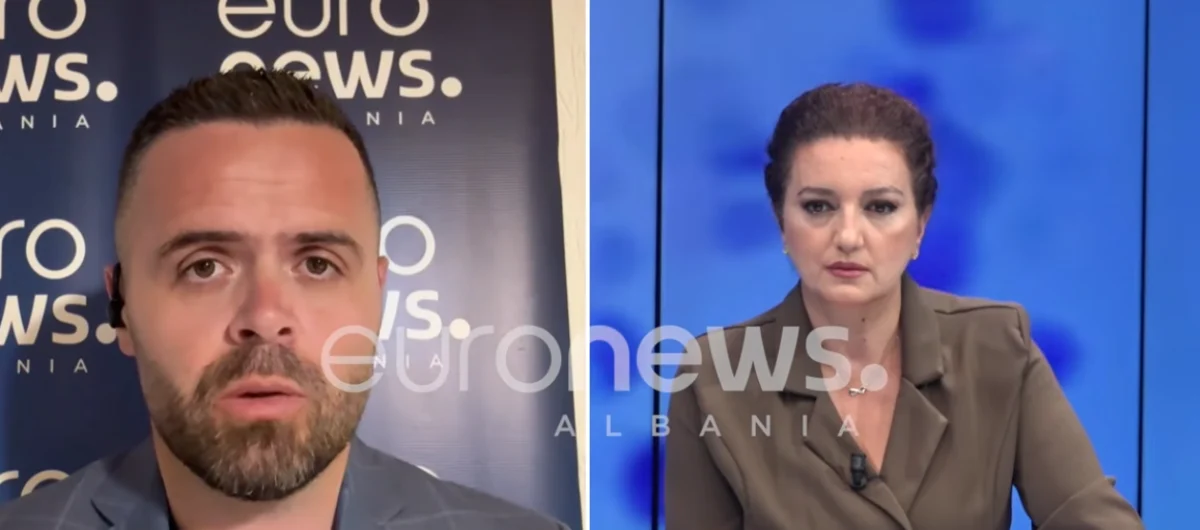
The spontaneous protests that erupted in Pristina and other Kosovar cities reflect a deep-seated public sentiment of solidarity with the accused and a profound concern for the country’s historical narrative. Euronews journalist Xhemajl Rexha, reporting from Pristina, underscored the consistent nature of these gatherings. "Every night at 9:00 PM, people gather. There are several speeches, three or four individuals speak," Rexha noted, highlighting the organized yet seemingly organic nature of the demonstrations.
The protests are characterized by a strong sense of unity, transcending typical political divides. Participants express unwavering support for the former KLA leaders, viewing them not as alleged criminals but as patriots who spearheaded the fight for freedom. Banners often display images of the accused alongside KLA symbols, and chants frequently invoke the spirit of the liberation war. The emotional intensity of the crowds, fueled by a mix of anger, sadness, and defiance, underscores the profound impact of the Hague proceedings on the collective psyche of the nation.
Echoes from Pristina: The Pulse of the Protests
The nightly gatherings in Pristina have become a focal point for national sentiment, drawing significant participation and demonstrating a resilient spirit of solidarity. Journalist Xhemajl Rexha’s observations provide a crucial insight into the dynamics and underlying motivations of these public demonstrations.
Unifying for a Cause: Non-Partisan Solidarity
Rexha emphasized the non-partisan character of the protests, a significant detail in Kosovo’s often highly polarized political landscape. "It is truly a very beautiful protest because there are many people, participation, there is a lot of support for the four former KLA leaders," he stated. This non-partisan aspect suggests a deeper, more fundamental response rooted in a shared sense of national identity and historical grievance, rather than mere political opportunism. It indicates that the issue at hand—the perceived assault on the KLA’s legacy—resonates across various segments of society, momentarily bridging the divides that typically characterize Kosovar politics.
The gatherings are not orchestrated by a single political party but appear to be driven by a broader civic impulse. This allows for a more diverse participation, including war veterans, families of fallen KLA members, youth, and ordinary citizens, all united by a common cause. The speeches delivered at these events often focus on the historical context of the KLA’s fight, the sacrifices made for independence, and the perceived injustice of the Hague proceedings.
The Message: Unwavering Focus on Justice
According to Rexha, the core objective of these protests is clear: to ensure that the KSC’s decision and the broader implications of the case remain at the forefront of public and political discourse. "The main idea of this protest is that this topic should not be removed from the center of attention, that it should continue to be discussed, and that those who are there should not be left alone," he explained. This sentiment reflects a fear among many Kosovars that the international legal process might be allowed to unfold without adequate public scrutiny or political engagement within Kosovo.
The protesters aim to exert continuous pressure on the government, political parties, and the international community to acknowledge their perspective. They seek to keep the narrative alive, countering any attempts to diminish the KLA’s role or to allow the accused to be forgotten. This sustained pressure is intended to remind both domestic and international actors of the profound national significance of the individuals on trial and the implications for Kosovo’s foundational narrative. The daily rhythm of these protests, commencing at 9 PM, serves as a consistent reminder of the ongoing national wound and the desire for justice that aligns with the Kosovar interpretation of their history.
The Political Chessboard: Navigating Legal and Public Opinion
Parallel to the street protests, Kosovo’s political arena is ablaze with intense debate and strategic maneuvering regarding the KSC’s jurisdiction and the legal fate of the former KLA leaders. The situation has exposed deep divisions and presented significant challenges for the current government and opposition parties.
PDK’s Legislative Challenge: Amending the Specialist Chambers Law
The Democratic Party of Kosovo (PDK), historically associated with many of the KLA’s prominent figures, including Hashim Thaçi and Kadri Veseli, has taken a proactive stance. Rexha reported that the PDK has proposed amending the law pertaining to the Specialist Chambers. This move is highly controversial, as the KSC was established through a constitutional amendment and an international agreement, making any unilateral change by Kosovo’s parliament fraught with legal and political complications.
The motivation behind PDK’s proposal is multi-faceted. On one hand, it seeks to demonstrate solidarity with the accused and to appease a significant portion of the electorate that views the KSC as an unjust institution. On the other hand, it represents an attempt to reclaim political initiative and influence the judicial process, potentially seeking to limit the KSC’s powers or even undermine its legitimacy. However, the international community, which was instrumental in the KSC’s establishment, would likely view any such amendment as a direct challenge to Kosovo’s international commitments and the rule of law.
Rexha noted PDK’s willingness to withdraw the proposed law if it were "too late," implying a recognition of the legal complexities and potential international backlash. This indicates a careful balancing act between responding to public sentiment and avoiding actions that could further isolate Kosovo on the international stage.
Alliance’s Support and Vetëvendosje’s Crucial Stance
The PDK’s initiative has garnered support from the Alliance for the Future of Kosovo (AAK), led by Ramush Haradinaj, another prominent former KLA commander who was himself acquitted by the International Criminal Tribunal for the former Yugoslavia (ICTY). AAK’s backing provides additional parliamentary weight to the proposal, but it is not enough to push it through.
Crucially, the support of the ruling Vetëvendosje Movement (VV), led by Prime Minister Albin Kurti, is indispensable. To convene an extraordinary session of parliament, 40 signatures are required, and the combined strength of PDK and AAK is currently insufficient. Rexha highlighted this critical parliamentary arithmetic: "For this, 40 signatures are needed to call an extraordinary session, and the support that the Vetëvendosje Movement should give is crucial."
Vetëvendosje’s position is more cautious. While acknowledging the sensitivity of the issue and expressing empathy for the accused, the government has been hesitant to directly challenge the KSC. Prime Minister Kurti’s administration has generally sought to project an image of adherence to the rule of law and international obligations, recognizing that any move to obstruct the KSC could severely damage Kosovo’s relations with key international partners, particularly the United States and the European Union, whose support is vital for Kosovo’s state-building and integration aspirations.
Rexha reported that Vetëvendosje intends to "wait for the decision" of the Constitutional Court regarding the legality of such a move and will "review the PDK’s proposal very carefully" before deciding on its support. This indicates a desire to avoid making hasty decisions that could have long-term negative consequences, balancing domestic political pressure with international expectations.
The Constitutional Conundrum and Parliamentary Dynamics
The involvement of the Constitutional Court adds another layer of complexity. Any proposed amendment to the law on Specialist Chambers would inevitably face scrutiny from the highest legal authority in the country. The Constitutional Court’s review process will assess whether the proposed changes are in line with Kosovo’s constitution and international agreements. A ruling against the amendment would effectively halt the initiative, regardless of parliamentary support.
The parliamentary dynamics are thus intricate. Even if an extraordinary session were convened, passing an amendment to the law on Specialist Chambers would require a two-thirds majority, a threshold that would be challenging to meet without broad cross-party consensus, especially given the international implications. The political maneuvers underscore the deep internal struggle within Kosovo over how to reconcile the legacy of the KLA’s liberation struggle with the demands of international justice and the rule of law. The outcome of this legislative and political battle will have profound implications for Kosovo’s governance, its international standing, and its ability to confront difficult truths about its recent past.
Historical Context and International Scrutiny
To fully grasp the current crisis, it is essential to delve into the historical context of the Kosovo Liberation Army and the unique circumstances that led to the establishment of the Kosovo Specialist Chambers.
The Kosovo Liberation Army and its Legacy
The KLA emerged in the mid-1990s as a paramilitary organization committed to achieving the independence of Kosovo from Serbia. Its ranks swelled as peaceful resistance to Serbian oppression failed to yield results, and the international community seemed slow to act. The KLA’s armed struggle escalated into a full-blown conflict in 1998-1999, eventually drawing NATO intervention to halt the widespread ethnic cleansing perpetrated by Serbian forces under Slobodan Milošević.
For the vast majority of Kosovo Albanians, the KLA represents a heroic liberation movement, essential for their survival and the realization of their national aspirations. Its members are seen as patriots who fought against a brutal occupying regime. This narrative is foundational to modern Kosovar identity, and any challenge to it is perceived as an attack on the very legitimacy of the state. The individuals currently on trial in The Hague—Thaçi, Veseli, Krasniqi, and Selimi—are deeply embedded in this heroic narrative, having been central figures in the KLA’s political and military leadership.
Establishing the Specialist Chambers: A Compromise for Justice
The Kosovo Specialist Chambers and Specialist Prosecutor’s Office (KSC & SPO) were established in 2015, following intense international pressure and amidst allegations of war crimes committed by elements of the KLA. The impetus for the KSC came largely from a 2011 report by Council of Europe rapporteur Dick Marty, which alleged organ trafficking and other grave crimes involving senior KLA figures.
The establishment of the KSC was a compromise. While it operates under Kosovar law, it is based in The Hague, staffed by international personnel, and funded by the EU. This unique structure was designed to address concerns about witness intimidation and political interference within Kosovo’s domestic justice system, issues that had plagued previous attempts to prosecute KLA members for war crimes. For the international community, particularly the EU and the US, the KSC represents a crucial commitment by Kosovo to uphold the rule of law and deliver justice for all victims of the conflict, regardless of their ethnicity or allegiance. Failure to cooperate with the KSC would have severe repercussions for Kosovo’s international standing and its Euro-Atlantic integration path.
However, within Kosovo, the KSC has been controversial since its inception. Many view it as an unfair imposition, a court designed to prosecute only Albanians, thus creating a moral equivalence between the aggressor (Serbia) and the victim (Kosovo Albanians). This perception fuels the public protests and the political resistance to the KSC’s proceedings.
Broader Implications: Navigating Identity, Justice, and European Aspirations
The current crisis in Kosovo extends far beyond the legal proceedings themselves, touching upon fundamental questions of national identity, reconciliation, international relations, and the country’s future trajectory.
Impact on Kosovo’s International Standing
Kosovo’s cooperation with international justice mechanisms is a cornerstone of its relationship with Western powers, particularly the United States and the European Union. These nations have been instrumental in Kosovo’s independence and state-building efforts. Any attempt to obstruct the KSC or undermine its authority, such as through legislative amendments, would be seen as a direct breach of international commitments and could severely strain these vital alliances.
Such actions could lead to diplomatic isolation, a reduction in financial aid, and a halt to progress on EU integration. For a country still striving for full international recognition and seeking to solidify its place on the global stage, alienating key allies would be a detrimental setback. The international community views the KSC as a test of Kosovo’s maturity as a state and its commitment to universal principles of justice and accountability.
The Delicate Balance of National Narrative and Accountability
The protests and political debates highlight a profound tension within Kosovo: how to reconcile the cherished national narrative of a just liberation war with the demands for accountability for individual crimes that may have been committed during that conflict. For many, accepting that KLA members could have committed war crimes is tantamount to betraying the sacrifices made for independence and validating the Serbian narrative that demonizes the KLA.
However, proponents of the KSC argue that justice for all victims, regardless of ethnicity, is essential for a healthy post-conflict society and for preventing future cycles of violence. They contend that individual accountability does not diminish the overall righteousness of the liberation struggle but rather strengthens the rule of law. Navigating this delicate balance will be crucial for Kosovo’s long-term stability and its ability to foster genuine reconciliation, both internally and with its neighbors.
Future Outlook: A Nation at a Crossroads
Kosovo stands at a critical juncture. The ongoing protests reflect a deep-seated popular sentiment that cannot be ignored by its political leaders. At the same time, the government is acutely aware of its international obligations and the potential consequences of defying the KSC. The coming weeks and months will likely see continued public demonstrations, intense parliamentary debates, and careful diplomatic maneuvering.
The outcome of the trials in The Hague will undoubtedly shape Kosovo’s historical memory and its future political landscape. Whether Kosovo can successfully navigate this complex period, upholding both its national dignity and its commitment to international justice, will determine its trajectory as a sovereign nation. The world watches to see how this young democracy, born out of conflict, will reconcile its past with the universal demands of justice and accountability.