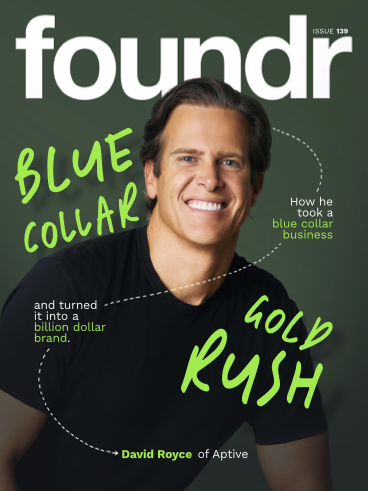
In the modern business landscape, the archetype of success is often defined by Silicon Valley software startups, high-frequency trading firms, or venture-backed consumer brands. However, David Royce, the founder and chairman of Aptive Environmental—now the third-largest residential pest control service in North America—has rewritten that narrative. Royce’s journey to building a billion-dollar empire proves that massive wealth is not reserved for the tech-savvy or the Ivy League elite. Instead, it is the reward for those willing to embrace the "unsexy" work that others avoid.
Royce’s philosophy is deceptively simple: success is not about the industry you choose or your academic credentials; it is about your willingness to perform the tasks that others despise, for long enough to become the absolute best at them.
The Formative Years: From "Not Smart" to Top-Tier Salesman
David Royce’s trajectory was not linear, nor was it paved with early academic accolades. As a child, he struggled in school, often feeling alienated because he could not focus on subjects that didn’t ignite his interest. It wasn’t until he was an adult that he was diagnosed with ADHD, a condition he now views as a "double-edged sword."
"In boring environments, it’s brutal," Royce explains. "In environments I care about, it’s a superpower."

His turning point arrived in the sixth grade, courtesy of a teacher named Mrs. Luft. She saw potential in him before he did, sparking a drive that pushed him to excel. However, the most critical lesson in persistence came later. During his college years, seeking to earn money, Royce entered the world of door-to-door pest control sales. His start was disastrous. He spent his first week in Sacramento failing to land a single sale. While his peers were closing deals, Royce was effectively performing "free cardio."
Rather than quitting, he spent his weekend in a bookstore, devouring sales literature and committing to 90 minutes of daily study. By the end of that summer, he was the top sales rookie out of 200 representatives. He had learned a foundational truth: persistence is simply genius in disguise.
A Chronology of Growth: The Anatomy of a Serial Entrepreneur
Royce’s rise is marked by a unique methodology. He did not jump from one industry to the next; he mastered one, sold it, and used the proceeds and the talent pool to build the next iteration on a larger stage.
1. The Startup Foundation
After graduating with a finance degree, Royce faced a crossroads: join an investment bank or start his own pest control company. He chose the latter, though he admits his ego initially recoiled at the idea of working in a "blue-collar" industry. He took $300,000 in savings—money he had earned through his summers in door-to-door sales—and launched his first venture.
2. The Cash Flow Crisis
During his first year, Royce’s company nearly collapsed—not from a lack of demand, but from an excess of it. The business model required paying commissions to salespeople upfront, before the recurring revenue from new customers arrived. While he had projected 5,000 new customers, he secured 7,500. He narrowly avoided bankruptcy by negotiating with his sales leaders, offering them interest on their delayed payments. This taught him a vital lesson: "Revenues are vanity. Profits are sanity. But cash flow is reality."
3. The Asset-Deal Strategy
Royce sold three separate companies to the same strategic buyer. Crucially, he retained his "golden goose": his leadership team and salesforce. By carving out his staff from these asset-only sales, he was able to launch the next company with a battle-tested team, zero debt, and improved capitalization, avoiding equity dilution entirely.
Supporting Data: Why "Boring" is Profitable
Royce’s skepticism toward "prestige" industries is backed by hard data. According to The Wall Street Journal, roughly 43% of the top 0.1% of income earners in the U.S. operate within "boring" blue-collar industries.
The reasoning is twofold:

- Essential Services: Recessions affect luxury goods, but they do not stop pests from entering homes. The recurring revenue model provides a buffer against economic volatility.
- The Retirement Gap: Millions of baby-boomer business owners are approaching retirement without clear succession plans. This creates an enormous opportunity for disciplined operators to acquire or compete in these spaces.
- AI-Resistance: While artificial intelligence is revolutionizing white-collar workflows, it cannot unclog a drain, treat termites in a wall, or climb a roof. The physical nature of these services provides a natural moat against digital disruption.
Official Insights: Culture, Training, and Leadership
For Royce, building a billion-dollar empire was not a solo feat; it was the result of building a machine. He institutionalized his sales success into a training program that saw reps from competitor firms increase their productivity by 70% upon joining his team.
On Culture as Design
Royce emphasizes that culture is not about "vibes" or perks like golf simulators and Ferraris—those are just "sugar." The true protein of his culture was ownership. He famously gave away 25% of the company to his employees, resulting in massive life-changing payouts for his team during the exit. "Turns out," Royce notes, "ownership is a far better retention tool than ping-pong tables."
On the Transition from "Hero" to "Architect"
Perhaps the most difficult transition for any founder is stepping back. Royce spent a decade grooming a protégé to take over as CEO of Aptive. He learned that leadership at the highest level requires the discipline to stop "saving the day" when minor issues arise. He had to shift his identity from the hero of the story to the architect of the system.
Implications: The Lessons for Modern Entrepreneurs
The story of David Royce serves as a blueprint for the "stealthy wealthy." It challenges the obsession with raising venture capital and chasing high-growth tech trends.
The Pitfalls of "Big-Company" Hires
Royce warns against blindly hiring executives from massive, billion-dollar corporations. He recounted a disastrous experience with a CFO who, despite a perfect resume, lacked the granular understanding of how expenses impacted a smaller, high-growth business. This mistake led to missed forecasts during a sale process, causing potential buyers to walk away. The lesson: trust, but verify; and never allow your metrics to falter during a sensitive transition period.
Redefining Success
Ultimately, Royce views entrepreneurship as a process of self-development. He argues that if one does not enjoy the climb, the summit will be profoundly disappointing. His legacy, he suggests, is not found in the valuation of his companies, but in the number of leaders he helped create.
For those looking to build their own empires, the advice from Royce is clear: Look for the problems that others are too "proud" or "sophisticated" to solve. Master the fundamentals of cash flow, treat your employees as partners through ownership, and remember that persistence is not just a trait—it is the ultimate competitive advantage. As Royce puts it: "If you want to build something that lasts, stop looking for the opportunity that looks good on paper, and start looking for the work that nobody else wants to do."