By Euronews
Published on 20 July 2026 – 14:13 GMT+2
On Monday, 20 July 2026, the Republic of Cyprus entered a somber day of remembrance, marking the 52nd anniversary of the Turkish military invasion of 1974. For the people of Cyprus, the day is defined by the haunting sound of sirens that wailed across the island at 5:30 am—the exact moment the first Turkish troops set foot on the northern shores over five decades ago.
This anniversary serves as a painful reminder of a geopolitical wound that has failed to heal. While the world has moved through the Cold War, the digital revolution, and the expansion of the European Union, the island of Cyprus remains physically and politically bifurcated, serving as the only EU member state with territory under foreign military occupation.
The Historical Context: From Coup to Catastrophe
The roots of the 1974 tragedy lie in the volatile political climate of the mid-1970s. On 15 July 1974, a Greek-backed military coup d’état, orchestrated by the ruling junta in Athens, sought to overthrow the democratically elected President of Cyprus, Archbishop Makarios III, with the ultimate goal of Enosis (union with Greece).
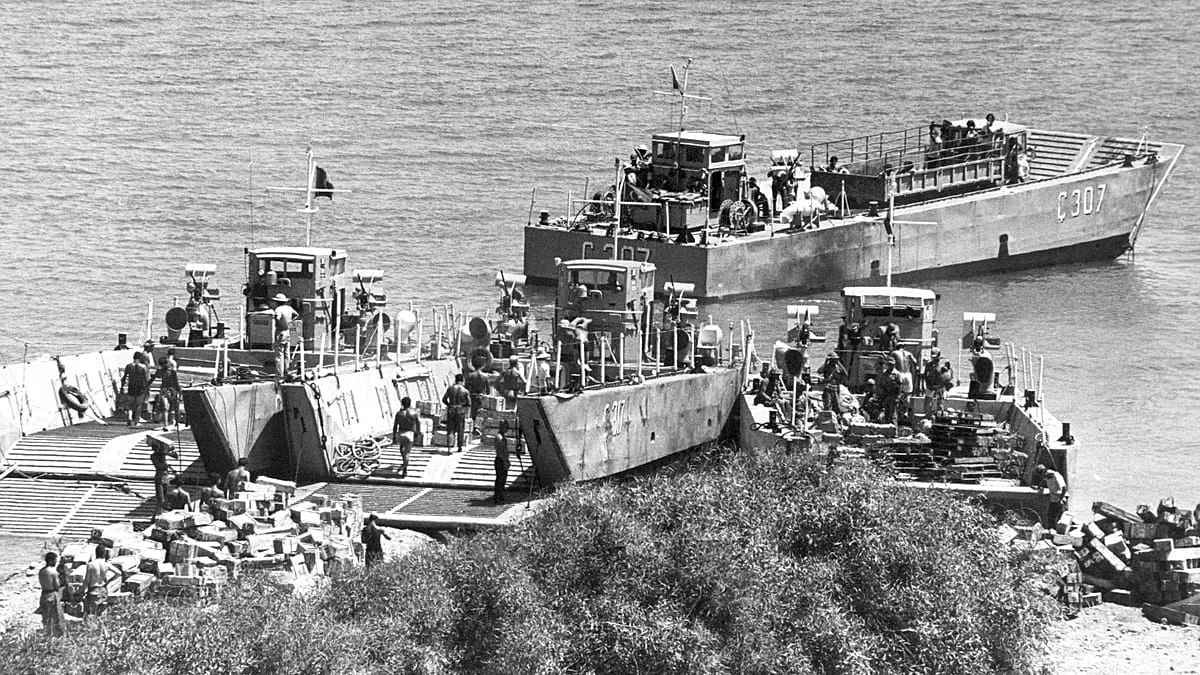
Five days later, on 20 July, Turkey launched "Operation Attila," citing its rights as a guarantor power under the 1960 Treaty of Guarantee. What began as a localized intervention rapidly escalated into a full-scale military campaign. By the time a ceasefire was established in August 1974, the Turkish Armed Forces had seized control of approximately 37% of the island’s territory.
The human cost was catastrophic. The invasion triggered a massive humanitarian crisis, forcing the displacement of roughly 170,000 Greek Cypriots from the north and 50,000 Turkish Cypriots from the south. The demographic map of the island was redrawn overnight, creating a chasm of mistrust that has persisted for generations.
Chronology of the Conflict
To understand the current impasse, one must look at the timeline of events that solidified the division:
- 1960: Cyprus gains independence from British colonial rule. A power-sharing constitution is established between the Greek Cypriot and Turkish Cypriot communities.
- 1963–1964: Inter-communal violence breaks out, leading to the deployment of a United Nations peacekeeping force (UNFICYP), which remains on the island to this day.
- 15 July 1974: A Greek-backed coup attempts to remove President Makarios III.
- 20 July 1974: Turkey initiates "Operation Attila," invading the northern coast near Kyrenia.
- August 1974: A second wave of Turkish military advances expands the occupied territory to 37% of the island.
- 1983: The "Turkish Republic of Northern Cyprus" (TRNC) is unilaterally declared, a state recognized only by Ankara.
- 2004: The Republic of Cyprus joins the European Union, while the northern part remains excluded due to the ongoing occupation.
- 2017: High-level reunification talks in Crans-Montana, Switzerland, collapse, marking the most significant failure in recent diplomatic history.
Supporting Data: The Impact of Occupation
The statistics surrounding the Cyprus issue paint a picture of a nation frozen in time. Beyond the 37% of land under military control, the conflict’s legacy is measured in human lives and cultural heritage:
- The Missing Persons: More than 1,600 people remain missing from the 1974 conflict. While the Committee on Missing Persons (CMP) has worked tirelessly to exhume and identify remains, many families are still left without closure.
- Demographic Engineering: Since 1974, Ankara has encouraged the migration of settlers from mainland Turkey to the north, a policy that international observers argue is designed to alter the demographic character of the occupied territory.
- Cultural Destruction: The Republic of Cyprus has repeatedly accused the occupying forces of the systematic looting and destruction of Orthodox churches, cemeteries, and archaeological sites in the north, labeling it a "cultural genocide."
- Economic Disparity: While the Republic of Cyprus has flourished as an EU member, the north remains heavily dependent on Turkish economic subsidies and isolated from the global financial system.
Official Responses and Political Rhetoric
On the 52nd anniversary, the Republic of Cyprus Presidency utilized the occasion to highlight the ongoing injustice. In a post on X (formerly Twitter), the government declared: "Turkey continues to illegally occupy 37% of our homeland, perpetuating one of the greatest crimes in the post-war history of Europe."
The statement further condemned the "expanded illegal settlement" and the "deprivation of the right to live freely" for all Cypriots. The government emphasized that for 52 years, Ankara has refused to provide transparency regarding the fate of the missing, further deepening the trauma of the affected families.
From Athens, the Greek government reiterated its unwavering support for a peaceful resolution. Greece remains committed to a solution based on a bi-zonal, bi-communal federation. This model, long supported by the United Nations, envisions a single sovereignty and a single international personality for Cyprus, ensuring political equality for both communities.
The Diplomatic Impasse: Why No Resolution?
The failure to resolve the Cyprus issue is not for a lack of effort, but rather a fundamental disagreement on the structure of a future state.
The Federal Model
The international community, including the EU and the UN, advocates for a federal Cyprus. This would integrate the north and south into a unified state structure. However, this requires significant compromises: the withdrawal of Turkish troops, the return of displaced persons to their homes, and the devolution of power to allow Turkish Cypriots a meaningful role in governance.
The Two-State Narrative
In recent years, the current Turkish Cypriot leadership, backed by the government in Ankara, has moved away from the federal model, instead advocating for a "two-state solution." They argue that the two communities have lived separately for over half a century and that recognition of sovereign equality is the only pragmatic path forward. This position is rejected by the Republic of Cyprus and the international community, as it would effectively legitimize the illegal invasion and partition of a sovereign EU member state.
Implications for the European Union
Cyprus is not merely a regional conflict; it is a major friction point in EU-Turkey relations. The occupation complicates Turkey’s ambitions regarding EU membership and creates tension within NATO, of which both Greece and Turkey are members.
For the European Union, the presence of an occupied member state is a constant reminder of the bloc’s limited ability to project soft power when confronted with entrenched geopolitical interests. Brussels has repeatedly called for the resumption of talks, but the lack of progress has led to a sense of "Cyprus fatigue" among some member states.
However, as long as Turkey maintains its military footprint in the north, the issue will continue to dominate the EU’s eastern Mediterranean policy. The illegal nature of the occupation remains a primary barrier to any long-term normalization between the EU and Turkey, and it remains a central pillar of the security architecture of the region.
Conclusion: A Future in Limbo
As the sun set on the 52nd anniversary, the sirens fell silent, but the reality for the people of Cyprus remains unchanged. Fifty-two years is a long time in politics, yet for those who remember the events of 1974, the trauma is as vivid as if it happened yesterday.
The path toward reunification requires more than just diplomatic summits; it requires a fundamental shift in political will. Until the international community can find a way to incentivize a peaceful withdrawal and restore the sovereignty of the Republic of Cyprus, the island will remain a tragic anomaly—a European territory divided by barbed wire, checkpoints, and the enduring ghosts of the 20th century.
The people of Cyprus, both Greek and Turkish, remain caught in a geopolitical deadlock, waiting for the day when the sirens of 1974 are replaced by the sounds of a unified, peaceful, and sovereign home.