
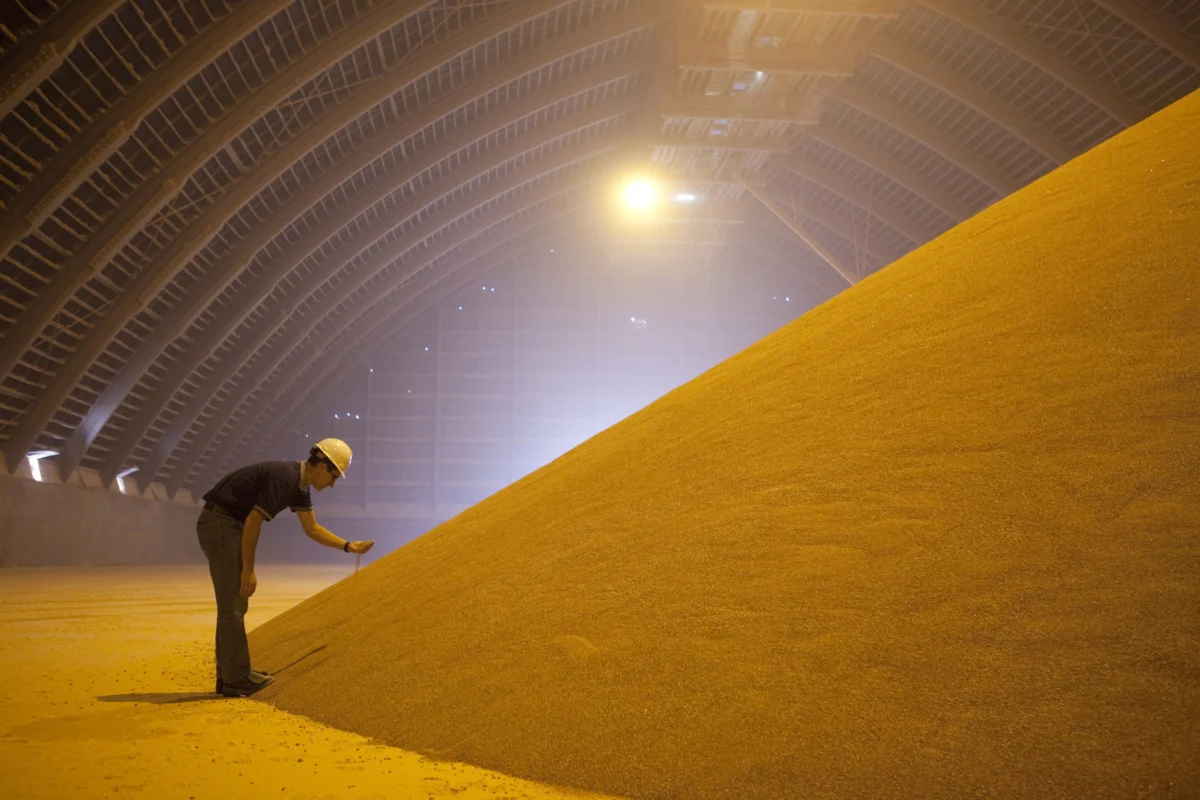
WASHINGTON — The global agricultural landscape is currently grappling with a severe supply-chain shock as the Iran war, and the subsequent closure of the Strait of Hormuz, ripples through the essential fertilizer trade. For American farmers and global food security, the disruption is not merely an abstract economic concern; it is a fundamental threat to crop yields, planting cycles, and the affordability of the world’s food supply.
With over 30 percent of global nitrogen fertilizer trade historically flowing through the Strait of Hormuz, the closure has served as a catalyst for a broader crisis. While nitrogen-based fertilizers have taken the brunt of the immediate impact, the ripple effects have extended to phosphate and potassium—the other two pillars of modern industrial farming. As the cost of diammonium phosphate climbs and the price of muriate of potash—a critical potassium fertilizer—surges, the United States finds itself at a crossroads. For a nation that has doubled its nitrogen production over the last decade, the continued, near-total reliance on foreign potash has become a significant strategic vulnerability.
The Chronology of a Crisis: From Transit Chokepoints to Policy Shifts
The current volatility is the culmination of years of mounting supply-chain pressures, exacerbated by both geopolitical conflict and administrative policy shifts.
- 2021–2022: The onset of Western sanctions against Russia and Belarus, following the invasion of Ukraine, began to tighten the global potash market, placing an outsized burden on Canada to fill the supply gap. Simultaneously, labor disputes and cross-border mandates—including a 2022 Canadian Pacific Railway strike and COVID-era trucking restrictions—exposed the fragility of North American logistics.
- 2025: The year began with a fundamental shift in domestic policy. The US Department of the Interior officially designated potash as a "critical mineral," signaling that the administration now views the nutrient with the same strategic importance as lithium or cobalt. In March, President Donald Trump issued Executive Order 14241, aimed at accelerating domestic mineral production through the streamlining of federal permitting processes.
- December 2025: In a move that surprised international observers, the United States lifted sanctions on three Belarusian potash companies. The move, tied to a complex prisoner-release deal, was widely interpreted as an attempt to cool global prices and diversify imports, despite the ongoing friction with Belarus.
- February 2026: Vice President JD Vance unveiled a proposal to form a G7-led "critical minerals trading bloc." The move was designed to consolidate Western control over mineral supply chains, though it faced immediate skepticism from EU officials and domestic mining interests concerned about the feasibility of such a coalition.
- Ongoing: The establishment of "Project Vault" by the US Export-Import Bank has begun to formalize the government’s commitment to strategic stockpiling, positioning potash as a priority commodity for state-backed financial support.
Supporting Data: The Anatomy of Import Dependence
The mathematical reality of US potash reliance is stark. While the United States is a leading producer of phosphate rock, its potash production remains stagnant, yielding only about 500,000 metric tons annually—a mere 8 percent of the 5.9 million tons required for domestic consumption.
This creates a net import reliance of 92 percent. Canada remains the primary supplier, accounting for 79 percent of US imports. Russia and Israel contribute a combined 12 percent, keeping the US market susceptible to the ebbs and flows of European and Eurasian political tensions.
Furthermore, the economic barrier to domestic entry is immense. While the US possesses an estimated seven billion tons of potash resources, deep-seated deposits in New Mexico and Utah are prohibitively expensive to extract. When adjusted for technical feasibility and permitting constraints, recoverable reserves drop to roughly 970 million tons—a figure that fails to provide the long-term confidence required for significant private sector capital investment compared to the 4.5 billion tons of accessible reserves held by Canada.
Official Responses and Strategic Policy
The administration’s strategy is built upon a three-pronged approach: domestic production, international collaboration, and strategic reserves.
The push to streamline mining, while central to the Trump administration’s platform, faces significant hurdles. Mining industry analysts point out that even with expedited permitting, the return on investment (ROI) for new potash operations is slim. The "critical mineral" designation helps by opening doors to government-backed loans and financial incentives, but these measures may not be sufficient to bridge the gap between high development costs and the lower market price of imported potash.
Internationally, the United States has doubled down on initiatives like the Forum on Resource Geostrategic Engagement (FORGE). By coordinating with multilateral development banks and foreign governments, Washington hopes to de-risk exploration in non-traditional mining regions. The goal is to move beyond the current "oligopoly" of producers and create a more resilient, diversified network of suppliers that are less prone to the geopolitical blackmail of regimes currently controlling the majority of global output.
Implications for the American Consumer and Global Markets
The implications of this supply-chain fragility are profound. When farmers face high input costs, they are often forced to choose between reducing the amount of fertilizer used—thereby lowering crop yields—or passing those costs onto the consumer at the grocery store. In an era where food inflation has already hit household budgets hard, a sustained potash shortage could lead to higher prices for essential staples, including wheat, corn, and soy.
Furthermore, the lack of a strategic buffer means that short-term shocks—such as a rail strike or a regional conflict—can cause immediate, localized price spikes. The introduction of "Project Vault" is a recognition of this danger. By establishing a federal stockpile, the government intends to create a shock absorber that can stabilize the market during volatile planting seasons. However, critics argue that excessive government intervention could lead to market distortions, potentially discouraging the very private-sector innovation that is needed to create a more efficient, long-term supply chain.
A Path Toward Circularity
As the administration looks for long-term solutions, there is an emerging consensus that the answer may lie not just in mining, but in "nutrient circularity." The recovery of potassium from domestic waste streams—including livestock manure, wastewater, and biomass ash—represents an untapped frontier.
Current recovery technologies are in their infancy, hindered by high transport costs and the biological nature of the waste. Yet, by establishing national nutrient recovery standards and providing innovation grants, the federal government could foster a domestic industry that transforms waste into a valuable resource. European models, where such technology is already operational, provide a roadmap for the United States to capture and reuse potassium, eventually creating a decentralized, regional supply of fertilizer that is insulated from international conflicts.
Conclusion: The Long Road to Resilience
In the short term, the United States remains tethered to the existing global trade architecture. Despite ambitious executive orders and new trading blocs, there is no quick fix to the structural dependency on Canadian and Eurasian potash. Mining projects have decade-long lead times, and circular technology requires a fundamental shift in agricultural infrastructure.
Ultimately, the United States must balance the urgency of current geopolitical threats with the necessity of long-term planning. While continuing to advocate for international cooperation to secure supply chains, Washington must also incentivize the development of domestic recovery systems. By treating fertilizer not merely as a commodity but as a core component of national security, the United States can begin to build a robust system that protects both the American farmer and the global consumer from the inevitable volatility of the 21st-century commodity markets.