The French capital has emerged from a harrowing climatic ordeal, with official figures from Santé Publique France revealing that the Île-de-France region experienced a mortality rate more than double the statistical norm during the record-shattering heatwave that gripped the nation last month. The data paints a grim picture of the human cost associated with the accelerating climate crisis, underscoring the vulnerability of urban centers to extreme weather phenomena.
Main Facts: A Statistical Crisis in the Capital
According to the latest report released by France’s national health agency on Friday, the week of June 22 to 28 witnessed a total of 3,000 fatalities in the Paris region. This figure represents an "excess mortality" of 1,565 deaths—meaning that 1,565 more people perished than would have been expected under normal meteorological conditions.
The statistics are particularly alarming for the demographic breakdown: individuals over the age of 65 accounted for a staggering 82.4 percent of these excess deaths. This demographic tilt highlights the acute risk faced by the elderly, whose physiological ability to regulate body temperature is often compromised, and who are frequently more isolated within the sprawling urban landscape of Paris.
Health officials have cautioned that these figures are preliminary and could rise further. Deaths linked to heatwaves are notoriously difficult to categorize in real-time, as the physiological impacts—ranging from acute hyperthermia and dehydration to the exacerbation of pre-existing cardiovascular and respiratory conditions—can manifest days or even weeks after the mercury begins to fall.
Chronology: A Summer of Repeated Assaults
The June heatwave was not an isolated incident, but rather the third major thermal event to strike France since the onset of May, signaling a terrifying new normal for the European continent.
- Mid-May: France experienced an unseasonably early heatwave, providing an initial warning to emergency services and public health authorities regarding the nation’s lack of preparedness for record-breaking early summer temperatures.
- June 22–28: The most intense period of the recent heatwave. During these seven days, temperatures soared to levels that shattered historical records across the Île-de-France region.
- Late June: Initial estimates placed the national excess death toll at approximately 2,000. However, as longitudinal data from hospitals, morgues, and care facilities has been processed, the figure has been revised upward, with the Paris region bearing the brunt of the casualty count.
- Early July: As the region recovered from the June event, the French populace began a frantic scramble for air conditioning and cooling equipment, fueled by warnings from Météo-France that a fourth heatwave was already looming on the horizon.
Supporting Data: Comparisons and Context
To understand the severity of the June event, climatologists and health experts are looking back to the catastrophic heatwave of 2003, which claimed 15,000 lives in France and remains the benchmark for heat-related mortality in modern French history.
France’s weather service, Météo-France, has noted that while the June 2026 event lasted two days less than the 2003 disaster, it was, in many respects, "more intense." The concentration of heat, the speed of the temperature climb, and the duration of the "tropical nights"—where temperatures failed to drop below a certain threshold, preventing the human body from recovering—contributed to the high mortality rates.
Furthermore, the heatwave was not confined to French borders. It swept across the entirety of Europe, breaking all-time temperature records in nations ranging from the Iberian Peninsula to Eastern Europe. The World Weather Attribution (WWA) network, a consortium of leading climate scientists, described the June event as the "most severe ever recorded" based on a three-day forecast of average peak temperatures.
Perhaps most damning is the scientific consensus regarding the causality of these events. The WWA has stated categorically that such a heatwave would have been "virtually impossible" without the influence of anthropogenic (man-made) climate change. The burning of fossil fuels and the resulting accumulation of greenhouse gases have effectively "loaded the dice," making extreme weather events more frequent, more intense, and longer-lasting.
Official Responses and Systemic Vulnerability
The surge in mortality has triggered an intense national debate regarding the adequacy of France’s healthcare infrastructure and its social protection mechanisms for the elderly.
The Hospital and Care Home Crisis
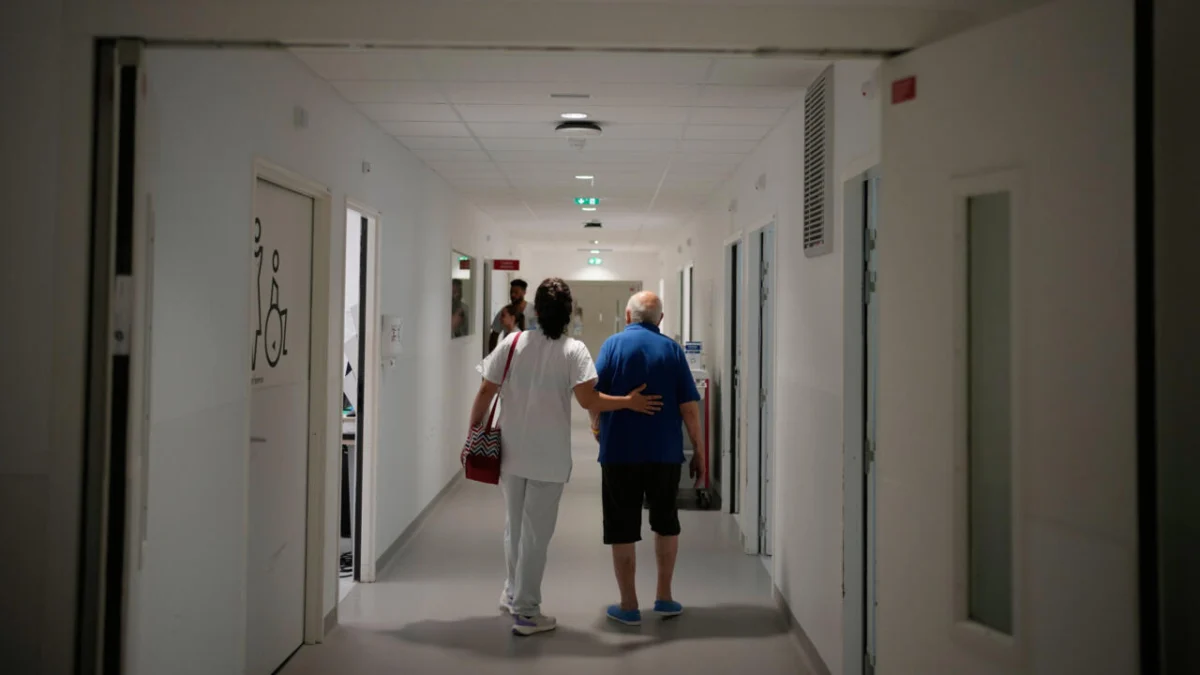
Healthcare facilities and aged care homes (EHPADs) have been the front lines of this crisis. Reports from the ground indicate that many of these institutions struggled to maintain internal temperatures that were safe for patients. In many older, pre-war Parisian buildings, traditional cooling methods—such as shutters and natural ventilation—proved woefully insufficient against the heat island effect created by the city’s concrete and asphalt.
"Our hospitals are currently operating in a state of perpetual emergency," noted one health administrator in a briefing following the release of the report. "We are seeing the convergence of a labor shortage in the care sector and a massive, sudden influx of patients suffering from heat-induced organ failure. It is a system under extreme duress."
The Call for Urban Adaptation
The French government is facing mounting pressure to rethink urban planning in Paris. The city is a quintessential "urban heat island," where dense masonry and a lack of green canopy trap heat during the day and prevent cooling at night. Proposals for "cool islands" (parks, fountains, and air-conditioned public spaces) are being accelerated, but critics argue that these measures are merely superficial interventions in the face of a rapidly warming planet.
Public health campaigns, which typically focus on hydration and "checking on neighbors," are also being scrutinized. While helpful, they do not address the structural inequalities that prevent low-income elderly residents from accessing air-conditioned environments or having adequate living conditions to endure a week of 40°C+ heat.
Implications: The Long-Term Cost of Climate Inaction
The data from the June heatwave is more than a set of grim statistics; it is a profound indicator of the socio-economic implications of climate change.
The Demographic Time Bomb
The fact that over 82 percent of the excess deaths occurred in the 65+ age bracket reveals the specific danger to France’s aging population. As the continent continues to age, the number of individuals susceptible to heat-related mortality will grow. This necessitates a radical shift in social policy, potentially requiring the mandatory retrofitting of all care facilities with industrial-grade cooling and air filtration systems, and a more robust social outreach program that can identify vulnerable individuals before, rather than after, a heatwave hits.
The Economic Burden
Beyond the human tragedy, the economic impact is immense. The cost of emergency medical services, the loss of productivity during heatwaves, and the long-term strain on the social security system are all rising. The scramble for air conditioning—while a logical individual response—is, in itself, a problematic cycle. Increased air conditioning usage leads to higher energy demand, which, if not met by renewable sources, contributes to further carbon emissions, thereby exacerbating the very problem that caused the heatwave.
The Political Horizon
The French government is now caught in a difficult political landscape. With the public demanding immediate protection from the heat, and the scientific community demanding systemic change to meet carbon neutrality goals, the administration is being pushed to act on both fronts.
The report from Santé Publique France serves as a stark warning: the climate crisis is not a distant, future threat. It is a current reality that is actively claiming lives. The "excess deaths" recorded in Paris are the tangible, heartbreaking evidence of the failure of global and local systems to adapt to the new climatic reality.
As France prepares for a potential fourth, fifth, or sixth heatwave in the coming months, the question remains whether these statistics will finally serve as the catalyst for the structural transformation required to ensure the safety of the most vulnerable citizens. For the families of the 1,565 individuals whose lives were cut short in late June, the response from policymakers has come far too late. The challenge for the future is not just to count the dead, but to fundamentally alter the conditions that make such mortality rates possible.