
By Editorial Desk
July 8, 2026
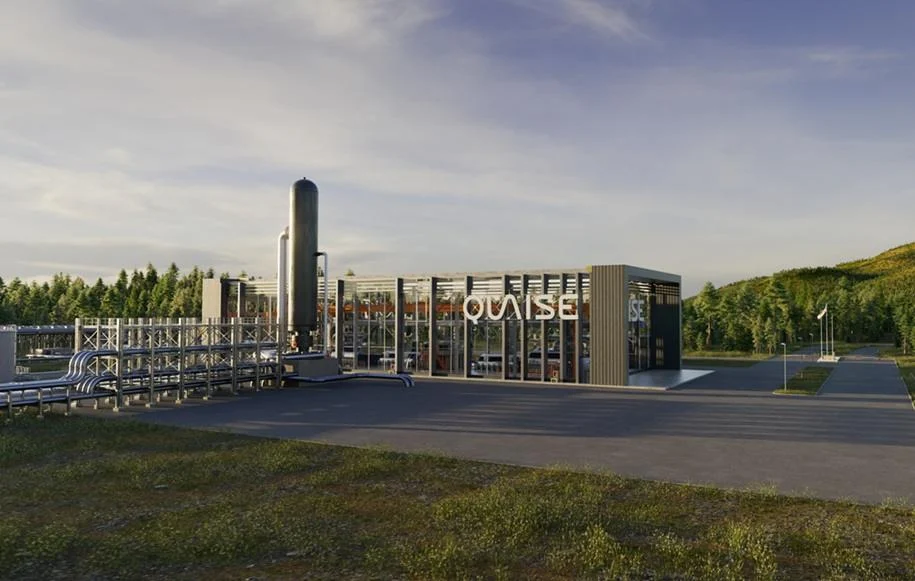
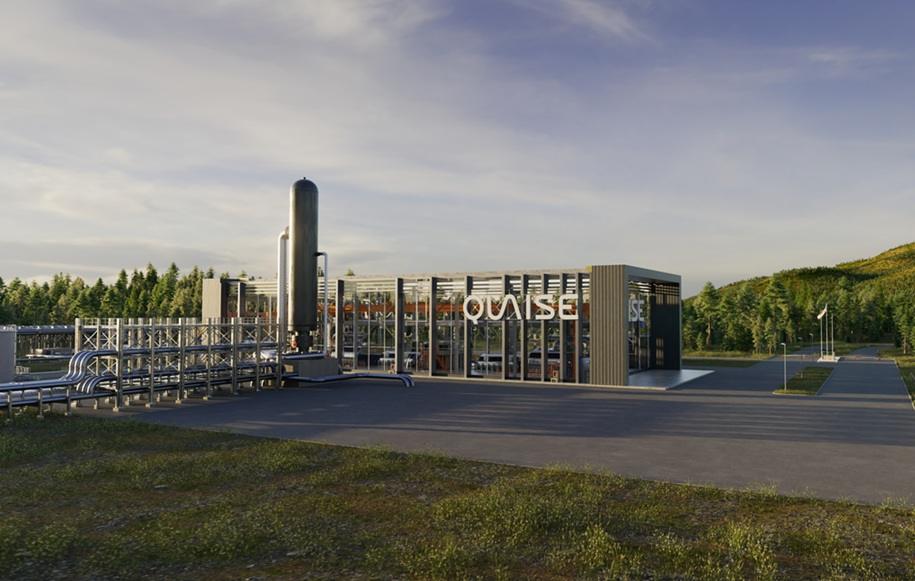
In a milestone development for the global energy transition, Quaise Energy—a pioneering firm spun out of the Massachusetts Institute of Technology (MIT)—has successfully closed a $134 million Series B funding round. This massive infusion of capital marks a transition from experimental research to the construction of the world’s first commercial "superhot" geothermal power plant.
By utilizing proprietary millimeter-wave drilling technology, Quaise aims to tap into heat sources miles beneath the Earth’s crust, potentially providing a baseload, carbon-free energy source that operates independently of weather conditions, unlike wind or solar.
The Core Innovation: Accessing the Earth’s Engine
For decades, geothermal energy has been restricted to regions where tectonic activity brings high heat close to the surface—typically near volcanic hotspots. Conventional drilling, which relies on mechanical bits, often struggles with the extreme temperatures and hardness of the rock found at greater depths.
Quaise Energy has fundamentally reimagined this process. Rather than grinding through rock, the company employs high-frequency millimeter-wave energy to vaporize rock, allowing it to reach depths where temperatures range between 300°C and 500°C. At these temperatures, water pumped into the crust can be transformed into supercritical steam, which carries significantly more energy than conventional geothermal steam. This technology essentially allows for the creation of a "geothermal battery" anywhere on the planet, potentially turning decommissioned coal and gas plants into clean energy hubs by retrofitting their existing steam turbines.
Chronology: From MIT Lab to Project Obsidian
The journey of Quaise Energy reflects the rapid maturation of deep-tech climate solutions:
- 2018: Quaise Energy is founded as a spinout from MIT’s Plasma Science and Fusion Center. The founders bring expertise in gyrotron technology—the same tech used to heat plasma in fusion research—to the field of geothermal drilling.
- 2021-2023: The company secures seed and Series A funding, proving its millimeter-wave drilling capabilities in controlled lab and field tests.
- 2025: The company identifies the Deschutes National Forest in Oregon as the ideal site for its pilot commercial project, citing the region’s extensively mapped geological data.
- July 2026: Quaise secures $134 million in a Series B round led by Prelude Ventures, with significant participation from global energy giants JERA and Idemitsu.
- 2030 (Target): Project Obsidian is scheduled to begin full-scale electricity delivery to the regional grid.
Supporting Data: Why Superhot Geothermal Matters
The global energy grid is facing a dual challenge: an unprecedented surge in electricity demand—driven by the expansion of AI data centers and the electrification of transport—and the need to retire aging fossil-fuel assets.
According to industry analysts, the "Superhot" geothermal approach offers several distinct advantages over current renewable models:
- High Capacity Factor: Unlike solar or wind, which require storage solutions (batteries) to mitigate intermittency, superhot geothermal provides continuous, 24/7 baseload power.
- Energy Density: Supercritical steam can generate significantly more electricity per well than traditional geothermal, drastically reducing the physical footprint of power plants.
- Global Scalability: While wind is best in the plains or at sea and solar requires high irradiance, the Earth’s heat is omnipresent. Quaise’s technology is designed to operate in virtually any geography, theoretically making the entire world a geothermal candidate.
- Capital Efficiency: By potentially retrofitting existing power plant infrastructure, Quaise avoids the massive cost of building new grid interconnections, which are often the primary bottleneck for new renewable projects.
Official Responses and Strategic Backing
The Series B round was not just a financial success but a strategic signal to the energy market. By bringing in Japanese energy titans JERA and Idemitsu, Quaise has secured the manufacturing and operational expertise needed to scale their technology globally.
Carlos Araque, CEO and President of Quaise Energy, emphasized the gravity of this transition:
"Our ambition is to power civilization with Earth’s most compelling energy source. This round takes us from field-proven technology to first commercial revenues. We aren’t just building a power plant; we are building a platform that can decarbonize the global energy sector by repurposing the existing infrastructure of the fossil fuel era."
Mark Cupta, Managing Director at Prelude Ventures, echoed this sentiment, highlighting the "conviction" behind the investment:
"We have backed Quaise since the beginning because we believed accessing superhot rock would unlock geothermal energy at a scale the world has never seen. What the team has achieved in the field and what they are now building at Project Obsidian validates that conviction. We are proud to continue supporting Quaise as they move from proving the technology to powering the grid with clean, reliable energy nearly anywhere on Earth."
Project Obsidian: The Vanguard of Grid Reliability
Project Obsidian is not merely a proof-of-concept; it is intended to be a functional, gigawatt-scale asset. Located in the Pacific Northwest, the site is strategically placed to support a region currently grappling with transmission constraints and the volatility of its existing hydroelectric assets, which have been impacted by changing precipitation patterns.
The facility will serve as a roadmap for the future. If successful, Quaise plans to leverage the modular nature of its drilling rigs to deploy similar projects across the U.S. and internationally. The company has already raised a cumulative $230 million, and management has signaled that further project-level financing—comprised of both debt and equity—is expected before the end of the year.
Implications: A New Era for Energy Security
The success of Quaise Energy’s latest funding round sends a clear message to policymakers and investors alike: the era of "Deep Heat" has arrived.

1. The Death of Intermittency
If Quaise succeeds in drilling at scale, the primary criticism of the renewable transition—intermittency—will effectively vanish. A grid powered by deep geothermal energy is a grid that does not require massive lithium-ion or long-duration storage arrays to survive a cloudy week or a windless month.
2. Economic Revitalization
One of the most profound social implications of this technology is its ability to transition the energy workforce. The skills required for deep-crust drilling are remarkably similar to those used in the oil and gas industry. By offering a clean, high-tech future for petroleum engineers and drilling specialists, Quaise may find an easier path to labor adoption than other green technologies that require entirely new supply chains.
3. Geopolitical Independence
Energy security is currently a top priority for nations worldwide. Relying on imported fossil fuels or volatile international commodity markets poses a constant threat to domestic stability. Superhot geothermal offers a path to true energy sovereignty, as the heat source is entirely domestic and impossible to embargo or disrupt via geopolitical maneuvering.
4. A Path to Net Zero 2050
To meet the climate goals set by the Paris Agreement, the world needs a massive influx of firm, clean power. While wind and solar will continue to provide the bulk of energy additions in the short term, they require a "firming" partner. Quaise Energy’s technology could very well be the missing piece of the puzzle, bridging the gap between our current carbon-heavy reality and a sustainable, electrified future.
Conclusion
As the company moves toward its 2030 goal for Project Obsidian, the energy sector will be watching closely. The technical hurdles remain significant—drilling into the earth’s basement is a feat of engineering that has humbled many before. However, with $134 million in new capital and the backing of global energy leaders, Quaise Energy has transitioned from an MIT-inspired dream to a tangible, industrial reality.
The promise is simple but profound: the planet’s internal fire, harnessed to provide clean, infinite, and reliable power for the next century of human progress.