Introduction: A Strategic Pivot in the French Right
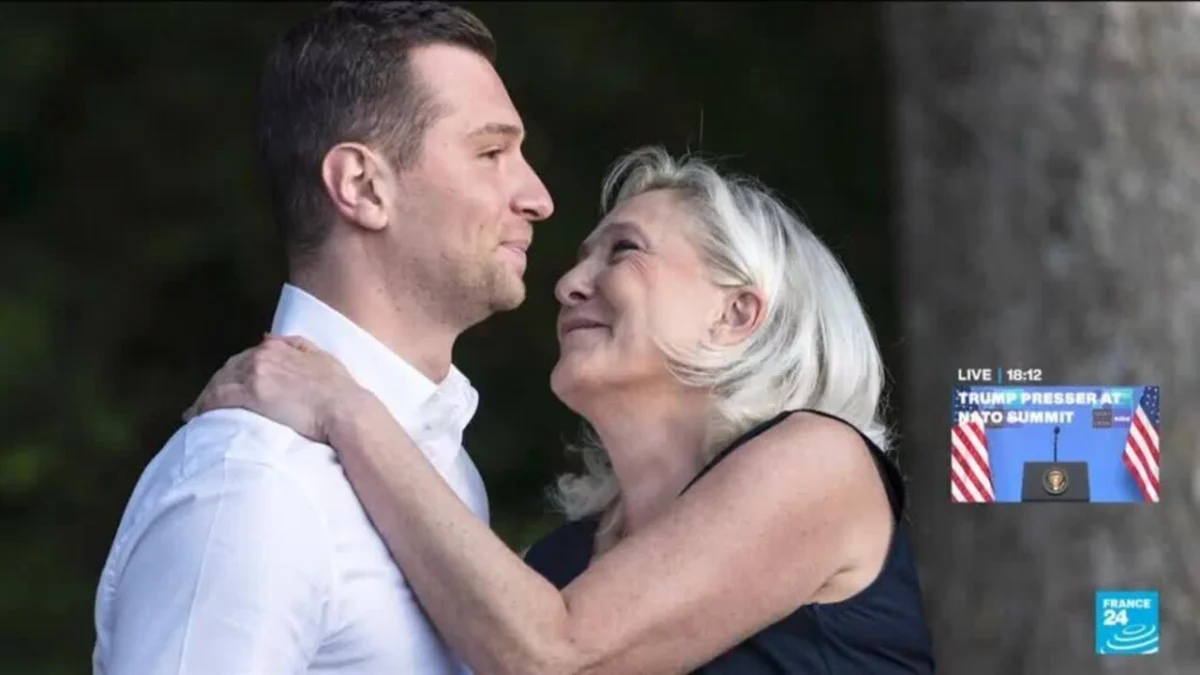
The French political landscape is undergoing a tectonic shift. Marine Le Pen, the long-time face of the National Rally (RN), has officially launched her presidential bid, setting the stage for what promises to be one of the most consequential elections in the Fifth Republic’s history. However, this is not the Le Pen of 2017 or 2022; she now operates within a complex internal dynamic alongside her protégé and party president, Jordan Bardella. As the party moves from the fringes of protest politics to the halls of potential executive power, the question remains: is this a united front or a house divided by ambition?
Main Facts: The New Campaign Dynamics
Marine Le Pen’s latest candidacy is built on a platform of "sovereign stability," emphasizing economic protectionism, strict immigration controls, and a re-evaluation of France’s role within the European Union’s current integration trajectory.
The primary fact defining this campaign is the institutionalization of the National Rally. Unlike previous cycles, where Le Pen fought as an insurgent against the "system," she is now presenting herself as a seasoned stateswoman ready to manage the apparatus of the French state. Central to this strategy is the "dual-leadership" narrative. While Le Pen remains the ideological matriarch and the clear choice for the presidency, Jordan Bardella serves as the modernizing force, tasked with broadening the party’s appeal among youth, the business community, and the suburban middle class.
Chronology: The Road to the 2026-2027 Cycle
To understand the current tension, one must look at the timeline of the RN’s recent evolution:
- 2021-2022: Jordan Bardella is appointed interim president of the party, signaling a generational handoff. Le Pen focuses on her legislative duties and building the "dedemonization" strategy.
- 2023: The party experiences record-breaking membership growth, largely attributed to Bardella’s social media prowess and ability to navigate mainstream media interviews without the historical baggage associated with the party’s origins.
- Early 2026: Internal debates surface regarding the party’s stance on the pension reform and economic taxation. Le Pen advocates for a more populist, working-class approach, while Bardella suggests a more pragmatic, market-friendly economic platform.
- July 8, 2026: The official launch of the campaign. Le Pen solidifies her position as the candidate, but the media spotlight is shared equally with Bardella, who is positioned as the potential Prime Minister in a "cohabitation" scenario or the successor to the party’s ideological engine.
Supporting Data: The Shifting Demographics
The National Rally has successfully dismantled the "glass ceiling" that previously restricted its voter base. Data from recent polling suggests:
- Youth Appeal: For the first time, the RN holds a plurality among voters aged 18–34. This is largely credited to Bardella’s digital-first strategy, which focuses on issues like housing affordability and security rather than strictly traditional ideological markers.
- Professional Expansion: Support among white-collar workers and professionals has risen by 12% over the last four years. The party’s pivot toward "responsible governance" has alleviated fears among the conservative business elite.
- The "Bardella Effect": Surveys indicate that 40% of voters who support the RN do so primarily because of the synergy between Le Pen and Bardella. They perceive the pairing as a "tried-and-tested" experience combined with "dynamic innovation."
Official Responses and Internal Friction
The announcement has triggered a wave of responses from across the political spectrum. The governing coalition, led by centrist forces, has labeled the Le Pen-Bardella ticket as a "danger to the European project," arguing that the duo represents two sides of the same populist coin.
Inside the party, the atmosphere is one of disciplined caution. While Le Pen has publicly dismissed rumors of a rift, political analysts point to subtle differences in rhetoric. Le Pen often focuses on the "civilizational" threat, appealing to the traditional conservative base. In contrast, Bardella emphasizes the "technical" failures of the current administration, focusing on inflation, energy costs, and administrative bloat.
"The party is a tandem," noted one high-ranking party official on condition of anonymity. "Marine provides the vision and the legacy; Jordan provides the execution and the future. They are not competing; they are segmenting the market."
Implications: What This Means for France
The Question of Cohesion
The central implication of this bid is the risk of a "two-headed" leadership. Should Le Pen win, she will need to balance the party’s traditional base with the expectations of the moderate voters Bardella has courted. If the party fails to maintain a unified message, it could alienate the very coalition they have spent years building.

European Geopolitics
A victory for this ticket would send shockwaves through Brussels. Both Le Pen and Bardella have been critical of the European Commission’s centralization of power. The implication is a potential "France-first" approach that could gridlock EU decision-making processes, particularly regarding defense and agricultural policy.
The Institutional Shift
If Le Pen is elected, the transition will be the most significant since the start of the Fifth Republic. The move from an oppositional party to a governing one will force the National Rally to address the realities of the national budget, civil service unions, and judicial independence. The partnership with Bardella suggests that the party is preparing a "shadow government" that is ready to hit the ground running, a stark contrast to their previous lack of administrative preparation.
Deep Dive: The Ideological Symbiosis
To fully grasp the implications of this bid, one must look at the ideological distribution within the party. Marine Le Pen has spent decades distancing the party from the xenophobic rhetoric of her father, Jean-Marie Le Pen. This process, known as "dedemonization," was a prerequisite for legitimacy.
Jordan Bardella has taken this a step further by focusing on "identity preservation" through a lens of security and economic sovereignty rather than ethnic nationalism. This shift allows the party to remain popular among voters who would otherwise be repelled by overt exclusionary rhetoric.
However, critics argue that this is merely a cosmetic change. They point to the party’s proposed policies on immigration—specifically the concept of "national priority"—as evidence that the core philosophy remains fundamentally unchanged. The challenge for the campaign will be to sustain this dual-track messaging without falling into internal contradiction.
Conclusion: The Road Ahead
As the 2026-2027 presidential cycle accelerates, the relationship between Marine Le Pen and Jordan Bardella will remain the most scrutinized aspect of the French political landscape. Le Pen has clearly calculated that she cannot win alone; she needs the vitality that Bardella brings to the table. Conversely, Bardella knows that his path to long-term influence is tethered to Le Pen’s success at the ballot box.
Whether this partnership survives the intense pressures of a presidential campaign—and the even greater pressures of governance—remains to be seen. What is certain, however, is that the National Rally has evolved. It is no longer a party of protest; it is a party of power. And with the Le Pen-Bardella tandem at the helm, the French electorate is being asked to decide whether this evolution represents a necessary change or a fundamental risk to the republic.
The coming months will be defined by debates, rallies, and a rigorous interrogation of policy. As voters prepare to cast their ballots, they are not just choosing a president; they are choosing between two distinct visions of what it means to be French in an increasingly fractured Europe. The stage is set, the players are in position, and the future of the nation hangs in the balance.